
Brinjal, or eggplant, grows in every corner of Indian kitchens, but is it actually good for you? This article breaks down the health benefits and possible downsides of brinjal, from its nutrition facts to the concerns people rarely talk about. Get tips on choosing and growing brinjal, plus fun facts you probably didn't know. Discover how this versatile veggie fits into Indian diets and whether you should eat it more often or watch out for anything. Straight facts, no fluff—just everything you need to know about brinjal.
Brinjal: Growing the Best Eggplant in India with Proven Tips
When you think of Indian kitchen gardens, Brinjal, a widely grown, versatile vegetable also known as eggplant or aubergine, is one of the first plants that comes to mind. Also known as eggplant, it thrives in India’s warm climate and shows up in curries, stir-fries, and pickles across every state. But growing it well? That’s where most gardeners struggle.
Brinjal needs more than just sunlight and water. It demands the right soil—loose, well-drained, and rich in organic matter. Many gardeners plant it in heavy clay and wonder why their plants turn yellow or drop flowers. The fix? Mix in compost or leaf mold, just like you’d do for tomatoes or peppers. It also hates cold nights. If you plant too early in the season, frost or chilly winds can kill young seedlings. Wait until the soil stays warm above 20°C, usually after the last chill of spring. And don’t forget pests: fruit borers and aphids love brinjal. A simple spray of neem oil every 10 days keeps them away without chemicals.
Brinjal doesn’t just grow—it responds. It’s a plant that tells you when it’s happy. Healthy leaves are deep green and glossy. Flowers that turn into fruit mean your plant has enough nutrients and pollinators around. If you see small, misshapen fruits, it’s often a sign of poor pollination or inconsistent watering. Keep the soil moist but not soggy, and mulch with dry grass to hold moisture and stop weeds. Companion planting helps too. Grow marigolds or basil nearby—they repel bugs and boost growth. You’ll also notice that brinjal does best in raised beds or large pots, especially in urban balconies. That’s why so many of the guides here focus on container growing, soil prep, and pest solutions tailored for Indian conditions.
What you’ll find below isn’t just a list of articles. It’s a collection of real, tested advice from gardeners who’ve grown brinjal in Delhi’s heat, Mumbai’s monsoons, and Karnataka’s red soil. You’ll learn how to fix common problems like flower drop, how to choose the right variety for your region, and why some plants give you 10 fruits while others give you none. Whether you’re planting in a backyard, terrace, or balcony, these posts cut through the noise and give you what works.
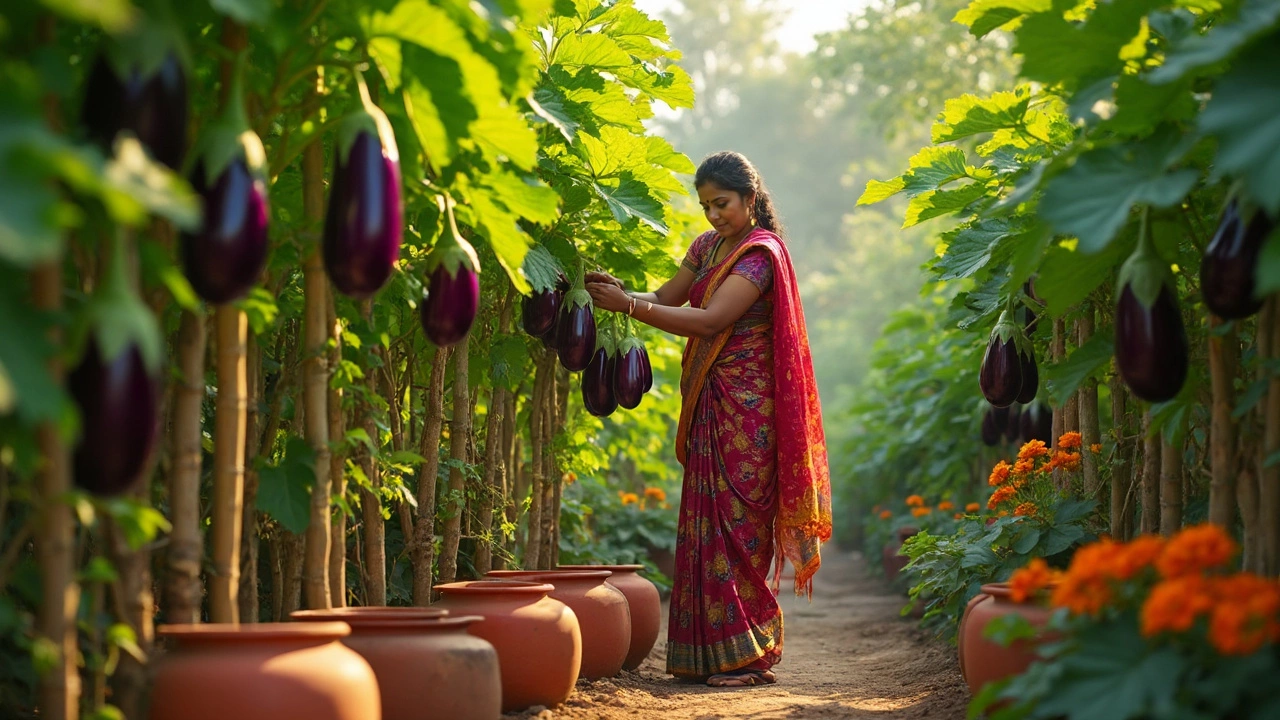
Curious why a fruit holds the title 'queen of vegetables' in India? This article digs into the story behind the eggplant, also called brinjal, and its unique spot in vegetable gardening. You'll find practical advice on growing it at home, discover some lesser-known facts, and get tips to make your brinjal patch thrive. If you want to level up your kitchen garden, this guide will come in handy. Expect clear answers and real, useful tricks anyone can follow.