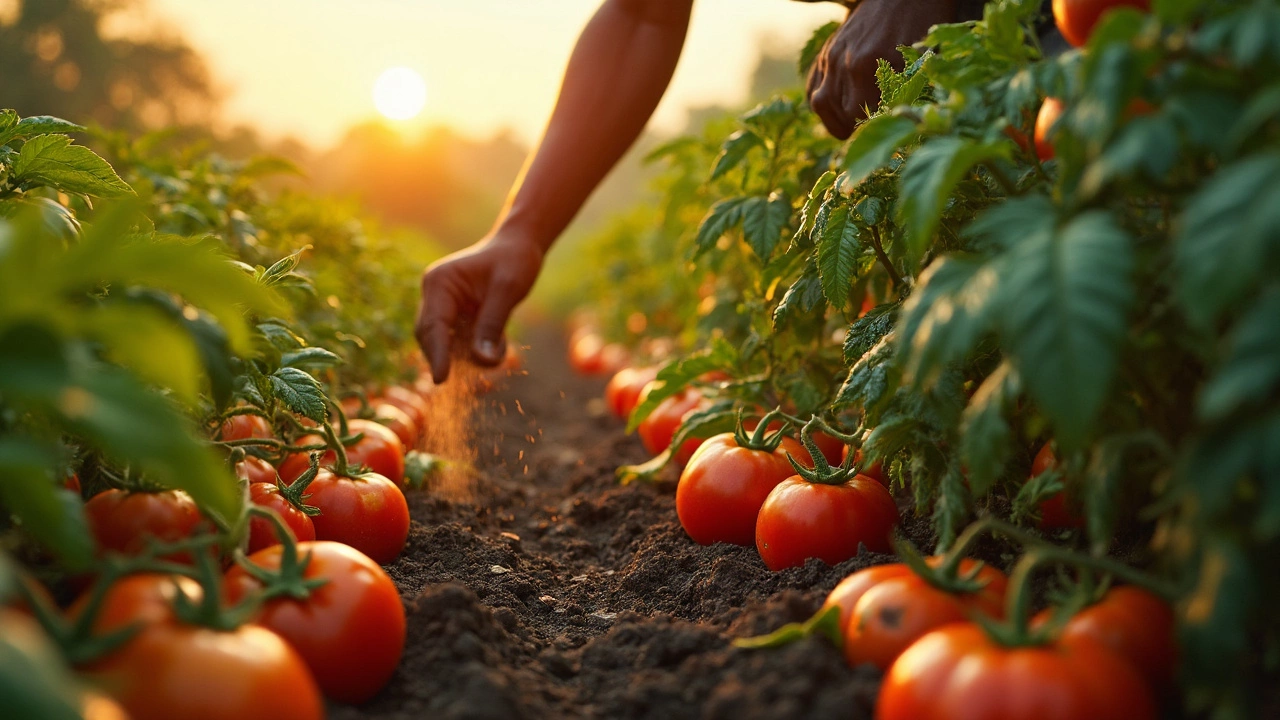
Getting the frequency of fertilizing tomatoes just right can make all the difference in your garden's success. This article delves into the optimal schedule for feeding your tomato plants, how to assess soil health, and tips for using organic and inorganic fertilizers effectively. It provides practical advice to ensure your tomato plants thrive, without overdoing it, all while keeping health and environmental impacts in mind.
Fertilize Tomatoes: Best Ways to Feed Your Plants for Bigger Harvests
When you fertilize tomatoes, apply nutrients to support healthy growth and fruit production. Also known as feeding tomato plants, it’s not just about dumping fertilizer on the soil—it’s about timing, balance, and understanding what your plants need at each stage. Tomatoes are heavy feeders. They don’t just want food—they want the right kind, at the right time. Skip this step, and you’ll get leggy plants with few fruits. Do it right, and you’ll harvest more than you can share.
Tomato nutrients, the essential elements that fuel growth and fruiting break down into three big ones: nitrogen, phosphorus, and potassium. Early on, your plants need more nitrogen to build strong leaves and stems. But once flowers appear, they shift gears. Too much nitrogen after that point means lush vines and zero fruit. That’s when organic tomato care, using natural inputs like compost, worm castings, and fish emulsion shines. These don’t burn roots, they feed slowly, and they improve soil over time—perfect for Indian summers where synthetic fertilizers can leach away fast.
Most gardeners miss the second key moment: flowering. That’s when phosphorus kicks in. A handful of bone meal or a liquid seaweed spray gives your tomatoes the boost they need to set fruit. Then, as the tomatoes start swelling, potassium becomes critical. It’s what makes them sweet, firm, and resistant to rot. Epsom salt (magnesium sulfate) is a cheap, easy fix for yellowing leaves between veins—a classic sign of magnesium shortage in Indian soils.
When you fertilize tomatoes, apply nutrients to support healthy growth and fruit production, you’re not just adding chemicals—you’re working with nature’s rhythm. In India, where monsoons wash away nutrients and heat stresses plants, timing matters more than quantity. Feed lightly every 2–3 weeks after transplanting. Stop feeding 3–4 weeks before the first expected frost (or end of the growing season). And never fertilize dry soil—it’s like giving someone saltwater when they’re thirsty.
What you’ll find in the posts below isn’t a one-size-fits-all guide. It’s real-world advice from people who’ve grown tomatoes in Delhi balconies, Kerala backyards, and Punjab fields. You’ll learn how to fix yellow leaves, what to do when your plants flower but don’t fruit, and why some gardeners swear by crushed eggshells while others avoid them entirely. There’s no magic bullet—but there are proven methods. And they all start with knowing when and how to fertilize tomatoes the right way.