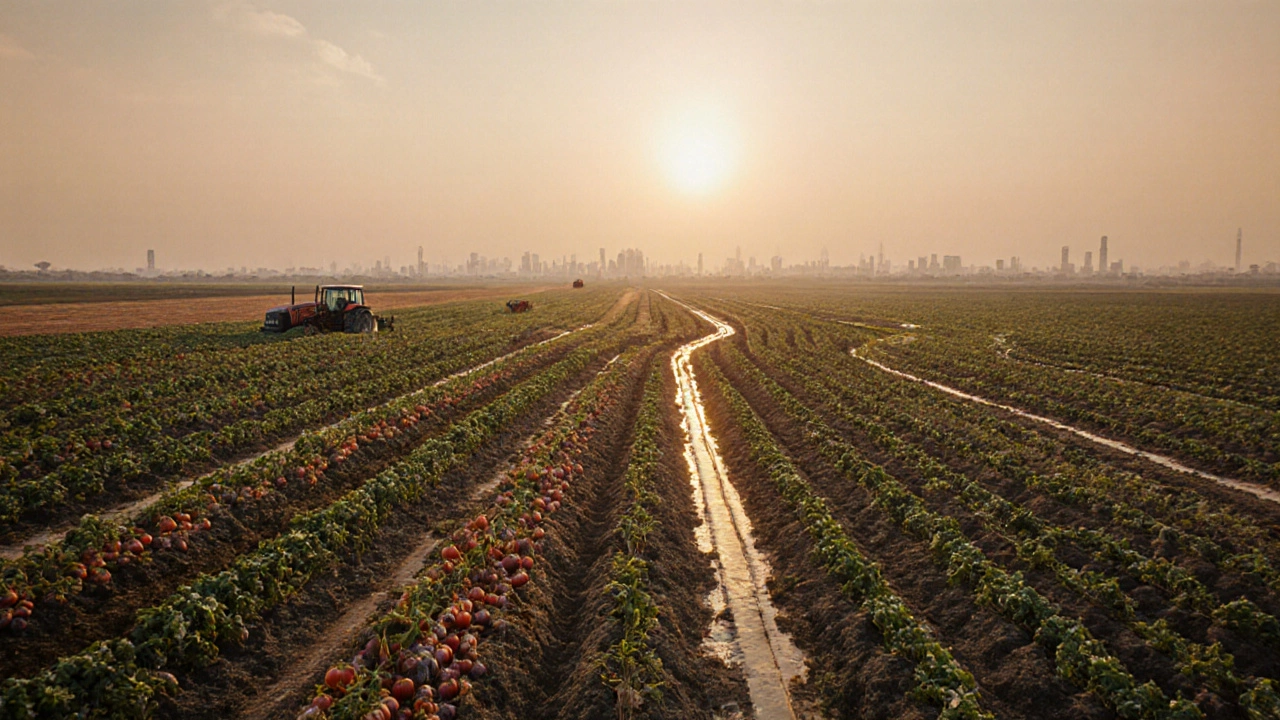
Haryana is India's vegetable capital, producing over 12 million metric tons of diverse vegetables annually. Learn why its soil, irrigation, and farming practices make it the top producer-and how home gardeners can copy its success.
Indian Vegetable Farming: Grow Native Crops Successfully at Home
When it comes to Indian vegetable farming, the practice of growing edible plants suited to India’s diverse climates and soil types. Also known as traditional Indian crop cultivation, it’s not just about planting seeds—it’s about working with monsoons, heat cycles, and local pests to get real harvests. This isn’t fancy greenhouse farming. It’s what your grandparents did, what small farmers still do, and what urban gardeners are bringing back to balconies and terraces across the country.
Native Indian vegetables, crops like brinjal, okra, amaranth, and cluster beans that evolved in India’s soil and weather. Also known as local heirloom vegetables, they don’t need imported seeds or chemical inputs to thrive. They’re tough, they’re nutritious, and they’re perfectly tuned to India’s seasons. Compare that to imported hybrids that die in a heatwave or get wiped out by monsoon rains. Real Indian vegetable farming starts with what belongs here. You don’t need to chase exotic varieties. Start with what’s already proven. Plants like drumstick, bitter gourd, and spinach don’t just survive—they outperform imported types when planted at the right time, in the right soil, with simple compost.
Organic gardening India, a movement built on natural inputs, compost, and pest-resistant varieties instead of synthetic chemicals. Also known as chemical-free farming, it’s not a trend—it’s a return to what worked before pesticides became common. The posts below show how farmers and home gardeners use cow dung, neem, and kitchen waste to build soil and keep bugs away. No expensive kits. No complex formulas. Just time-tested methods that actually work in places like Rajasthan, Tamil Nadu, or a Mumbai balcony. And it’s not just about food. It’s about saving water, reducing waste, and growing food that’s safe for your family. When you grow your own vegetables the Indian way, you’re not just feeding yourself—you’re protecting your land and your health.
What You’ll Find in This Collection
Below are real guides from people who’ve done this—whether they’re growing okra in a pot on a Delhi terrace or planting tomatoes in a village field in Odisha. You’ll see how to pick the right season, fix dense soil with local materials, avoid common watering mistakes, and choose plants that bloom or fruit year-round. No theory. No fluff. Just what works when the temperature hits 40°C or the rains come early.