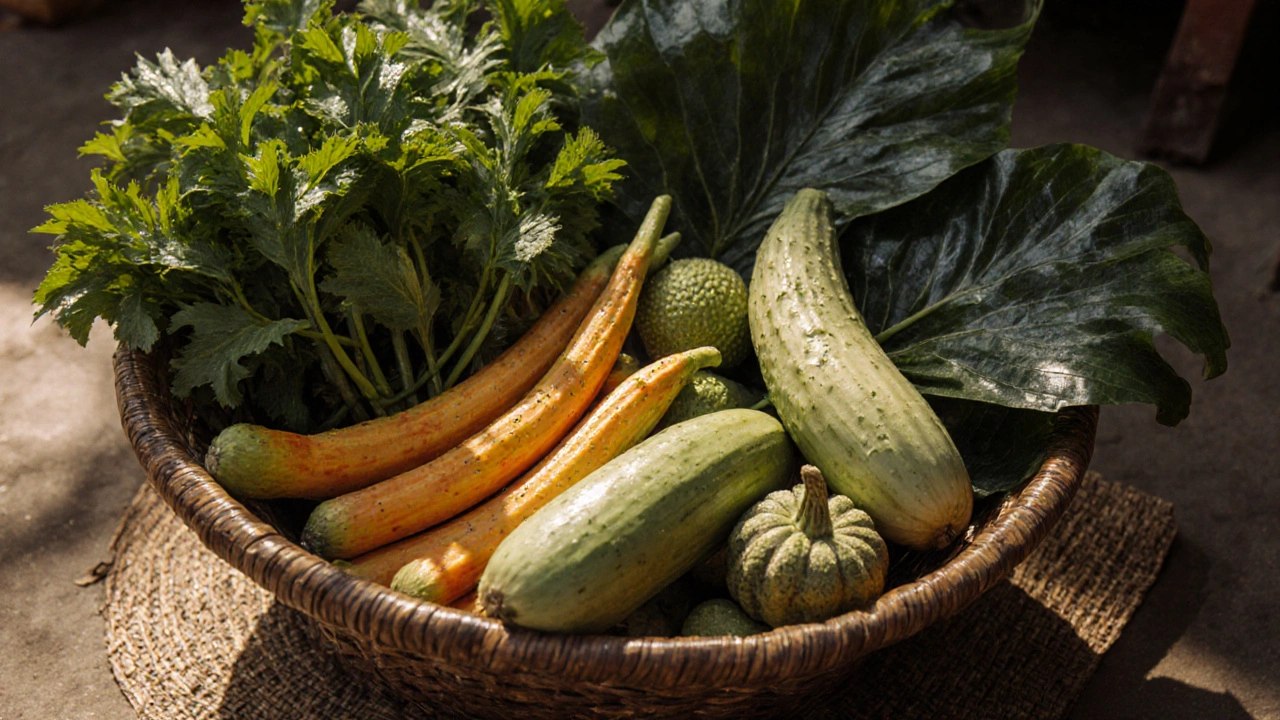
Discover India's native vegetables, why they matter, and how to grow them. Get climate tips, a handy comparison table, and step‑by‑step planting guidance.
Traditional Indian Crops: What Grows Best and Why It Matters
When we talk about traditional Indian crops, crops that have been grown across India for hundreds of years, shaped by local climate, soil, and culture. Also known as indigenous Indian crops, they are the backbone of rural livelihoods and the foundation of India’s food identity. These aren’t just plants—they’re living history. Think of rice grown in the flooded fields of Bengal, millets thriving in the dry lands of Rajasthan, or lentils that have fed generations in Punjab. They don’t need fancy inputs. They don’t rely on imported seeds. They just work—year after year, rain or shine.
What makes these crops special isn’t just their taste or nutrition. It’s how they fit into the land. millet, a group of small-seeded grains like bajra, jowar, and ragi that have been grown in India for over 5,000 years. Also known as coarse grains, they require less water than rice and grow well in poor soil. That’s why they’re making a comeback—not because they’re trendy, but because they’re tough. pulse crops, like urad, chana, and moong, which fix nitrogen in the soil and reduce the need for chemical fertilizers. Also known as lentils, they’re not just protein powerhouses—they’re soil healers. And then there’s turmeric, a rhizome grown across southern and eastern India, valued for its medicinal properties and deep golden color. Also known as haldi, it’s more than a spice—it’s a crop that supports small farmers and thrives without heavy irrigation. These aren’t side notes in Indian agriculture. They’re the main story.
Modern farming pushed these crops aside for high-yield hybrids, but the cost was real: soil fatigue, water waste, and lost flavor. Now, more farmers and gardeners are returning to what worked before. You don’t need a large farm to grow them. Even a balcony can hold a pot of ragi or a row of spinach that’s been grown in India since ancient times. The posts below show you how—whether you’re trying to revive an old variety, fix your soil with natural methods, or simply grow food that actually tastes like food. You’ll find guides on planting cycles, soil tricks, and how to protect these crops from pests without chemicals. No fluff. No hype. Just real, practical ways to grow what India has always grown best.