Sun Exposure Risk Calculator
Input Your Garden Details
Risk Assessment
Most people assume more sun means better vegetables. After all, tomatoes love the heat, peppers thrive in bright light, and cucumbers need all-day sunshine to grow plump and sweet. But here’s the truth: vegetable garden can absolutely get too much sun - and it’s not just about scorching leaves. In places like Brighton, where summer days stretch long and the sun sits high in the sky, even experienced gardeners get caught off guard when their crops start wilting, dropping fruit, or turning white and crispy.
What Too Much Sun Actually Does to Vegetables
Sun isn’t just light - it’s energy. When plants get more than 8-10 hours of direct, intense sunlight every day, especially in temperatures above 30°C, they start to shut down. Their stomata (tiny pores on leaves) close to conserve water. That sounds smart, right? But it stops photosynthesis. No photosynthesis means no sugar production. No sugar means no fruit. Your tomato plant might look green and full, but if it’s been under relentless sun for a week, it’s not making tomatoes - it’s just surviving.
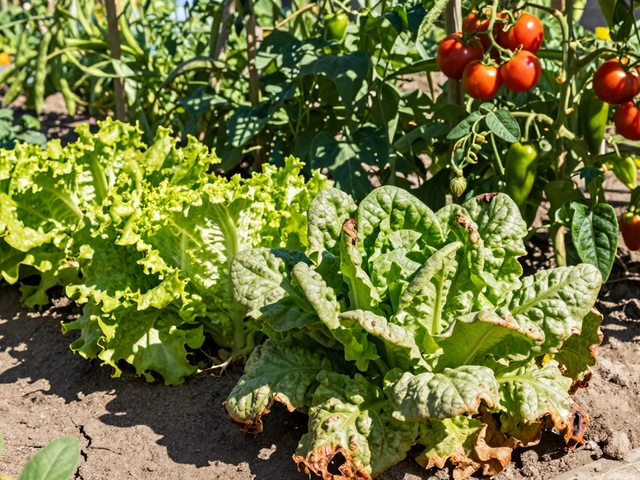
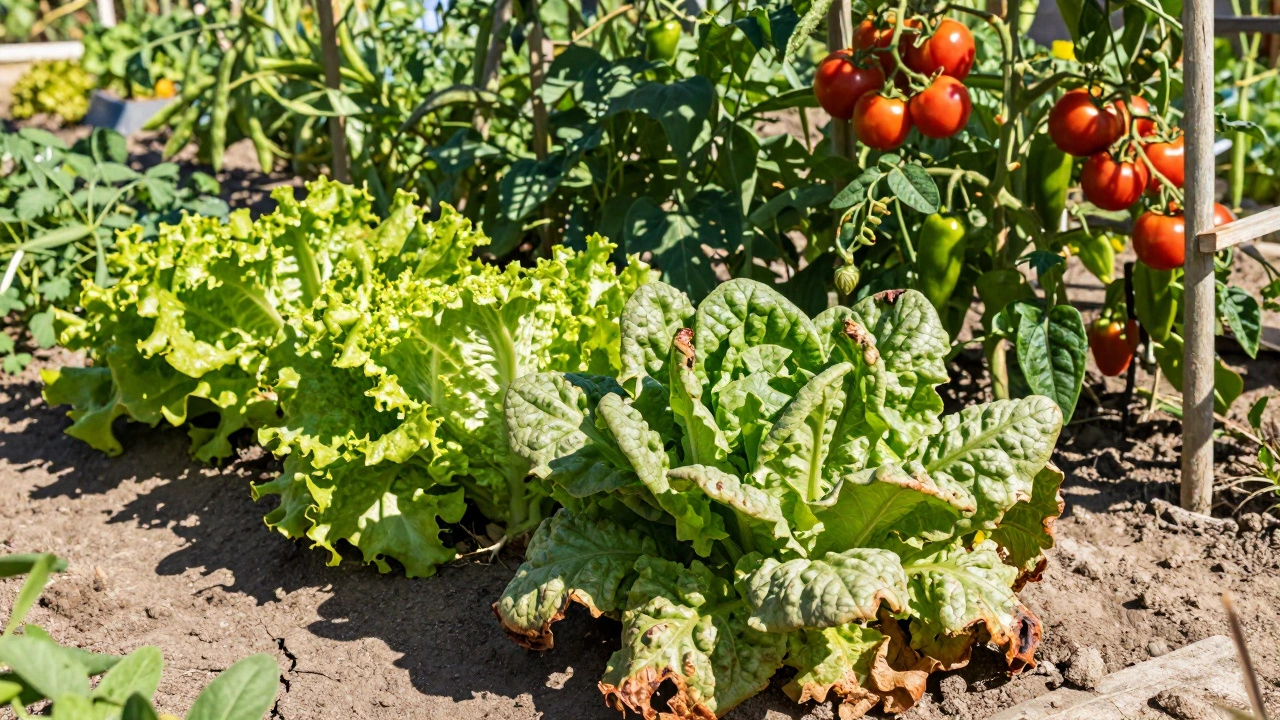
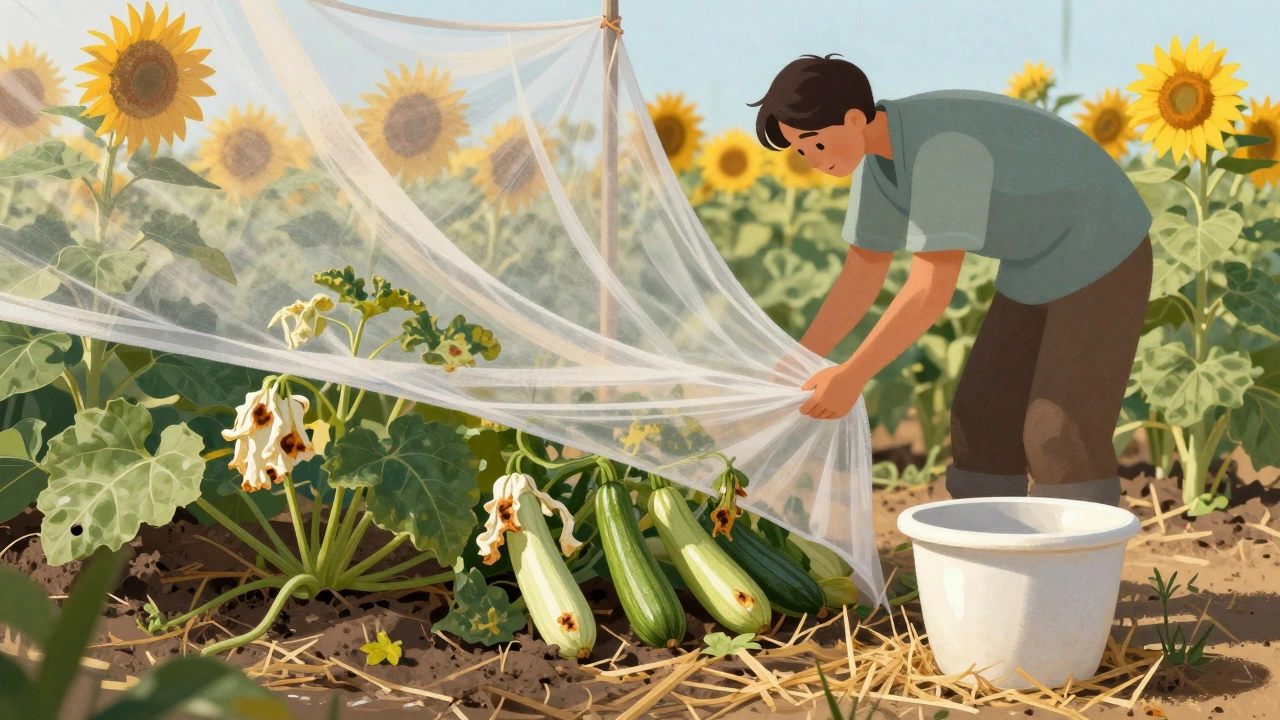
Leaf scorch is the most obvious sign. You’ll see pale, bleached patches on leaves that turn papery and brown around the edges. That’s not a disease - it’s sunburn. Same goes for fruit. Zucchini, cucumbers, and even peppers can develop sunken, white, leathery spots on their skin. These areas won’t rot right away, but they’ll never ripen properly. Once that damage is done, it’s permanent.
Which Vegetables Are Most at Risk?
Not all veggies handle full sun the same way. Some are built for it. Others? Not so much.
- High-risk crops: Lettuce, spinach, kale, arugula, and other leafy greens. These are cool-season plants. They bolt (go to seed) fast in heat, and their leaves crisp up like potato chips in direct sun. Even a few days of 28°C+ with no shade can ruin a whole bed.
- Moderate-risk crops: Broccoli, cauliflower, peas, and beans. These can handle morning sun but need relief in the afternoon. Without it, broccoli heads turn yellow and bitter, and pea vines stop flowering.
- Low-risk crops: Tomatoes, peppers, eggplants, squash, and corn. These are sun lovers - but even they suffer if temperatures spike above 35°C for days on end. Fruit set drops. Blossoms fall off. The plant says, “Not today.”
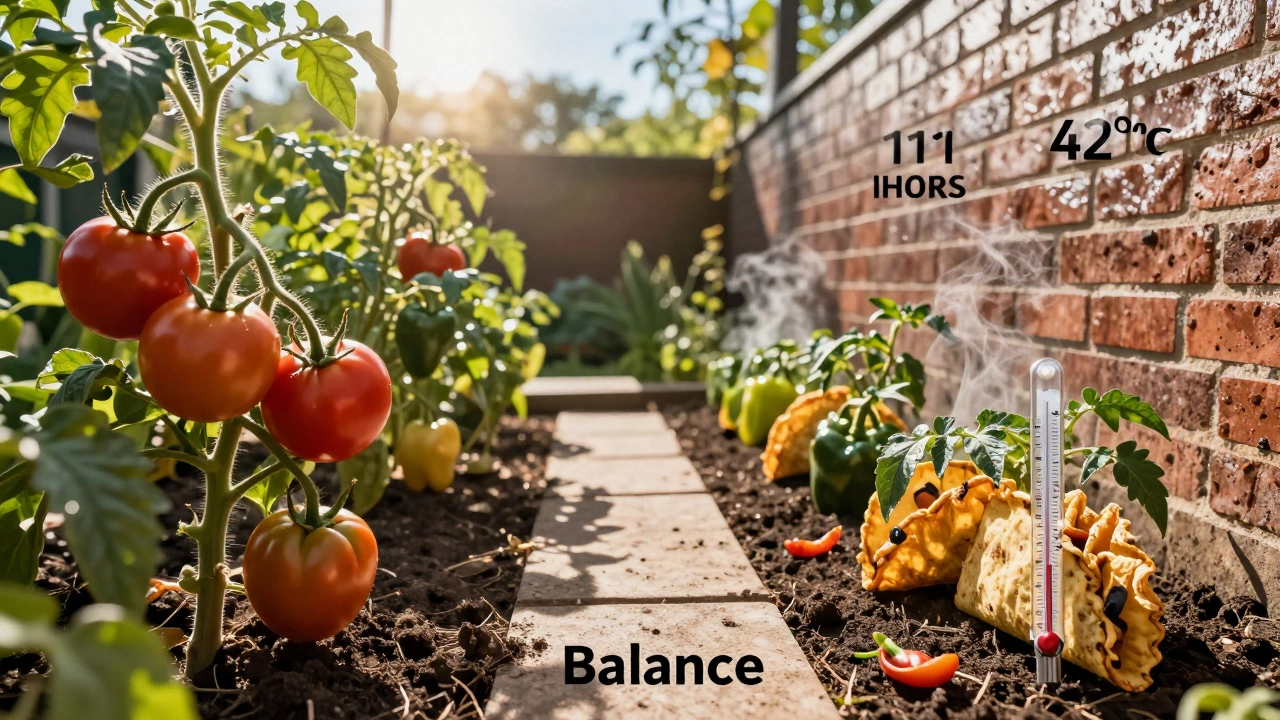
In Brighton, where summer highs can hit 32°C with little rain, even tomatoes can struggle if they’re planted in an open, south-facing spot with no breeze. I’ve seen gardeners lose entire tomato crops because they didn’t realize the afternoon sun on a brick wall was reflecting heat back onto the plants - turning their little oasis into a solar oven.
Signs Your Garden Is Getting Too Much Sun
You don’t need a weather app to know your garden is overheating. Look for these red flags:
- Leaves curling upward like taco shells - that’s a plant trying to reduce surface area to the sun.
- Soil cracking and drying out within hours after watering - signs of extreme evaporation.
- Fruit dropping before ripening, even if it looks healthy.
- Stunted growth. A plant that’s been growing fine suddenly stops.
- White or bleached patches on leaves or fruit - classic sunburn.
One gardener I know thought her zucchini was dying from pests. Turns out, the plants were getting 11 hours of direct sun on a west-facing balcony. The soil temperature hit 42°C. No bugs. Just heat stress. She moved them into partial shade and within a week, new flowers appeared.
How to Protect Your Garden from Too Much Sun
You don’t need fancy gear. Simple, low-cost fixes work better than most people think.
- Use shade cloth. A 30-50% shade cloth draped over stakes or a frame cuts sun intensity without blocking airflow. Hang it over leafy greens in the afternoon. It’s cheap, reusable, and works like a charm.
- Plant taller crops as shields. Corn, sunflowers, or even okra can act as natural sunscreens for lettuce or spinach planted nearby. This mimics how plants grow together in nature.
- Water early. Watering at 6 a.m. lets plants absorb moisture before the heat hits. Evening watering? Bad idea. Wet leaves in hot, humid air invite fungal diseases.
- Mulch heavily. A 5-7 cm layer of straw, shredded leaves, or even cardboard keeps soil cool and slows evaporation. I’ve seen mulched beds stay 8°C cooler than bare soil on a 30°C day.
- Use containers with light-colored pots. Dark pots absorb heat. A white or terracotta pot stays cooler, protecting roots. Move pots into shade during peak hours if you can.
One trick I use in my own kitchen garden: I grow cucumbers under a trellis that also supports climbing beans. The beans shade the cucumber vines in the late afternoon, and the cucumbers help keep the soil moist. It’s a win-win.
When to Accept the Sun - and When to Fight It
Not every plant needs shade. Tomatoes, peppers, and eggplants actually produce more fruit with full sun - as long as they’re not overheating. The trick is knowing the difference between healthy sun exposure and heat stress.
Here’s a quick rule: if your plants look happy, are flowering, and the soil stays moist for at least 24 hours after watering, you’re good. If they’re drooping by 11 a.m. and the soil is dust-dry, you’ve crossed the line.
And don’t forget wind. A gentle breeze cools plants faster than anything. If your garden is tucked between walls or fences with no airflow, even 7 hours of sun can be too much. Open up the space if you can.
What to Do If Your Plants Are Already Damaged
If leaves are already bleached or fruit is sunburned, don’t panic. You can’t reverse the damage, but you can stop it from getting worse.
- Remove severely damaged leaves. They’re not helping the plant - they’re just using energy.
- Don’t fertilize. Stress adds extra burden. Let the plant recover first.
- Keep watering consistently. Even damaged plants need moisture to heal.
- Shade the plant for a few days. Even 3-4 hours of relief can trigger new growth.
Plants are resilient. I’ve had lettuce that looked like it was done for the season bounce back after a week under shade cloth. It didn’t look perfect, but it was edible. And sometimes, that’s all you need.
Seasonal Adjustments Matter
In Brighton, spring and early summer are perfect for sun-loving crops. But by late July, the sun is relentless. That’s when you shift your strategy. Start planting heat-tolerant varieties - like ‘Solar Fire’ tomatoes or ‘Red Malabar’ spinach - or plan for partial shade. Rotate crops so your most sensitive plants aren’t in the hottest spot every year.
Think of your garden like a living system. It’s not just about planting seeds and waiting. It’s about reading the signs, adjusting as the season changes, and giving your plants what they need - not just what you assume they want.
Can vegetables get sunburned?
Yes. Tomatoes, peppers, cucumbers, and zucchini can develop white, leathery, sunken patches on their skin when exposed to intense, direct sunlight for days. This is sunburn, and it ruins the fruit’s texture and flavor. It’s not a disease - it’s physical damage from heat and UV exposure.
How many hours of sun do vegetables really need?
Most vegetables need 6-8 hours of direct sun. But that’s not a one-size-fits-all. Leafy greens like lettuce and spinach do best with 4-6 hours of morning sun and afternoon shade. Tomatoes, peppers, and squash thrive with 8-10 hours - but only if temperatures stay below 32°C. Beyond that, even sun-lovers suffer.
Is morning sun or afternoon sun worse for vegetables?
Afternoon sun is usually worse. It’s more intense and hits when temperatures are highest. Morning sun is gentler and helps plants start the day strong. Afternoon sun, especially on south-facing walls or in open areas with no breeze, can raise soil and leaf temperatures dangerously high.
Should I move my vegetable garden if it’s getting too much sun?
If you’re growing in containers, absolutely. Move them to a spot with afternoon shade. For in-ground gardens, you can’t easily relocate plants, but you can add shade cloth, plant taller crops nearby as shields, or use lightweight fabric to cover sensitive plants during peak heat. Timing matters - you don’t need to move everything, just the most vulnerable ones.
Do I need to water more if my garden gets too much sun?
Not necessarily more - but more often and more deeply. Watering once a day isn’t enough when soil dries out in hours. Instead, water deeply every other day, early in the morning. Mulch heavily to hold moisture. Overwatering in hot sun can cause root rot, so focus on consistent moisture, not volume.