Rice Stockpile Calculator
How Much Rice Do You Need?
Calculate your emergency food supply based on family size and duration.
Your Emergency Rice Supply
Total Pounds Needed:
Required Buckets:
When you’re building an emergency food supply, rice is one of the first things people think about. It’s cheap, filling, and stores well-but how long can you actually keep it before it goes bad? The answer isn’t simple. White rice can last decades under the right conditions. Brown rice? Not even close. And if you’ve been storing rice in a plastic bag on the pantry shelf, you might be eating rancid grain without even knowing it.
White Rice vs. Brown Rice: The Big Difference
Not all rice is the same when it comes to shelf life. White rice has had the bran and germ removed, leaving mostly starch. That’s why it lasts so long. Under ideal conditions-cool, dry, and sealed-it can stay edible for 25 to 30 years. The U.S. Department of Agriculture has tested stored white rice from the 1970s that was still safe to eat, though the texture and flavor had changed.
Brown rice is a different story. It still has the bran and germ, which contain natural oils. Those oils turn rancid over time. Even in perfect storage, brown rice rarely lasts more than 6 to 12 months. After that, it starts tasting bitter or oily. If you’re stockpiling for emergencies, skip brown rice unless you plan to use it within a year.
What Makes Rice Go Bad?
Rice doesn’t spoil like milk or meat. It doesn’t grow mold overnight. Instead, it degrades slowly through moisture, heat, oxygen, and bugs. The biggest threats are:
- Moisture: Even 10% humidity can trigger mold and fermentation. Rice absorbs water like a sponge.
- Oxygen: Oxygen causes fats in brown rice to oxidize and go rancid. It also lets insects breathe and multiply.
- Heat: Above 70°F (21°C), degradation speeds up. In hot climates, rice stored in a garage or attic can spoil in months.
- Insects: Weevils and moths lay eggs in grain. Those eggs hatch into larvae that eat through your stockpile. You might not see them until it’s too late.
That’s why storing rice in a cardboard box or a resealable plastic bag from the grocery store is a bad idea. Those containers breathe. They let in air and moisture. And they’re easy for bugs to chew through.
How to Store Rice for Decades
If you want rice to last 20+ years, you need to mimic how it’s stored in military and humanitarian supply chains. Here’s what works:
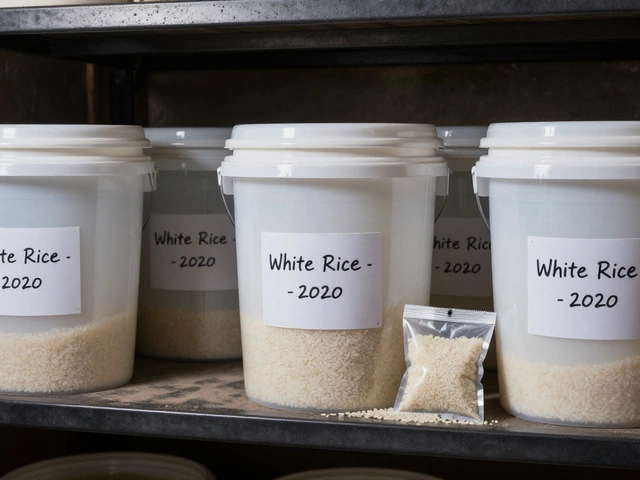
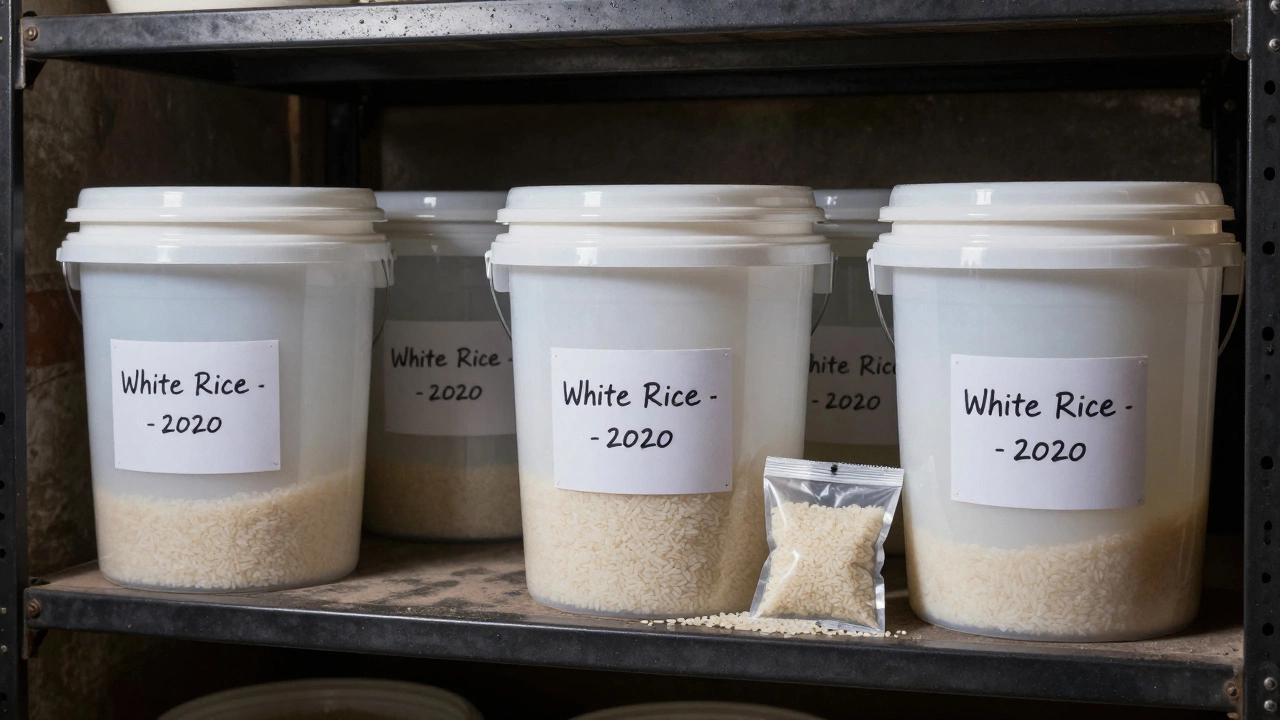
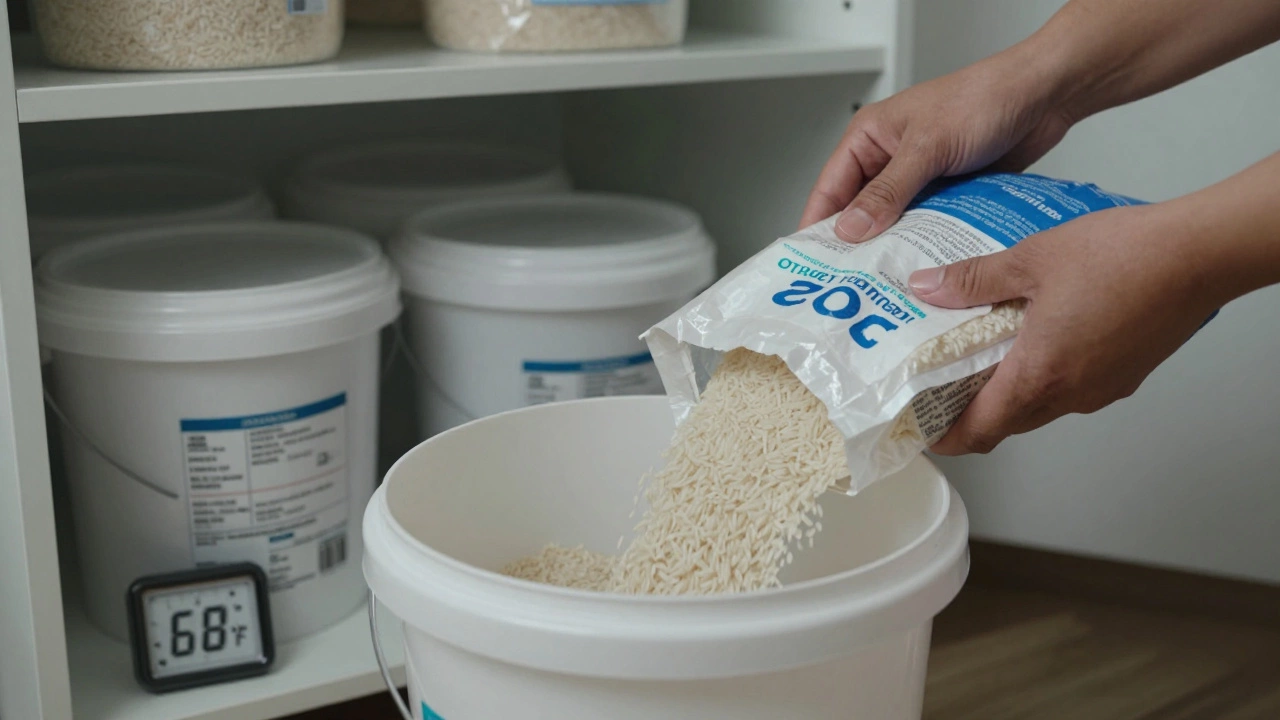
- Use food-grade buckets: Get 5-gallon buckets made of HDPE plastic with gamma seal lids. These are airtight and rodent-proof. Avoid milk jugs or trash bags-they’re not designed for long-term storage.
- Add oxygen absorbers: Place one 2000cc oxygen absorber per 5-gallon bucket. This removes nearly all oxygen, stopping oxidation and killing insect eggs. Don’t use silica gel-that only absorbs moisture, not oxygen.
- Seal it tight: Once you’ve poured in the rice and dropped in the absorber, snap the lid shut. You should hear a slight pop as the vacuum forms. If you don’t, the seal failed. Open it and try again.
- Store in a cool, dark place: A basement, closet, or underground storage room is ideal. Avoid garages, attics, or sheds where temperatures swing above 80°F.
- Label everything: Write the date and type of rice on the lid with a permanent marker. You won’t remember what’s in there in 10 years.
Some people use Mylar bags inside buckets for extra protection. That’s fine, but not required if you’re using good buckets and oxygen absorbers. Mylar is more expensive and harder to seal without a heat sealer.
What About Vacuum Sealing?
Vacuum sealing works for short-term storage-say, 1 to 3 years-but it’s not enough for decades. Home vacuum sealers don’t remove 100% of the air. They also don’t stop oxygen from slowly leaking back in over time. Plus, the plastic bags can develop tiny pinholes from rough handling.
If you’re using a vacuum sealer, add an oxygen absorber inside the bag. That gives you a better chance of long-term survival. But for true 25-year storage, go with buckets and absorbers.
How to Tell If Stored Rice Has Gone Bad
You can’t always tell by looking. But here are signs to watch for:
- Smell: Fresh rice has no smell. If it smells musty, sour, or oily-pitch it.
- Color: White rice should stay bright and white. Yellow, gray, or dark spots mean mold or oxidation.
- Texture: If the grains feel sticky or clump together, moisture got in.
- Insects: Live weevils, webbing, or tiny holes in grains? Throw out the whole bucket. Don’t try to sift them out.
- Taste: If it tastes bitter or off after cooking, it’s rancid. Brown rice is more prone to this.
Even if the rice looks fine, if it’s been stored improperly for 10+ years, it may lack nutrients. Vitamins B1 and E degrade over time. So while it won’t poison you, it won’t give you the same nutrition as fresh rice.
How Much Rice Should You Stockpile?
One person needs about 1.5 to 2 cups of uncooked rice per day for basic calories. That’s roughly 100 to 130 pounds per year. For a family of four, that’s 400 to 500 pounds annually.
Most people start with 50 to 100 pounds. That’s enough for 3 to 6 months of meals. If you’re serious about long-term food security, aim for 1 to 2 years’ supply. That means 200 to 400 pounds of white rice per person.
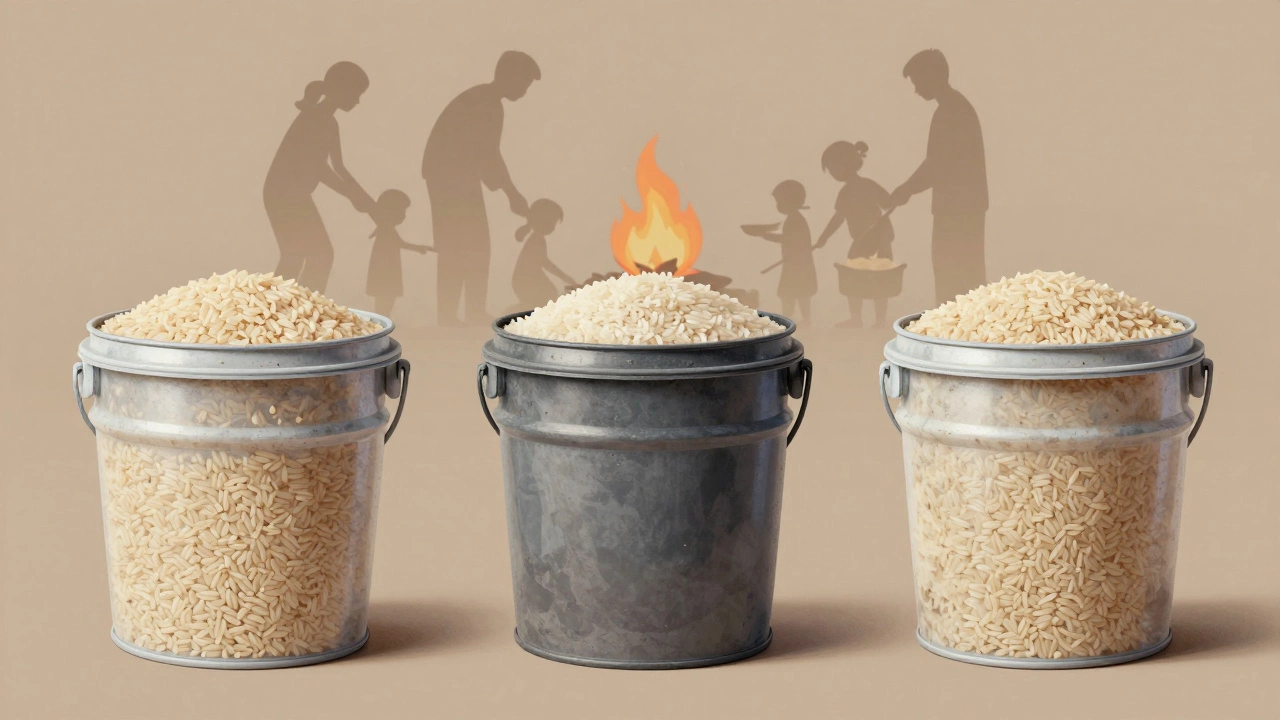
Store it in 25-pound bags inside 5-gallon buckets. That’s easy to move, rotate, and use. Don’t buy one giant 100-pound sack-it’s hard to seal properly and gets contaminated faster when you open it.
Rotate Your Stockpile
Even the best-stored rice should be rotated. Use the oldest first. Every 6 months, cook a few cups from your oldest bucket. Replace it with fresh rice. This keeps your supply active and ensures you’re not eating 20-year-old rice in an emergency.
Don’t wait until the apocalypse to test your stockpile. Cook with it. Make fried rice. Add it to soups. Taste it. If you like it, it’s still good. If it tastes flat or strange, replace it.
What About Other Grains?
Rice isn’t the only grain you should store. Other long-lasting options include:
- Wheat berries: Last 30+ years when sealed with oxygen absorbers.
- Quinoa: Lasts 8 to 10 years if kept dry.
- Oats: Last 5 to 10 years-better than brown rice, but not as good as white rice.
- Beans: Lentils, black beans, pinto beans-can last 10 to 30 years.
Combine rice with beans for complete protein. That’s a survival diet that’s been used for centuries.
Common Mistakes People Make
Most people fail at rice storage because they skip the basics:
- Storing rice in the original bag from the store-air and moisture get in.
- Putting it in the garage or near the stove-heat ruins it.
- Not using oxygen absorbers-bugs and oxidation win.
- Buying brown rice for long-term storage-wastes money and space.
- Not labeling containers-ends up with mystery buckets nobody wants to open.
One person I know stored 200 pounds of rice in 10 plastic bins under his bed. Five years later, he opened one and found weevils crawling out. He lost everything. It wasn’t the rice’s fault-it was his storage method.
Final Tip: Start Small, Think Long-Term
You don’t need to buy a ton of rice tomorrow. Start with one 5-gallon bucket of white rice. Seal it with an oxygen absorber. Put it in a cool closet. Label it. In a year, open it and cook some. Taste it. If it’s still good, buy another. Slowly build up. In five years, you’ll have a 10-year supply without spending a fortune or stressing over it.
Rice isn’t magic. But when stored right, it’s one of the most reliable foods you can own. It doesn’t need refrigeration. It doesn’t need electricity. It doesn’t expire on a label. It just needs a dry, dark, sealed space-and a little patience.