Bonsai Coffee Safety Checker
Check Your Bonsai Care
This tool helps you understand whether your coffee-based care practices could harm your bonsai tree based on article research.
Many people wonder if pouring leftover coffee or sprinkling coffee grounds on their bonsai tree will help it grow stronger. It sounds like a smart hack-coffee is full of nutrients, right? But bonsai trees aren’t just any houseplant. They’re delicate, carefully shaped, and grown in tiny pots with limited soil. Giving them coffee might seem harmless, but it can do more harm than good if you don’t know what you’re doing.
What’s Actually in Coffee Grounds?
Coffee grounds contain nitrogen, phosphorus, potassium, and trace minerals like magnesium and copper. These are all things plants need. But here’s the catch: those nutrients aren’t immediately available. Coffee grounds have to break down first, and that process changes the soil around your bonsai in ways you might not expect.
When coffee grounds decompose, they can temporarily tie up nitrogen in the soil instead of releasing it. This happens because microbes use nitrogen to break down the carbon-rich grounds. If your bonsai is already in a low-nutrient soil mix-like the typical akadama, pumice, and lava rock blend-this nitrogen lock-up can stress the roots. And stressed roots mean slower growth, yellowing leaves, or even dieback.
Acidity: The Big Misconception
A lot of people think coffee is acidic, so it must be good for acid-loving plants like azaleas or blueberries. But brewed coffee isn’t nearly as acidic as people believe. Freshly brewed coffee has a pH between 5 and 5.5-slightly acidic, but not enough to make a real difference in soil pH. Used coffee grounds are even closer to neutral, around 6.5 to 6.8. That’s not going to lower your bonsai soil’s pH in any meaningful way.
Bonsai trees like junipers, maples, and pines thrive in slightly acidic to neutral soil (pH 5.5-7.0). So, you don’t need to acidify the soil. In fact, most bonsai soil mixes are already designed to maintain that balance. Adding coffee grounds won’t fix a pH issue-it might even make it worse if you pile them on top and create a dense, water-retaining crust.
How Coffee Grounds Affect Drainage
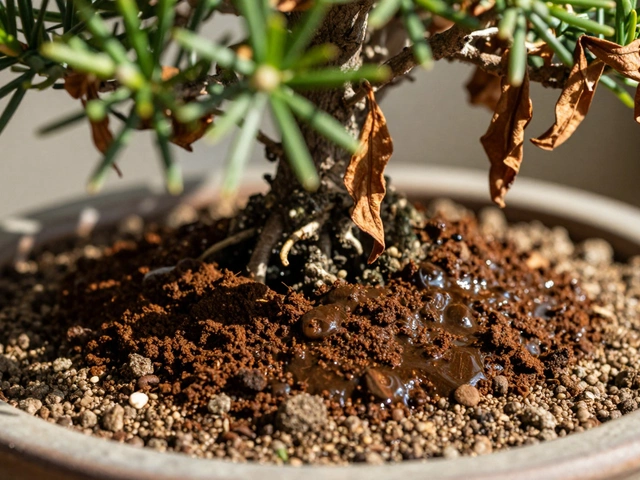
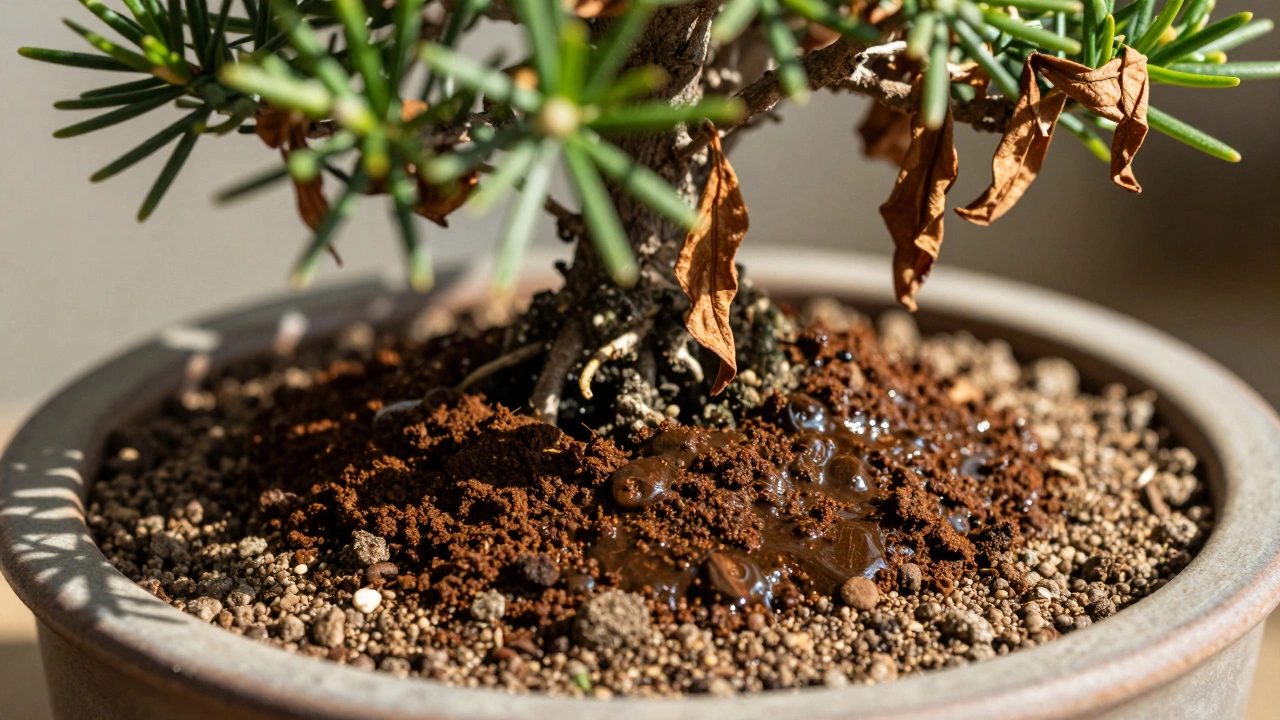
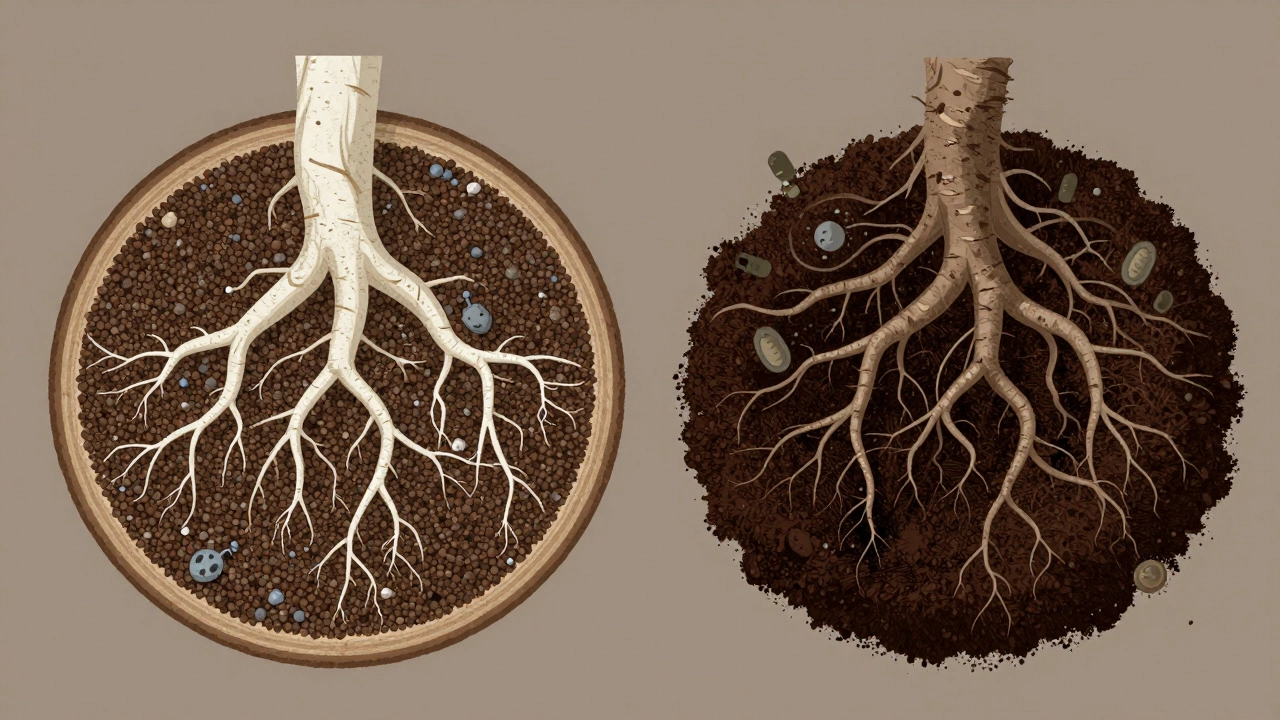
Bonsai trees hate wet feet. Their roots need air as much as they need water. That’s why bonsai soil is gritty and fast-draining. If you sprinkle coffee grounds on the surface, they clump together when wet. Over time, they form a sticky, compact layer that blocks water and air from reaching the roots.
I’ve seen this happen with a client’s juniper bonsai. They’d been adding coffee grounds every week, thinking they were doing a favor. The soil stayed soggy for days after watering. The roots started turning brown. The tree dropped half its leaves. It wasn’t the coffee itself-it was the way the grounds changed the soil structure. Once we scraped off the layer and repotted with fresh mix, the tree recovered in six weeks.
What About Liquid Coffee?
Some people dilute leftover coffee and use it as a weak fertilizer. Again, it’s tempting. But you’re introducing inconsistent nutrient levels and possibly caffeine. Caffeine is a natural pesticide. In small doses, it might deter pests. But in higher concentrations, it can stunt root growth. There’s no reliable way to know how much caffeine is left in your cold brew or espresso dregs.
Plus, coffee contains tannins and oils that can build up in the soil. These aren’t harmful in tiny amounts, but over months or years, they can interfere with nutrient uptake. Bonsai trees grow slowly. They don’t need quick fixes. They need steady, balanced care.
When Coffee Might Help (And How to Use It Safely)
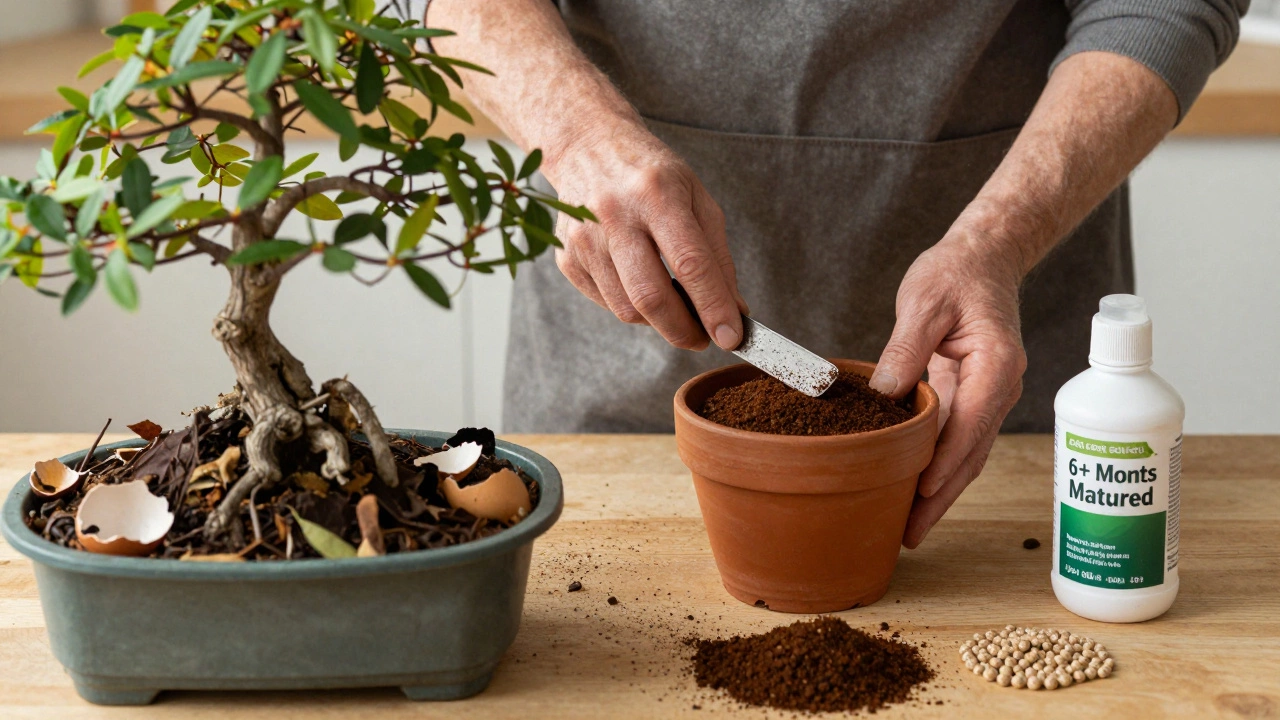
There’s one scenario where coffee grounds can be useful: as a small part of a compost pile. If you’re making your own compost for bonsai soil, a handful of coffee grounds mixed with leaves, eggshells, and grass clippings can add nitrogen. But even then, you should only use it after it’s fully broken down-six months or more.
Never add coffee grounds directly to a bonsai pot. If you want to use them, dry them out first, then mix no more than 10% into a batch of homemade soil. Let it sit for a few weeks before using it on your tree. This lets microbes break down the compounds and reduces the risk of compaction or nitrogen lock-up.
What Bonsai Trees Really Need
Bonsai trees don’t need coffee. They need:
- Well-draining soil-a mix of akadama, pumice, and lava rock in a 2:1:1 ratio
- Regular fertilizing-a balanced, slow-release bonsai fertilizer applied every 2-4 weeks during growing season
- Proper watering-water only when the topsoil feels dry, and soak thoroughly
- Good airflow-keep them away from stuffy corners or near heating vents
- Seasonal care-pruning in spring, repotting every 2-3 years, and protecting from frost in winter
These are the real keys to healthy bonsai. No coffee required.
Common Myths About Coffee and Bonsai
- Myth: Coffee grounds make bonsai grow faster. Truth: They can slow growth by disrupting root function.
- Myth: Coffee kills pests. Truth: Caffeine might repel ants or slugs, but it’s not reliable or safe for the tree.
- Myth: Coffee is a natural fertilizer. Truth: It’s an uncontrolled source of nutrients that can imbalance soil chemistry.
- Myth: All plants love coffee. Truth: Some houseplants tolerate it, but bonsai are too sensitive to risk it.
What to Do Instead
If you’re looking for organic ways to feed your bonsai, try these instead:
- Use a liquid seaweed fertilizer every few weeks-it’s gentle and full of micronutrients.
- Make compost tea from well-aged compost and apply it as a foliar spray.
- Add worm castings to the topsoil (a thin layer, no more than 1/4 inch).
- Use slow-release bonsai pellets-they’re designed for the small root systems of potted trees.
These methods give your bonsai what it needs without the risk. And they’ve been tested by decades of bonsai growers.
Final Verdict
No, coffee is not good for bonsai trees-not as a direct soil amendment, not as a liquid feed, and not as a pest control. The risks outweigh any tiny benefits. Your bonsai doesn’t need your coffee leftovers. It needs consistent care, proper soil, and patience.
If you’re tempted to use coffee grounds, ask yourself: Am I trying to save money, or am I trying to help my tree? If it’s the latter, stick to proven methods. Your bonsai will thank you with strong branches, healthy leaves, and years of beauty.
Can I use coffee grounds as mulch for my bonsai?
No. Coffee grounds compact when wet and block airflow and water from reaching the roots. Bonsai require fast-draining soil, and mulching with grounds creates a moisture trap that leads to root rot. Use gravel, moss, or small stones for surface mulch instead.
Is brewed coffee safe to water bonsai with?
Not recommended. Brewed coffee contains caffeine and tannins that can build up in the soil over time. Even diluted, it’s an unpredictable source of nutrients. Stick to plain water and a proper bonsai fertilizer for consistent results.
Do coffee grounds change the pH of bonsai soil?
Not significantly. Used coffee grounds are nearly neutral (pH 6.5-6.8). Most bonsai trees prefer slightly acidic to neutral soil (5.5-7.0), so pH isn’t the issue. The real danger is soil structure and nutrient imbalance, not acidity.
Can coffee grounds attract pests to my bonsai?
Wet coffee grounds can attract fungus gnats and mold, especially in indoor environments. These pests thrive in damp, organic debris. Keeping your bonsai soil clean and free of food scraps is essential for preventing infestations.
What’s the best organic fertilizer for bonsai?
Slow-release bonsai pellets or liquid seaweed fertilizer are the best choices. They provide balanced nutrients without shocking the roots. Worm castings can also be used sparingly as a top dressing. Avoid homemade solutions like coffee, tea, or banana peels-they’re too inconsistent and risky.
Next Steps for Your Bonsai
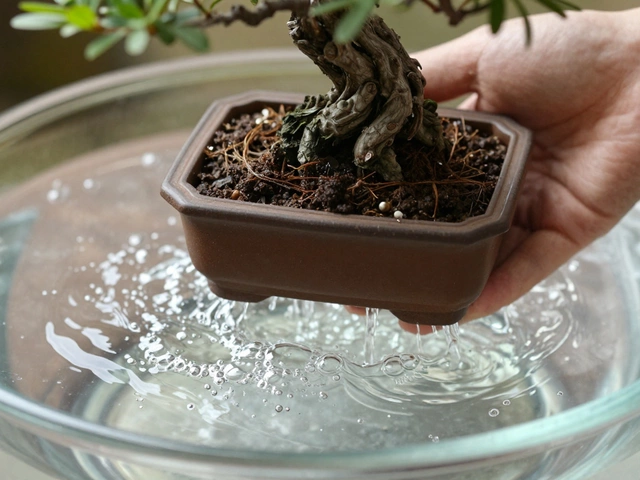
Stop using coffee on your bonsai. If you’ve been doing it for a while, check your soil. Is it staying wet longer than usual? Are the roots looking brown or mushy? If yes, it’s time to repot. Gently remove the tree, wash off the old soil, and replace it with fresh bonsai mix. Trim any damaged roots. Give it a few weeks in bright, indirect light and no fertilizer. Then resume a proper feeding schedule.
Good bonsai care isn’t about hacks. It’s about understanding your tree’s needs-and respecting its limits. Your bonsai isn’t a houseplant you can treat like a succulent or a fern. It’s a living sculpture. Treat it like one.