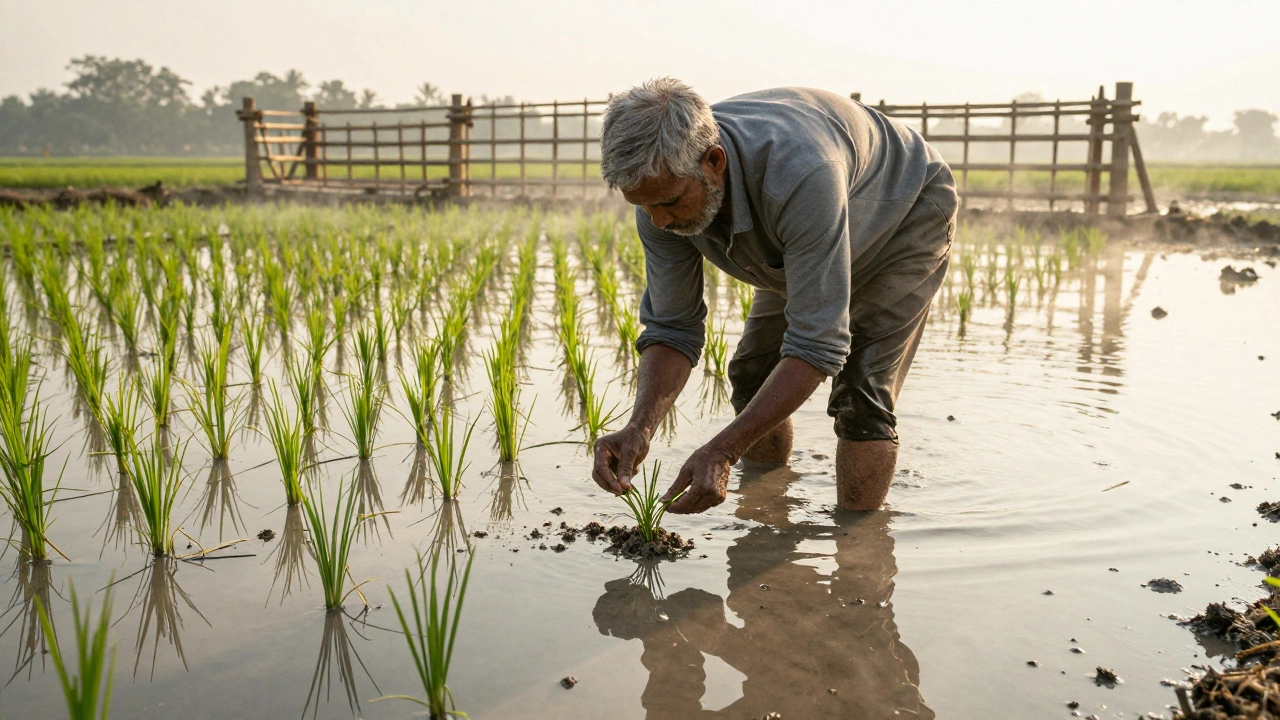
Rice feeds billions, but growing it requires perfect water control, warm temperatures, heavy soil, and relentless labor. Even small mistakes can wipe out an entire crop.
Rice Soil Requirements: What Kind of Soil Grows the Best Rice in India
When it comes to growing rice, not just any dirt will do. rice soil requirements, the specific physical and chemical conditions rice needs to grow well. Also known as paddy soil conditions, it’s not about richness alone—it’s about water retention, drainage, texture, and nutrients working together. In India, where rice feeds over half the population, farmers don’t guess—they test. They know that clayey loam, with just the right mix of silt and organic matter, holds water like a sponge but still lets roots breathe. Too sandy? Water drains too fast. Too heavy clay? Roots suffocate. The sweet spot is soil that stays wet for weeks but doesn’t turn into mud.
What makes Indian rice fields different from others isn’t just the monsoon—it’s how farmers adapt. soil for rice cultivation, the type of earth used to grow rice in India’s diverse regions. Also known as paddy field soil, it’s often enriched naturally over generations through crop rotation, flooding, and composted plant waste. In Punjab and Haryana, where rice follows wheat, farmers rely on soil that’s already packed with nutrients from the previous crop. In Odisha and West Bengal, where fields flood for months, the soil is naturally high in iron and organic material from decaying vegetation. You won’t find rice thriving in rocky hillside soil or alkaline desert sand—those are dead zones for paddy.
And it’s not just about what’s in the soil—it’s about what’s missing. Rice hates salt. Even a little salinity from poor drainage or over-irrigation can kill yields. It also needs steady pH levels, usually between 5.5 and 6.5. Too acidic? Nutrients lock up. Too basic? Iron and zinc vanish. That’s why smart farmers test their soil before planting—not once, but every season. They add lime if it’s too sour, or gypsum if it’s too salty. They mix in compost to boost microbial life, because healthy soil means healthy roots, and healthy roots mean more grains.
There’s a reason why India’s top rice-growing states—West Bengal, Uttar Pradesh, Punjab—don’t just have rain. They have the right earth. And if you’re trying to grow rice at home, whether on a small plot or a terrace with containers, you’re not just planting seeds—you’re building a system. You need soil that holds water without drowning roots, drains slowly enough to stay wet for 45 days, and feeds the plant without burning it. It’s not magic. It’s science. And it’s the same science used by millions of Indian farmers who feed a nation.
Below, you’ll find real guides from farmers and gardeners who’ve tested these conditions in their own fields—from how to fix dense soil for better drainage to how to make your own compost to feed rice crops naturally. No fluff. Just what works.