Rice Cultivation Success Calculator
Rice feeds more than half the world’s population, yet most people have no idea how hard it is to grow. You see bags of rice in the supermarket, perfectly white and uniform, and it’s easy to assume it just grows like any other grain. But rice isn’t like wheat or corn. It doesn’t just need sun and soil-it needs a precise balance of water, temperature, and timing that’s easy to mess up. One wrong move, and your crop can fail completely.
It Needs Way More Water Than You Think
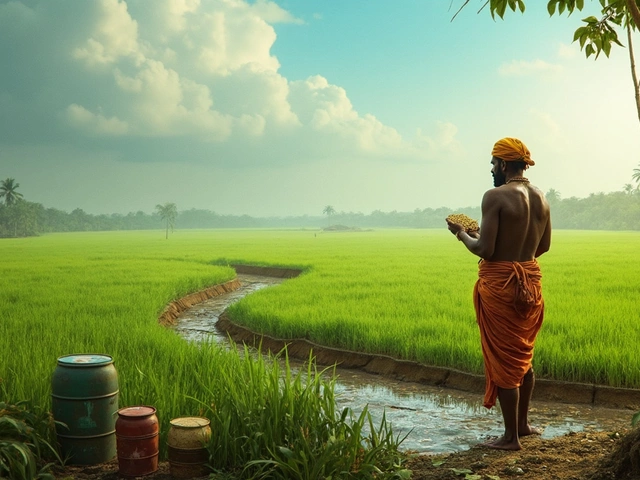
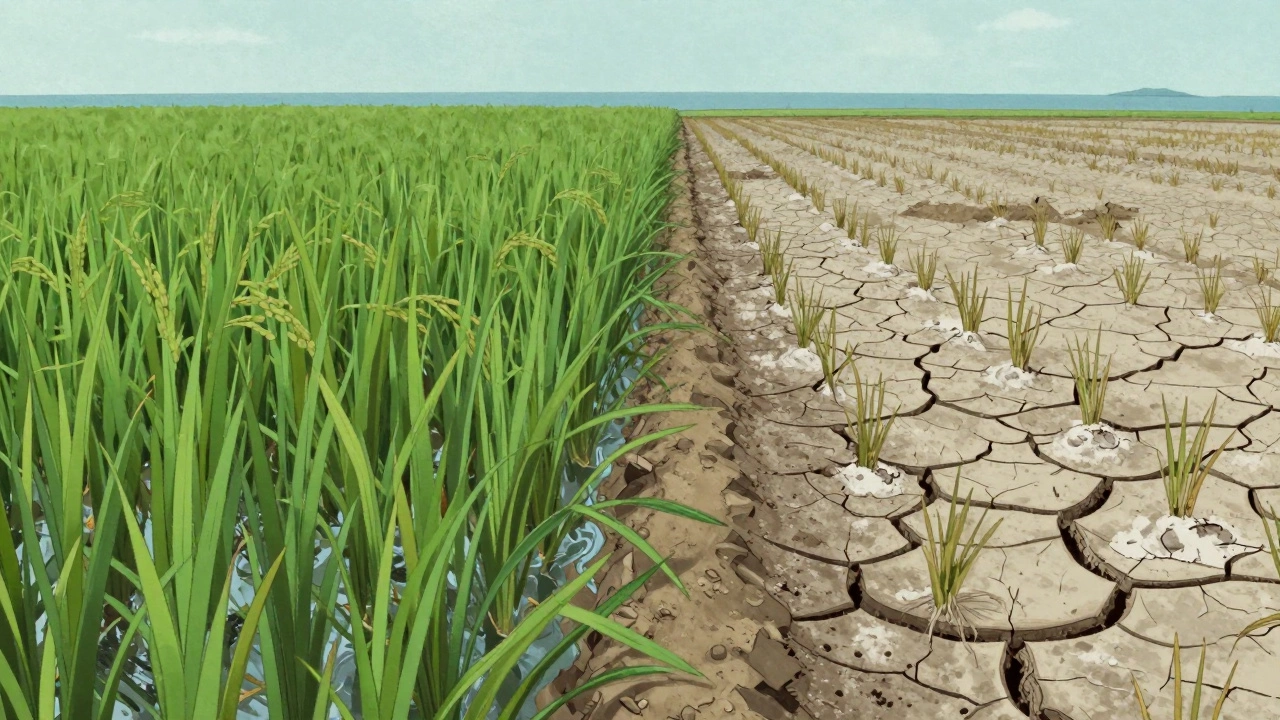
Rice isn’t just a thirsty crop-it’s a water hog. Most rice fields are flooded for most of the growing season. That’s not optional. It’s not just to keep the plants hydrated. The water keeps weeds down, controls pests, and regulates soil temperature. But flooding a field isn’t as simple as turning on a hose. You need to manage water depth down to the centimeter. Too shallow, and weeds take over. Too deep, and the plants drown or rot. In places like Southeast Asia, farmers use intricate networks of ditches and bamboo gates to control flow. In the U.S. or Europe, where water is expensive and regulated, this becomes a huge cost and logistical headache.
And it’s not just about having water-it’s about having clean water. Rice fields can’t handle salty or polluted water. Even a little salt buildup from poor drainage can kill plants. In coastal areas, rising sea levels are pushing saltwater into farmland, making rice impossible to grow without expensive soil flushing systems.
The Soil Has to Be Just Right
Rice doesn’t grow well in just any dirt. It needs heavy, clay-rich soil that holds water like a sponge. Sandy soil? Forget it. It drains too fast. Loamy soil? Still not good enough. The soil has to be compact enough to trap water but still allow roots to breathe. Farmers often spend months preparing the land-plowing, leveling, and even flooding it early to soften the clay before planting.
Even then, the soil needs to be rich in organic matter. Rice depletes nutrients fast. Without regular applications of manure, compost, or synthetic fertilizers, yields drop sharply. But too much fertilizer runs off into rivers and causes algae blooms. It’s a tightrope walk between feeding the crop and protecting the environment.
Temperature Has to Be Perfect-No Exceptions
Rice is a tropical plant. Most varieties need steady temperatures between 20°C and 35°C. That’s fine in Thailand or Vietnam, but in places like northern Italy or Oregon, summer nights can dip below 15°C. That’s enough to stall growth or cause sterility in the flowers. Even a single cold snap during flowering can wipe out 80% of the grain.
And it’s not just about cold. Too much heat above 35°C during pollination causes pollen to die. That’s why rice farmers in hotter regions plant at different times of year-sometimes very early or very late-to avoid the hottest weeks. It’s not just about planting when it’s warm enough. It’s about planting so the critical stages-flowering and grain filling-happen during the sweet spot of the season.
Planting Is Labor-Intensive
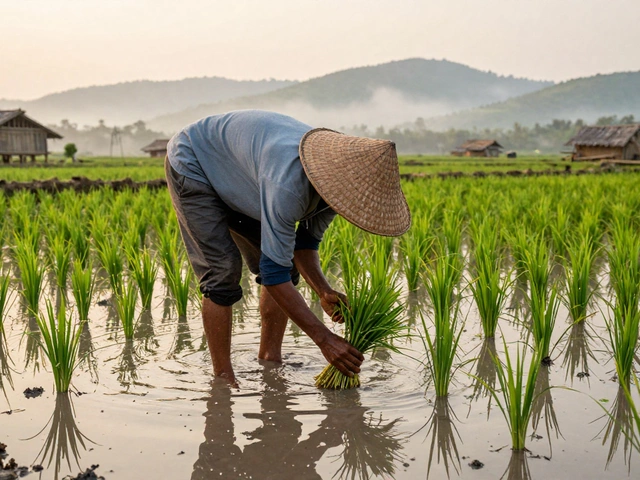
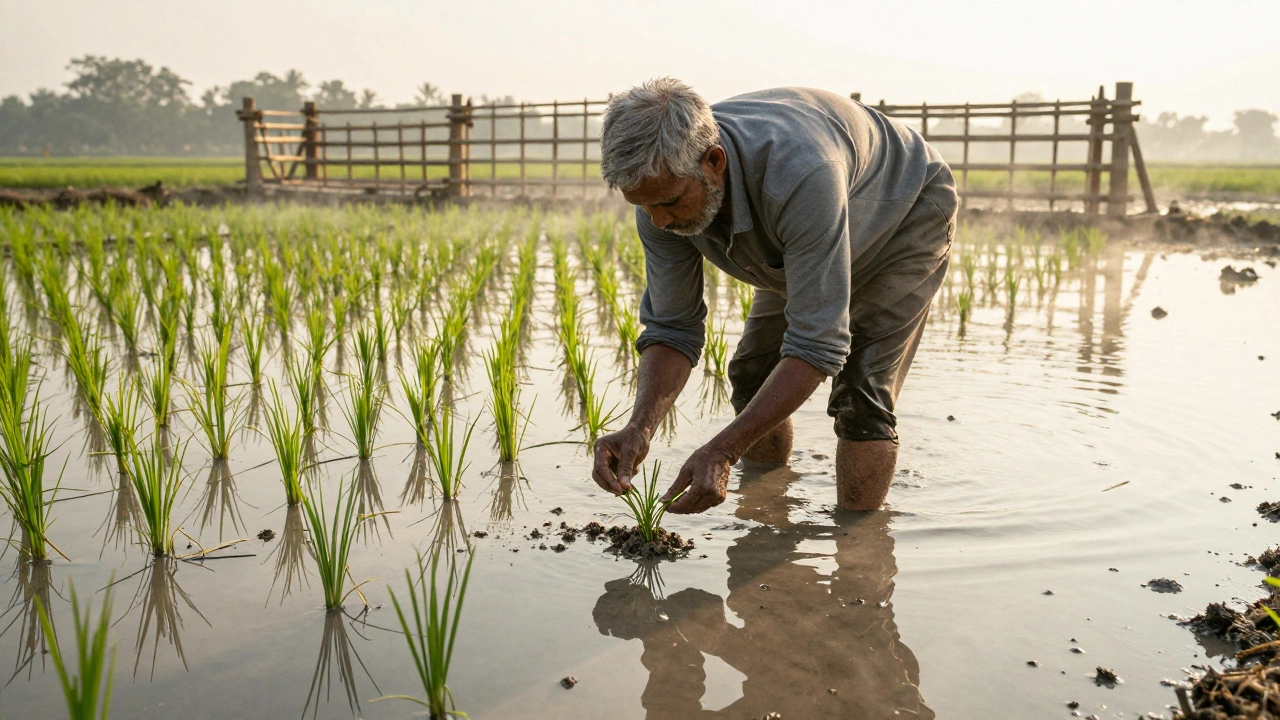
In most of the world, rice is still planted by hand. Farmers wade into flooded fields and stick seedlings into the mud, one by one. It’s backbreaking work. Even in mechanized systems, transplanting machines are expensive, hard to maintain, and don’t work well in uneven or muddy fields. Direct seeding-planting dry seeds into wet soil-is faster, but it leads to uneven stands and higher weed pressure.
And there’s no shortcut. Rice can’t be broadcast like wheat. If seeds aren’t spaced properly, plants compete for light and nutrients. Crowded plants produce fewer grains. Too far apart? You waste land and water. Getting the spacing right means either skilled labor or precision machinery that costs more than most small farms can afford.
Weeds and Pests Are Constant Battles
Flooding helps control weeds-but not all of them. Some weeds, like red rice, look just like rice plants and grow right alongside them. They’re hard to spot, and they steal nutrients, water, and sunlight. Even a few red rice plants in a field can reduce yields by 30% or more.
Then there are pests. The brown planthopper, rice stem borer, and rice leaf folder can destroy entire fields in days. Insecticides help, but overuse leads to resistant bugs and dead fish in nearby streams. Many farmers now use integrated pest management-introducing natural predators like spiders and frogs-but that takes knowledge, patience, and time.
And disease? Rice blast fungus spreads fast in humid conditions. Once it hits, it can turn a healthy field into a brown, dead mess overnight. There are resistant varieties, but they’re not perfect. The fungus evolves. What works this year might not work next.
Harvesting Is a Race Against Time
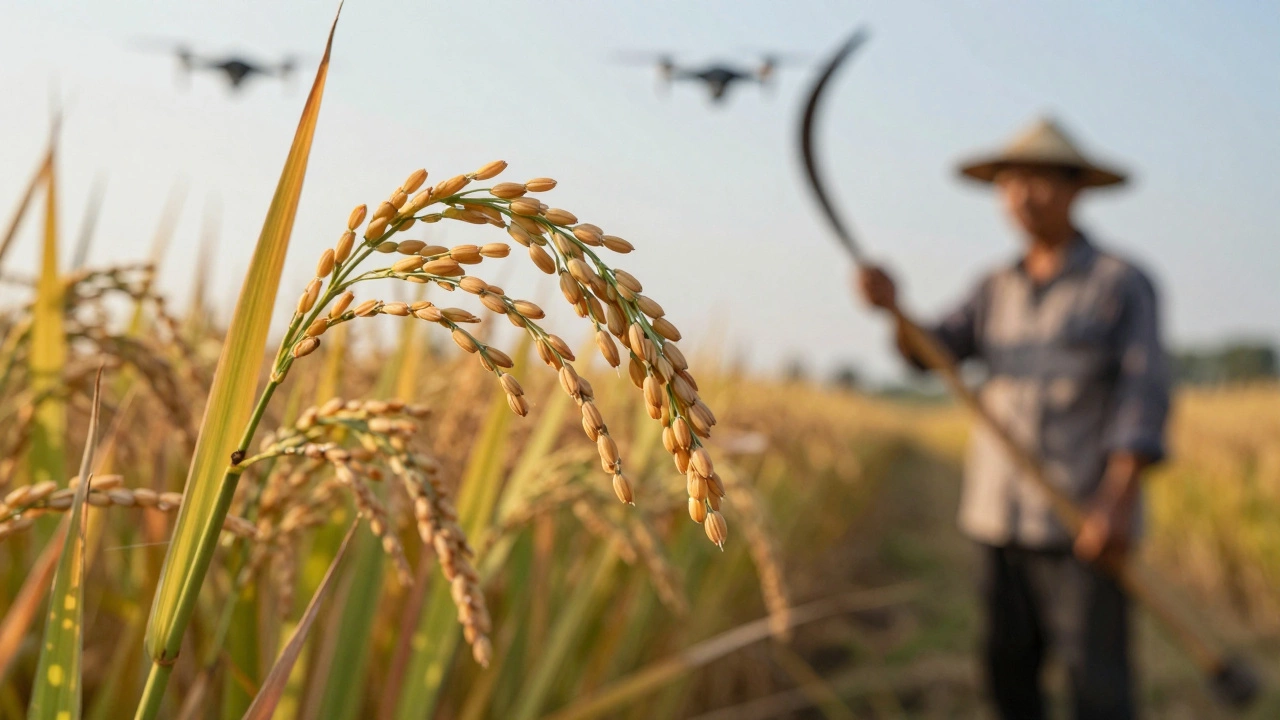
When rice is ready, you don’t have weeks to harvest. The grains shatter easily. If you wait too long, wind or rain knocks them to the ground. If you harvest too early, the grains are underdeveloped and won’t cook right. The window is narrow-sometimes just five to seven days.
Combine harvesters work well in flat, large fields, but in small, uneven plots common in Asia and Africa, they can’t fit. Many farmers still cut by hand with sickles, then dry the stalks on mats in the sun. That’s risky. Rain during drying turns the grain moldy. Even a little moisture left in the grain after storage leads to spoilage or toxic aflatoxins.
It’s Not Just About the Plant-It’s About the Whole System
Rice farming isn’t a single task. It’s a chain of 15 to 20 interdependent steps: land prep, water control, seed selection, transplanting, fertilizing, pest control, drainage, harvesting, drying, milling. One weak link breaks the whole chain. A farmer can do everything right-except drain the field at the right time-and still lose the crop.
And climate change is making it worse. Rainfall is more unpredictable. Dry spells come when water is needed most. Floods wash away seedlings. Temperatures rise faster than new rice varieties can adapt. In Bangladesh, farmers are already seeing harvests drop by 10-15% in the last decade because of shifting weather patterns.
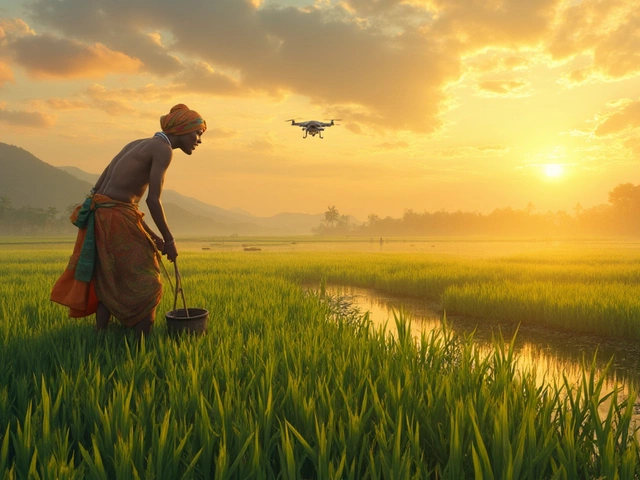
There are new technologies-drought-tolerant strains, laser-leveling for fields, drone monitoring-but they’re out of reach for most smallholders. The world’s rice comes mostly from small farms. Big agribusinesses grow only a fraction. That means solutions have to be cheap, simple, and local.
Rice isn’t hard to grow because it’s fragile. It’s hard because it demands perfection across every stage. One mistake, and you lose everything. That’s why, even today, with all our technology, rice remains one of the most challenging crops on Earth.
Can rice be grown without flooding the field?
Yes, but it’s not easy. Dry-seeded rice systems exist and use less water, but they require stronger herbicides and precise timing. They work best in areas with reliable rainfall and low weed pressure. In places like California and parts of Brazil, farmers use this method successfully. But in Asia, where weeds are aggressive and labor is cheaper than machines, flooded fields still dominate.
Why can’t I grow rice in my backyard garden?
You can try, but it’s unlikely to yield much. Rice needs a lot of space, consistent water, and warm temperatures. Even in a large container, you’d need to flood the soil and keep it flooded for months. Most home gardens can’t support that without creating mosquito problems or damaging the soil structure. Plus, rice plants grow over a meter tall-they’ll shade out everything else. It’s possible for hobbyists, but don’t expect a harvest.
Is organic rice harder to grow than conventional rice?
Yes, significantly. Without synthetic fertilizers and herbicides, organic rice farmers rely on compost, green manure, and manual weeding. That’s labor-heavy and less predictable. Pest control is harder too-no chemical sprays mean relying on natural predators, which takes time to establish. Yields are often 20-30% lower, which is why organic rice costs more.
What’s the biggest threat to rice farming today?
Climate change. Rising temperatures, erratic rainfall, and saltwater intrusion are hitting rice-growing regions hard. In Vietnam’s Mekong Delta, saltwater is creeping inland, making soil too salty for rice. In India, heatwaves during flowering are causing massive crop losses. The rice varieties we’ve used for decades weren’t bred for this new reality, and developing new ones takes years.
Are there any new rice varieties that are easier to grow?
Yes. Scientists have developed drought-tolerant, flood-resistant, and saline-tolerant strains. The most famous is Sub1 rice, which can survive two weeks underwater-something traditional rice can’t do. Others like Sahbhagi Dhan mature faster and need less water. But adoption is slow. Farmers are hesitant to switch unless the new variety clearly outperforms what they already grow-and even then, seeds are often hard to get or expensive.
If you’ve ever wondered why rice costs what it does, now you know. It’s not just the price of land or labor. It’s the invisible effort behind every grain-the perfect timing, the precise water, the endless battle against nature. That’s why rice remains one of the most demanding crops on the planet.