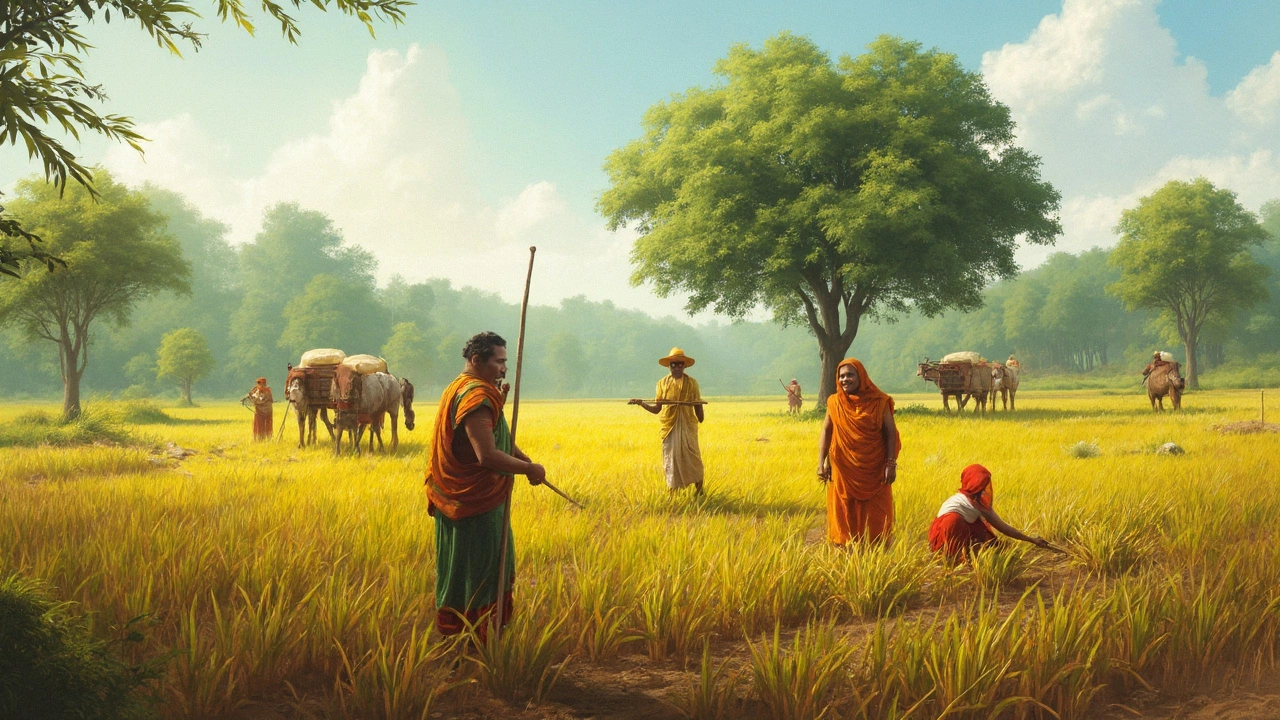
Rice isn't just for wet paddies—it's possible to grow it on dry land too. This article explains how rice farmers have adapted their methods to work without flooded fields, including crop choices and soil care. You'll find out which types of rice can survive with less water, and what challenges come up when fields stay dry. There are smart tips for feeding the soil and keeping pests away, plus examples from real farmers making it work. Anyone curious about farming rice off the paddy will get straight answers here.
Upland Rice: How to Grow This Drought-Resistant Crop in India
When you think of rice, you probably picture flooded fields—but upland rice, a type of rice grown in dry, non-flooded soils without standing water. Also known as rainfed rice, it’s the quiet hero of India’s drought-prone hills and uplands, feeding millions without needing irrigation systems. Unlike paddy rice, which needs constant water, upland rice survives on rainfall alone. It’s the crop farmers turn to when wells run dry, monsoons are late, or land is too steep for flooding. This isn’t some niche experiment—it’s real, working agriculture across Odisha, Jharkhand, Chhattisgarh, and parts of the Northeast.
Upland rice isn’t just about survival—it’s about smart adaptation. It’s closely tied to dryland farming, a farming system designed for areas with low and unpredictable rainfall. Farmers who grow it often rely on traditional knowledge: timing seeds with the first rains, using mulch to hold moisture, and rotating with legumes to keep soil healthy. It’s not high-yielding like hybrid paddy, but it’s reliable. And in a climate where rains are getting erratic, reliability matters more than peak output. This crop also connects directly to rainfed rice, the broader category of rice grown without artificial irrigation, covering nearly 40% of India’s total rice area. Many of the posts in this collection touch on soil health, water efficiency, and crop resilience—all core to growing upland rice successfully.
You won’t find flood irrigation here. Instead, you’ll see farmers using compost to loosen dense soil, planting in contours to stop runoff, and choosing varieties that mature fast before the dry season hits. The challenge isn’t just water—it’s making poor soils work. That’s why posts about garden soil improvement, drip irrigation problems, and loosen dense soil are so relevant. Even if you’re not farming acres, the same principles apply: healthy soil holds water better, feeds plants longer, and cuts down on waste. Upland rice teaches you to work with nature, not against it. And that’s exactly what the posts here are about—real solutions for real conditions in India’s varied landscapes.
Below, you’ll find practical guides on managing crops in dry conditions, improving soil without chemicals, and choosing plants that thrive when water is scarce. Whether you’re a smallholder farmer, a terrace gardener, or just curious about sustainable food systems, these posts give you the tools to grow smarter—no matter how much rain falls.