Blueberry Soil pH Calculator
Blueberry Soil Calculator
Blueberries need acidic soil (pH 4.5-5.5). Calculate how much elemental sulfur and coffee grounds to add for a 5-gallon bucket.
Elemental Sulfur: grams
For 5-gallon bucket (19L soil)Coffee grounds: tablespoons
For pH maintenance⚠️ Warning: Do not apply more than 20g sulfur monthly. Over-application can damage plants.
How it works: For a 5-gallon bucket (19L), 1 gram of elemental sulfur lowers pH by 0.1 for every 10L of soil. Coffee grounds provide slow acidification.
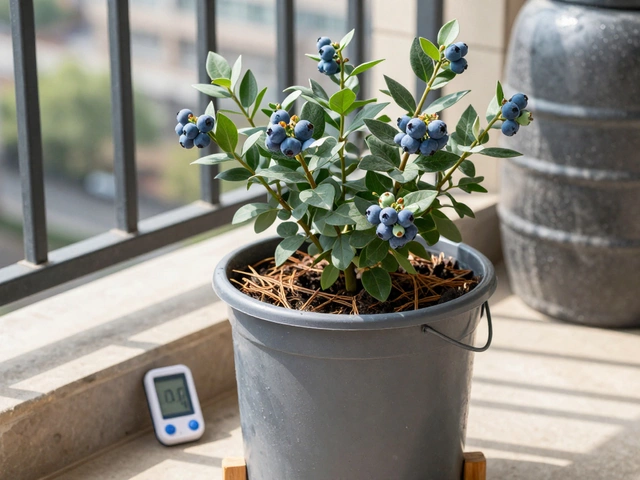
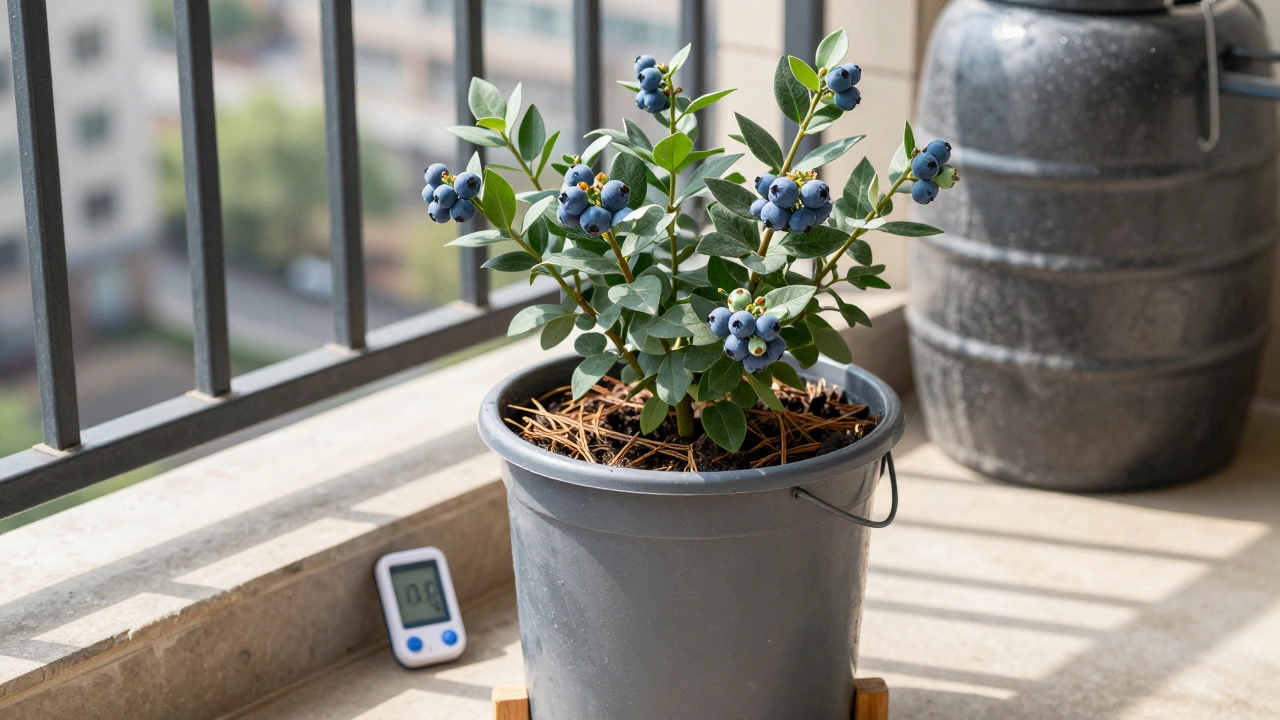
Most people think blueberries need acres of land, acidic soil, and decades to bear fruit. But if you’ve got a balcony, a 5 gallon bucket, and 6 hours of sunlight, you can grow your own blueberries-even in the middle of Brighton. No yard? No problem. Blueberries thrive in containers, and a 5 gallon bucket is more than enough space for a healthy, fruiting plant.
Why a 5 Gallon Bucket Works Perfectly
A 5 gallon bucket holds about 19 liters of soil. That’s the sweet spot for dwarf or semi-dwarf blueberry varieties. Too small, and the roots get cramped. Too big, and the soil stays wet too long, leading to root rot. A 5 gallon bucket gives roots room to spread without drowning in moisture.
Most commercial blueberry plants sold in garden centers are already sized for containers. Varieties like Bluecrop, Patriot, and Sunshine Blue are bred for pots. They stay under 4 feet tall, produce fruit in year two, and handle wind and temperature swings better than larger types.
Choosing the Right Bucket
Not just any bucket will do. You need one that’s food-grade plastic or untreated wood. Avoid buckets that held paint, chemicals, or pesticides. If you’re reusing an old bucket, wash it with soapy water and let it dry completely.
Drainage is non-negotiable. Drill at least four ½-inch holes in the bottom. Add a layer of gravel or broken pottery shards on the bottom to stop soil from clogging them. Then, place the bucket on pot feet or bricks to let air circulate underneath. Standing water in a bucket? That’s a death sentence for blueberries.
Soil Is Everything-And It’s Not Regular Garden Dirt
Blueberries need acidic soil, pH 4.5 to 5.5. Regular potting mix? Too alkaline. Topsoil? Worse. You need a mix built for acid-loving plants.
Here’s what works: combine equal parts peat moss, pine bark fines, and perlite. That’s your base. Add a handful of elemental sulfur (follow package instructions) to lower pH if needed. You can also buy pre-mixed acid plant soil labeled for azaleas or rhododendrons-it’s close enough.
Test your soil pH once a year with a cheap digital meter. If it creeps above 6.0, sprinkle a tablespoon of coffee grounds or pine needle mulch on top. Don’t use lime. Don’t use compost unless it’s made from pine needles or oak leaves. Most composts are too neutral.
Planting Your Blueberry in the Bucket
Buy a one-year-old bare-root or container-grown plant in late winter or early spring. Plant it in early March if you’re in the UK. Don’t plant in autumn-cold, wet roots won’t survive.
Remove the plant from its nursery pot. Gently loosen the root ball. If roots are circling, cut them with clean scissors. Place the plant in the bucket so the top of the root ball sits 1 inch below the rim. Fill in with your acidic mix. Water deeply until it drains out the bottom.
Don’t bury the stem. Blueberries hate being planted too deep. The crown-the spot where roots meet stem-must stay above soil level.

Watering: More Than Just a Splash
Blueberries hate dry soil. They also hate soggy soil. Keep the soil consistently moist, like a wrung-out sponge. In spring and summer, water every 2-3 days. On hot, windy days? Daily.
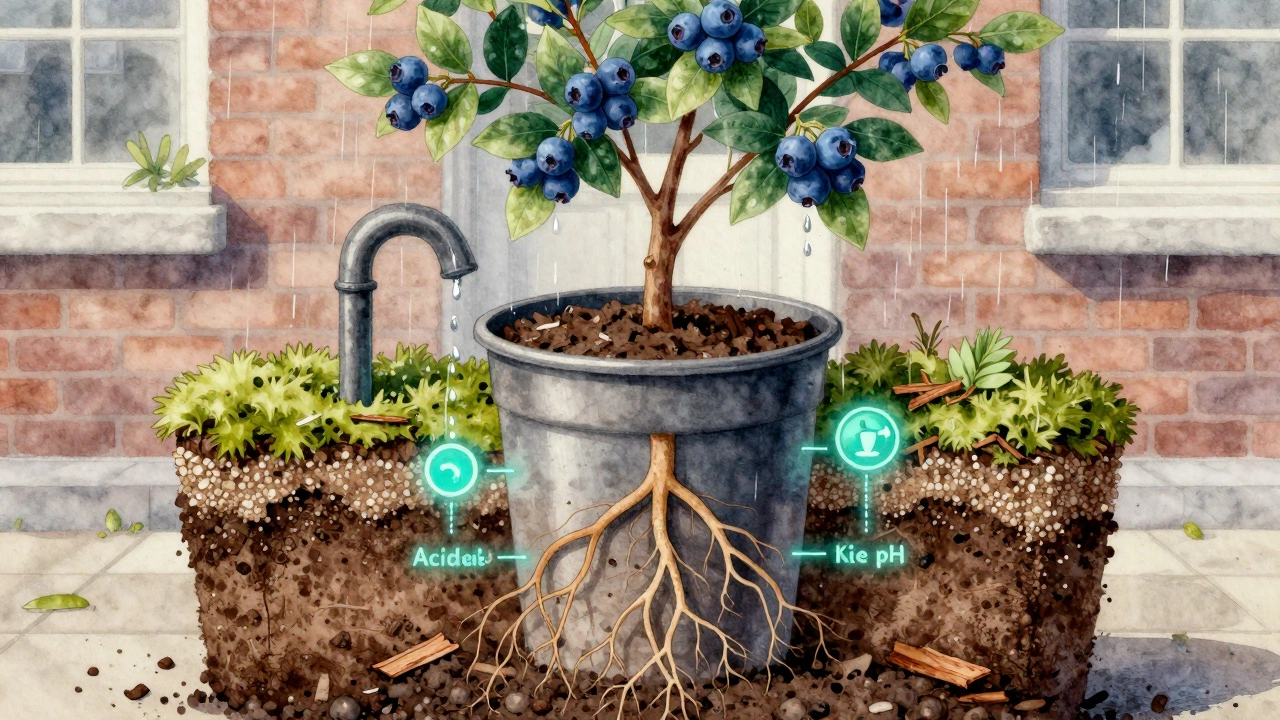
Use rainwater if you can. Tap water in the UK is often hard-high in calcium and magnesium. That raises soil pH over time. If you only have tap water, let it sit in an open container for 24 hours before using. It helps some minerals settle out.
Add a layer of pine needles or shredded bark mulch on top. It keeps roots cool, reduces evaporation, and slowly acidifies the soil as it breaks down.
Fertilizing: Less Is More
Blueberries are light feeders. Over-fertilizing burns roots and kills fruit production. Use a slow-release, acid-specific fertilizer like one labeled for azaleas or rhododendrons. Apply in early spring and again in early summer.
Avoid general-purpose fertilizers. They’re full of nitrates and lime. Even organic options like fish emulsion or compost tea can be too alkaline unless specially formulated.
One tablespoon of fertilizer per bucket, twice a year, is plenty. Watch the leaves. Yellowing between veins? That’s iron deficiency-common in high-pH soil. Spray with chelated iron solution if needed.
Pruning and Winter Care
Don’t prune in the first year. Let the plant grow. In year two, remove any weak, crossing, or dead branches. In year three and beyond, cut out one-third of the oldest stems each winter. This keeps the plant young and productive.
Blueberries are hardy to UK winters, but buckets freeze faster than ground soil. Move the bucket to a sheltered spot-against a south-facing wall, under an overhang, or inside a cold frame. Wrap the bucket in bubble wrap if temperatures drop below -5°C. Don’t bring it indoors. Blueberries need cold dormancy to set fruit.
Harvesting and Yield
Expect your first real harvest in year two. By year three, you’ll get 2-4 pounds of berries per plant. That’s enough for jam, muffins, and fresh snacks.
Blueberries don’t ripen all at once. Pick them when they turn deep blue and come off the stem with a gentle tug. If they’re still red or pink, leave them. They won’t sweeten after picking.
Use a shallow basket to collect them. Don’t pile them deep-bruised berries spoil fast. Rinse only right before eating. Moisture invites mold.
Common Mistakes to Avoid
- Using regular potting soil-blueberries will die within a year.
- Overwatering-soggy roots rot. Let the top inch dry between waterings.
- Planting only one variety-blueberries need cross-pollination. Plant two different types in separate buckets for better fruit.
- Skipping mulch-without it, soil dries out fast and pH rises.
- Putting the bucket in full shade-blueberries need at least 6 hours of sun. Morning sun with afternoon shade is ideal in hot summers.
What to Do Next
Once you’ve got one bucket working, try two. Mix a Sunshine Blue with a Patriot. They bloom at the same time, pollinate each other, and fruit in late July. You’ll double your harvest and extend the season.
Blueberries in buckets are perfect for small spaces. They’re ornamental, too-silvery-green leaves in spring, bright berries in summer, red foliage in fall. A 5 gallon bucket isn’t just a container. It’s a mini-orchard on your balcony.
Can I grow blueberries indoors in a 5 gallon bucket?
Not really. Blueberries need cold winter dormancy to produce fruit. Indoor temperatures are too warm and stable. Even with grow lights, they won’t get the chilling hours they need (800-1,000 hours below 45°F). Keep them outside, even in winter. A sheltered balcony is fine.
How long do blueberry plants live in buckets?
With proper care, blueberry plants in 5 gallon buckets can live 10-15 years. But their productivity drops after year 6-7 as roots become too crowded. Repot into a 10-15 gallon container every 4-5 years to refresh soil and give roots space. Or, start a new plant every 5 years to keep harvests strong.
Do I need two blueberry plants for fruit?
Yes, for good yields. Most blueberry varieties are not self-pollinating. Even if one plant sets a few berries alone, cross-pollination with a different variety doubles or triples your harvest. Plant two different types in separate buckets near each other. Sunshine Blue and Patriot work well together in the UK climate.
Can I use a 5 gallon bucket for other berries?
Yes-but not all. Raspberries and blackberries need much larger containers (at least 15-20 gallons) because of their aggressive roots. Strawberries do great in 5 gallon buckets. Cranberries need constantly wet soil and aren’t suited to pots. Stick to blueberries and strawberries for small containers.
Why are my blueberry leaves turning yellow?
Yellow leaves with green veins mean iron deficiency, usually caused by soil that’s too alkaline. Test your soil pH. If it’s above 5.5, add elemental sulfur or chelated iron. Avoid using tap water long-term-rainwater is better. Mulch with pine needles to naturally acidify the soil over time.