Broccoli Cost & Alternative Analyzer
1. Select Your Scenario
Choose how you acquire your greens.
Imported Broccoli (Summer)
Off-season, high logistics costLocal Harvest (Winter)
Nov-Feb, lower transport costHome Garden
Minimal input cost, high effortLocal Alternatives
Cauliflower/Mustard GreensEstimated Monthly Cost
Price: ₹150 - ₹300 / kg
Cost Breakdown Comparison
💡 Smart Tip
Switching to local alternatives can save you over 70% while providing similar nutritional benefits.
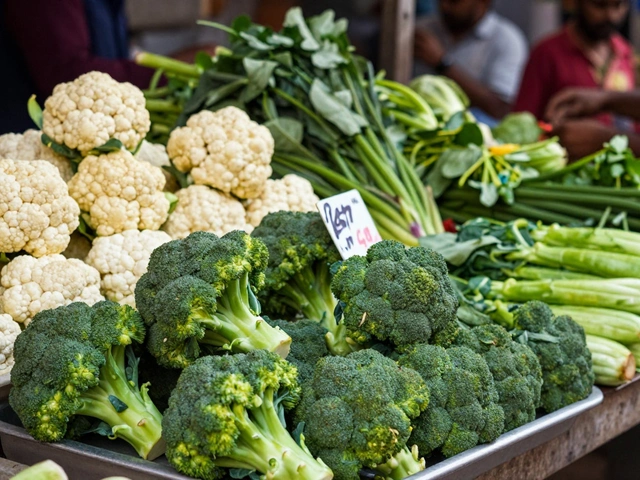
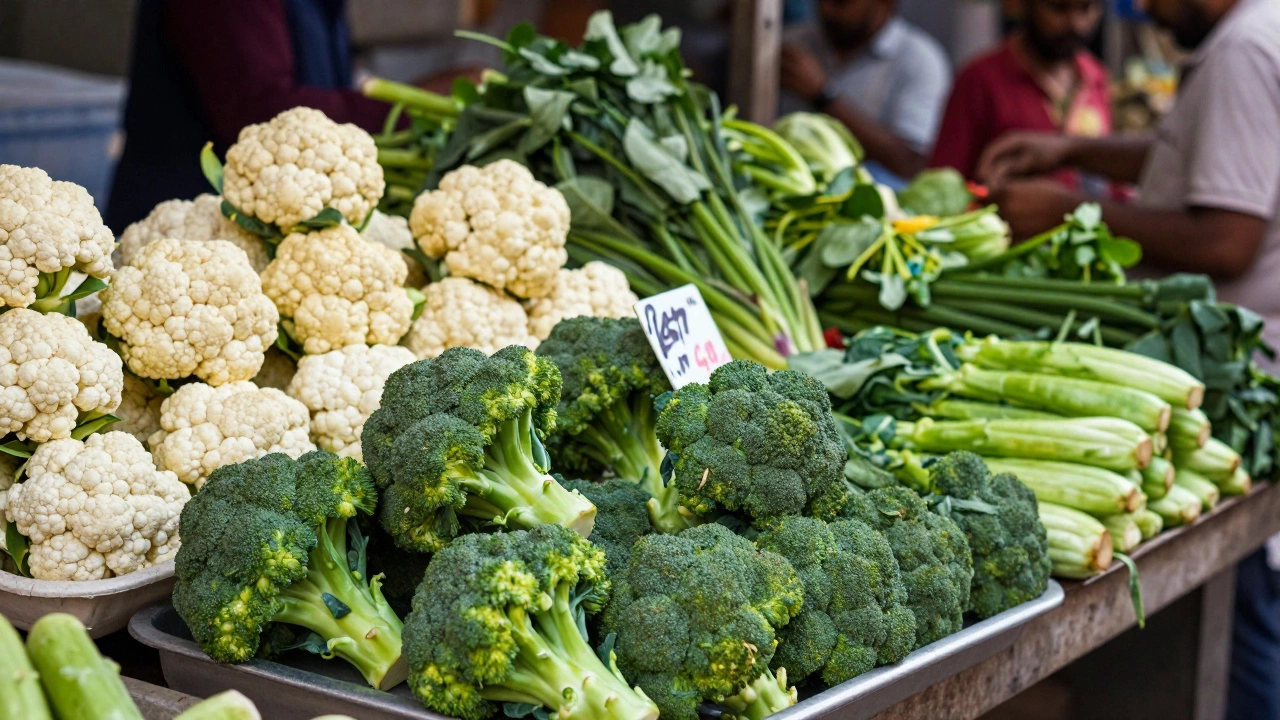
You walk into a local market in Mumbai or Delhi, looking for fresh greens. You spot the cauliflower-cheap and abundant. Then you see the broccoli. The price tag makes you double-take. Why does this green cousin of cauliflower cost three or four times more? For many Indian home cooks and health enthusiasts, broccoli remains a luxury item rather than a daily staple. But the high price isn't just because it's 'exotic.' It comes down to biology, logistics, and a supply chain that struggles to keep up with demand.
If you've ever wondered why your grocery bill spikes when you add broccoli to your cart, you're not alone. The answer lies in how difficult it is to grow this specific crop in India's climate, combined with the heavy reliance on imports. Let's break down exactly what drives these prices up and what you can do about it.
The Climate Mismatch: Why Broccoli Hates Heat
To understand the price, you first have to understand the plant. Broccoli is a cool-season brassica vegetable that requires specific temperature ranges to develop its characteristic head. Unlike tomatoes or okra, which thrive in India's tropical heat, broccoli needs mild weather. Ideally, it grows best when daytime temperatures stay between 15°C and 20°C (59°F-68°F) and nights drop below 15°C.
India is largely a tropical and subtropical country. Most of the year, temperatures soar well above the comfort zone for broccoli. When it gets too hot, the plant bolts-it stops forming heads and starts flowering instead. This means farmers can only grow broccoli during the winter months, primarily from November to February. In states like Himachal Pradesh, Uttarakhand, and parts of Punjab and Maharashtra, you get a short window of opportunity. Outside of this narrow season, domestic production plummets.
This seasonal limitation creates a massive supply gap. For nine months of the year, there is very little local broccoli available. To fill the shelves of supermarkets across Bangalore, Chennai, and Hyderabad, retailers must look elsewhere. That leads us directly to the next problem: imports.
The Import Dependency and Logistics Costs
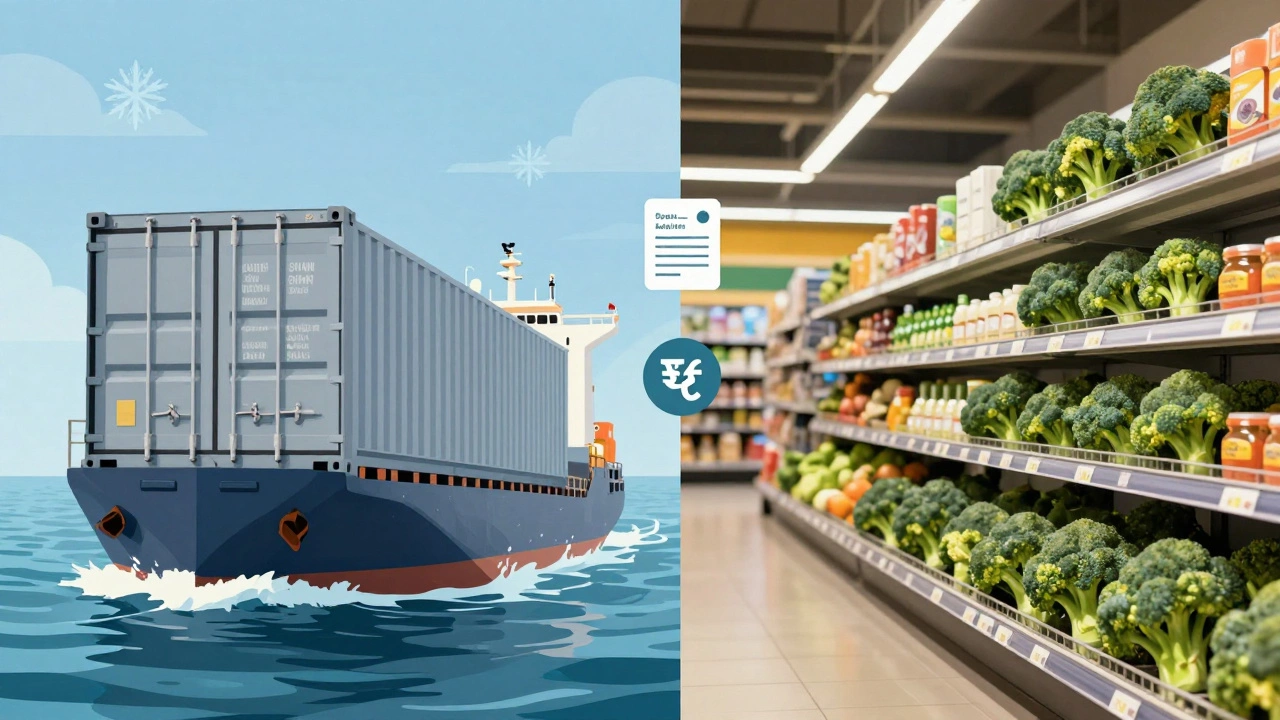
When local harvests dry up, India turns to global suppliers. The majority of imported broccoli comes from countries with cooler climates or advanced greenhouse technologies, such as Spain, Italy, China, and Kenya. However, shipping perishable vegetables across oceans is expensive and risky.
- Cold Chain Requirements: Broccoli spoils quickly. It must be kept refrigerated from the farm to the consumer. Maintaining this cold chain involves specialized trucks, refrigerated containers, and warehousing. Each step adds significant cost.
- Customs and Taxes: Imported produce faces customs duties, GST, and various handling fees. These taxes are passed directly to the consumer.
- Shrinkage and Waste: During transit, some broccoli wilts or gets damaged. Importers factor this loss into their pricing, meaning you pay for the waste too.
Compare this to locally grown spinach or methi (fenugreek). These crops are harvested nearby, transported in simple vans, and sold within hours. The logistical overhead is minimal. With broccoli, you're paying for air-conditioned shipping lanes and international trade regulations.
Limited Cultivation Area and Farming Challenges
Even during the winter season, broccoli doesn't dominate Indian farms. Farmers prefer crops that are easier to manage and have guaranteed buyers. Cauliflower, cabbage, and mustard greens are traditional favorites. They are hardier, require less precise care, and fit better into existing agricultural practices.
Growing broccoli successfully requires specific knowledge. It is susceptible to pests like aphids and diamondback moths. It also demands consistent moisture and nutrient-rich soil. Many smallholder farmers, who make up the bulk of India's agricultural workforce, lack access to the hybrid seeds and technical training needed for high-yield broccoli cultivation. As a result, the acreage dedicated to broccoli remains tiny compared to other vegetables.
This low supply elasticity means that even a slight increase in demand-say, from a health trend promoting cruciferous vegetables-can cause prices to skyrocket. There aren't enough farmers ready to pivot to broccoli overnight to meet that surge.
Consumer Demand vs. Cultural Preference
Historically, broccoli was not part of the traditional Indian diet. Cauliflower (gobi) served the same culinary role. However, over the last decade, urbanization and exposure to global cuisines have shifted preferences. Health-conscious millennials and expatriates drive much of the current demand.
This demand is concentrated in metro cities. Supermarkets in South Bombay or Gurgaon stock broccoli daily, while rural markets might never see it. This fragmented demand pattern makes it inefficient for large-scale distribution. Suppliers cannot achieve the economies of scale seen with onions or potatoes. High volume lowers per-unit costs; low volume keeps them high.
Furthermore, the perception of broccoli as a 'premium' or 'diet' food allows retailers to maintain higher margins. Consumers willing to pay extra for health benefits accept the price tag, reinforcing the cycle.
| Factor | Broccoli | Cauliflower |
|---|---|---|
| Climate Preference | Cool (15-20°C) | Mild to Cool (15-25°C) |
| Growing Season | Winter Only (Nov-Feb) | Year-round in many regions |
| Local Availability | Limited, mostly Himalayan foothills | Widespread across North & West India |
| Import Reliance | High (70%+ off-season) | Low |
| Avg. Price (per kg) | d>₹150 - ₹300+₹40 - ₹80 | |
| Pest Susceptibility | High (requires careful management) | Moderate |
Can You Grow Broccoli at Home?
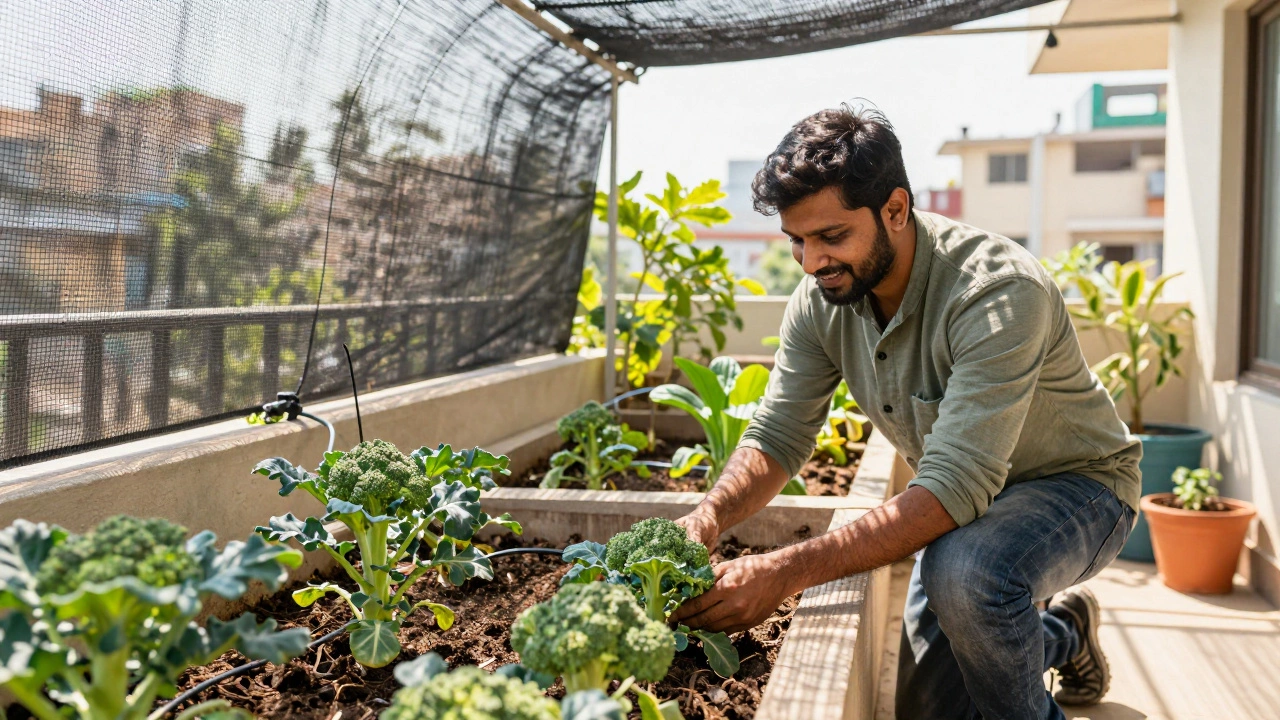
If the store price frustrates you, consider growing it yourself. While challenging, it is possible to cultivate broccoli in India, especially if you live in cooler regions or use raised beds and shade nets in warmer areas.
Here is a quick guide to getting started:
- Choose the Right Time: Start seeds in late October or early November. Avoid summer planting unless you have a controlled environment.
- Select Varieties: Look for heat-tolerant hybrids if you are in a slightly warmer zone. Varieties like 'Green Magic' or 'Calabrese' are popular choices.
- Soil Preparation: Use well-drained loamy soil rich in organic matter. Add compost or well-rotted manure. The pH should be slightly acidic to neutral (6.0-7.0).
- Watering: Keep the soil consistently moist but not waterlogged. Drip irrigation works best to prevent fungal diseases.
- Pest Control: Monitor for aphids and caterpillars. Neem oil spray is an effective organic deterrent.
Growing your own broccoli cuts out the middlemen, import taxes, and logistics costs. Plus, homegrown broccoli tastes significantly sweeter and fresher than store-bought varieties that have traveled thousands of miles.
Better Alternatives: Cheaper, Local, and Nutritious
If growing broccoli isn't feasible, don't despair. India has plenty of indigenous cruciferous vegetables that offer similar health benefits without the premium price tag.
Mustard Greens (Sarson) are leafy greens widely cultivated in North India, rich in vitamins A, C, and K. They are cheap, easy to find, and pack a nutritional punch. Another option is Colocasia Leaves (Arbi Patta), which are nutrient-dense leaves used in South Indian cuisine, offering fiber and minerals. While not cruciferous, they provide excellent antioxidants.
For a direct broccoli substitute, try Kale. Although also imported, kale is becoming more common in hydroponic farms near major cities. However, for true affordability, stick to cauliflower and cabbage. Cooking them with spices enhances their flavor profile, making them satisfying staples for any meal.
The Future of Broccoli Prices in India
Will broccoli ever become as cheap as tomatoes? Probably not anytime soon. The biological constraints of the plant remain unchanged. However, advancements in controlled-environment agriculture (CEA) and hydroponics may help. Urban farms in cities like Pune and Bengaluru are experimenting with vertical farming techniques to grow leafy greens year-round. If these methods scale up, we might see a reduction in reliance on imports and a subsequent drop in prices.
Until then, understanding the economics behind the price tag helps you make informed choices. Whether you choose to grow it yourself, switch to local alternatives, or treat it as an occasional luxury, you are now equipped with the knowledge to navigate the market wisely.
Is broccoli grown in India?
Yes, but only in limited quantities and specific regions. Major cultivation occurs in Himachal Pradesh, Uttarakhand, Punjab, and parts of Maharashtra during the winter months (November to February). Due to its sensitivity to heat, it cannot be grown year-round in most of India.
Why is imported broccoli so costly?
Imported broccoli is expensive due to cold chain logistics, customs duties, GST, and transportation costs. Since it is highly perishable, it requires refrigerated shipping from countries like Spain or China, adding significant overhead that is passed on to the consumer.
What is the best time to buy broccoli in India?
The best time to buy broccoli is during the peak winter harvest season, typically December and January. During these months, local supply increases, reducing reliance on expensive imports and lowering prices.
Can I grow broccoli in my balcony garden?
It is challenging but possible if you live in a cooler region or use shade nets and pots with good drainage. You must start seeds in late autumn and protect the plants from intense sunlight and heat. Dwarf varieties are suitable for container gardening.
Are there cheaper alternatives to broccoli in India?
Yes, cauliflower and cabbage are much cheaper and widely available. For leafy green alternatives, mustard greens (sarson) and fenugreek leaves (methi) are nutritious, affordable, and culturally familiar options.