Bonsai Watering Calculator
Watering Calculator
Calculate your next watering time based on your bonsai's conditions.
Your Watering Schedule
Enter your bonsai details above to see when to water.
Bonsai tree care isn’t about perfection. It’s about patience. If you’ve ever seen a bonsai tree with twisted branches and tiny leaves and thought, ‘I could never keep that alive’, you’re not alone. Most beginners kill their first bonsai-not because they’re bad at gardening, but because they treat it like a regular houseplant. Bonsai trees aren’t decorative ornaments. They’re living, breathing organisms that need consistent, thoughtful attention. The good news? Once you learn the basics, caring for one becomes as natural as watering your fern or feeding your cat.
Understand What a Bonsai Really Is
A bonsai isn’t a special species of tree. It’s any tree-juniper, maple, ficus, pine-that’s been trained to stay small through pruning, wiring, and careful root management. The art comes from mimicking the shape of a full-sized tree in nature, just scaled down. That means your bonsai still needs the same things a big tree needs: sunlight, water, air, and seasonal changes.
Most beginners start with a ficus or juniper bonsai. Ficus trees are forgiving. They tolerate lower light and irregular watering. Junipers are tougher outdoors but need full sun. If you’re keeping yours inside, ficus is your best bet. Avoid buying a bonsai from a gas station or tourist shop. Those are often stressed, over-pruned, or planted in wrong soil. Look for a reputable nursery or online seller who ships live plants with proper root wrapping.
Light Is Non-Negotiable
Your bonsai needs at least 4-6 hours of direct sunlight every day. That’s not a suggestion. That’s a requirement. If you’re keeping it indoors, place it right next to a south-facing window. A bright corner isn’t enough. A windowsill with morning sun and afternoon shade works for some species, but most bonsai need full sun. If your home doesn’t get enough natural light, invest in a simple LED grow light. You don’t need a fancy setup-just a 20-watt full-spectrum LED hung 6-12 inches above the tree for 6-8 hours daily.
Outdoor bonsai (like juniper or pine) should spend spring, summer, and fall outside. Bring them in only when temperatures drop below 40°F (4°C). Indoor bonsai (like ficus or serissa) can stay inside year-round, but still need that strong light. If your tree starts dropping leaves or growing long, leggy branches, it’s begging for more sun.
Watering: The Most Common Mistake
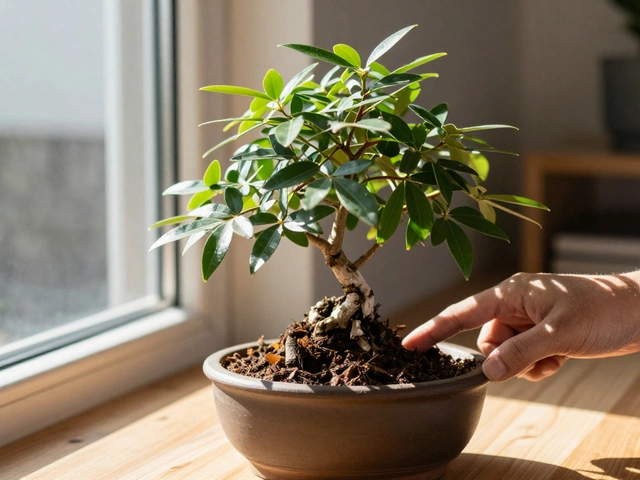
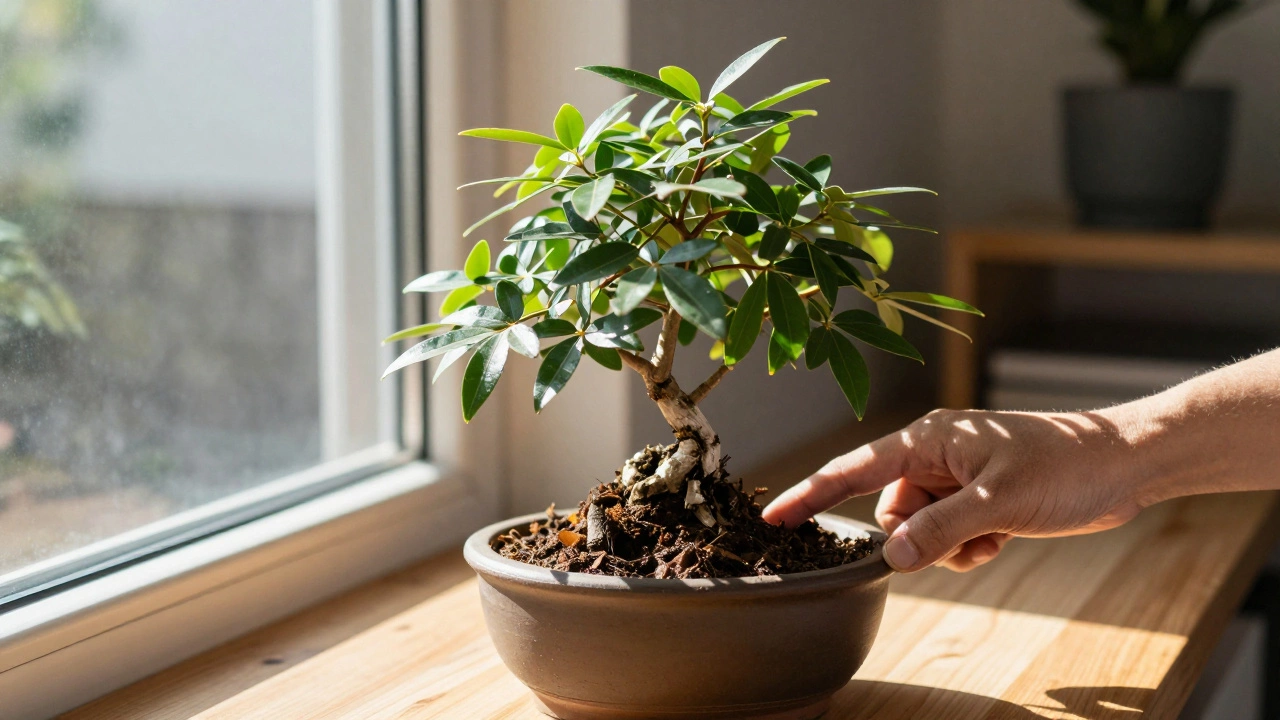
Most beginners kill bonsai by overwatering. They see the soil dry on top and assume it’s time to water. But bonsai pots are tiny. The soil dries fast on the surface but stays moist deeper down. The only reliable way to know when to water? Stick your finger in up to the first knuckle. If it’s dry, water. If it’s damp, wait.
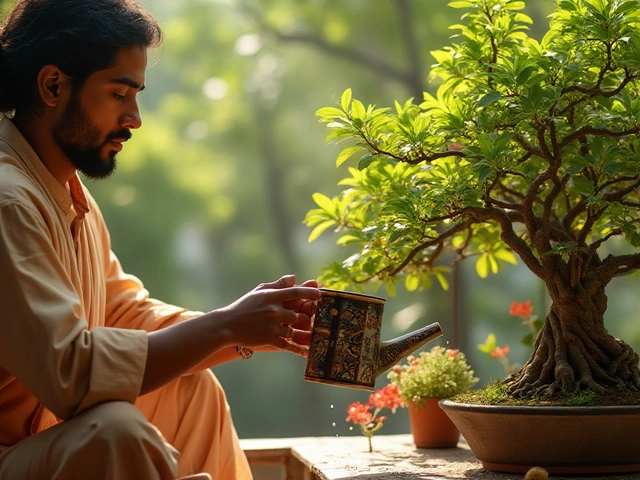
When you do water, soak the soil completely. Place the pot in a sink or tray and pour water slowly over the surface until it runs out the drainage holes. Let it drain for 10 minutes. Never let the pot sit in standing water. Root rot kills more bonsai than drought.
Watering frequency changes with the season. In summer, you might need to water daily. In winter, once every 5-7 days might be enough. Always check before you reach for the watering can. A moisture meter can help, but your finger works just as well.
Soil and Potting: It’s Not Regular Potting Mix
Bonsai soil isn’t dirt. It’s a special mix designed to drain fast and hold just enough moisture. Regular potting soil holds too much water and compacts over time, suffocating the roots. Use a pre-made bonsai mix or make your own: 50% akadama (a baked clay granule), 25% pumice, 25% lava rock. You can find these at bonsai specialty stores or online.
Repotting happens every 2-3 years for young trees, every 3-5 for older ones. Do it in early spring, just before new growth starts. Gently remove the tree from its pot, trim back one-third of the roots, and replant in fresh soil. Don’t repot a sick or stressed tree. Wait until it’s healthy.
Pruning and Shaping: Less Is More
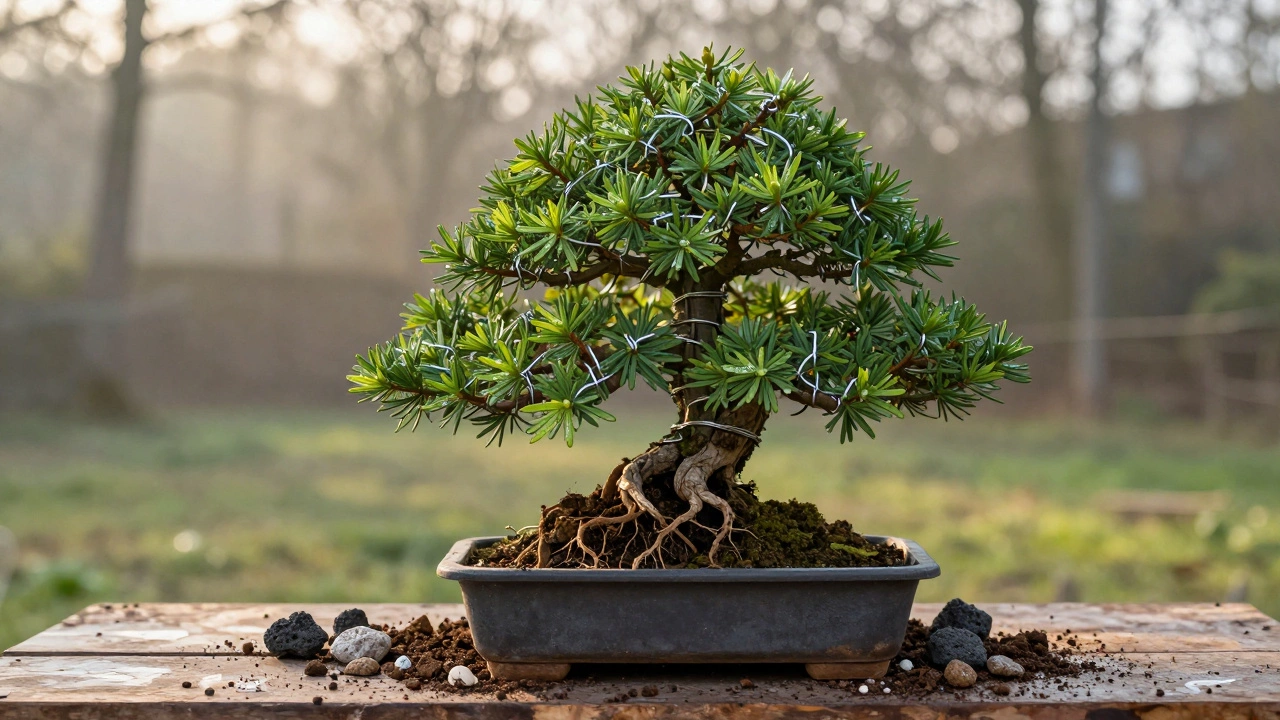
Pruning keeps your bonsai looking like a miniature tree, not a bush. Use sharp, clean bonsai scissors. Pinch off new shoots with your fingers when they grow longer than 2-3 inches. This encourages back-budding-new growth closer to the trunk. That’s how you get a dense, mature look.
Wiring shapes branches. Use aluminum wire for deciduous trees (maple, ficus) and copper for conifers (juniper, pine). Wrap the wire loosely at a 45-degree angle. Don’t force a branch into place. Bend it slowly. Remove the wire after 3-6 months, or before it cuts into the bark. Leaving it on too long can scar the tree.
Never prune more than 30% of the foliage at once. Your tree needs leaves to make food. If you’re unsure, wait. You can always prune more later.
Feeding: Fertilizer Isn’t Optional
Bonsai trees grow in tiny pots with limited soil. They run out of nutrients fast. Use a balanced, liquid fertilizer every 2-4 weeks during the growing season (spring to early fall). Dilute it to half the recommended strength. In winter, stop feeding. Your tree is resting.
Organic options like fish emulsion or seaweed extract work well. Chemical fertilizers are fine too-just don’t overdo it. Too much fertilizer burns roots. Look for a 10-10-10 NPK ratio. That means equal parts nitrogen, phosphorus, and potassium. Avoid high-nitrogen fertilizers unless you’re trying to boost growth after repotting.
Seasonal Care: Trees Don’t Live in a Constant Spring
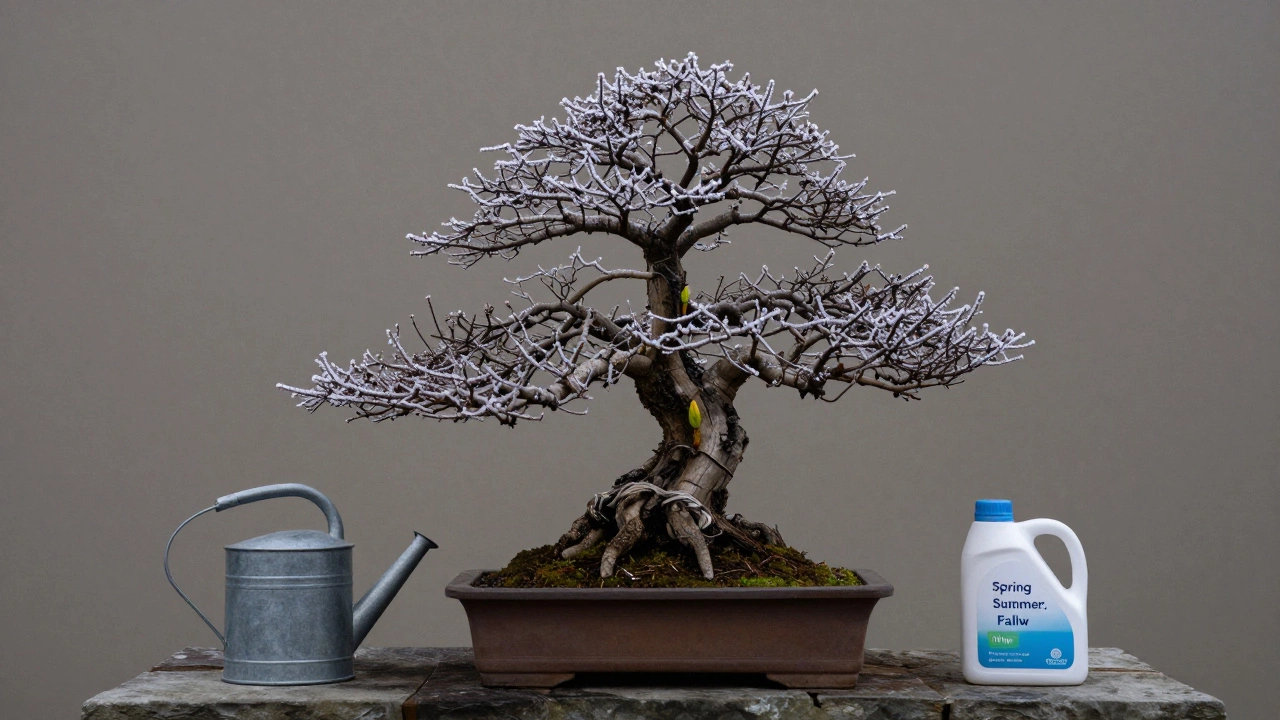
Bonsai trees go dormant in winter. That’s normal. Don’t panic if your tree loses leaves in fall or looks bare in January. That’s not dying-it’s sleeping. Reduce watering. Stop fertilizing. Keep it cool but not freezing. A garage or unheated porch that stays above freezing is perfect.
In spring, watch for new buds. That’s your signal to start watering more and resume feeding. Summer means more sun and more water. Fall is the time to prepare for dormancy. Adjust care based on the season, not your schedule.
Common Problems and Quick Fixes
- Yellowing leaves? Could be overwatering, poor drainage, or lack of light. Check the soil moisture and move to a brighter spot.
- Leaves falling off? Sudden changes in temperature, light, or watering can shock the tree. Don’t move it around. Find one good spot and leave it there.
- White crust on soil? That’s mineral buildup from tap water. Use rainwater or filtered water if you can. Flush the soil with clean water every few months.
- Spider webs or tiny bugs? Treat with neem oil spray. Mix 1 teaspoon neem oil with 1 quart of water and a drop of dish soap. Spray the leaves and soil surface. Do it in the evening to avoid sunburn.
What to Avoid
- Don’t mist your bonsai. It doesn’t need humidity. Misting just encourages mold.
- Don’t keep it in a decorative pot without drainage holes. That’s a death sentence.
- Don’t trim it every week. Bonsai grows slowly. Let it rest.
- Don’t buy one because it’s ‘cute.’ Buy one because you’re ready to care for it for years.
Think of your bonsai like a pet. It doesn’t need constant attention, but it does need consistency. Miss a watering once? It’ll survive. Forget to prune for a year? It’ll grow wild, but you can fix it. The key is showing up. Not perfectly. Just regularly.
Can I keep a bonsai tree indoors year-round?
Yes, but only if it’s a tropical or subtropical species like ficus, serissa, or Chinese elm. These can live indoors with strong light-ideally from a south-facing window or a grow light. Conifers like juniper and pine need outdoor seasons and will die if kept inside all year.
How long does a bonsai tree live?
With proper care, a bonsai can live for decades-sometimes over 100 years. The oldest known bonsai is over 800 years old. Your tree’s lifespan depends on species, care, and environment. A well-cared-for ficus can easily live 40-60 years indoors.
Is bonsai hard to care for?
It’s not hard if you learn the basics. The challenge isn’t complexity-it’s consistency. Most people fail because they treat it like a disposable decoration. Bonsai needs regular watering, proper light, seasonal adjustments, and patience. If you’re willing to learn and show up, it’s one of the most rewarding plants to grow.
How often should I repot my bonsai?
Young trees (under 10 years old) need repotting every 2-3 years. Older trees can go 3-5 years. Check the roots in early spring. If they’re circling the pot or growing out the drainage holes, it’s time. Never repot in winter or when the tree is stressed.
Can I use regular potting soil for bonsai?
No. Regular potting soil holds too much water and compacts over time, which leads to root rot. Bonsai needs fast-draining soil made of akadama, pumice, and lava rock. You can buy pre-mixed bonsai soil online or at specialty nurseries. It’s worth the small extra cost.
Next Steps
Start small. Buy one healthy bonsai-preferably a ficus-and give it a bright windowsill. Water only when the soil is dry. Don’t touch the pruning shears for the first three months. Just watch it. Learn its rhythm. Once you’ve kept it alive for a year, you’ll understand why bonsai isn’t a hobby-it’s a relationship.
Join a local bonsai club or online forum. Ask questions. Show pictures. Most experienced growers love helping beginners. You don’t need to be perfect. You just need to care enough to keep trying.