Lotus Home Safety & Suitability Checker
Answer these questions to determine if a lotus plant is a safe and viable addition to your home environment.
Your Lotus Profile
Suitability Score
Calculating...
Risk & Safety Analysis
Recommendations
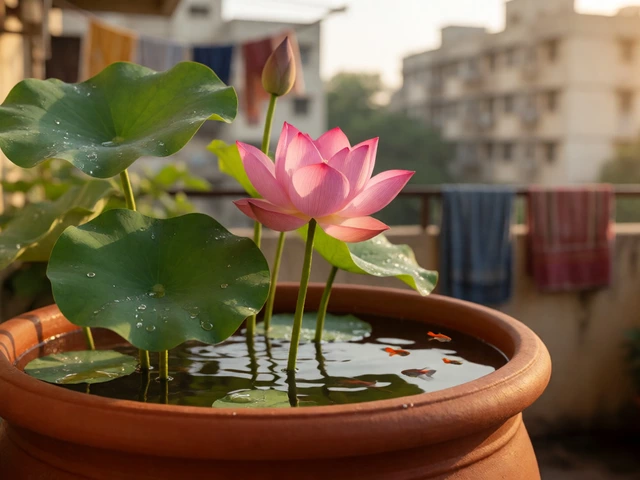
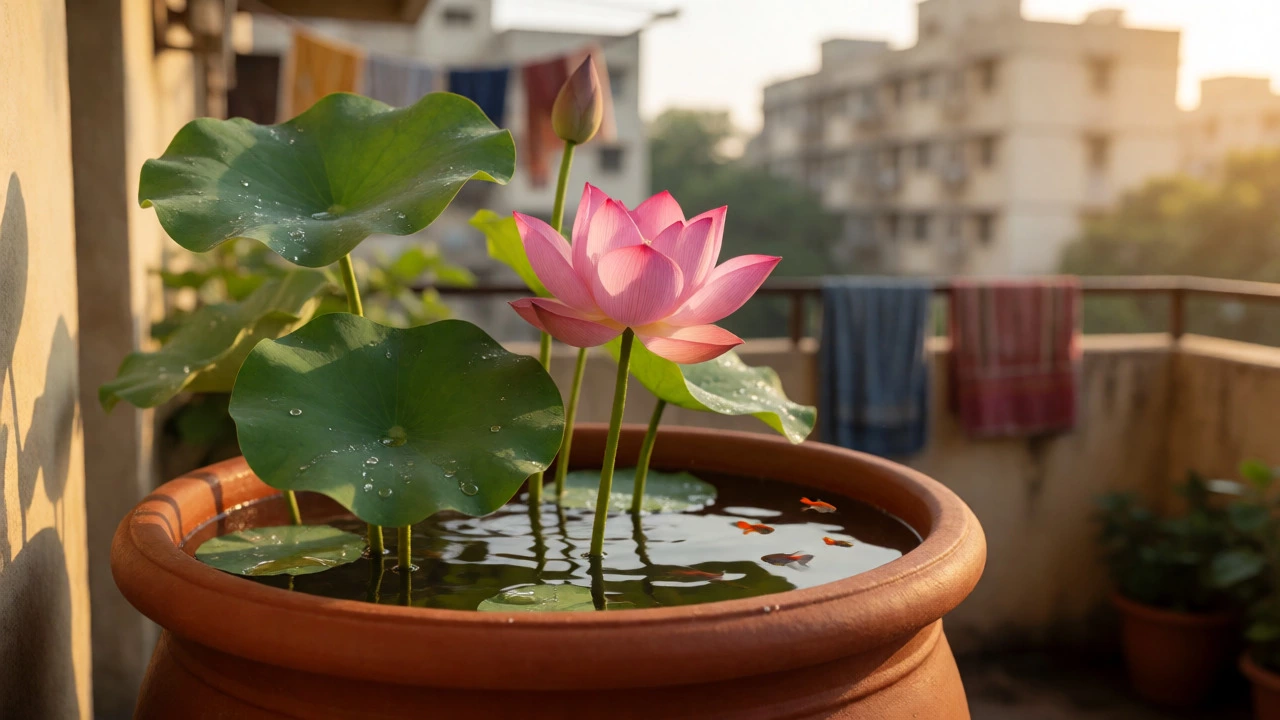
You’ve probably seen those stunning photos of lotus (Nelumbo nucifera) blooming in pristine ponds across Asia. The flowers look ethereal, almost too perfect to be real. But when you try to grow one on your balcony or in a backyard pot in Mumbai or Delhi, reality hits hard. You might worry about stagnant water breeding mosquitoes, the smell if it goes wrong, or whether this sacred flower actually thrives outside its natural habitat.
The short answer is yes, it is safe to grow lotus at home, provided you manage the ecosystem correctly. It’s not just about dumping a tuber in a bucket and hoping for the best. This plant demands specific conditions regarding depth, light, and water quality. If you ignore these, you won’t get beautiful blooms; you’ll get a murky mess that smells like old swamp water and attracts pests. But get it right, and you have a low-maintenance, high-impact centerpiece that purifies air and adds serious curb appeal.
The Real Risks: Mosquitoes and Stagnant Water
Let’s tackle the biggest fear first: mosquitoes. In tropical climates like India, standing water is an invitation for Aedes aegypti, the carrier of dengue and chikungunya. A typical lotus pot holds 50 to 100 liters of water. If left untouched, this becomes a nursery for larvae within days.
However, lotus pots are rarely truly "stagnant" in a healthy setup. The key difference between a mosquito trap and a thriving lotus pond is circulation and biology. Here is how you keep the risk near zero:
- Add small fish: Guppies or Gambusia affinis (mosquito fish) eat larvae before they become adults. They thrive in the shallow margins of larger pots.
- Maintain water movement: Even a simple solar fountain or a small submersible pump keeps the surface agitated. Mosquitoes prefer still water to lay eggs.
- Check regularly: Inspect the water surface every two weeks. If you see wrigglers, add a biological larvicide containing Bacillus thuringiensis israelensis (Bti). It targets mosquito larvae specifically and is safe for plants and pets.
If you live in a high-rise apartment with no access to sunlight for part of the day, the evaporation rate changes. You might need to top up water more often, which naturally disrupts the mosquito breeding cycle. So, while the risk exists, it is entirely manageable with basic hygiene habits.
Safety for Pets and Children
Another common concern is toxicity. Is the lotus poisonous if a curious toddler pulls off a petal or a dog chews on a leaf? Good news here: Lotus is non-toxic to humans, dogs, and cats. Unlike lilies, which can cause fatal kidney failure in cats, lotus leaves and petals are harmless if ingested in small amounts. The rhizome (the root stalk) is actually edible and widely consumed in Asian cuisine, though raw consumption isn't recommended due to potential bacterial load from the mud.
The physical safety hazard isn't chemical-it's structural. Lotus tubers are brittle. If a child trips over a clay pot filled with heavy soil and water, it can break easily. Ensure your container is stable and placed out of high-traffic walkways. Also, the edges of ceramic or terracotta pots can chip. Smooth any sharp edges or use plastic liners inside decorative pots to prevent cuts.
Choosing the Right Container and Soil
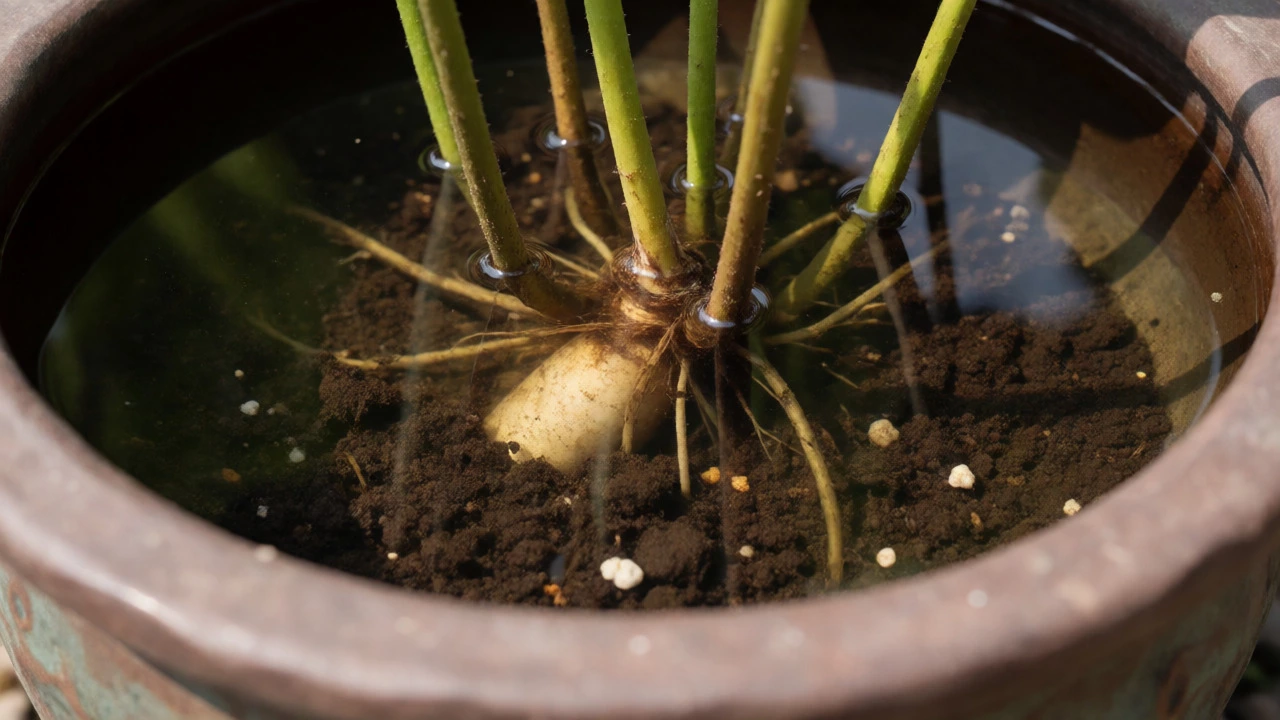
This is where most beginners fail. They buy a regular planting pot with drainage holes. Stop right there. Lotus roots do not tolerate drying out. Your container must be watertight.
| Feature | Requirement | Why It Matters |
|---|---|---|
| Material | Terracotta, Plastic, or Cement | Must hold water without leaking. Avoid porous materials unless lined. |
| Depth | Minimum 30-45 cm (12-18 inches) | Roots need vertical space to anchor and spread horizontally. |
| Diameter | Minimum 60 cm (24 inches) | Lotus spreads wide. Small pots stunt growth and reduce flowering. |
| Drainage Holes | None | Holes allow water to escape, leading to root desiccation and death. |
Soil choice is equally critical. Do not use standard potting mix. It contains perlite and peat moss, which float and make the water cloudy. Instead, use heavy garden loam or clay-rich soil. Some experts recommend mixing 70% clay soil with 30% composted cow dung. This provides nutrients while keeping the substrate dense enough to stay submerged. Place the soil at the bottom, gently press the tuber into it, and then carefully fill the pot with water, tilting it slightly to avoid disturbing the mud too much.
Light and Temperature Needs in the Indian Context
Lotus is a sun-worshipper. In India, you cannot grow them successfully in shaded balconies facing north or east-only exposure. They need at least 6 hours of direct sunlight daily. Without this, the plant will produce lush green leaves but few, if any, flowers. The energy required to push up those large buds comes directly from intense solar radiation.
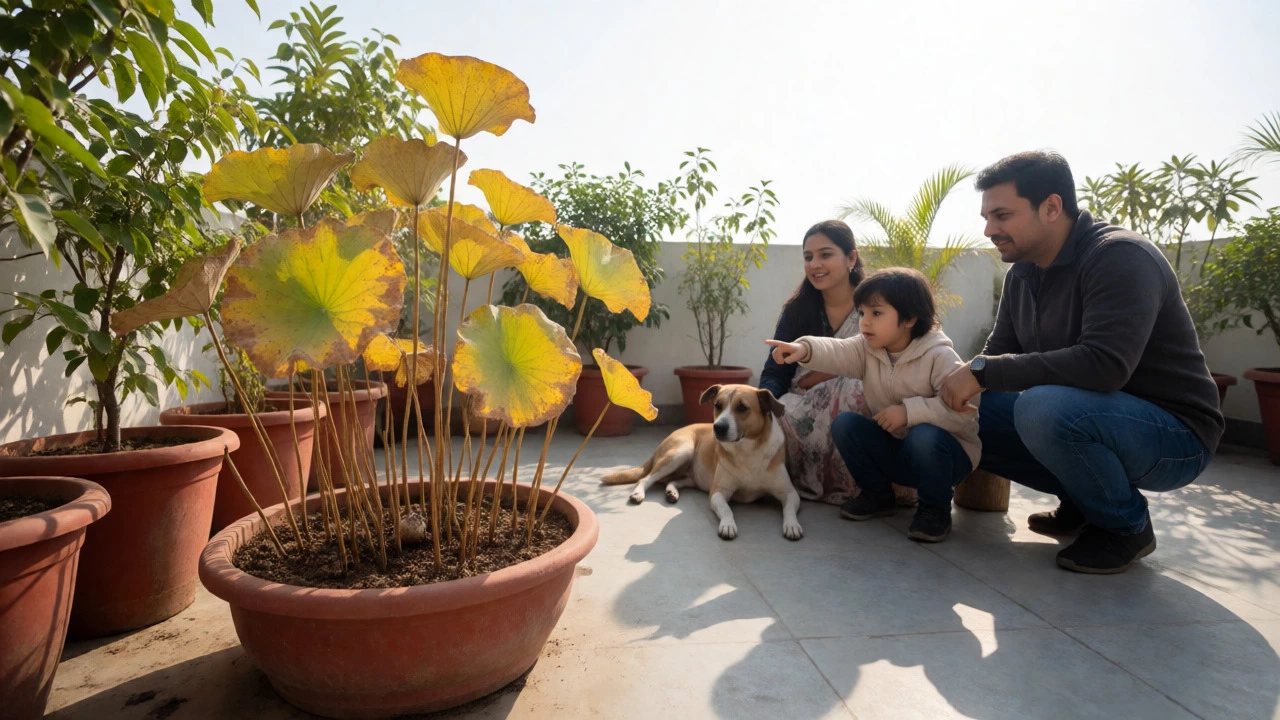
Temperature plays a role too. Lotus enters dormancy when temperatures drop below 15°C (59°F). In North India, winters can slow growth significantly. Don't panic if leaves yellow and die back in December or January. The tuber survives underground. Just keep the soil moist and wait for spring warmth to trigger new shoots. In South India and coastal regions, lotus can grow year-round because temperatures rarely dip low enough to induce full dormancy.
Wind is another factor. Large lotus leaves act like sails. On a high-rise terrace, strong gusts can snap stems. Use a windbreak, such as a taller shrub nearby, or place the pot in a sheltered corner. If you’re on a windy balcony, consider dwarf varieties like 'Momo Botan' or 'Alba Grandiflora,' which have smaller leaves and sturdier stems compared to the giant native species.
Maintenance: Feeding and Cleaning
Lotus is a hungry plant. Because it grows in water, nutrients leach out quickly. You need to fertilize, but not with liquid houseplant food. That causes algae blooms-green, slimy water that looks ugly and blocks light.
Use aquatic fertilizer tablets. Push them deep into the soil near the roots, away from the stem base. This feeds the plant directly without feeding the algae. Apply every 4-6 weeks during the growing season (March to September in most parts of India).
Cleaning involves removing dead leaves. As soon as a leaf turns yellow or brown, cut the stem close to the soil level. Do not let it rot in the water; decomposition consumes oxygen and creates bad odors. Regular removal keeps the water clear and prevents fungal infections like leaf spot, which appears as dark, circular patches on foliage.
Common Problems and Quick Fixes
Even with good care, issues pop up. Here is a quick diagnostic guide:
- Cloudy Water: Usually caused by disturbed soil or excess organic matter. Add activated charcoal granules to the water column to absorb impurities. Or, simply change the top half of the water gradually.
- No Flowers: Check sunlight first. Then check if the pot is too small. Root-bound lotus stops blooming. Repot in early spring if necessary.
- Yellowing Leaves: Often a sign of iron deficiency or chlorosis. Add a chelated iron supplement to the soil. Alternatively, drop a clean steel wool pad into the water; it releases trace amounts of iron slowly.
- Snail Infestation: Apple snails love young tender leaves. Pick them off manually or introduce predatory fish if the pot is large enough.
Growing lotus is less about complex horticulture and more about consistent observation. It rewards patience. The first year might be slow as the tuber establishes itself. By the second year, you’ll likely see vigorous growth and abundant blooms. The satisfaction of watching a sacred flower open at dawn in your own home is worth the initial effort.
Can I grow lotus indoors?
Yes, but only if you have a very bright south-facing window or use full-spectrum LED grow lights providing at least 6 hours of intense light daily. Standard indoor lighting is insufficient for flowering.
How deep should the water be for a lotus plant?
For established plants, maintain 15-30 cm (6-12 inches) of water above the soil line. When starting a new tuber, keep the water level lower (around 5-10 cm) until floating leaves emerge, then gradually increase the depth.
Do lotus plants attract snakes?
Not directly. Snakes may visit gardens looking for rodents or frogs. Since lotus pots can harbor small frogs or insects, they might indirectly attract snakes if your garden has a snake population. Keeping the area tidy reduces hiding spots.
Which variety is best for small balconies?
Choose dwarf varieties like 'Momo Botan' (pink) or 'Alba Grandiflora' (white). These grow to about 30-45 cm tall and fit comfortably in containers with a diameter of 60 cm.
How often should I change the water?
You don't need to change all the water frequently. Top up evaporated water weekly. Perform a partial water change (replacing 20-30%) every month to remove accumulated salts and waste, being careful not to disturb the roots.