Find Your Perfect Year-Round Flower
Tell us about your space:
Select your preferences and click "Find My Flowers" to see recommendations.
India is a land of extremes. You have the scorching heat of May in Delhi, the humid monsoons of Mumbai, and the biting cold of December in Shimla. Most gardeners here face a frustrating cycle: their garden looks lush for three months and then turns into a dry, brown patch for the rest of the year. But what if you didn’t have to wait for spring? What if your garden could bloom continuously, regardless of whether it’s 45°C or 10°C?
The secret isn’t magic; it’s choosing the right perennial flowers that are adapted to India's diverse climatic zones. While no single flower blooms literally every single day without rest, there is a specific group of hardy plants that offer near-continuous color from January to December. These are not delicate imports that die at the first sign of humidity or frost. They are tough, resilient natives and naturalized species that thrive with minimal fuss.
Understanding India’s Climatic Zones for Gardening
Before picking seeds, you need to understand where you stand. India is broadly divided into four gardening climates, and the "all-year" list varies slightly for each.
- Tropical (Kerala, Karnataka, Goa): Hot and humid year-round. Rain is frequent. Plants here struggle with root rot more than heat.
- Sub-Tropical (Maharashtra, Tamil Nadu, Andhra Pradesh): Hot summers, moderate winters. This is the easiest zone for year-round blooming.
- Temperate (Punjab, Haryana, Uttar Pradesh): Extreme heat in summer, cold winters. Some tropical plants will pause growth in December but bounce back quickly.
- Hilly/Cool (Himachal, Uttarakhand, North East): Cool summers, very cold winters. True year-round bloomers are rare here unless you use greenhouses.
For this guide, we focus on the vast majority of India-Tropical, Sub-Tropical, and Temperate zones-where these stars truly shine.
Top 7 Flowers That Bloom Year-Round in India
Here are the heavy hitters. These plants are proven performers across cities like Bangalore, Pune, Hyderabad, and even parts of Delhi during mild winters.
| Flower Name | Sunlight Needs | Water Requirement | Best For |
|---|---|---|---|
| Marigold | Full Sun | Moderate | Borders, Pests Control |
| Hibiscus | Partial Shade/Sun | High | Privacy Screens, Pots |
| Petunia | Full Sun | Moderate | Hanging Baskets, Beds |
| Zinnia | Full Sun | Low-Moderate | Cutting Gardens, Heat Tolerance |
| Vinca (Catharanthus) | Full Sun | Low | Ground Cover, Low Maintenance |
| Bougainvillea | Full Sun | Very Low | Fences, Walls, Structures |
| Portulaca (Moss Rose) | Full Sun | Very Low | Rockeries, Cracks in Pavement |
1. Marigold (Tagetes erecta)
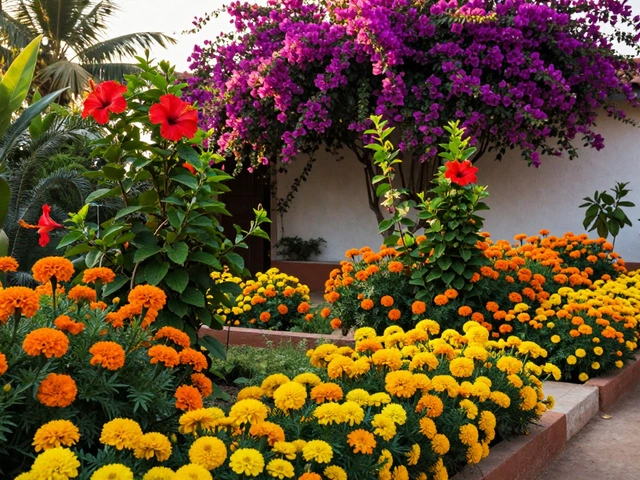
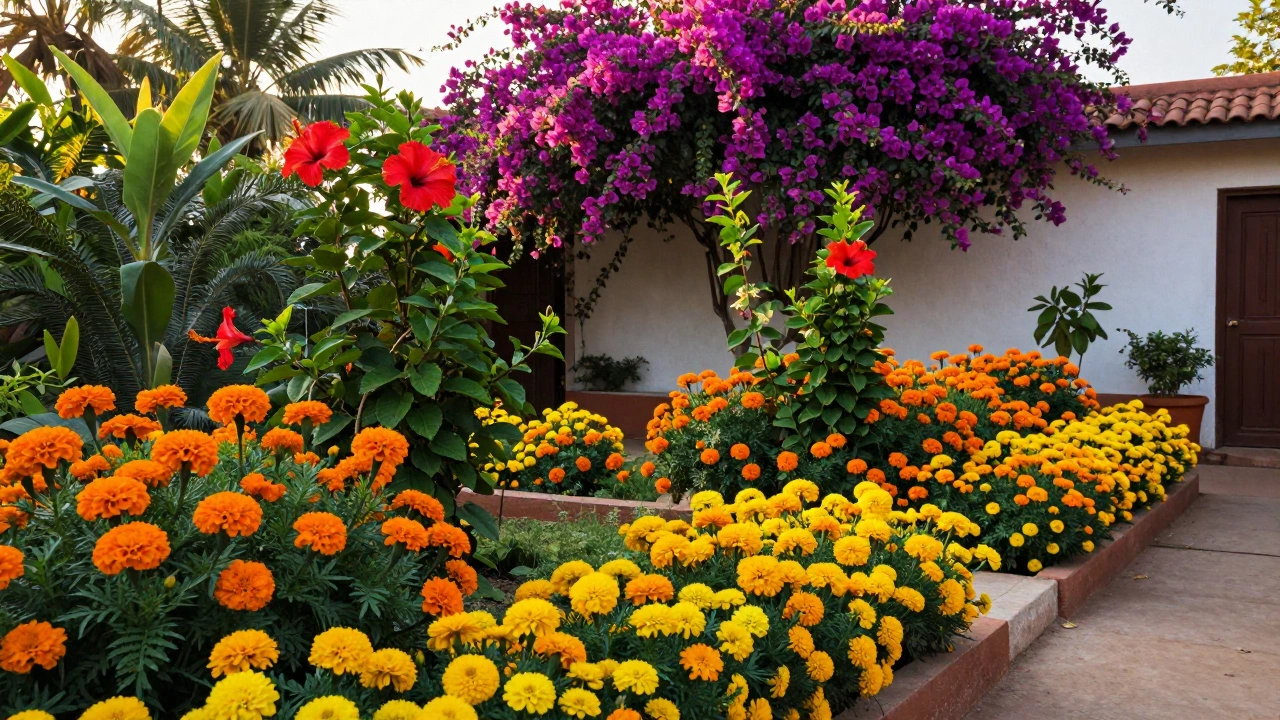
If there is one flower that defines an Indian garden, it is the Marigold. It is cheap, easy to find, and practically indestructible. In most parts of India, Marigolds bloom from October through March vigorously, but in warmer states like Kerala and Tamil Nadu, they bloom almost year-round. Even in cooler northern states, if you sow new seeds every two months, you can maintain continuous color. They also repel aphids and nematodes, making them a functional addition to any vegetable patch.
2. Hibiscus (Hibiscus rosa-sinensis)
The Chinese Hibiscus is a powerhouse. Once established, this shrub produces large, showy flowers in red, pink, orange, and yellow throughout the year. It thrives in full sun but tolerates partial shade. The key to keeping it blooming is consistent watering and monthly feeding with organic compost. It grows fast, so prune it regularly to keep its shape. In colder regions like Delhi, it might shed leaves in January but will flush new growth by February.
3. Petunia
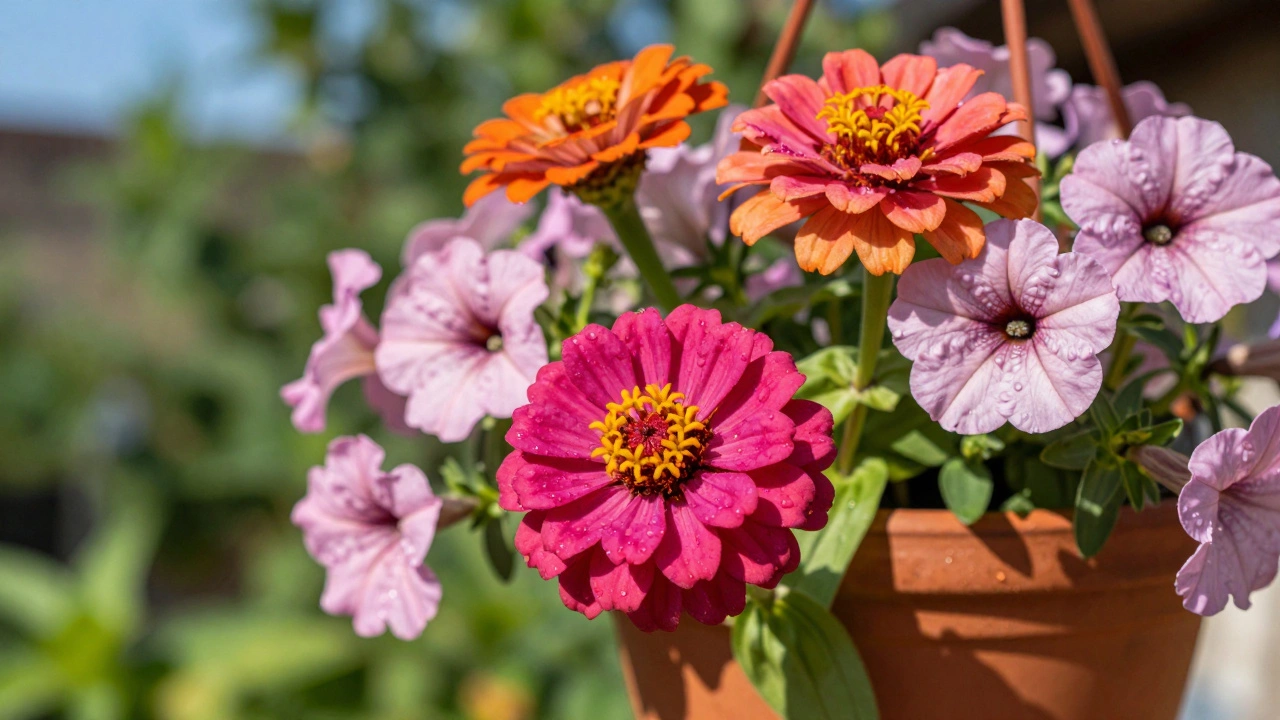
Petunias are often mistaken for annuals because they are sold as small seedlings. However, in India’s climate, they behave like perennials. They love the sun and will produce a carpet of flowers from winter until the peak summer heat hits. During the intense heat of April-May, they may slow down, but they recover quickly when temperatures drop slightly. They are perfect for hanging baskets on balconies or as edging plants in front yards.
4. Zinnia
Zinnias are the champions of heat tolerance. While many flowers wilt under the scorching Indian summer sun, Zinnias thrive. They come in vibrant colors and require very little water once established. Sow them directly in the ground, and they will reward you with blooms from June through November. In milder climates, they can bloom year-round. They are excellent for cutting gardens because the stems are long and sturdy.
5. Vinca (Periwinkle)
Also known as Catharanthus roseus, Vinca is the ultimate low-maintenance plant. It spreads horizontally, forming a dense mat of foliage dotted with white, pink, or purple flowers. It survives droughts, poor soil, and neglect. If you have a large area to cover and don’t want to spend hours weeding, plant Vinca. It blooms continuously in warm weather and slows down only in deep winter.
6. Bougainvillea
This is not just a flower; it is a structural element of Indian landscaping. Bougainvillea climbs fences, covers walls, and drapes over pergolas. It needs full sun and very little water. Interestingly, it blooms best when stressed slightly-don’t overwater it. The colorful bracts appear year-round in tropical zones. In temperate zones, it blooms heavily from late winter to early summer.
7. Portulaca (Moss Rose)
Don’t let its small size fool you. Portulaca is a succulent-like plant that stores water in its fleshy leaves. It opens its bright flowers only in sunlight and closes them at night or on cloudy days. It grows in cracks, rockeries, and pots. It is virtually impossible to kill. If you live in a hot, dry part of India, this is your go-to plant for constant color.
How to Maintain Continuous Blooms
Even the best flowers need a little help to perform consistently. Here is how to keep your garden looking fresh all year.
- Deadheading: Remove spent flowers immediately. This signals the plant to produce more blooms instead of seeds. Spend 10 minutes every weekend doing this.
- Regular Feeding: Indian soils are often nutrient-depleted. Add organic compost or well-rotted cow dung every 3 months. Use a phosphorus-rich fertilizer (like bone meal) to encourage flowering.
- Smart Watering: Water deeply but less frequently. Shallow watering encourages weak roots. Mulch around the base of plants with dry leaves or straw to retain moisture and suppress weeds.
- Pruning: For shrubs like Hibiscus and Bougainvillea, prune after the main blooming cycle ends. This prevents woody growth and encourages new, flower-bearing shoots.
Common Mistakes to Avoid
Many gardeners lose their plants due to simple errors. Avoid these pitfalls:
- Overwatering: Especially during the monsoon. Ensure your pots have drainage holes. Root rot is the number one killer of indoor and potted plants in India.
- Ignoring Sunlight: Most year-round bloomers need at least 6 hours of direct sunlight. Planting them in deep shade will result in lots of leaves but few flowers.
- Using Chemical Fertilizers Only: Synthetic fertilizers give a quick boost but degrade soil health over time. Stick to organic options for long-term sustainability.
FAQs About Year-Round Flowering in India
Do roses bloom all year round in India?
Roses do not bloom continuously year-round in most parts of India. They typically have a peak season from October to March. In summer, they require heavy pruning and protection from extreme heat. While some modern hybrid varieties are bred for repeat blooming, they still need significant care compared to native perennials like Marigolds or Hibiscus.
Which flowers are best for balcony gardening in India?
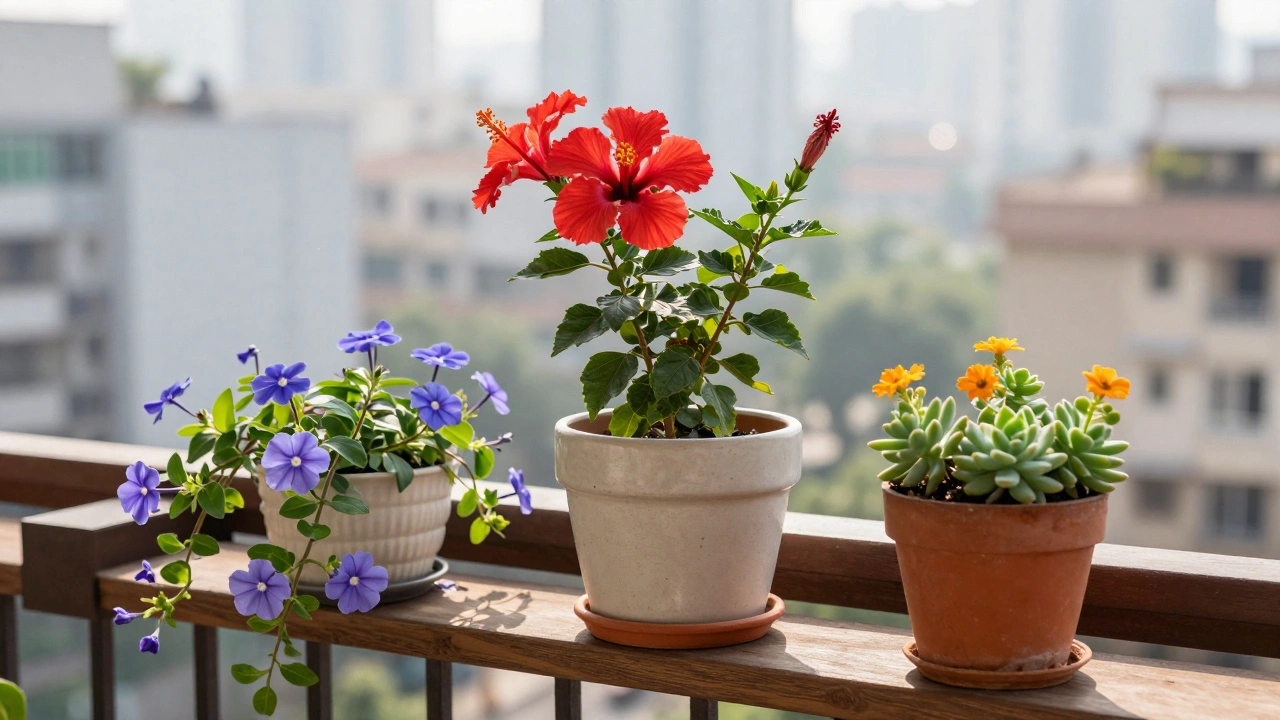
For balconies, space is limited. Choose compact varieties like Petunias, Geraniums, and Dwarf Hibiscus. Hanging baskets with Petunias and Ivy Geraniums work well. Ensure your balcony gets at least 4-6 hours of sunlight. Avoid large climbers like Bougainvillea unless you have a strong railing to support them.
Can I grow these flowers in pots?
Yes, most of these flowers thrive in containers. Hibiscus, Petunias, and Marigolds are excellent for pots. Use a high-quality potting mix with good drainage. Repot Hibiscus every 2 years as they grow large. Smaller plants like Portulaca and Vinca can stay in the same pot for several years.
What should I do during the monsoon season?
During monsoons, reduce watering frequency. Ensure proper drainage to prevent waterlogging. Watch out for fungal diseases; apply neem oil spray if you notice spots on leaves. Some flowers like Zinnias may struggle in heavy rain, so protect them with temporary covers if possible.
Are these flowers safe for pets?
Most of these common garden flowers are non-toxic to cats and dogs. However, Lilies (if you choose to grow them) are highly toxic to cats. Always research specific plant toxicity if you have curious pets. Marigolds, Hibiscus, and Zinnias are generally considered safe.
Gardening in India doesn't have to be a seasonal chore. By selecting the right hardy perennials and giving them basic care, you can enjoy a vibrant, blooming garden from January to December. Start with Marigolds and Hibiscus if you are a beginner, and gradually add Zinnias and Bougainvillea as you gain confidence. Your garden will thank you with endless color.