Plant Water Compatibility Checker
Select a plant type below to see if tap water is safe or if you should switch to an alternative source.
Plant Type
Risk LevelAnalysis:
Analysis text goes here.
Recommended Water:
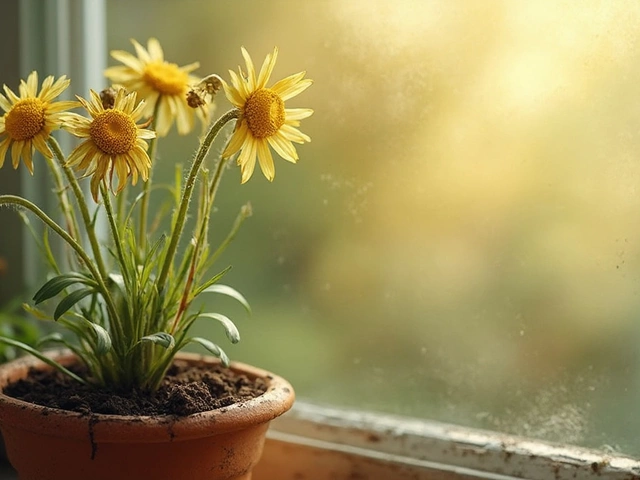
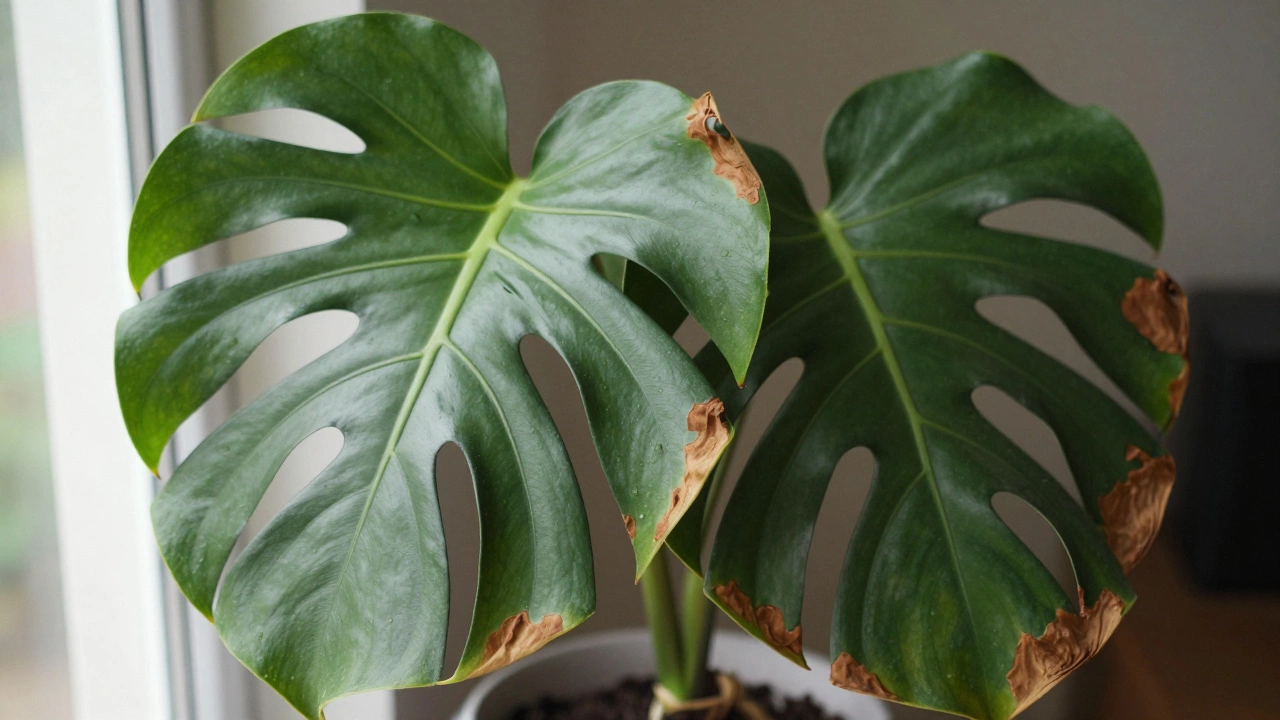
You’ve probably spent a small fortune on a stunning Monstera or a delicate Calathea, only to notice the leaf tips turning brown despite your best efforts. You're watering on schedule, the light is just right, but something is off. Could the culprit be the very thing you're using to keep them alive? Most of us just fill a watering can from the kitchen sink and call it a day, but tap water for plants isn't always a one-size-fits-all solution. Depending on where you live and what you're growing, that convenient faucet could be slowly poisoning your greenery or starving it of essential minerals.
Quick Takeaways: Can You Use Tap Water?
- Most plants handle tap water just fine, but sensitive species (like carnivorous plants) will struggle.
- Chlorine and fluoride are the main culprits behind brown leaf tips and stunted growth.
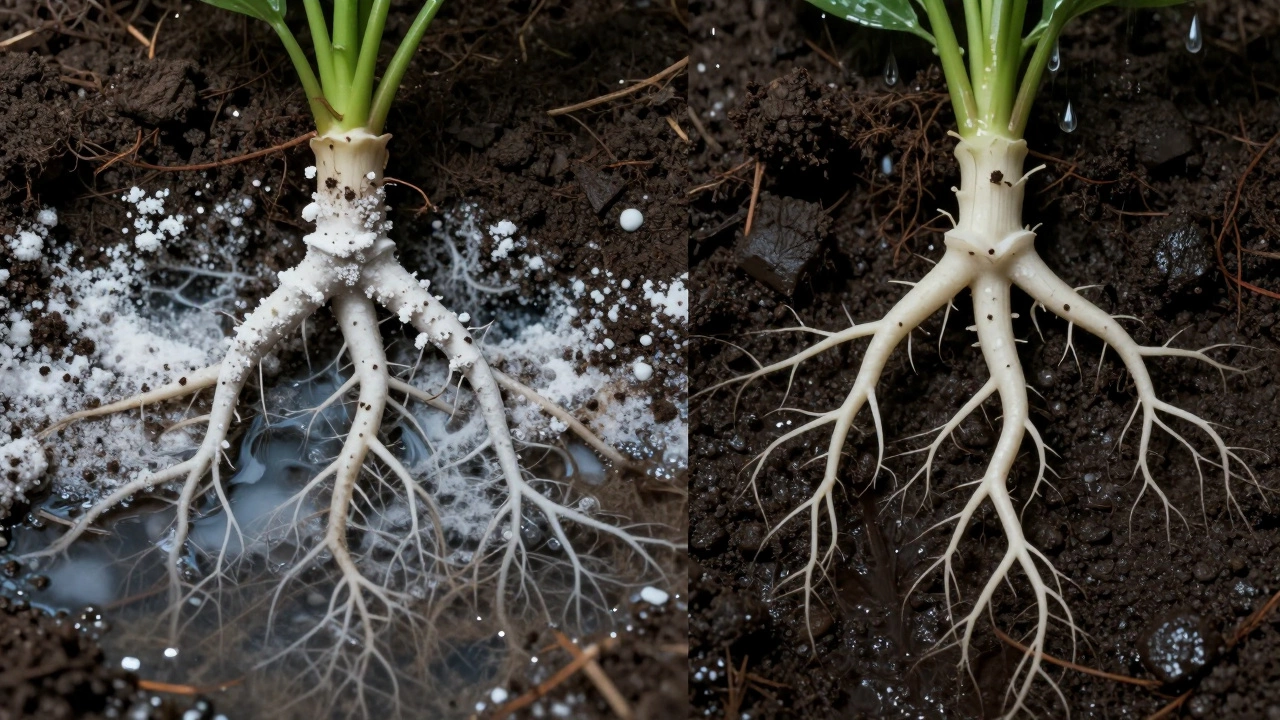
- Hard water adds calcium and magnesium, which can create white crusty buildup on soil.
- Sitting water for 24 hours helps some chemicals evaporate, but it doesn't fix mineral issues.
- Distilled or rainwater is the gold standard for "diva" plants.
Understanding What's Actually in Your Faucet
Before we decide if your water is "good," we need to look at what's inside it. Municipal water systems treat water to make it safe for humans, but plants have different biological requirements. Chlorine is a chemical disinfectant used by city water treatment plants to kill bacteria and viruses. While it keeps us healthy, high levels can damage the sensitive root hairs of a plant, making it harder for them to absorb nutrients.
Then there is Fluoride, often added to prevent tooth decay in humans. Some plants, particularly those in the Bromeliad family, are hypersensitive to fluoride. If you see tiny brown spots appearing on the edges of your leaves, your plant might be reacting to this additive.
Finally, we have "hard water." This is water with a high concentration of dissolved minerals, specifically Calcium and Magnesium. In moderation, these are micronutrients that plants actually need. However, in excess, they lead to salt buildup in the potting mix, which can lock out other nutrients and leave a white, chalky residue on the surface of your soil.
Which Plants Hate Tap Water?
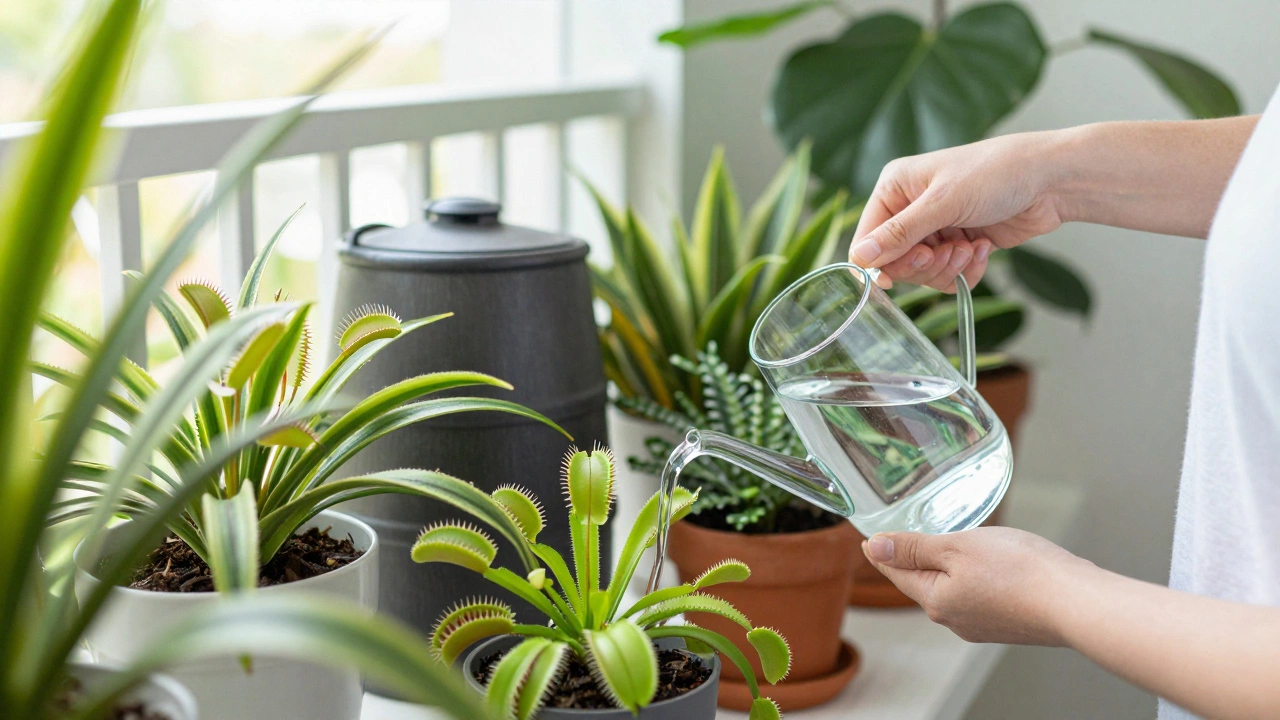
Not every plant is a picky eater. A Pothos or a Snake Plant will practically drink whatever you give them. But if you're collecting more exotic species, you need to be careful. For instance, Venus Flytraps are’ almost entirely incompatible with tap water because they evolved in nutrient-poor bogs; minerals in city water can literally burn their roots.
Calatheas and Marantas are also notorious for their sensitivity. These "Prayer Plants" often react to the chemicals in tap water by curling their leaves or developing scorched edges. If you have these in your collection, switching to a filtered source usually solves the problem within a few weeks.
| Water Type | Best For | Pros | Cons |
|---|---|---|---|
| Tap Water | Hardy plants (Pothos, ZZ plant) | Convenient, free | Contains chlorine, fluoride, salts |
| Distilled Water | Carnivorous plants, Calatheas | Zero impurities | Lacks all minerals, expensive |
| Rainwater | Almost all indoor plants | Natural, pH balanced | Requires collection effort |
| Filtered Water | Most tropical house plants | Removes most chlorine | Filters need regular replacing |
The "Let It Sit" Myth
You've probably heard the advice to leave your watering can out overnight to let the chemicals evaporate. Does this actually work? Yes and no. Chlorine is a gas and will dissipate into the air over 24 hours. However, many modern cities use Chloramine, which is a more stable bond of chlorine and ammonia. Chloramine does not evaporate. If your city uses chloramine, letting your water sit is a waste of time.
Moreover, letting water sit does nothing to remove fluoride or calcium. If your problem is hard water buildup (those white crusty rings on the pot), the "sitting method" won't help you. You'll need to actually remove the minerals using a filter or by switching sources.
Better Alternatives for Your Greenery
If you've realized tap water is the enemy, you don't need to buy a fancy irrigation system. There are several easy ways to upgrade your water game. First, consider a Reverse Osmosis Filter. This is a system that pushes water through a semi-permeable membrane, stripping away almost everything, including fluoride and heavy minerals. It's the closest thing to pure water you can get without buying jugs from the store.
Then there's the classic approach: rainwater. If you have a balcony or a garden, setting up a rain barrel is a win-win. Rainwater is naturally slightly acidic, which helps plants absorb nutrients more efficiently from the soil. It's also completely free of the treatment chemicals found in municipal systems.
For those who don't have outdoor space, distilled water is a safe bet for your most expensive plants. However, because distilled water is completely empty of minerals, using it exclusively for every plant in your home can actually lead to nutrient deficiencies over time. A pro tip is to use a mix: tap water for the hardy plants and distilled for the sensitive ones.
How to Fix Salt Buildup in Soil
If you've been using hard tap water for months, your soil might be saturated with salts. You can tell this is happening when you see a white film on the soil surface or if the water starts running through the pot too quickly. To fix this, you need to perform a "flush."
- Take your plant to the sink or shower.
- Use distilled or filtered water.
- Water the plant heavily until water flows freely out of the drainage holes for several minutes.
- This process washes away the accumulated salts and minerals, effectively "resetting" the soil chemistry.
Can I use bottled water for my plants?
You can, but check the label. Spring water is generally fine, but avoid "purified" water if it contains added minerals for taste, as these can contribute to the same salt buildup as tap water. It's also the most expensive and least sustainable option.
Will my plants die if I only use tap water?
Most won't die, but they might not thrive. You'll see "cosmetic" damage like brown tips or slower growth. However, for carnivorous plants like Sundews or Venus Flytraps, tap water can be fatal over time.
Does a Brita filter actually help?
Standard carbon filters, like those in a Brita, are great at removing chlorine and improving taste. However, they aren't very effective at removing fluoride or reducing the "hardness" (calcium/magnesium) of the water.
How often should I flush my soil?
If you have hard water, a deep flush every 3-6 months is usually enough to prevent mineral toxicity and keep the roots breathing.
Is aquarium water good for plants?
Yes! Fish waste breaks down into nitrates, which act as a natural, mild fertilizer. Just make sure you aren't using heavy medications in the tank before pouring it into your pots.
Next Steps for Your Watering Routine
If you're unsure where to start, don't panic and throw out your tap water immediately. Start by identifying your "divas"-the plants that look stressed despite good care. Switch those few plants to filtered or distilled water and see if the new growth looks healthier. If you notice your soil looks crusty, go ahead and do a thorough flush with pure water this weekend. Once you find the balance that works for your specific local water chemistry, your indoor jungle will look more lush than ever.