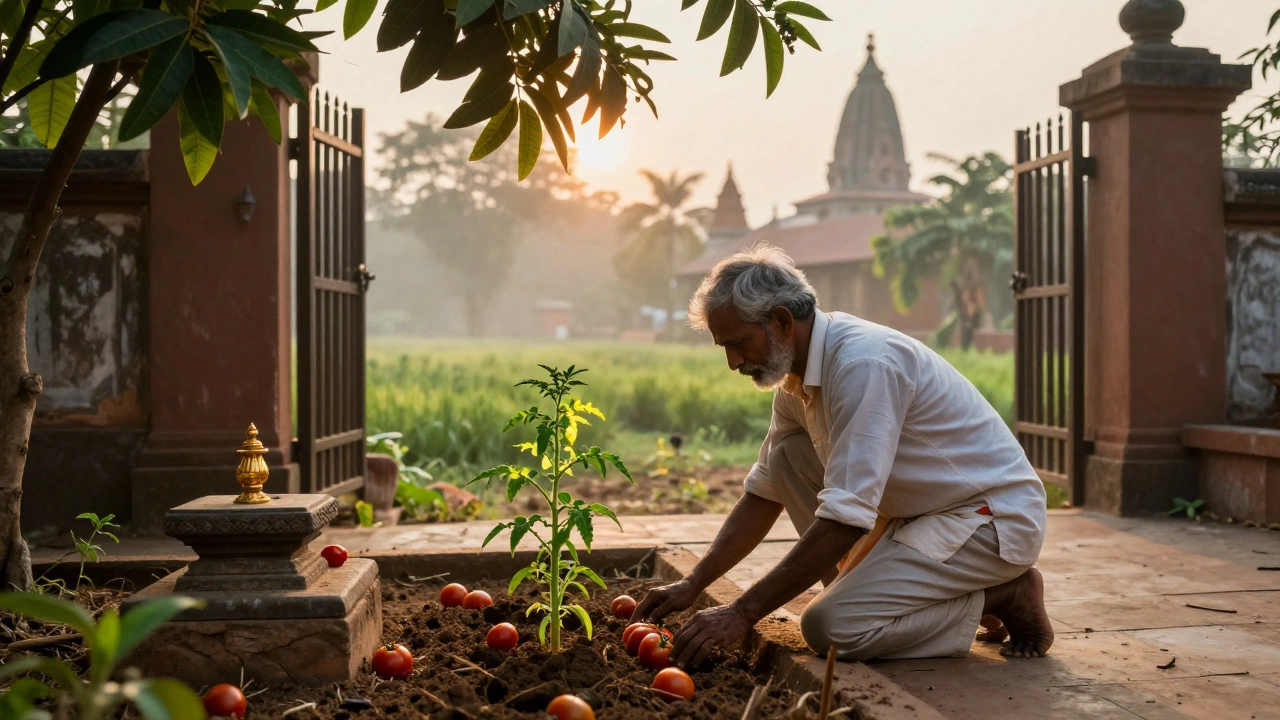
Discover the Hindu deities tied to gardening and crop growth in India-from Prithvi and Indra to tulsi and sacred plants. Learn how ancient traditions still shape modern vegetable gardening in homes and fields across the country.
Hindu deities and agriculture: How ancient beliefs shape Indian farming
When you think of Hindu deities and agriculture, the sacred connection between gods, land, and harvest in Indian farming traditions. Also known as spiritual agriculture, it's not just symbolism—it's a living system that still guides how seeds are sown, water is managed, and harvests are celebrated across villages. Farmers in Bihar don’t just wait for monsoon rains—they pray to Indra, the Vedic god of rain and storms, whose blessings are sought before planting kharif crops. In Tamil Nadu, women place rice grains at temple steps before sowing, honoring Annapurna, the goddess of nourishment and food, who represents the sacredness of grain. These aren’t old stories. They’re daily practices that shape planting calendars, irrigation choices, and even how farmers respond to crop failure.
It’s not just about who to pray to—it’s about how the land is seen. In Hindu thought, the earth isn’t just soil. It’s Bhumi Devi, the earth goddess, revered as a living being who gives life and must be treated with respect. That’s why many farmers avoid tilling during certain lunar phases, or leave a corner of the field unplanted as an offering. Even modern organic farmers in Haryana, who use compost and drip irrigation, still tie their work to these ideas. They don’t see it as superstition. They see it as wisdom passed down through generations who watched the land, the stars, and the seasons.
And it’s not just about rain or soil. The cycle of planting, growth, and harvest mirrors the cycles of life and death in Hindu philosophy. Pashupati, an early form of Shiva as lord of animals and nature, connects farming to stewardship—not domination. This mindset leads to practices like intercropping, seed saving, and avoiding chemical inputs—not because they’re trendy, but because they honor balance. Even the most tech-savvy farmer in Punjab might light a diya near the field during harvest, not to impress neighbors, but because it’s how their grandfather did it—and it felt right.
What you’ll find in these posts isn’t a list of rituals. It’s proof that faith and farming aren’t separate worlds. You’ll read about how rice cultivation mirrors the story of Lakshmi’s emergence from the ocean—requiring patience, water, and purity. You’ll see why drought-tolerant plants are linked to devotion, why terrace gardens in Kerala follow temple timing, and how composting echoes the idea of return and renewal. These aren’t just gardening tips. They’re cultural codes written into the soil. And they’re still growing today.