Garden Spot Assessment Tool
Evaluate Your Garden Spot
Answer these 6 essential questions based on your potential garden location. Get instant feedback on your spot's potential.
Does your spot get at least 6 hours of direct sunlight daily?
Does water drain within 1 hour after rain?
Is your spot protected from strong, drying winds?
Can you reach a water source within 20 feet?
Can you see the garden from inside the kitchen?
Have you tested soil or plan to add compost?
Your Garden Spot Assessment
Where you put your garden isn’t just a matter of preference-it’s the difference between a thriving harvest and a patch of sad, stunted plants. If you’re setting up a kitchen garden, the right spot can mean the difference between picking fresh basil in July or wondering why nothing grew at all. It’s not about having the biggest space. It’s about having the right space.
Start with sunlight
Most vegetables and herbs need at least six hours of direct sunlight a day. That’s the baseline. Tomatoes, peppers, squash, and herbs like rosemary and thyme? They’ll beg for eight to ten. If your garden spot gets less than six, you’re setting yourself up for disappointment. Leafy greens like lettuce and spinach can handle a little shade-they’ll grow slower but still produce. But if you’re serious about growing food, full sun is non-negotiable.
Watch your yard for a full day. Start in the morning. Note where the sun hits first. Then check again at noon. Finally, walk around at 4 p.m. You’ll quickly see which areas stay bright and which turn shadowy by mid-afternoon. Avoid spots blocked by fences, sheds, or tall trees. Even if a spot looks sunny in spring, a tree that’s bare in March might cast thick shade by June. Don’t assume. Observe.
Drainage matters more than you think
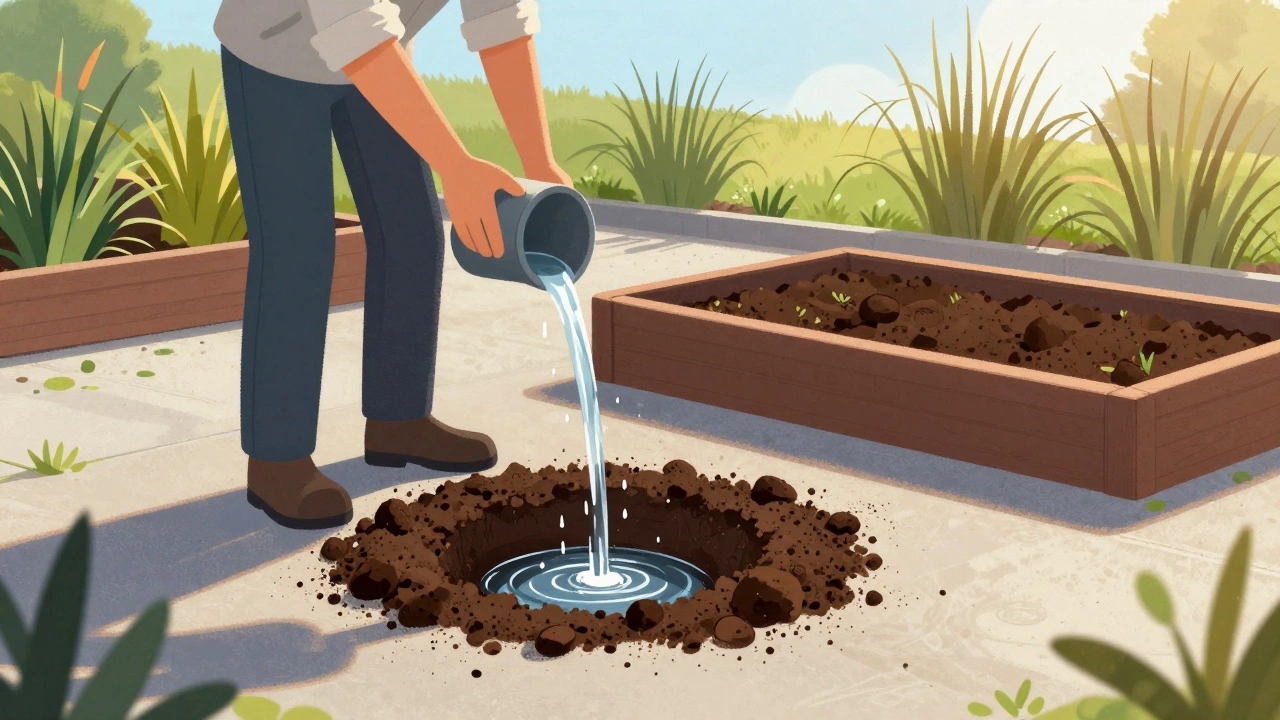
Plants don’t like soggy roots. Even if a spot gets perfect sun, if water pools after rain, your plants will rot. A simple test: dig a hole about a foot deep and fill it with water. If it drains in under an hour, you’re good. If it takes three hours or more, you’ve got a problem. Clay soil? It holds water like a sponge. Sandy soil? It drains too fast. Most kitchen gardens do best in loamy soil-crumbly, dark, and moist but not wet.
If your yard has poor drainage, don’t give up. Raised beds are your friend. Fill them with quality soil mix and you bypass the ground below. You can even build them on concrete patios or driveways. Just make sure they’re at least 12 inches deep. That’s enough for most root systems to spread.
Avoid the wind tunnels
Wind might not seem like a big deal, but it dries out soil fast and can snap delicate stems. A spot tucked between your house and a fence? That’s often a wind tunnel. Open, exposed corners? Same problem. Look for natural windbreaks: hedges, walls, or even tall containers of ornamental grasses. They don’t need to be solid-just enough to slow the breeze.
In Brighton, where coastal winds roll in off the English Channel, this matters even more. I’ve seen gardens on the north side of a house get shredded by spring winds. The plants didn’t die, but they never grew tall or strong. Move the garden a few feet to the south side, and suddenly everything thrived. Location isn’t magic. It’s physics.
Think about water access
Carrying a watering can 50 feet every morning gets old fast. If your garden is far from a hose or outdoor tap, you’ll skip watering. And skipped watering means stressed plants. Pick a spot within 20 feet of a water source. If you can’t move it, install a rain barrel near the garden. Or use a soaker hose with a timer. It’s not glamorous, but it’s practical.
Also, avoid low spots where water naturally collects. Those are flood zones in heavy rain. You don’t want your tomatoes sitting in a puddle. And don’t plant near downspouts. Even if the soil looks dry now, after a storm, it turns to mud.
Keep it close to the kitchen
This isn’t just about convenience-it’s about habit. If your garden is hidden behind the shed, you’ll forget to check it. If it’s right outside the back door, you’ll notice when the basil needs a snip or the tomatoes are turning red. That’s how you end up eating fresh food every day. I’ve talked to dozens of gardeners who gave up because their garden felt like a chore. The ones who kept going? Their garden was within sight of the kitchen window.
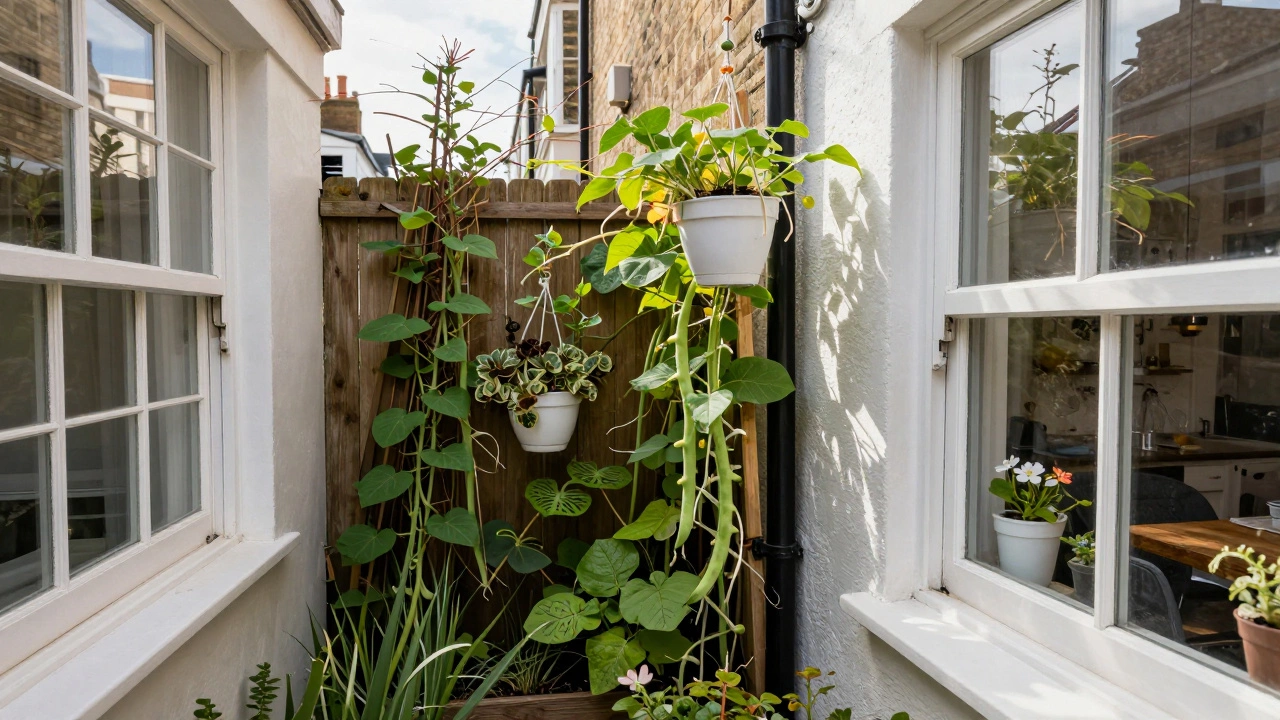
Think about your daily routine. Where do you walk most? Where do you hang out? Place your garden where you naturally pass by. Even a narrow strip along the side of the house can work if you use vertical planters or hanging baskets. You don’t need a big plot. You just need to see it.
Soil quality isn’t everything-but it’s close
You can fix bad soil. You can’t fix bad sun. But good soil makes everything easier. Test your soil if you can. Most garden centers sell simple kits for pH and nutrient levels. Kitchen gardens prefer a pH between 6.0 and 7.0. Too acidic? Add lime. Too alkaline? Add compost or peat moss. But you don’t need a lab report. Just mix in a few inches of well-rotted compost every spring. It improves structure, feeds microbes, and holds moisture without drowning roots.
And don’t overcomplicate it. I’ve seen people buy expensive soil blends and still have poor yields because they planted in compacted ground. Digging in compost once a year beats buying fancy products every month.
What about shade? Can you grow anything there?
Yes-but only certain things. If your best spot gets three to five hours of sun, focus on leafy crops: kale, spinach, chard, lettuce, arugula, and mint. Herbs like parsley and cilantro will also do okay. Root crops like radishes and carrots can manage with a bit less light, though they’ll take longer to mature. Avoid anything that fruits: tomatoes, peppers, cucumbers, beans. They’ll flower but never set fruit in low light.
One trick: use reflective surfaces. White walls, light-colored pots, or even aluminum foil taped to a fence can bounce light back onto plants. It’s not a miracle fix, but it can add 10-15% more light to a shady corner.
Final checklist: Is your spot right?
Before you dig, ask yourself:
- Does this spot get at least six hours of direct sun daily?
- Does water drain away quickly after rain?
- Is it protected from strong, drying winds?
- Can I reach a water source without dragging a hose across the whole yard?
- Can I see this garden from inside the house?
- Have I tested the soil, or am I willing to mix in compost this spring?
If you answered yes to all six, you’ve found your spot. If you missed one, tweak it. Move the garden a few feet. Build a raised bed. Trim a branch. Don’t settle. A good garden starts with a good location.
What if I only have a small patch?
You don’t need a yard. Even a 4x4 foot area can feed a person with the right plants. Use containers. Stack them. Grow vertically. A single sunny windowsill can hold herbs. A balcony can hold peppers. A narrow strip along a wall can hold climbing beans. Size doesn’t matter. Sunlight, drainage, and consistency do.