Hindu Garden Planting Calendar Calculator
Select Your Vegetables
Your Location
Planting Schedule Results
Based on traditional Hindu agricultural practices
Recommended Planting Time
Sacred Deity Connection
Traditional Ritual
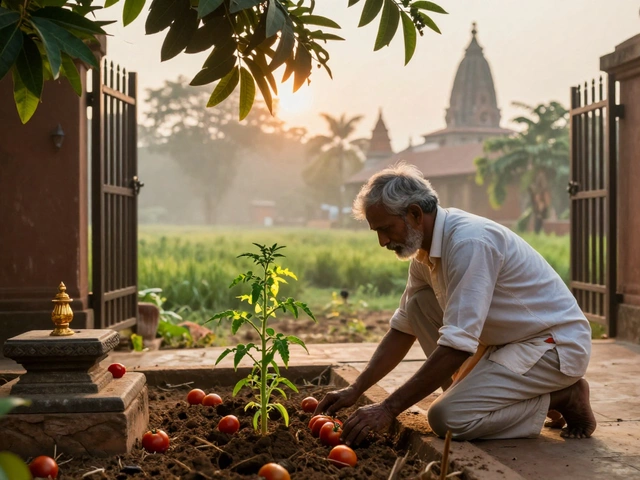
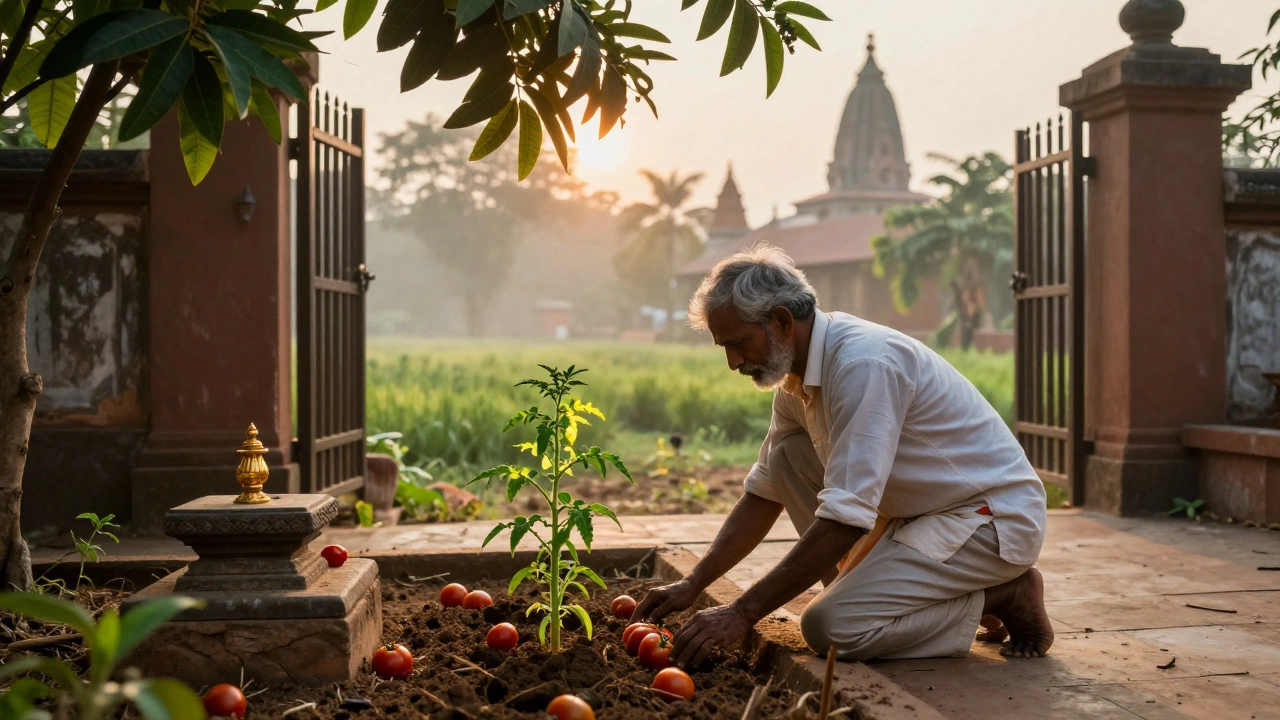
There’s no single Hindu god of gardening in the way you might picture a greener wearing overalls and holding a trowel. But if you walk through a village in Uttar Pradesh or a backyard in Kerala where tomatoes, okra, and spinach grow wild between temple stones, you’ll quickly realize that gardening in India isn’t just about dirt and seeds-it’s woven into prayer, ritual, and daily life. The divine doesn’t just bless the harvest; it’s part of the planting.
Who Gets Credit for the Harvest?
Many people ask, ‘Who’s the Hindu god of gardening?’ The answer isn’t one name-it’s a cluster of deities, each tied to a different part of growing food. If you’re asking because you want to honor the earth while planting your first batch of spinach or chilies, you need to understand the full picture.
First, there’s Prithvi, the Earth goddess herself. She’s not just soil-she’s the living body that holds roots, feeds plants, and gives back what’s sown. In the Vedas, she’s called ‘Prithvi Mata’-Mother Earth-and farmers in rural India still touch the ground before planting, whispering thanks. You won’t find statues of her in city temples, but in every field where a farmer kneels to check the moisture, she’s there.
Then there’s Indra, the king of gods in early Vedic texts. He controls rain-the single most important factor in Indian agriculture. Without monsoon rains, even the best compost won’t help. In villages, you’ll still hear old men say, ‘Indra ji ne baras diya’-Indra has sent the rain. During the monsoon, families hang mango leaves at their gates to invite his blessings. Rain isn’t weather here; it’s a divine gift.
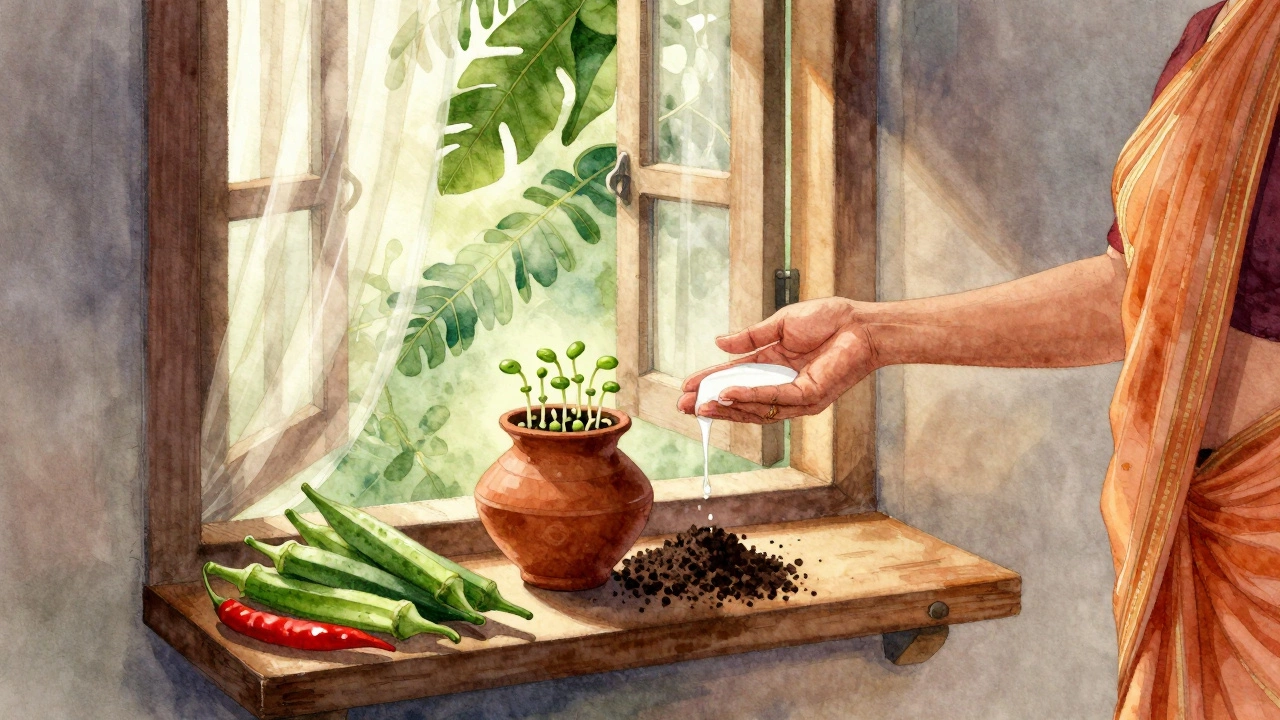
But if you’re growing vegetables like brinjal, beans, or pumpkin, you’re really working under the quiet watch of Shiva and Parvati. Shiva, often shown with a trident, is linked to transformation-and farming is all about change: seed to sprout, sprout to fruit, fruit to harvest. Parvati, his consort, is the source of fertility. In many South Indian homes, women place a small pot of soil with a sprouting bean near their kitchen window as a symbol of Parvati’s blessing on their food.
The Real ‘Gardening God’: Vishnu and the Sacred Plants
While Shiva and Parvati nurture the soil, Vishnu is the preserver-and he’s tied to the most sacred plants in Indian gardening. The tulsi (holy basil) plant grows in nearly every Hindu household, often in a raised platform called a tulsi chabutra. It’s not just for cooking-it’s worshipped daily. Devotees water it with morning prayers, light lamps beside it, and believe its presence keeps illness away.
Why tulsi? Because it’s believed to be an earthly form of the goddess Tulasi, a devoted follower of Vishnu. In the Puranas, she’s transformed into the plant after a curse. So when you plant tulsi, you’re not just growing herbs-you’re inviting a divine presence into your garden. In fact, many families won’t pluck a leaf without first asking permission. That’s gardening with reverence.
Other plants tied to Vishnu include the bel fruit (used in Shiva worship), the neem tree (for healing), and the banyan (for longevity). These aren’t ornamental. They’re functional, medicinal, and spiritual-all at once. A traditional Indian garden doesn’t separate ‘vegetable patch’ from ‘prayer space.’ They’re the same.
What About the Gods of Specific Crops?
Some regions have local deities tied to specific crops. In Maharashtra, farmers pray to Manjushri before planting rice. In Bengal, Shashthi, the goddess of children and fertility, is honored during the sowing of paddy. In Tamil Nadu, Amman-a mother goddess-is offered coconuts and turmeric before harvesting coconuts and bananas.
These aren’t myths. They’re cultural codes passed down for centuries. When a farmer in Odisha says, ‘We don’t start planting until we’ve offered rice to the earth,’ he’s not being poetic. He’s following a system that’s kept food growing for over 4,000 years.
Even the tools have meaning. The plow is called ‘hal,’ and in some traditions, it’s anointed with turmeric and oil before the first furrow. The seed basket? Washed with cow urine and water-a practice still common in organic farms in Andhra Pradesh. These aren’t superstitions; they’re rituals that connect human effort to natural cycles.
Modern Gardeners and Ancient Wisdom
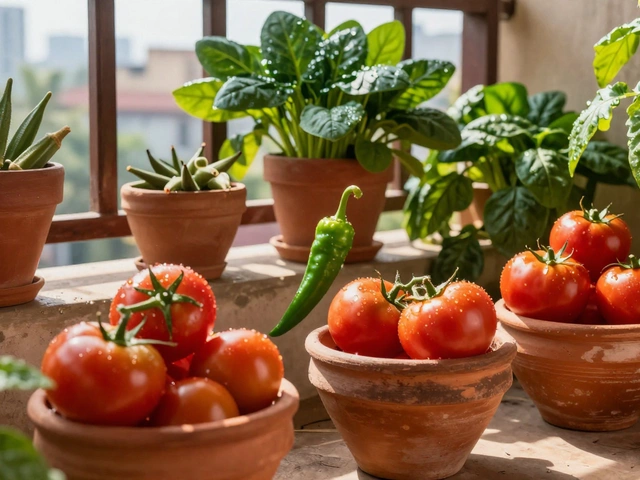
If you’re growing vegetables in a balcony in Delhi or a backyard in Chennai, you don’t need a temple to honor these traditions. But you can borrow the mindset.
Start small: Plant tulsi. Water it with intention. Don’t just check the soil for dryness-notice how the leaves turn toward the sun. That’s not just phototropism-it’s a quiet conversation with the land. Use compost made from kitchen scraps. Don’t call it ‘recycling’-call it returning what the earth gave you. Grow seasonal crops like cluster beans in summer, radish in winter. That’s not just smart gardening-it’s following the rhythm the old gods knew.
Indian farmers didn’t need chemical fertilizers because they understood balance. They planted marigolds next to tomatoes to keep pests away. They grew neem trees to purify the air. They rotated crops because they knew the soil needed rest. These aren’t ‘organic gardening tips’-they’re inherited wisdom.
Why This Matters Today
Climate change is making monsoons unpredictable. Soil is degrading. Urban gardeners are losing touch with seasons. But the old ways still work.
Studies from the Indian Council of Agricultural Research show that households growing tulsi and neem alongside vegetables have 40% fewer pest problems. Traditional seed-saving practices in Rajasthan have preserved over 200 native rice varieties that modern hybrids can’t match. And in Kerala, women’s cooperatives using ancient composting methods have increased yields by 30% without a single synthetic input.
You don’t need to become a priest to garden like a Hindu. But if you respect the soil, honor the seasons, and grow with gratitude, you’re already walking the same path.
What to Plant, When, and Why
Here’s a simple guide based on traditional Indian practices:
- March-April: Plant tomatoes, chilies, okra. These thrive with the rising heat. Offer a drop of milk to the soil before sowing-this is a common practice in Gujarat.
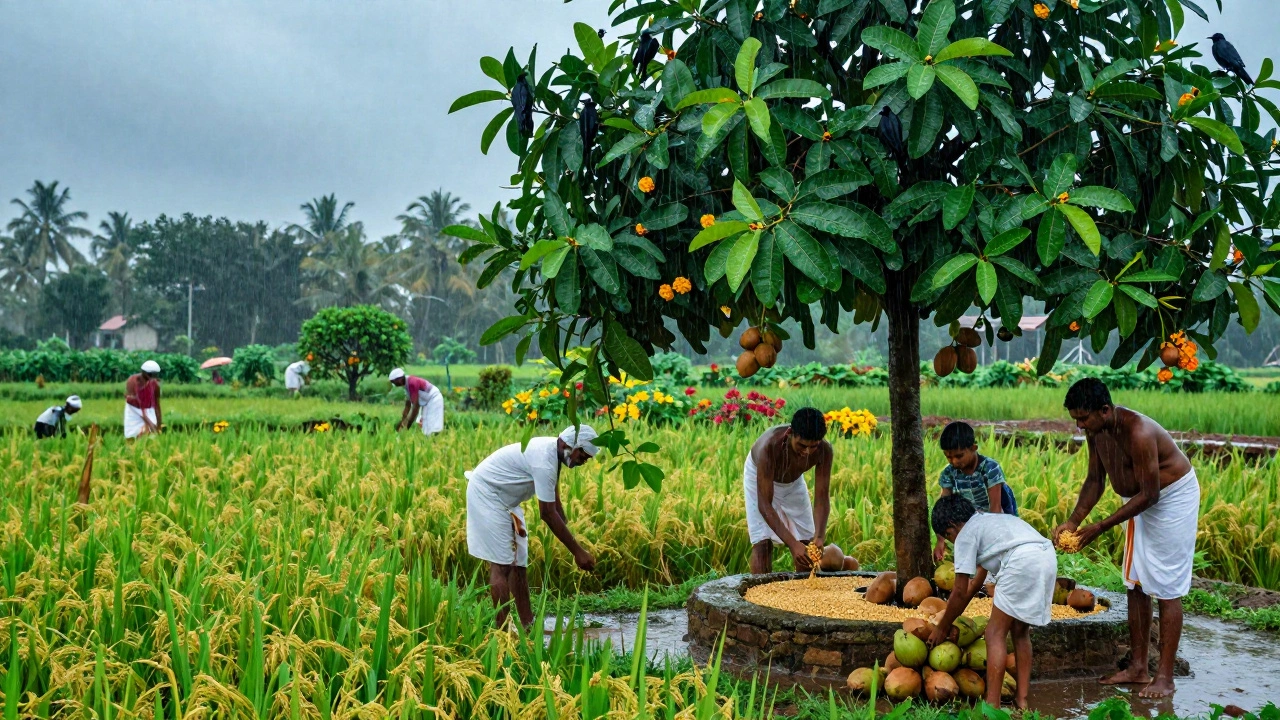
- June-July: Sow rice, lentils, and bitter gourd. Rain is here. Keep a tulsi plant nearby to attract beneficial insects.
- October-November: Grow spinach, carrots, radish. These are linked to the harvest festival of Diwali. Many families plant radish as a symbol of prosperity.
- December-February: Plant peas, cabbage, coriander. Cold weather crops. Keep compost piles warm with dry leaves.
Don’t just follow the calendar-follow the signs. If the neem leaves curl inward, rain is coming. If the crows gather near your garden, pests are nearby. These aren’t folklore-they’re observations passed down because they work.
Final Thought: Gardening as Devotion
There’s no Hindu god of gardening with a crown and a hoe. But there are gods who watch over rain, soil, seeds, and harvest. And in India, the act of planting is itself a form of worship.
When you water your plants, you’re not just giving them life-you’re continuing a tradition older than cities, older than empires. You’re part of a chain that began when the first human bent down, dug a hole, and placed a seed into the earth, hoping for more than food-for abundance, for peace, for blessing.
You don’t need a temple. You just need a patch of soil, a handful of seeds, and the quiet understanding that what grows here is sacred.
Is there a single Hindu god of gardening?
No, there isn’t one single god. Gardening in Hindu tradition is tied to multiple deities: Prithvi (Earth), Indra (rain), Shiva and Parvati (fertility and transformation), and Vishnu (preservation through sacred plants like tulsi). Each plays a role in the cycle of growth.
Why is tulsi so important in Indian gardens?
Tulsi, or holy basil, is considered an earthly form of the goddess Tulasi, who is devoted to Lord Vishnu. It’s planted in nearly every Hindu home not just for its medicinal properties but as a living symbol of divine presence. Daily watering and prayers to tulsi are acts of devotion, believed to bring health and protection to the household.
Do Hindus worship plants as gods?
They don’t worship plants as gods, but they see certain plants as sacred manifestations of divine energy. Tulsi, neem, banyan, and bel are treated with ritual care because they’re believed to carry spiritual power. This is different from idol worship-it’s about honoring the living connection between nature and the divine.
Can non-Hindus practice these gardening traditions?
Absolutely. These practices-planting tulsi, composting kitchen waste, growing seasonal crops, respecting the soil-are ecological wisdom wrapped in cultural form. You don’t need to believe in the gods to benefit from the methods. Many urban gardeners around the world use these techniques because they work.
What’s the best way to start a Hindu-inspired vegetable garden?
Start with tulsi. Plant it in a small pot or corner of your garden. Grow one or two seasonal vegetables like tomatoes or radishes using compost. Water with intention, not just routine. Observe the seasons, save seeds, and avoid chemicals. That’s the heart of it-not ritual, but relationship-with the earth, the plants, and the cycles of life.