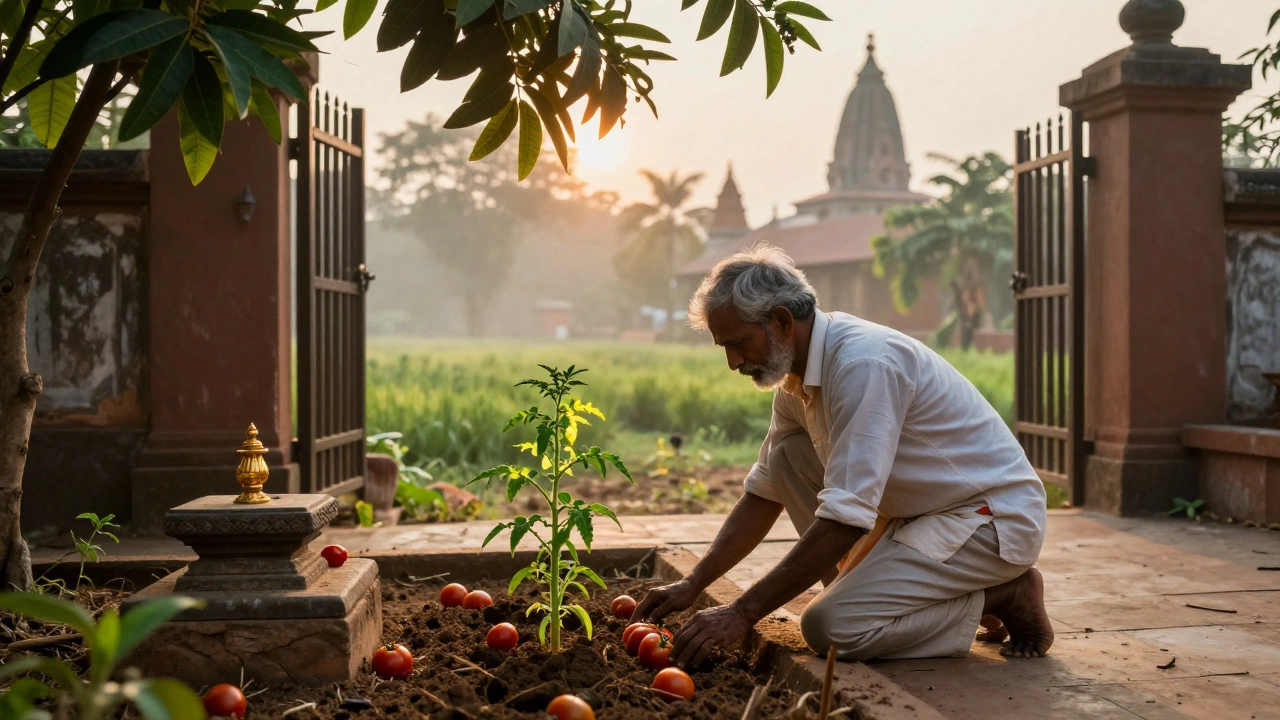
Discover the Hindu deities tied to gardening and crop growth in India-from Prithvi and Indra to tulsi and sacred plants. Learn how ancient traditions still shape modern vegetable gardening in homes and fields across the country.
Indian Gardening Traditions: Time-Tested Methods for Healthy Soil and Year-Round Crops
When you think of Indian gardening traditions, centuries-old practices that blend local climate knowledge, natural inputs, and community wisdom to grow food and flowers sustainably. Also known as traditional Indian agriculture, it’s not just about planting seeds—it’s about working with monsoons, respecting soil life, and using what’s already around you. These aren’t old-school ideas stuck in the past. They’re alive in village backyards, urban balconies, and organic farms from Haryana to Kerala, where people grow vegetables that have fed families for generations.
One key part of these traditions is native Indian vegetables, crops like amaranth, bitter gourd, and drumstick that thrive in India’s heat and rain without needing chemical help. These plants aren’t just nutritious—they’re tough. They don’t need fancy fertilizers or drip systems to survive. They’ve evolved with the land. That’s why farmers in Uttar Pradesh and Tamil Nadu still grow them alongside newer varieties. Another strong thread is organic gardening India, the use of compost, cow dung, and neem cake instead of synthetic chemicals. This isn’t trendy—it’s how most Indian households gardened before pesticides arrived. You’ll find this in the same posts that show how to make your own topsoil using compost and screened soil, or how to fix dense clay soil with leaf mold and cow manure.
Water is another big piece. Instead of expensive irrigation kits, many traditional gardens rely on rainwater harvesting, raised beds to avoid flooding, and planting schedules synced with monsoon cycles. That’s why you’ll see guides on sustainable farming India, methods that reuse resources, reduce waste, and keep farms running without draining groundwater. These practices show up in posts about stopping terrace leaks before they ruin your garden, or choosing plants that bloom all year round without constant watering. You won’t find much talk about imported seeds or imported tools here. It’s all about what works in your backyard, your balcony, your village plot.
And it’s not just about plants. It’s about rhythm. Planting when the earth is soft after rain. Pruning before the hot season hits. Letting the soil rest between crops. These aren’t random tips—they’re patterns passed down through generations. The posts below reflect this: you’ll find guides on how to care for a bonsai tree using local soil mixes, how to protect zinnias from rabbits without chemicals, and why rice has to be replanted every year because it’s an annual, not a perennial. You’ll learn what makes Haryana India’s vegetable capital—not because of big machines, but because of smart crop rotation and soil care.
What you’ll find here isn’t a list of rules. It’s a collection of real, working ideas—tested by farmers, refined by gardeners, and adapted for modern homes. Whether you’re growing on a balcony in Mumbai or a plot in Punjab, these traditions give you a foundation that’s simple, cheap, and built to last. No fluff. No hype. Just what works in India’s soil, under India’s sun, with India’s seasons.