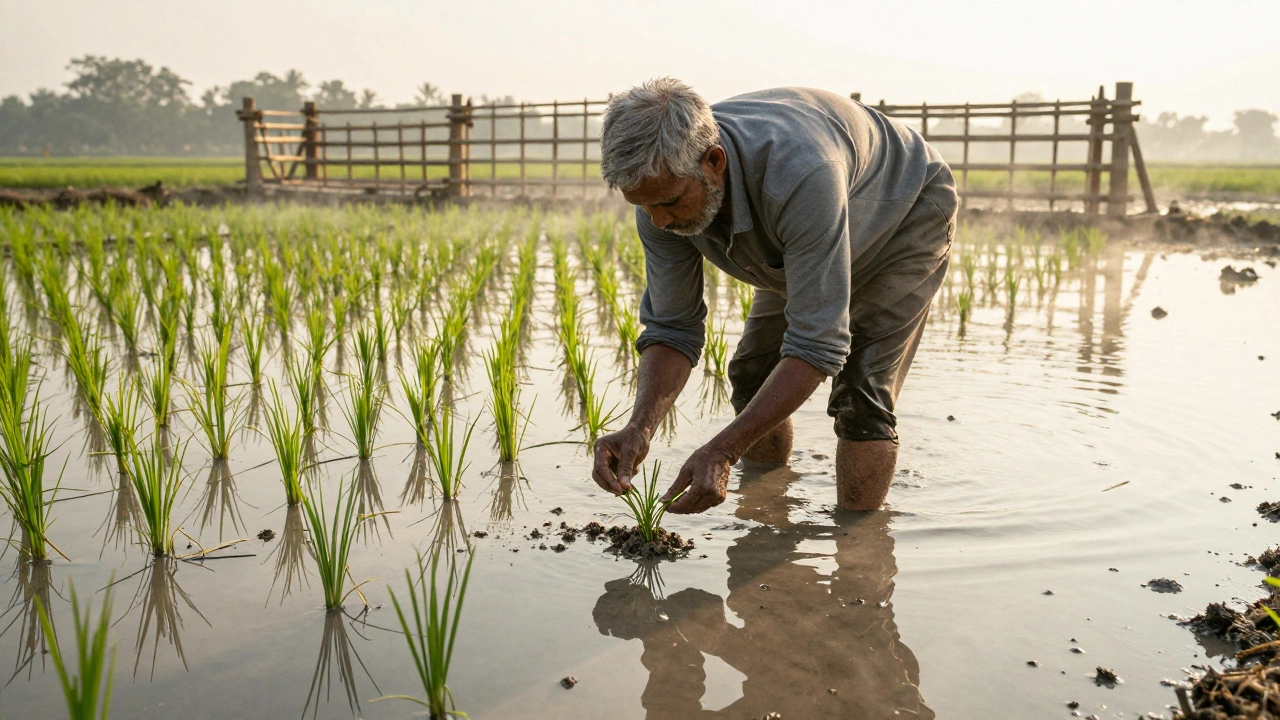
Rice feeds billions, but growing it requires perfect water control, warm temperatures, heavy soil, and relentless labor. Even small mistakes can wipe out an entire crop.
Rice Water Needs: How Much Water Does Rice Really Require in Indian Gardens?
When you grow rice, a staple cereal crop that feeds over half the world’s population and is deeply tied to India’s farming culture. Also known as paddy, it’s not just a plant—it’s a water-intensive system that shapes how farmers plan their seasons, manage fields, and even choose their tools. In India, rice isn’t grown the same way everywhere. In the flooded fields of Punjab, it thrives under deep water. In the dry uplands of Odisha or Maharashtra, farmers use less water and rely on rain or smart irrigation. The truth? rice water needs aren’t one-size-fits-all.
Water isn’t just poured on rice—it’s managed. Too little, and the plants stress, yield drops. Too much, and you waste water, invite pests, and leach nutrients. Farmers who get it right know that rice needs different amounts at different stages. During transplanting, fields are flooded to protect young seedlings. Later, during tillering and flowering, they keep a shallow layer—just 2 to 5 centimeters—enough to cool the roots and suppress weeds. After grain filling, they let the soil dry slightly to help the grains harden. This isn’t guesswork; it’s based on decades of local experience and studies from ICAR. And now, with water scarcity rising, even small-scale gardeners are switching to methods like drip irrigation for rice, a system that delivers water directly to the root zone, cutting usage by up to 40% compared to traditional flooding. It’s not common yet, but pilot projects in Tamil Nadu and Andhra Pradesh show it works—even in paddy.
What about soil? Clay holds water better than sandy soil, so rice grown in heavy soils needs less frequent watering. In raised beds or container gardens, you’ll need to water more often but in smaller doses. And don’t forget the monsoon. In regions with heavy rainfall, rice can survive on natural water—no pumps, no pipes. But in dry spells, even a few days without moisture can kill a crop. That’s why smart gardeners in places like Haryana and West Bengal mix rice with drought-tolerant crops or use mulch to hold moisture. The real win? When water use matches the plant’s rhythm, not the calendar.
You’ll find posts here that show how to cut water waste without hurting yield, how to fix leaking terraces where rice seedlings are started, and even how Indian farmers use ancient water storage systems still working today. Some posts compare rice water needs with other crops like tomatoes or onions. Others break down why drip systems fail—and how to fix them. You’ll also see how compost and soil health play a role in how well rice holds onto every drop. This isn’t about theory. It’s about what works in Indian fields, balconies, and home gardens right now.