Pumpkin Harvest Estimator
Estimate how much pumpkin you can harvest based on your garden space and growing conditions. India's national vegetable thrives in various climates and soil types!
Your Estimated Yield
Based on your garden conditions
Tip: Indian pumpkins yield best in 20-30°C temperatures. Plant between February-April for northern India, or July-August in southern states after monsoon.
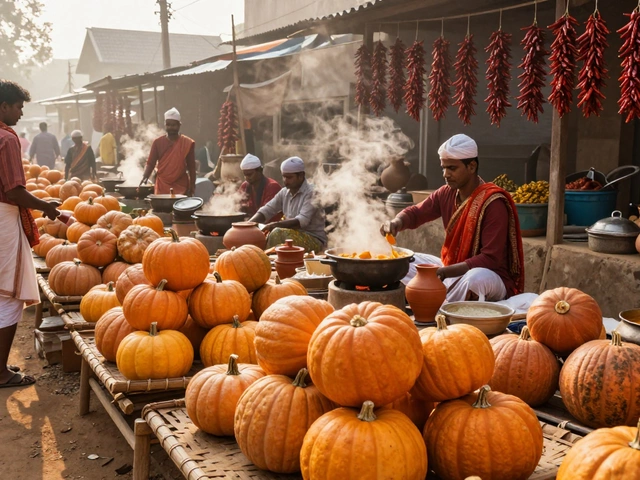
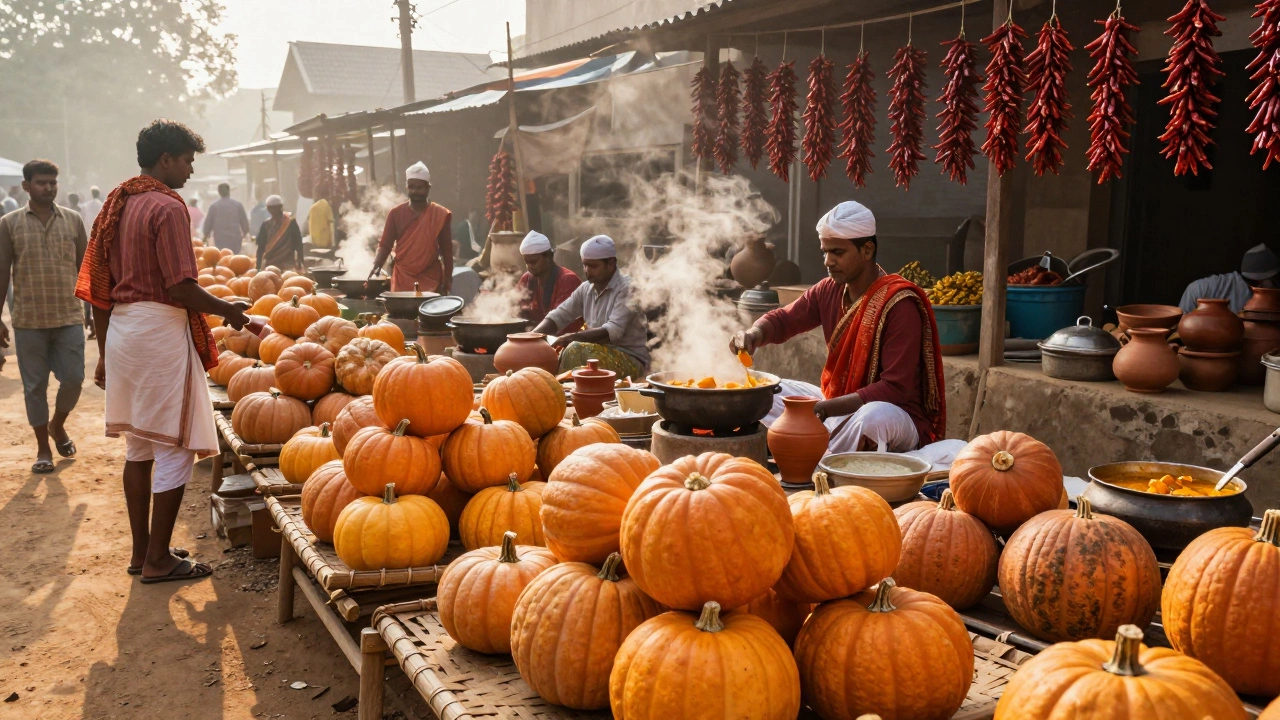
Ask someone what India’s national vegetable is, and you’ll get a lot of wrong answers. Some say tomato. Others say brinjal. A few even say potato. But the truth? It’s the pumpkin. Not because it’s flashy or spicy. Not because it’s rare. But because it’s everywhere-in rural kitchens, city markets, temple offerings, and monsoon-season curries. And it’s been that way for centuries.
Why the pumpkin? It’s not about prestige-it’s about survival
India doesn’t have an official government declaration naming a national vegetable. That’s a myth. No law, no ministry document, no parliamentary resolution says "pumpkin is the national vegetable." But if you talk to farmers in Uttar Pradesh, housewives in Odisha, or street vendors in Delhi, they’ll tell you the same thing: kaddu (pumpkin) is the real national vegetable. Why? Because it feeds people when nothing else can.
It grows in almost every soil type. It needs little water once established. It resists pests better than most vegetables. And it produces more than any other vine crop in India’s hot, humid climate. A single plant can yield 10-20 kg of fruit over three months. That’s more than double the output of tomatoes or okra under the same conditions.
In 2023, India produced over 11 million tonnes of pumpkin-more than any other country in the world. That’s 25% of global production. And most of it? Eaten at home. Not exported. Not turned into juice. Just chopped, boiled, spiced, and served with roti. It’s the vegetable that doesn’t ask for much but gives back everything.
It’s not just food-it’s culture
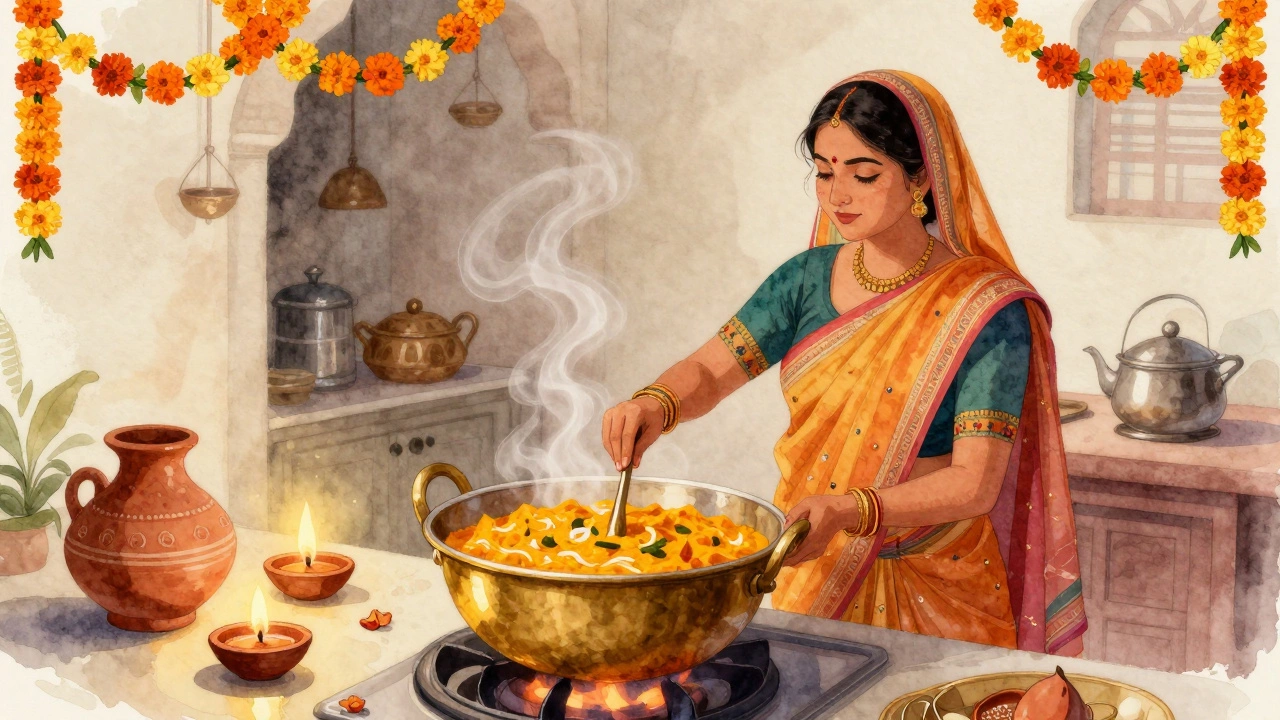
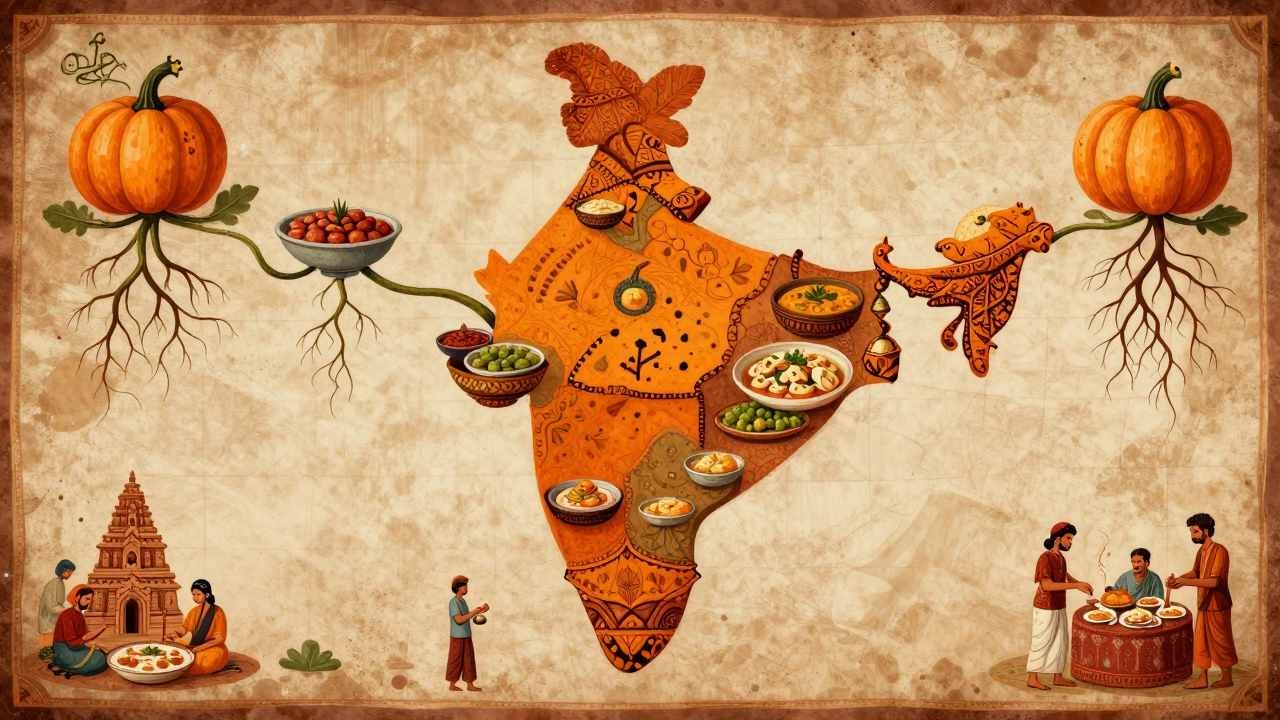
Walk into any traditional Indian kitchen during Diwali or Holi, and you’ll find pumpkin dishes. In Bengal, it’s mixed with lentils to make alur dom. In Maharashtra, it’s fried with gram flour as kaddu bhaji. In Gujarat, it’s cooked into sweet halwa for festivals. In Tamil Nadu, it’s steamed with coconut and tamarind for a tangy stew.
Even in temples, pumpkin is offered as naivedyam-a sacred food offering. Why? Because it’s considered pure, non-toxic, and easy to digest. Unlike eggplant or potato, which some orthodox communities avoid during religious fasts, pumpkin is universally accepted. It’s the one vegetable that crosses caste, region, and religion without a second thought.
How to grow pumpkin in Indian conditions
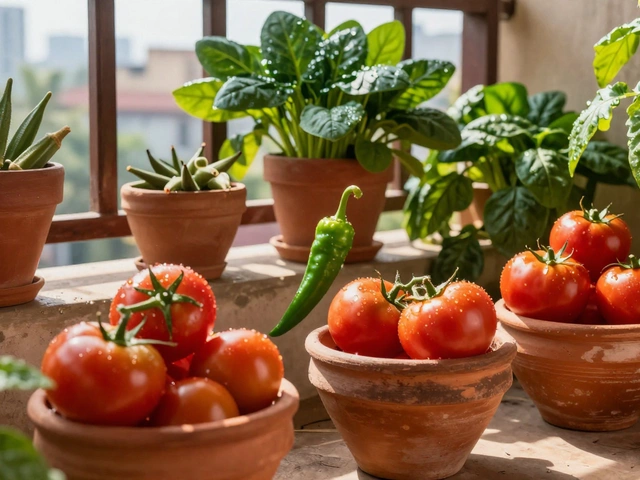
If you’re thinking of growing it yourself, you’re on the right track. Pumpkin is one of the easiest vegetables to grow in India, whether you’re in a village backyard or a balcony pot. Here’s how:
- Choose the right time: Plant between February and April for the best harvest. In southern states, you can also plant in July-August after the monsoon rains.
- Use well-drained soil: Pumpkins hate waterlogged roots. Mix compost or aged cow dung into your soil. Even in pots, use a 50-50 blend of garden soil and organic matter.
- Give it space: Vines spread 3-6 feet. If you’re short on space, train them up a trellis. In small gardens, dwarf varieties like ‘Baby Bear’ or ‘Small Sugar’ work better.
- Water deeply, not often: Water at the base once every 3-4 days. Avoid wetting the leaves-this prevents fungal diseases.
- Let it ripen: Pumpkins are ready when the skin turns deep orange and resists scratching with your fingernail. Harvest before heavy rain; wet fruit rots fast.
Don’t expect big, showy pumpkins like in the U.S. Indian varieties are smaller, denser, and sweeter. They’re meant for cooking, not carving.
Common mistakes gardeners make
Many people fail with pumpkin because they treat it like a tomato. That’s the mistake.
- Over-fertilizing: Too much nitrogen gives you lush leaves but no fruit. Use compost, not chemical fertilizers.
- Planting too close: Crowded vines don’t get airflow. That’s how powdery mildew spreads.
- Harvesting too early: A pale orange pumpkin won’t taste sweet. Wait until the stem turns dry and brown.
- Ignoring pollinators: Pumpkins need bees. If you don’t see bees around, hand-pollinate by transferring pollen from male flowers (thin stem) to female flowers (bulb at the base).
One farmer in Rajasthan told me he gets 50 pumpkins per plant just by planting near marigolds. The flowers repel aphids. No chemicals. No cost. Just smart gardening.
What about other vegetables? Why not tomato or okra?
Tomato is popular. Okra is loved. But neither has the same resilience or cultural reach. Tomatoes need consistent watering, careful pruning, and protection from blight. Okra grows fast but yields less per plant and is sensitive to cold. Pumpkin? It thrives in heat, drought, poor soil, and neglect.
In 2021, a study by the Indian Council of Agricultural Research found that pumpkin had the highest yield-to-input ratio of all vegetables in India. For every rupee spent on seeds, water, and compost, farmers got back 8-12 rupees in edible produce. Tomato? 3-5 rupees. Potato? 4-6.
It’s not about taste. It’s about efficiency. And in a country where millions still rely on homegrown food, efficiency matters more than flavor.
Is pumpkin really the national vegetable? Yes, by default
India doesn’t need to declare a national vegetable. The people already did. Every time a mother feeds her child pumpkin khichdi during illness. Every time a farmer sells his last kaddu at the market to buy medicine. Every time a temple priest places a whole pumpkin on the altar.
It’s not a symbol chosen by politicians. It’s a symbol chosen by survival.
If you want to grow something truly Indian in your garden, don’t chase exotic seeds from abroad. Plant pumpkin. It’s already yours.
Is pumpkin officially declared as India’s national vegetable?
No, India has never officially declared a national vegetable through law or government notification. However, pumpkin (kaddu) is widely accepted as the de facto national vegetable due to its cultural significance, widespread cultivation, and nutritional importance across all regions of India.
Why is pumpkin called the national vegetable if it’s not official?
Pumpkin earned this title through practical use. It grows in almost every Indian climate, requires minimal care, produces high yields, and is used in nearly every regional cuisine. It’s also the only vegetable accepted in all religious and dietary practices-from fasting to temple offerings. No other vegetable has this level of universal acceptance.
Can I grow pumpkin in a small balcony or terrace garden?
Yes, absolutely. Use dwarf varieties like ‘Baby Bear’ or ‘Sugar Pie’ in pots that are at least 12 inches deep and wide. Train the vines up a trellis or let them spill over the edge. Place the pot where it gets 6-8 hours of sunlight daily. Water at the base every 3-4 days. You’ll get 3-5 pumpkins per plant even in small spaces.
What’s the best time to plant pumpkin in India?
The best planting times are February to April in northern and central India, and July to August in southern India after the monsoon. Avoid planting during the peak heat of May-June or the cold of December-January. Pumpkin thrives in warm, humid conditions with temperatures between 20°C and 30°C.
How do I know when my pumpkin is ready to harvest?
Look for three signs: the skin turns a deep, uniform orange (or whatever color your variety is), the rind feels hard and resists scratching with your fingernail, and the stem connecting the fruit to the vine turns dry and brown. Cut the pumpkin with a sharp knife, leaving about 2 inches of stem attached to prevent rot.
Next time you see a pumpkin at the market, don’t just buy it for curry. Think of it as a piece of India’s food history. It’s the quiet hero of the garden-unassuming, reliable, and always there when you need it.