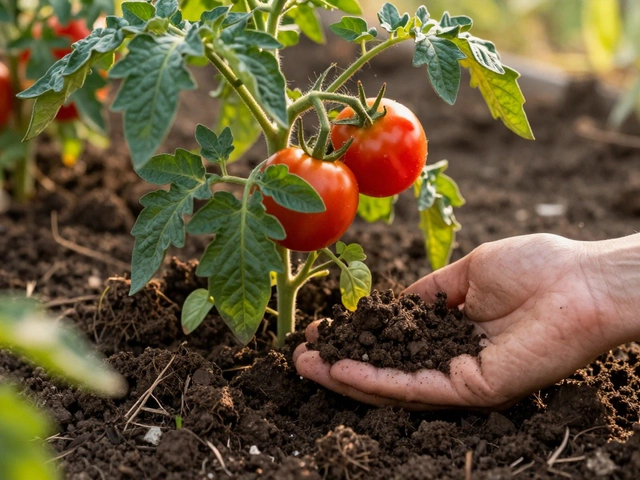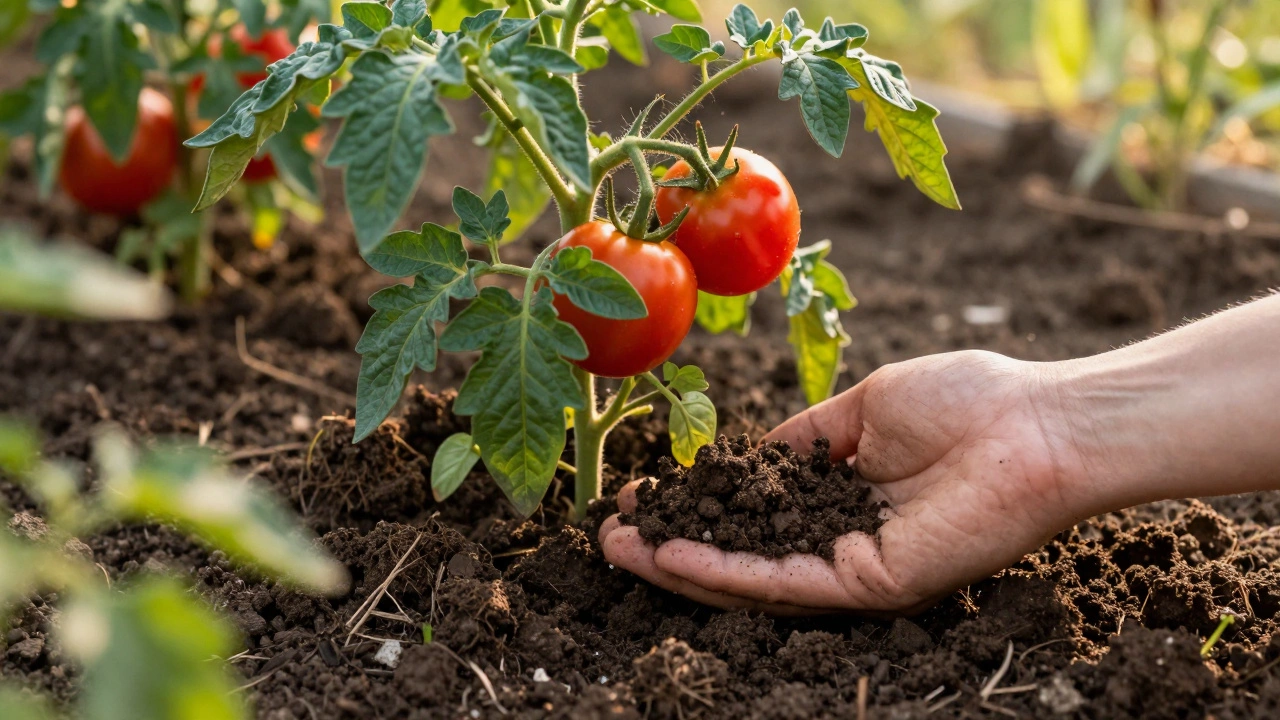
Tomato plants are hungry. They don’t just grow-they demand. If your tomatoes are small, pale, or dropping flowers before fruit sets, the problem isn’t usually the sun, the water, or even the variety. It’s the soil. And the best thing to add to soil for tomatoes? It’s not a miracle product. It’s not a fancy chemical blend. It’s compost.
Compost isn’t just organic matter. It’s a living, breathing ecosystem that feeds tomatoes slowly, steadily, and naturally. A study from the University of California found that tomato plants grown in soil amended with well-aged compost produced 30% more fruit than those fed only synthetic fertilizer. Why? Because compost doesn’t just give nutrients-it builds soil structure, holds moisture, and supports the microbes that help tomatoes absorb what they need.
Why compost works better than synthetic fertilizers
Synthetic fertilizers give a quick burst of nitrogen, phosphorus, and potassium. But they don’t last. Rain washes them away. Heat breaks them down. And over time, they can salt the soil, killing the good bacteria that tomatoes rely on. Compost? It releases nutrients over months. A single application in spring can feed your plants all season.
Tomatoes need a steady diet. Too much nitrogen early on? You get leafy plants with no fruit. Too little later? The fruit stays small and hard. Compost balances that. It’s rich in micronutrients like calcium and magnesium-exactly what tomatoes need to avoid blossom end rot and build strong cell walls.
What kind of compost works best?
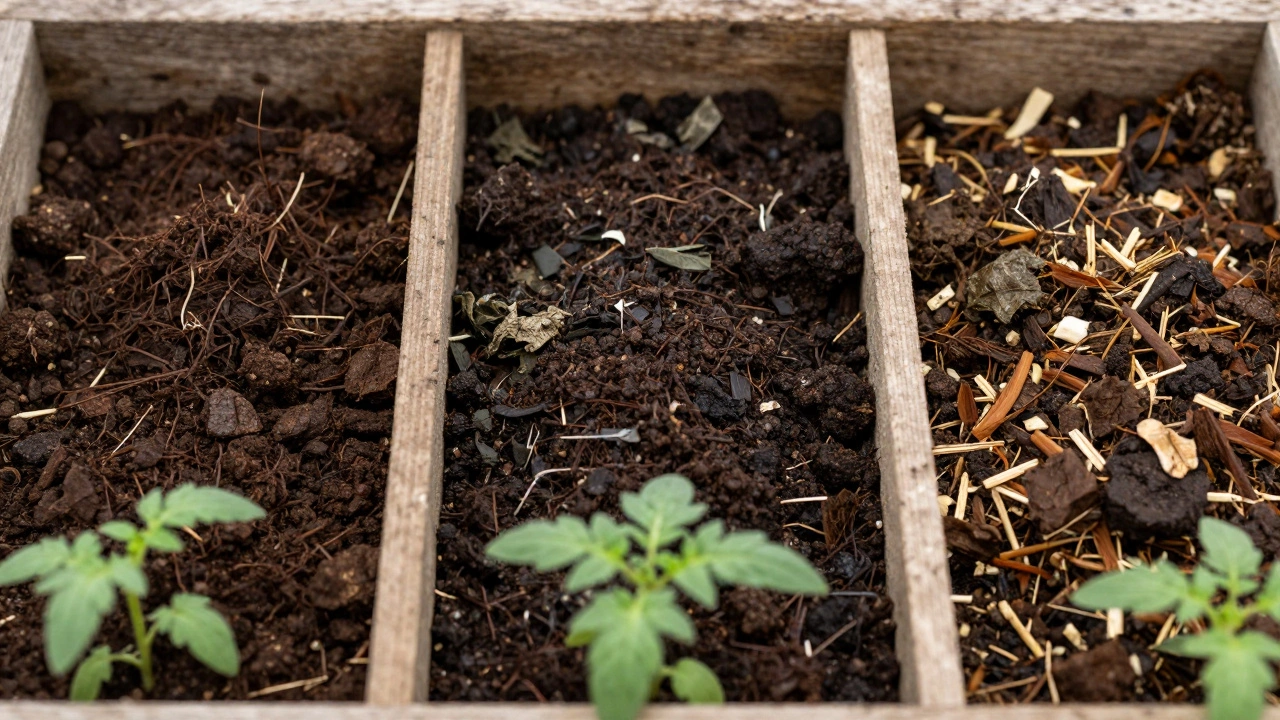
Not all compost is equal. The best kind for tomatoes is fully decomposed, dark, crumbly, and smells like damp earth-not sour or ammonia-like. Here’s what to look for:
- Manure-based compost (cow, horse, or chicken): High in nutrients, but must be aged at least 6 months. Fresh manure burns roots.
- Leaf mold compost: Excellent for water retention. Great if your soil drains too fast.
- Vegetable-based compost: Made from kitchen scraps and garden waste. Low in salt, perfect for containers.
- Mushroom compost: Often contains lime, so use it in moderation if your soil is already alkaline.
For container tomatoes, use a 50/50 mix of compost and potting soil. For garden beds, spread 2-3 inches over the surface and mix it into the top 6-8 inches of soil before planting.
Other helpful soil amendments-when to use them
Compost is the foundation, but sometimes tomatoes need a little extra help. Here’s what else you might add-and when.
Eggshells for calcium
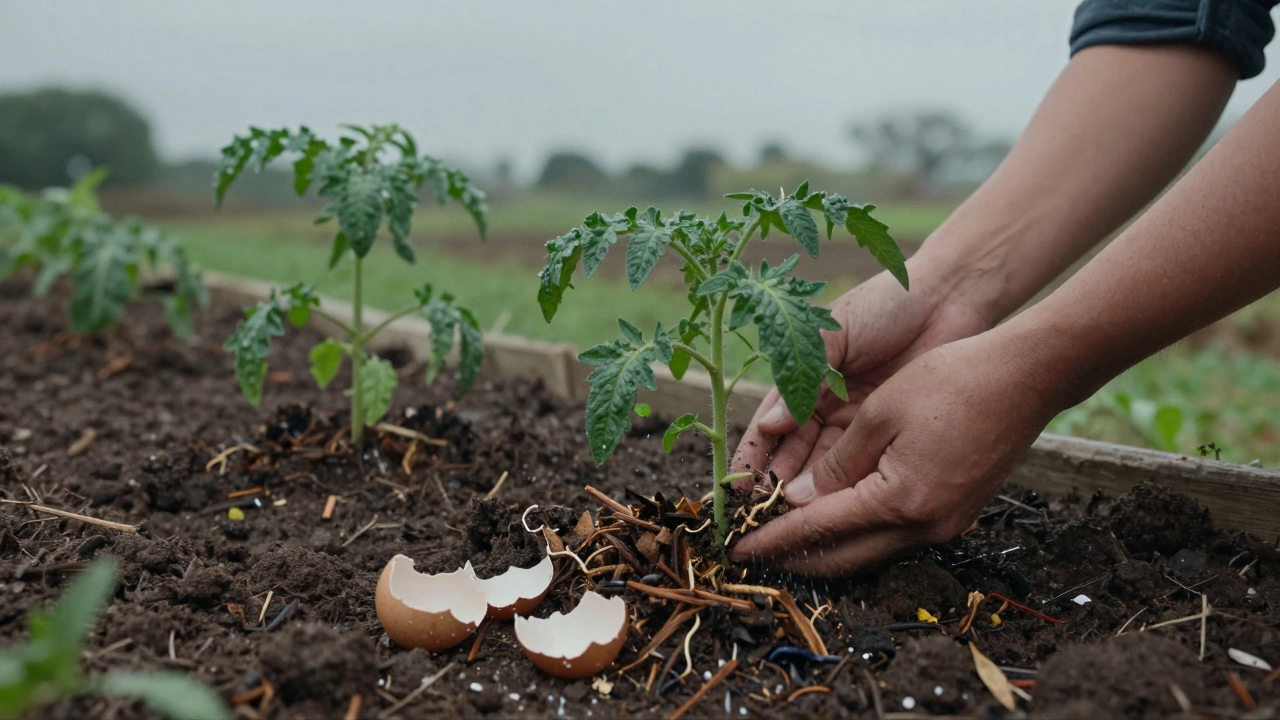
Blossom end rot looks like a black, sunken spot on the bottom of the fruit. It’s not a disease-it’s a calcium shortage. But adding eggshells doesn’t help if you just toss them in the hole. Crush them finely, mix them into compost, and let them break down over weeks. For a quick fix, brew eggshell tea: soak 10 cleaned shells in a gallon of water for 24 hours, then water the base of your plants with it.
Bone meal for phosphorus
Phosphorus helps roots and fruit develop. If your soil test shows low phosphorus (most garden soils do), mix in 1/2 cup of bone meal per plant at planting time. Don’t overdo it-too much can lock up micronutrients. Bone meal works best in cool spring soil, when tomatoes are getting started.
Worm castings for microbial boost
Worm castings are compost’s supercharged cousin. They’re packed with microbes, enzymes, and humic acids. Sprinkle a handful around each plant’s base after transplanting. You’ll see faster growth and better disease resistance. They’re safe, odorless, and won’t burn roots-even if you use too much.
Peat moss or coconut coir for moisture
If your soil is sandy and drains too fast, mix in 1 part peat moss or coconut coir to 3 parts soil. Peat moss lowers pH, which tomatoes like (they prefer slightly acidic soil, 6.0-6.8). Coconut coir is a sustainable alternative that holds water even better. Avoid perlite or vermiculite-they’re for drainage, not feeding.
What NOT to add to tomato soil
Some common gardening advice is flat-out wrong for tomatoes.
- Wood ash: Raises soil pH too much. Tomatoes hate alkaline soil.
- Fresh coffee grounds: Too acidic and can inhibit seed germination. Use them in compost, not directly.
- Uncomposted manure: Burns roots and can carry E. coli or salmonella.
- Chemical lime: Only use if a soil test shows pH below 5.5. Most home gardens don’t need it.
How to test your soil before you add anything
You don’t need a lab to know what your soil needs. A simple home test works:
- Take soil from 6 inches deep in 3 spots around where you’ll plant.
- Mix it in a clean container.
- Dig a hole 12 inches deep. Fill it with water. If it drains in under 10 minutes, your soil is too sandy. If it takes over an hour, it’s heavy clay.
- Smell it. If it smells sour, it’s anaerobic and needs more air. Add compost and loosen the soil.
- For pH: Use a $10 digital meter. Tomatoes like 6.0-6.8. Below 5.5? Add a little composted lime. Above 7.0? Mix in more acidic compost or pine needles.
Seasonal timing matters
Adding compost in fall lets it break down over winter. Spring applications work too, but give it 2-3 weeks to integrate before planting. For container tomatoes, refresh the top 2 inches of soil with fresh compost every 6 weeks.
In late summer, when fruit is setting, a side-dressing of worm castings or compost tea can boost yield. Just pour diluted compost tea (1 part tea to 5 parts water) around the base. No need to spray leaves-tomatoes hate wet foliage.
Real-world results: What works in Brighton gardens
Here in Brighton, we have clay-heavy soil with lots of rain. Last year, three neighbors tried different approaches:
- One used only synthetic tomato feed. Got 8 large tomatoes per plant.
- One used compost + bone meal. Got 14 tomatoes, all firm, sweet, and with no rot.
- One used compost + worm castings + crushed eggshells. Got 19 tomatoes-some over 1 pound each.
The difference? Compost didn’t just feed the plant. It fed the soil. And the soil fed the plant back.
Final tip: Rotate your crops
Tomatoes shouldn’t grow in the same spot two years in a row. They deplete nutrients and invite diseases like blight. Plant them after legumes (peas, beans) or onions. Let the soil rest with cover crops like clover in the off-season. Then, when you come back, add fresh compost-and you’ll be amazed at the difference.
Can I use store-bought potting soil for tomatoes?
Yes, but most store-bought potting soils are designed for general use-they lack the slow-release nutrients tomatoes need. Mix in 30% compost to boost fertility and microbial life. Avoid soils with added fertilizer unless they’re organic and slow-release.
How much compost should I add per tomato plant?
For garden beds, spread 2-3 inches of compost over the planting area and mix it into the top 6-8 inches of soil. For individual plants, add about 1 gallon of compost per hole before planting. In containers, use a 1:1 ratio of compost to potting mix.
Is manure better than compost for tomatoes?
Not directly. Fresh manure can burn roots and spread pathogens. Well-aged compost made from manure is ideal-but composted manure is already broken down and safe. If you’re using manure, let it age for at least 6 months before adding it to soil.
Do tomatoes need lime in the soil?
Only if your soil is too acidic (below pH 5.5). Most garden soils are fine. Adding lime unnecessarily can lock up nutrients like iron and manganese, causing yellow leaves. Test your soil first. If pH is 6.0-6.8, skip lime.
Can I use coffee grounds directly on tomato plants?
Not as a direct top-dressing. Fresh coffee grounds are too acidic and can form a crust that blocks water. But if you mix them into compost, they’re excellent. Use no more than 10% of your compost pile as coffee grounds.
Tomatoes don’t need fancy treatments. They need healthy soil. And healthy soil starts with compost. Add it once, right, and your plants will do the rest.