Rare Flower Explorer & Trip Planner
Select a rare flower below to discover its rarity factor, difficulty level, and how to spot it responsibly.
Neelakurinji
The Blue Wave Every 12 YearsKerala Hills
Ghost Orchid
The Invisible LeaflessNortheast Forests
Brahma Kamal
Himalayan Gem ProtectedHigh Himalayas
Blue Poppy
Desert Survivor AlpineLadakh/Spiti
Royal Lotus
Sacred Bloom AncientSouth India
Nepenthes
Carnivorous EndemicWestern Ghats
Key Statistics
Why is it Rare?
Spotting Tips
Have you ever heard of a flower that only blooms once every twelve years? Or a blossom so elusive that spotting it in the wild feels like finding a needle in a haystack? India isn’t just home to vibrant marigolds and jasmine; it holds some of the most mysterious and rare floral treasures on the planet. If you are wondering what is the rare flower in India, the answer isn’t just one plant-it’s a diverse list of botanical wonders ranging from the ghostly white orchids of the Northeast to the blue hills of Kerala.
Finding these flowers isn’t just about satisfying curiosity. It’s about understanding conservation, appreciating unique ecosystems, and knowing what makes certain plants nearly impossible to cultivate outside their native habitats. Whether you are a gardener looking for a challenge or a nature enthusiast planning a trek, knowing these names changes how you see the Indian landscape.
The Once-in-a-Decade Blue Wave: Neelakurinji
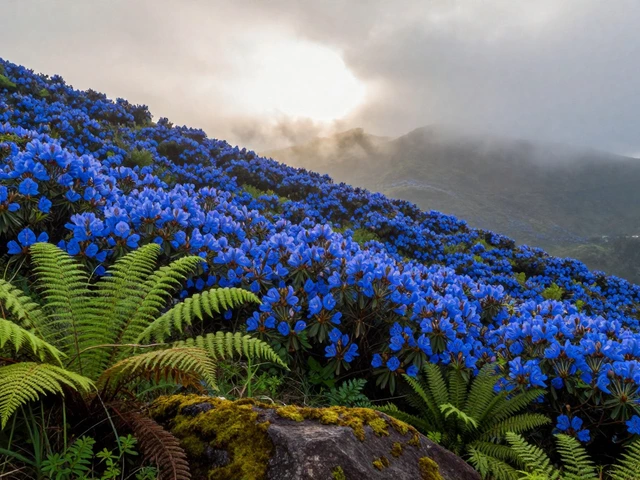
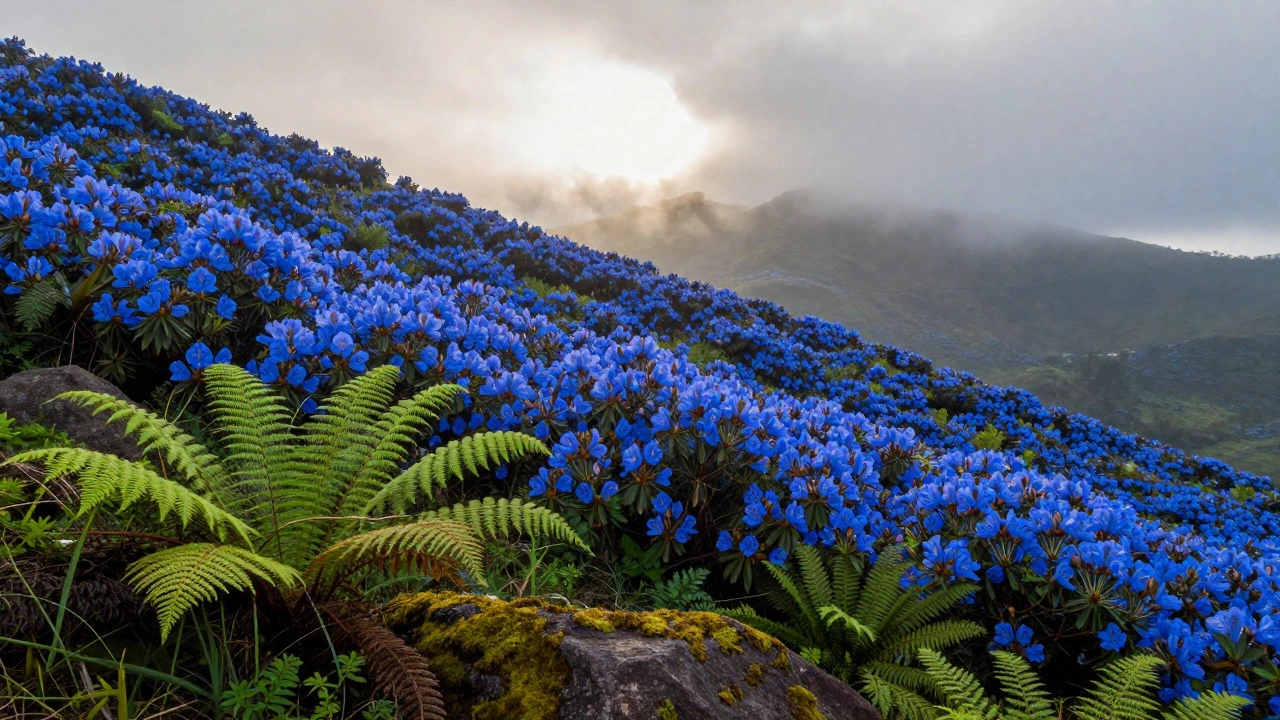
If there is one flower that defines rarity through timing rather than scarcity, it is the Neelakurinji (Strobilanthes kunthiana). This small shrub is famous for its synchronized blooming cycle. For eleven years, it looks like an ordinary green bush. Then, in the twelfth year, millions of them bloom simultaneously, turning the Western Ghats hillsides into a sea of deep blue.
The last major bloom happened in 2018. The next one is expected around 2030. This phenomenon occurs primarily in the Idukki and Ernakulam districts of Kerala. What makes this plant special isn’t just the color-it’s the biological precision. Scientists believe the long gap allows the plant to store enough energy to produce massive amounts of nectar, which supports local bee populations during lean years. Trying to grow Neelakurinji at home is notoriously difficult because it requires specific high-altitude mist and soil acidity found only in those specific hill ranges.
The Ghost of the Northeast: Ghost Orchid
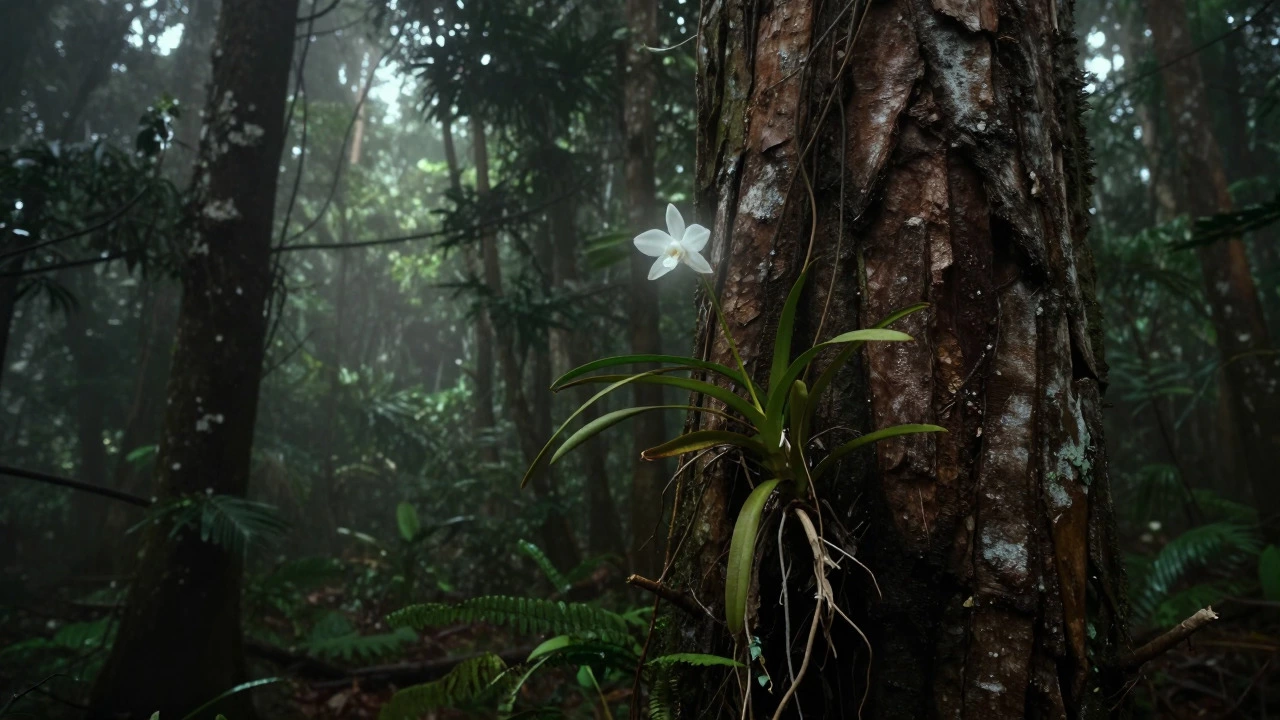
Moving to the humid forests of Meghalaya and Assam, we find the Ghost Orchid (Dendrophylax lindenii, though distinct Indian species like Taeniophyllum are often called ghosts too). These orchids don’t have leaves. Instead, their stems perform photosynthesis, making them look like bare, twisted branches clinging to tree trunks. Without flowers, they are virtually invisible against the bark.
When they do bloom, they release a scent similar to ripe bananas or fermenting fruit to attract moth pollinators. The rarity here comes from their epiphytic nature-they need very specific humidity levels and air quality. They cannot survive in pots with regular soil. For gardeners, this means the Ghost Orchid is almost exclusively a sightseeing experience in places like Mawlynnong village, known as Asia’s cleanest village, where the microclimate supports these delicate beauties.
The Royal Bloom: Padma Nageshwara Swamy Temple Lotus
Sometimes rarity is tied to location rather than biology. The Royal Lotus associated with temples in Andhra Pradesh and Tamil Nadu often refers to specific cultivars of Nelumbo nucifera that have been preserved for centuries. However, a more botanically distinct rare water lily is the Nymphaea nouchali var. marliacea, often found in sacred ponds.
But let’s talk about the truly rare aquatic: the Burmese Water Lily (Victoria amazonica variants) seen in select botanical gardens like the National Botanical Research Institute in Lucknow. These giant lilies can support the weight of a child. In India, they are rare because they require large, warm, still bodies of water and intense sunlight. Most backyard ponds aren’t big enough or warm enough to sustain them through the winter.
The Himalayan Gem: Brahma Kamal
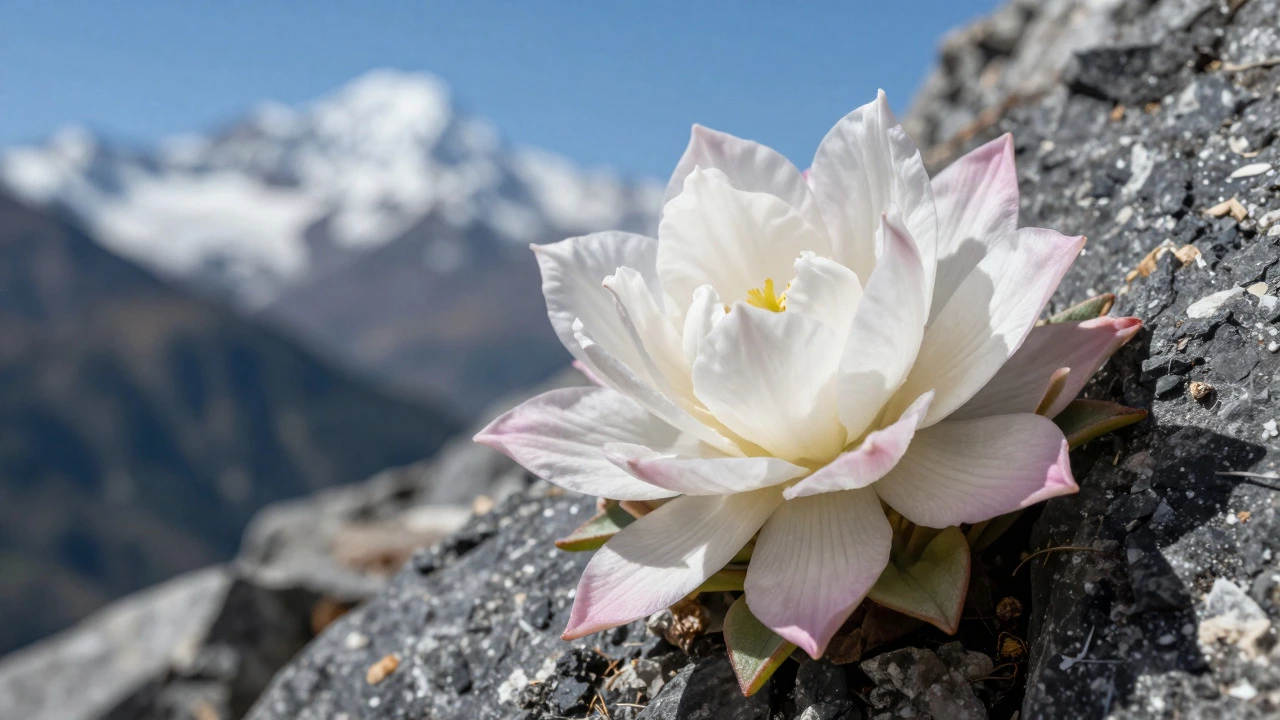
High in the Himalayas, above the tree line, grows the Brahma Kamal (Saussurea obvallata). Locals revere it as a divine flower. It has a unique structure: a central bud surrounded by multiple layers of petal-like bracts that can be white, pink, or yellow. Unlike typical flowers, it doesn’t have true petals; those colorful layers are modified leaves.
This plant is critically endangered due to overharvesting for traditional medicine. It takes up to seven years for a Brahma Kamal to mature and bloom. Because of its slow growth and high demand, it is protected under the Wildlife Protection Act of India. You won’t find this in any garden center. Seeing one requires a trek to altitudes between 4,000 and 5,000 meters in states like Uttarakhand, Himachal Pradesh, and Sikkim during the short summer window of July to September.
The Desert Survivor: Blue Poppy
In the cold deserts of Ladakh and Spiti Valley, the Blue Poppy (Meconopsis betonicifolia) stands out against the barren rock. Its sky-blue petals are striking, but the plant itself is fragile. It thrives in rocky, well-drained soils at high altitudes where nights are freezing and days are sunny.
Gardeners worldwide try to cultivate Meconopsis, but it is famously fussy. It hates root disturbance and needs cool roots with warm tops. In India, it is rare outside its native alpine zones. If you visit Leh in late spring, you might spot wild patches, but picking them is prohibited. The rarity here is ecological-it survives in conditions that kill most other flowering plants.
The Carnivorous Curiosity: Nepenthes Rajah
Not all rare flowers are pretty in the traditional sense. In the Western Ghats and parts of the Northeast, you’ll find Nepenthes Rajah, a tropical pitcher plant. While not a “flower” in the showy sense, its blooms are significant, and the plant itself is a botanical marvel. It traps insects and even small vertebrates in its waxy pitchers.
This plant is endemic to Mount Kinabalu in Borneo, but related rare Nepenthes species exist in India’s biodiversity hotspots. They are rare because they need extremely high humidity and pure rainwater. Tap water kills them. For hobbyists, growing carnivorous plants is a lesson in patience and purity of resources.
Why Are These Flowers So Rare?
You might wonder why these flowers don’t spread everywhere. Several factors contribute to their scarcity:
- Habitat Specificity: Many rare flowers like the Brahma Kamal or Neelakurinji require precise altitude, temperature, and soil pH. Move them ten miles away, and they die.
- Pollination Dependencies: Some orchids rely on a single species of moth or bee. If that insect declines, the flower cannot reproduce.
- Slow Growth Cycles: Plants like the Blue Poppy take years to reach maturity. Overharvesting wipes out generations before they can replace themselves.
- Climate Change: Shifting weather patterns disrupt the delicate balance of moisture and temperature these plants need.
Can You Grow Rare Indian Flowers at Home?
For most of these species, the answer is no-not easily. The Ghost Orchid and Brahma Kamal are nearly impossible for average gardeners. However, you can support their survival by visiting certified botanical gardens or buying from ethical nurseries that propagate common relatives.
If you want to challenge yourself with something rare but manageable, consider cultivating native medicinal herbs like Ashwagandha or rare varieties of Tulsi. They offer a taste of India’s botanical diversity without the risk of killing a critically endangered species.
| Flower Name | Primary Location | Rarity Factor | Cultivation Difficulty |
|---|---|---|---|
| Neelakurinji | Kerala (Western Ghats) | Blooms once every 12 years | Very High |
| Ghost Orchid | Meghalaya, Assam | Invisible without flowers | Extreme |
| Brahma Kamal | Himalayas (Uttarakhand, HP) | Protected species, slow growth | Impossible for home |
| Blue Poppy | Ladakh, Spiti | Alpine climate dependency | High |
How to Spot These Flowers Responsibly
If you plan to hunt for these blooms, follow these rules:
- Go with a Guide: Local guides know where to look without disturbing the ecosystem.
- Stay on Trails: Rare plants often grow off-path. Trampling surrounding vegetation damages their habitat.
- No Picking: Take photos, not specimens. Picking a Brahma Kamal or Blue Poppy is illegal in many areas.
- Best Time to Visit: Spring (March-May) for Himalayan blooms; Monsoon (July-Sept) for Western Ghats orchids.
What is the most expensive flower in India?
While prices vary, the Brahma Kamal and rare orchids like the Ghost Orchid command high prices in illegal markets due to their scarcity. However, legally, cut flowers like premium roses or imported orchids are costly. Conservation efforts aim to keep these rare plants in the wild rather than for sale.
Where can I see Neelakurinji in full bloom?
You can see Neelakurinji in the Munnar and Eravikulam National Park regions of Kerala. Since it blooms once every 12 years, check the current year against the last bloom date (2018) to plan your trip. The next major bloom is expected around 2030.
Is it legal to pick Brahma Kamal?
No, picking Brahma Kamal is generally prohibited in protected areas like the Himalayan national parks. It is listed as a vulnerable species, and local laws protect it from overharvesting for medicinal use.
Can I grow Ghost Orchids in my house?
It is extremely difficult. Ghost Orchids require high humidity, indirect light, and mounting on trees or specialized media. They are not suitable for typical indoor gardening setups unless you have a dedicated greenhouse with precise climate control.
What is the rarest flower in the world found in India?
The Middlemist Red is often cited as the rarest flower globally, with only two known specimens left, but it is not native to India. Within India, the Ghost Orchid and specific endemic orchids in the Western Ghats are among the rarest due to their limited range and specific habitat needs.