Vegetable Garden Layout Advisor
Answer a few questions about your space and goals to get a personalized recommendation for your vegetable garden layout.
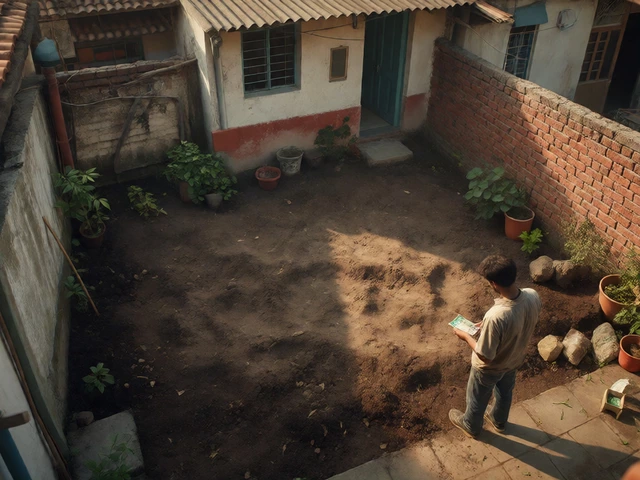
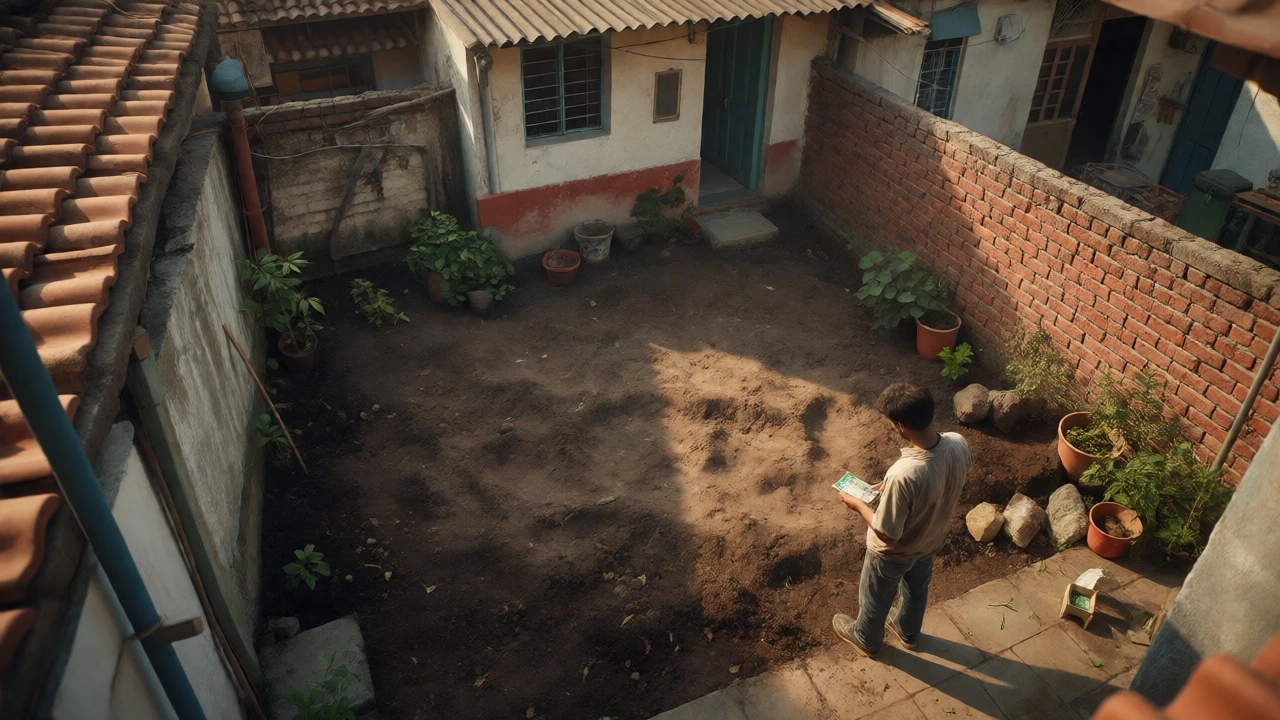
You’ve got the soil, you’ve bought the seeds, and you’re ready to dig. But staring at that empty patch of dirt can be surprisingly paralyzing. Do you plant in rows? Squares? Circles? The truth is, there isn’t one single "perfect" vegetable garden layout that works for everyone. What works for a sprawling ten-acre farm fails miserably in a cramped Brighton backyard. The right layout depends entirely on how much time you have, how much space you own, and what you actually plan to eat.
Most beginners make the mistake of copying those pristine, Instagram-worthy plots they see online without considering their own constraints. They end up with weeds they can’t reach or plants that shade each other out before harvest. A good layout isn't just about aesthetics; it’s about efficiency. It’s about minimizing your walking distance, maximizing sun exposure, and making sure you don’t accidentally trample your delicate lettuce while trying to prune your tomatoes. Let’s break down the most effective strategies so you can pick the one that fits your life, not just your Pinterest board.
The Classic Row System: Simple but Demanding
If you grew up watching your grandparents garden, this is probably the first image that pops into your head. Row gardening involves planting crops in long, straight lines separated by wide walkways. It’s the traditional method used by commercial farmers for centuries because it allows machinery to pass through easily. For home gardeners, it offers simplicity. You know exactly where everything is planted, and harvesting is straightforward if you stick to the paths.
However, row gardening has a significant downside: it wastes space. Those wide aisles are necessary for access, but they don’t produce food. In a small urban plot, losing 30-40% of your ground to bare earth feels like throwing money away. Also, rows require more weeding between the lines than intensive methods. If you have a large yard and hate bending over, rows might still work for you, especially for heavy feeders like potatoes or corn. But for most modern kitchen gardens, it’s often less efficient than alternatives.
Raised Beds: The Gold Standard for Control
Raised bed gardening has exploded in popularity, and for good reason. By building wooden frames filled with high-quality soil mix, you gain complete control over drainage, temperature, and soil composition. This is crucial in areas with heavy clay soil or poor drainage, common in many parts of the UK. Raised beds warm up faster in spring, allowing you to start planting weeks earlier than neighbors digging directly into the ground.
The standard size for a raised bed is four feet wide. Why four? Because that’s the maximum distance most people can reach from both sides without stepping into the bed. Stepping on your soil compacts it, which kills air pockets roots need to breathe. Keeping the width manageable ensures you never crush your hard work. Height varies, but six to twelve inches is usually sufficient for root vegetables, while deeper boxes (18+ inches) allow for carrots and parsnips to grow straight. If you suffer from back pain, taller beds (waist height) save your spine, though they cost more to fill.
| Layout Type | Space Efficiency | Maintenance Effort | Best For |
|---|---|---|---|
| In-Ground Rows | Low | Medium | Large spaces, potato/corn patches |
| Raised Beds | High | Low (after setup) | Small yards, bad soil, accessibility |
| Square Foot | Very High | High (initial planning) | Beginners, tiny spaces, salad greens |
| Cottage Style | Medium | Medium | Aesthetics, mixed flowers/veg |
Square Foot Gardening: Precision for Small Spaces
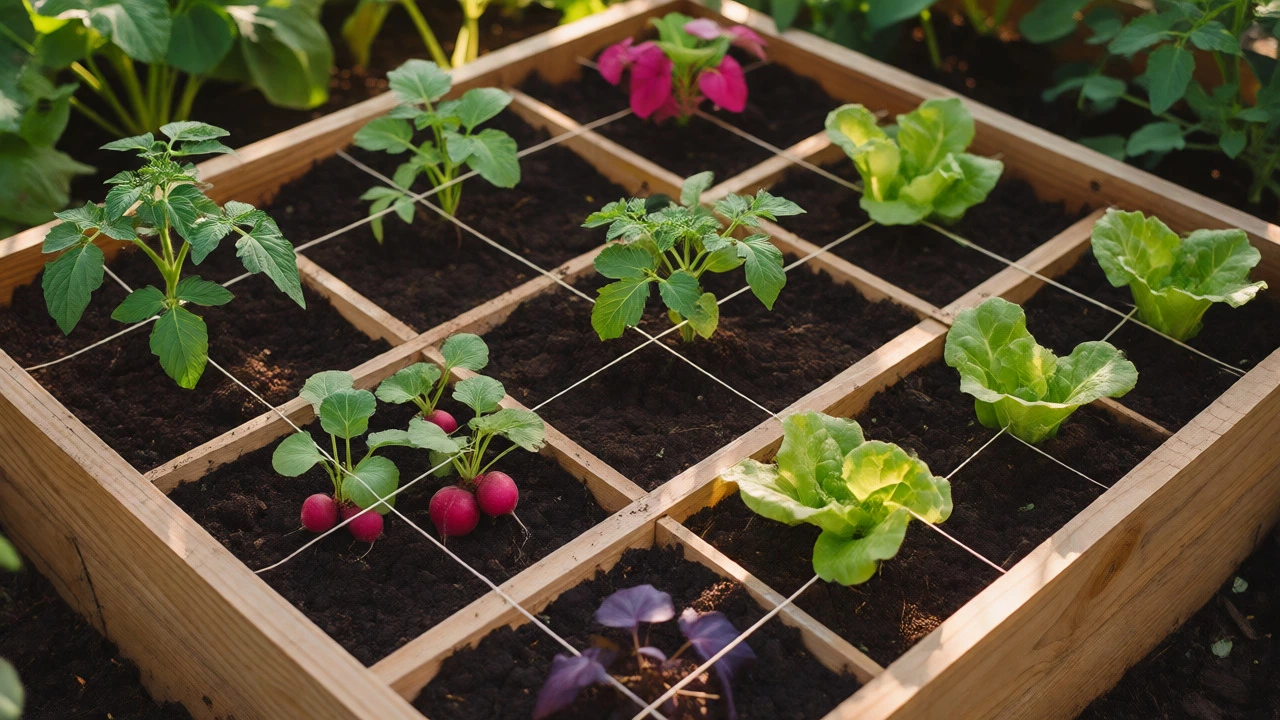
Developed by Mel Bartholomew in the 1980s, Square Foot Gardening takes raised beds to the next level of density. Instead of random scattering, you divide your bed into a grid of one-foot squares using string or thin wood strips. Each square holds a specific number of plants based on their mature size. One square gets one tomato plant, sixteen get radishes, and nine get lettuce heads. No guessing, no overcrowding.
This method eliminates the need for deep tilling because you only dig within the squares you’re planting. It drastically reduces weed growth since plants are so close together they shade out invaders. However, it requires strict adherence to spacing rules. If you try to squeeze three tomatoes into one square because "they look small now," you’ll end up with moldy, underperforming fruit. It’s ideal for salads, herbs, and compact veggies, but less suited for sprawling vines unless you train them vertically.
Cottage Garden Style: Mixing Beauty and Edibles
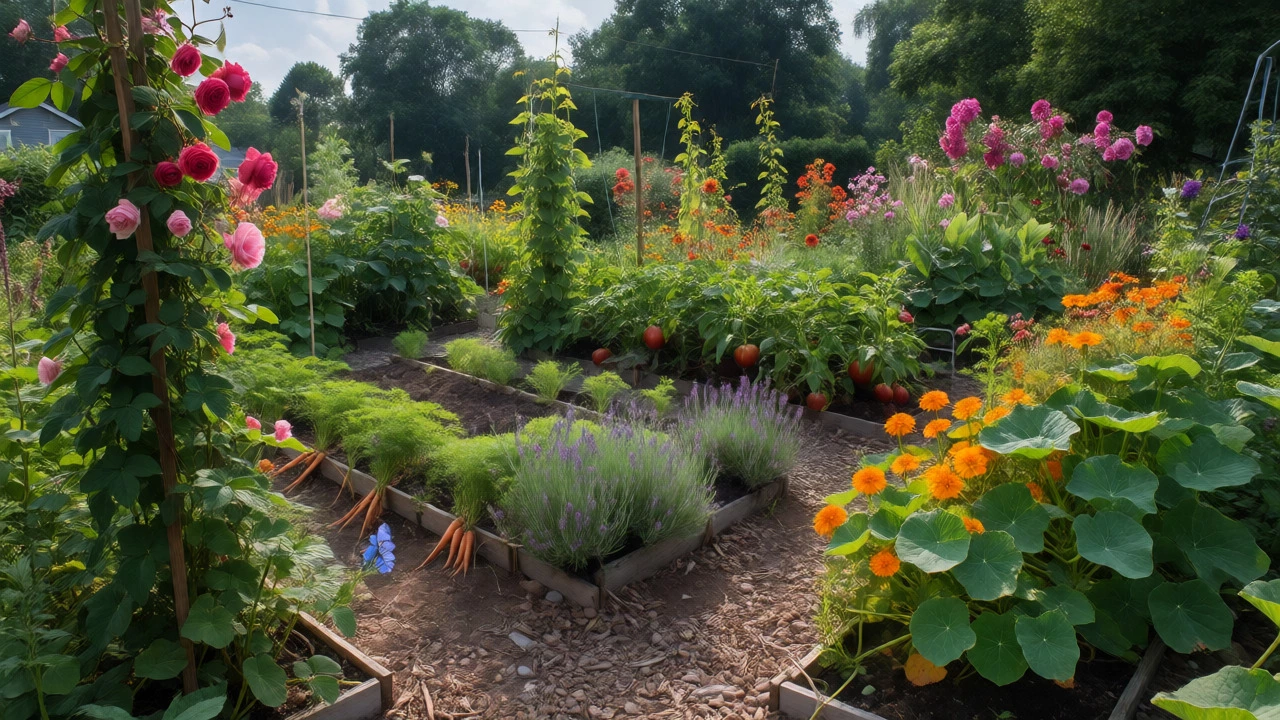
Not everyone wants a utilitarian block of green. The Cottage Garden style blends vegetables, fruits, and ornamental flowers in a seemingly chaotic but carefully planned arrangement. Think roses climbing up bean poles, lavender bordering carrot rows, and nasturtiums hiding squash leaves. This approach leverages companion planting, where certain plants benefit each other. Marigolds repel aphids near tomatoes; basil improves pepper flavor and health.
The aesthetic appeal is undeniable, and biodiversity attracts pollinators and beneficial insects, reducing pest pressure naturally. But be warned: this style demands higher horticultural knowledge. You need to understand light requirements and growth habits to prevent tall sunflowers from shading out low-growing spinach. It’s also harder to rotate crops strictly, as the boundaries blur. Choose this if you enjoy gardening as a hobby and want your plot to double as a relaxation zone.
Vertical Gardening: Growing Up, Not Out
If your horizontal space is limited, go vertical. Trellises, cages, and arbors turn walls and fences into productive real estate. Cucumbers, pole beans, peas, and even small melons thrive when trained upward. This keeps fruit off the damp ground, reducing rot and slug damage. Plus, harvesting becomes easier-you don’t have to crouch to find hidden zucchini.
When designing vertical elements, consider sunlight direction. Place tall structures on the north side of your garden (in the Northern Hemisphere) so they don’t cast shadows on shorter plants during peak sun hours. Use sturdy materials; wind can topple flimsy supports loaded with wet foliage. Vertical gardening pairs perfectly with raised beds, creating multi-layered systems that maximize yield per square foot.
Design Principles That Apply Everywhere
Regardless of which layout you choose, three principles will determine your success. First, respect the sun. Most vegetables need six to eight hours of direct light. Map your yard’s sun path before breaking ground. Second, plan for water. Position rain barrels or hose reels centrally to minimize dragging hoses across fragile seedlings. Third, think about workflow. Keep frequently harvested items like herbs and salad greens near the door. Save space-hungry, rarely visited crops like pumpkins or sweetcorn for the edges.
Crop rotation is another critical factor often ignored in static layouts. Never plant the same family in the same spot two years running. Tomatoes, peppers, and eggplants belong to the Solanaceae family; moving them prevents soil-borne diseases and nutrient depletion. Sketching your plan on paper helps visualize these rotations. Label your beds clearly. You’ll thank yourself in October when you forget what you planted where.
Common Pitfalls to Avoid
Don’t overplant. It’s tempting to buy every packet of seeds at the nursery, but an overgrown garden becomes a jungle you’re afraid to enter. Start smaller than you think you need. You can always expand next year. Don’t ignore soil health. Even the best layout fails in dead soil. Test your pH and add organic matter annually. Compost is your best friend, regardless of whether you use rows or squares.
Finally, don’t underestimate the power of mulch. A layer of straw or wood chips suppresses weeds, retains moisture, and regulates soil temperature. It makes maintenance significantly easier, especially in hot summers. If you skip mulching, expect to spend twice as much time pulling weeds.
How big should my vegetable garden be?
For a beginner feeding two people, a 4x8 foot raised bed (32 sq ft) is a perfect starting point. It provides enough space for a variety of crops without becoming overwhelming. Experienced gardeners often aim for 100-200 sq ft for full self-sufficiency in summer.
Do I need raised beds for a good layout?
No, but they offer significant advantages. Raised beds improve drainage, warm up faster, and reduce soil compaction. If you have sandy, well-draining soil and plenty of space, in-ground rows can work fine. However, for clay soils or small spaces, raised beds are generally superior.
What is the easiest layout for beginners?
Square Foot Gardening is often cited as the easiest because it removes guesswork from spacing. Alternatively, a simple single raised bed with clear pathways minimizes decision fatigue. Focus on mastering one bed before expanding.
How does orientation affect my garden layout?
In the Northern Hemisphere, orient rows east-west to maximize sun exposure on plant leaves throughout the day. Tall structures should be placed on the north side to avoid shading shorter plants. Proper orientation can increase yields by 20% or more.
Can I mix flowers and vegetables in any layout?
Yes, and it’s encouraged. Flowers attract pollinators and predatory insects that eat pests. Just ensure flowers don’t compete aggressively for nutrients or block sunlight. Plant them on borders or intercrop them intentionally rather than randomly scattering them.