Endangered Plant Species Explorer
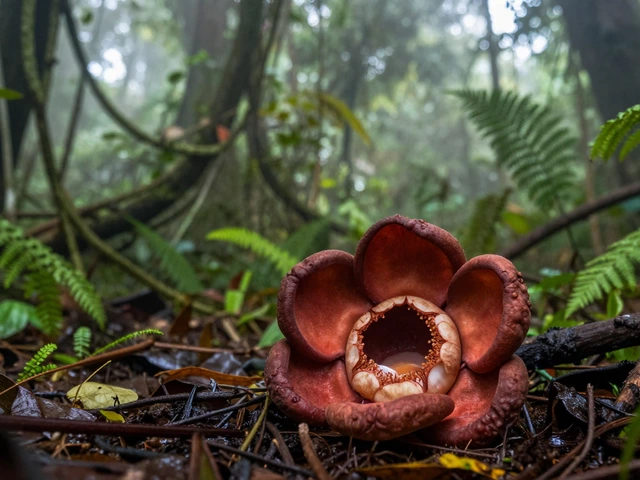
Walk into any local nursery in Mumbai or Delhi, and you will see rows of tomatoes, marigolds, and jasmine. These are the workhorses of Indian gardening. But look closer at the empty spaces between them. You won't find the Rafflesia arnoldii, the world's largest flower, or the delicate Himalayan Blue Poppy. These species are vanishing. When we ask "which plant is in danger in India?", we aren't just talking about a few obscure flowers. We are talking about entire ecosystems collapsing, traditional medicines disappearing, and food security threats lurking beneath the surface.
The crisis isn't limited to deep forests. It touches your kitchen garden too. Many heirloom varieties of vegetables and medicinal herbs are being replaced by high-yield hybrids, leading to a loss of genetic diversity. If you love gardening in India, understanding which plants are on the brink helps you make smarter choices. You can help save them by growing them, sharing seeds, and demanding sustainable practices from suppliers.
The Silent Crisis: Why Indian Flora Is Disappearing
To understand which plants are in danger, we first need to know why they are dying out. It’s not just one factor; it’s a perfect storm of human activity and climate shifts. The most significant driver is habitat loss. As cities expand, green belts shrink. Forests that once housed rare orchids and medicinal shrubs are now concrete jungles. This fragmentation means plants can’t pollinate effectively because their natural partners-bees, birds, and bats-are also struggling.
Climate change plays a huge role, especially for plants in specific zones. The Western Ghats, a biodiversity hotspot, faces erratic rainfall patterns. Plants adapted to steady monsoons are confused by droughts followed by floods. Meanwhile, rising temperatures push alpine species higher up mountains until there is literally no more room to go. The Himalayan region is particularly vulnerable. Glaciers are melting, altering water sources for rivers that feed these fragile ecosystems.
Overharvesting is another silent killer. Many Indians rely on Ayurveda and traditional medicine. While this is a beautiful cultural practice, unregulated collection of roots, barks, and leaves has decimated populations of plants like Sandalwood and Sarpagandha (Rauvolfia serpentina). Farmers often clear land for monoculture crops, removing the undergrowth where many endangered species thrive. This loss of biodiversity makes the entire agricultural system more fragile against pests and diseases.
Iconic Species Facing Extinction
When experts talk about endangered plants in India, several names come up repeatedly. These aren't just statistics; they are unique biological treasures. Let's look at some of the most critical cases.
| Plant Name | Region Found | Primary Threat | Conservation Status |
|---|---|---|---|
| Rafflesia arnoldii | Northeast India (Assam) | Habitat destruction | Critically Endangered |
| Himalayan Blue Poppy (Meconopsis grandis) | Ladakh, Himachal Pradesh | Climate change, over-collection | Endangered |
| Sandalwood (Santalum album) | Karnataka, Tamil Nadu | Poaching for oil/wood | Vulnerable |
| Dwarf Banana (Musa acuminata ssp. malaccensis) | Western Ghats | Agricultural expansion | Endangered |
| Indian Rhododendron (Rhododendron arboreum) | Himalayas | Deforestation, grazing | Near Threatened |
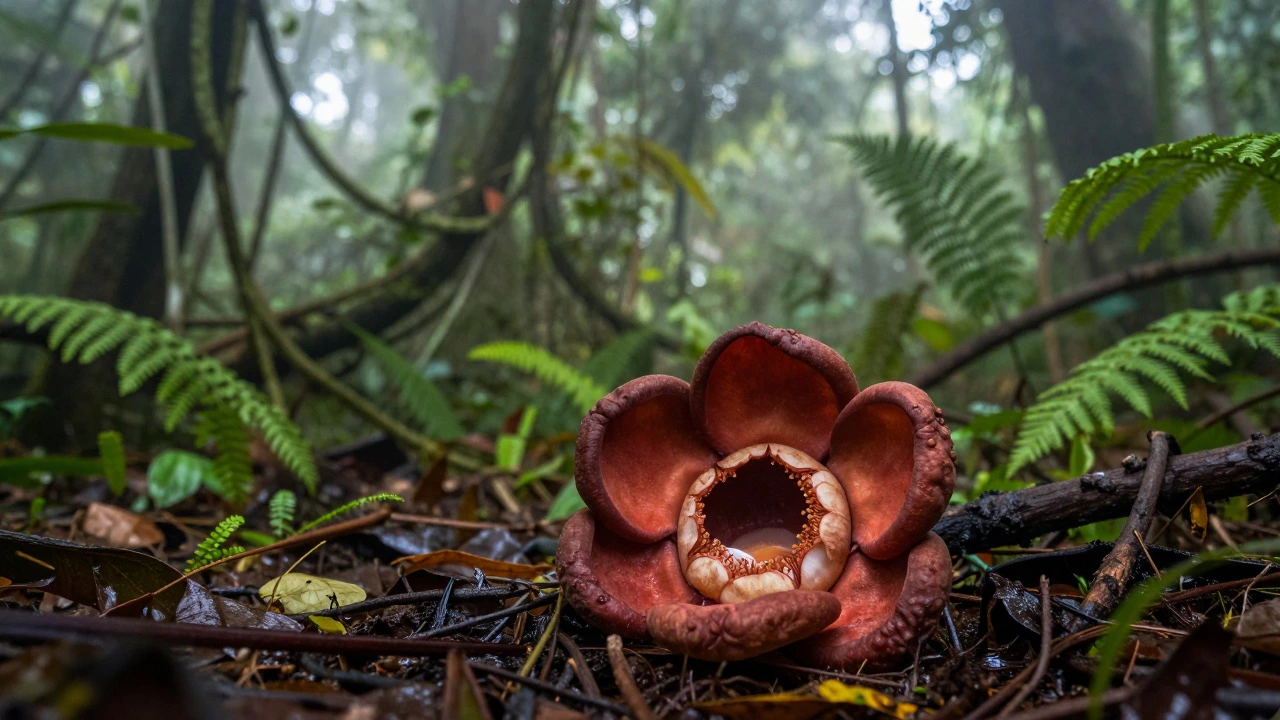
Rafflesia arnoldii is perhaps the most famous. Known as the corpse flower due to its smell, it is a parasitic plant that grows on vine roots in dense forests. It produces the largest individual flower on Earth, sometimes reaching three feet across. Because it needs very specific host plants and undisturbed forest conditions, even small logging operations can wipe out entire colonies. In Assam, sightings have become incredibly rare over the last two decades.
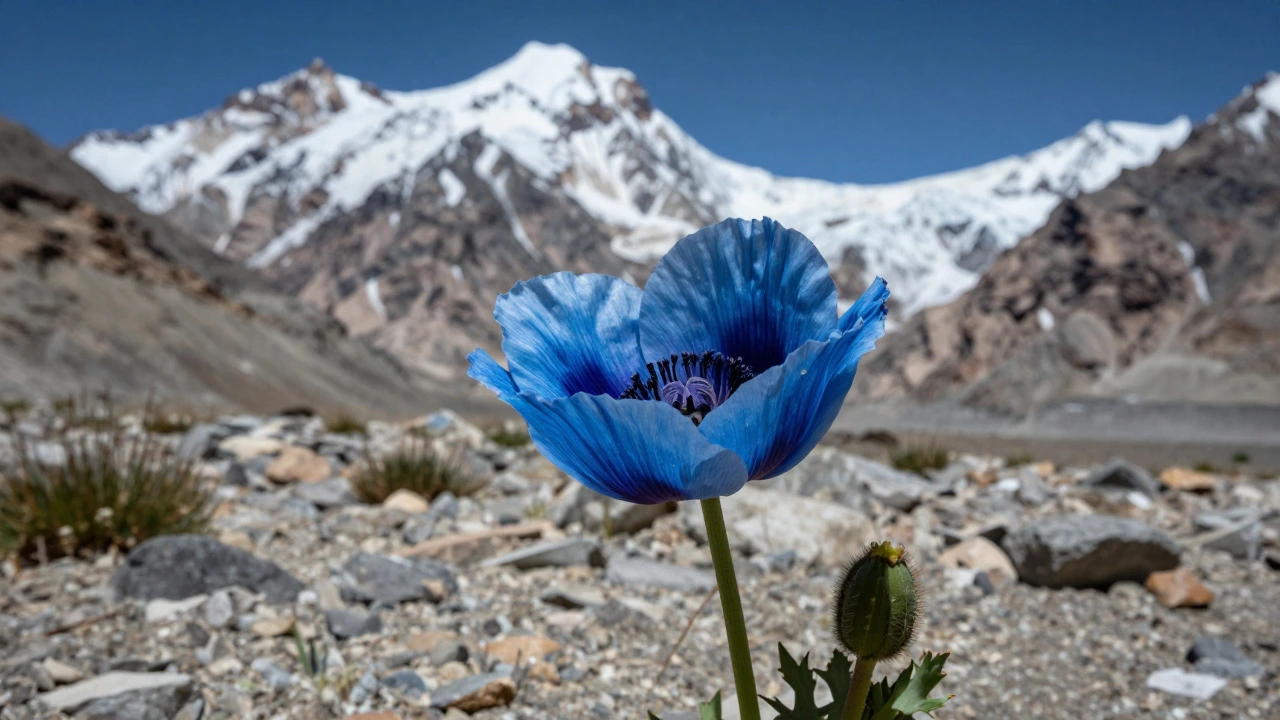
The Himalayan Blue Poppy is a gem for gardeners but a victim of demand. Its striking blue petals make it highly sought after by collectors. However, it only blooms in the cool, high-altitude air of Ladakh and Himachal Pradesh. Rising temperatures are disrupting its flowering cycle. Additionally, people dig up wild plants to sell, leaving nothing behind to regenerate. Conservationists are trying to cultivate it in nurseries, but it remains extremely difficult to grow outside its native range.
Sandalwood tells a different story. It’s economically valuable, which ironically hurts it. Poachers cut down trees before they mature to steal the fragrant heartwood. Although the government has strict protections, illegal trade persists. The tree is hemiparasitic, meaning it needs other trees to support it early in life. Clear-cutting forests destroys this support network, making natural regeneration nearly impossible.
The Hidden Danger: Heirloom Vegetables and Medicinal Herbs
You might think endangered plants are only those in remote forests. But the danger is also in your backyard. India is home to thousands of indigenous crop varieties, known as landraces. Over the past fifty years, modern agriculture has pushed these aside in favor of a few high-yield hybrid varieties. This is called genetic erosion.
Consider the traditional varieties of rice, millets, and pulses. Many local strains of Foxtail Millet and Little Millet are disappearing. These grains were bred over centuries to resist local pests and droughts. When farmers switch to commercial hybrids, they lose that resilience. If a new pest attacks, the uniform crops could all fail. Preserving heirloom vegetables is crucial for food security.
Medicinal herbs face similar risks. Plants like Ashwagandha and Brahmi are widely used, but wild populations are shrinking due to over-harvesting. Some companies source raw materials without ensuring sustainable farming practices. This leads to depletion of soil nutrients and loss of plant cover, causing erosion. For gardeners interested in herbal remedies, this means finding authentic, sustainably grown sources is harder than ever.
How Gardeners Can Help Save Endangered Plants
You don’t need to be a botanist to make a difference. Home gardeners play a vital role in conservation through ex-situ preservation. This simply means keeping plants alive outside their natural habitat. Here is how you can contribute, regardless of whether you have a large farm or a small balcony in Bangalore.
- Grow Native Species: Start with plants that are native to your region. They require less water and care, supporting local pollinators. Check with local botanical gardens for lists of native species available in nurseries.
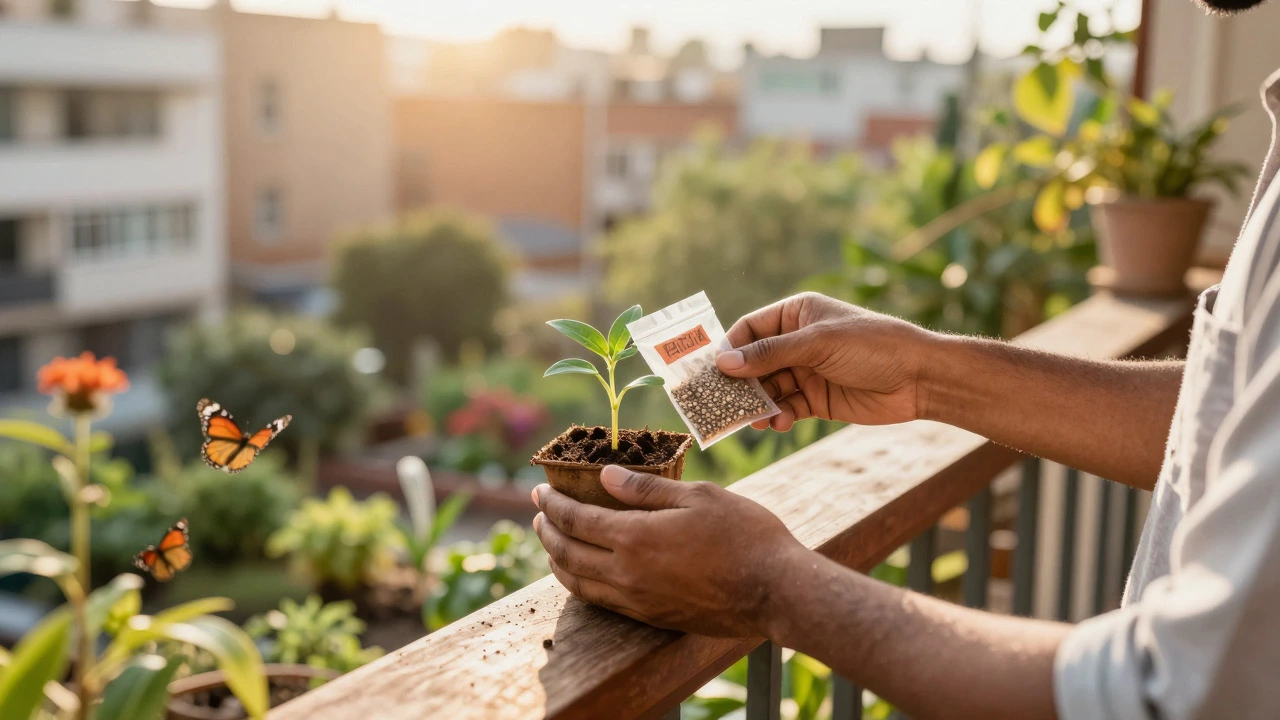
- Save Seeds: Instead of buying new packets every year, save seeds from your heirloom vegetables. Share them with neighbors or join seed exchange groups. This keeps genetic diversity alive in communities.
- Create Micro-Habitats: Even a small patch of wildflowers can attract bees and butterflies. Avoid using chemical pesticides. Healthy pollinators help endangered plants reproduce in the wild.
- Support Ethical Nurseries: Buy plants from nurseries that propagate species rather than digging them up from the wild. Ask questions. If a nursery sells wild-collected orchids or ferns, take your business elsewhere.
- Document Your Findings: If you spot a rare plant in your area, report it to local conservation authorities. Citizen science apps like iNaturalist help track biodiversity trends.
For example, if you live in the Western Ghats, consider planting Giant Stilt Grass or native orchids that are safe to cultivate. In the North, focus on hardy medicinal herbs that can be grown organically. Every plant you grow is a vote for biodiversity.
Government Initiatives and Legal Protections
India has taken steps to protect its flora. The Wildlife Protection Act of 1972 lists several plant species under Schedule VI, making it illegal to pick, uproot, or destroy them without permission. The National Biodiversity Authority (NBA) oversees access to biological resources and ensures fair benefit-sharing with local communities.
However, enforcement remains a challenge. Corruption and lack of awareness allow illegal trade to continue. Recent updates to the Biological Diversity Rules aim to strengthen penalties, but ground-level implementation varies by state. Local communities are increasingly involved in conservation efforts, recognizing that healthy forests mean clean water and stable climates for themselves.
Botanical gardens across India, such as the Lalbagh Botanical Garden in Bengaluru and the Indian Botanic Garden in Shibpur, act as living museums. They maintain gene banks and research programs to revive declining species. Visiting these places educates the public and funds conservation work.
The Future of Indian Flora
The situation is urgent, but not hopeless. Technology is helping. DNA barcoding allows scientists to identify species accurately and track illegal trade. Tissue culture techniques enable mass propagation of rare plants like orchids without harming wild stocks. Community-led conservation projects are restoring degraded lands in Rajasthan and Odisha.
As gardeners, we hold power. By choosing native, sustainable, and diverse plants, we reduce pressure on wild populations. We create refuges for pollinators and preserve genetic heritage. The next time you visit a nursery, ask about the origin of the plants. Choose wisely. Your garden can be a sanctuary for species that might otherwise vanish forever.
What is the most endangered plant in India?
The Rafflesia arnoldii is considered critically endangered. It is found only in specific forest patches in Northeast India and requires very particular conditions to survive. Other highly threatened species include the Himalayan Blue Poppy and certain endemic orchids.
Can I grow endangered plants at home?
It depends on the species. Some plants listed under Schedule VI of the Wildlife Protection Act cannot be picked or bought without permits. However, many endangered species can be legally purchased from certified nurseries that propagate them artificially. Always check local regulations before buying rare plants.
Why are heirloom vegetables disappearing?
Heirloom vegetables are being replaced by high-yield hybrid varieties favored by commercial agriculture. These hybrids offer uniform size and faster growth but lack genetic diversity. As farmers abandon traditional seeds, older varieties risk extinction, reducing resilience against pests and climate change.
How does climate change affect Indian plants?
Climate change alters rainfall patterns and increases temperatures. Alpine plants are forced to move higher up mountains until space runs out. Tropical plants face stress from irregular monsoons. These changes disrupt flowering cycles and reproduction rates, leading to population declines.
Where can I buy native plants for my garden?
Look for specialized native plant nurseries in your city. Organizations like the Bombay Natural History Society (BNHS) often recommend ethical suppliers. Online platforms dedicated to indigenous seeds and saplings are also emerging. Avoid general market stalls that may sell wild-collected specimens.