Soil Calcium Calculator
Plant Care Assessment Tool
Answer a few questions to determine if your plants actually need more calcium and what the best solution is.
Ever tossed your eggshells into the compost bin and wondered if they’re really helping your tomatoes or roses? You’re not alone. Millions of gardeners swear by crushed eggshells as a natural miracle cure for plant health. But here’s the truth: crushed eggshells aren’t the magic bullet everyone claims they are.
What’s Actually in Eggshells?
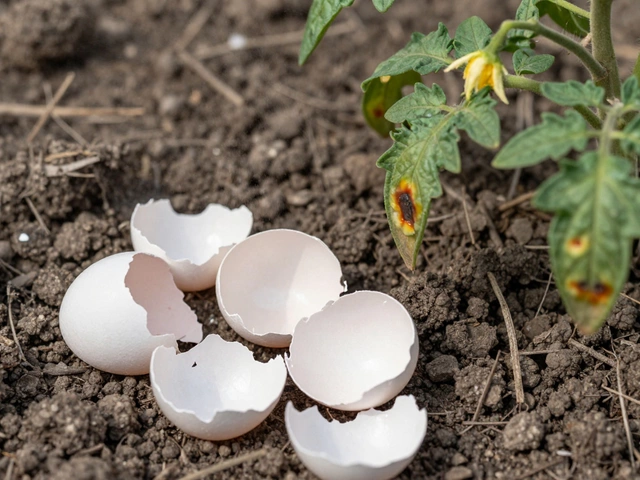
Eggshells are mostly calcium carbonate - about 94% of their dry weight. That’s the same compound found in agricultural lime, which farmers use to raise soil pH. They also contain small amounts of magnesium, sodium, and trace minerals like strontium and fluoride. But here’s the catch: your plants can’t use any of it unless the shells break down.
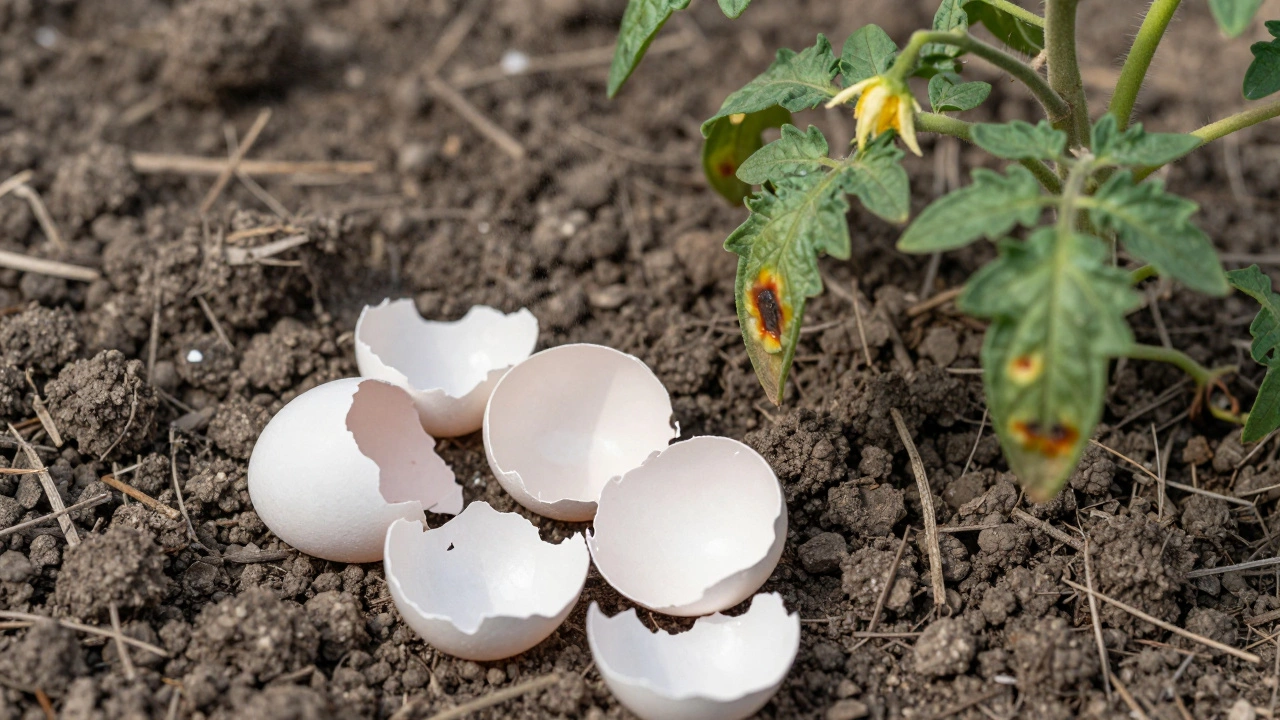
Calcium is essential for plant cell walls. Without it, tomatoes get blossom end rot, peppers develop weak stems, and leafy greens turn brittle. But calcium doesn’t move easily through soil. It sticks close to where it’s added. So even if you bury eggshells right at the base of a tomato plant, the roots won’t absorb it quickly - if at all.
Do Eggshells Actually Feed Plants?
Short answer? Not in any practical timeframe.
Studies from the University of Florida and the Royal Horticultural Society show that crushed eggshells take years to decompose in soil. In a 2021 trial, researchers buried eggshells in potting mix and checked them after 18 months. Only 12% of the shells had broken down. The rest? Still intact. That’s not fertilizer - that’s slow-motion trash.
Compare that to a handful of crushed oyster shell or garden lime. Those dissolve in weeks, not decades. Even composted eggshells, when added to a hot compost pile, release calcium too slowly to matter for growing season needs.
What About Pest Control? Snails and Slugs?
This one’s popular. People sprinkle eggshell shards around seedlings to keep slugs away. It sounds smart - sharp edges, right? But slugs don’t care. A 2020 study from the University of California tested this exact idea. They placed eggshells around lettuce plants and introduced slugs. Result? Slugs crawled right over the shells like they were gravel. No cuts, no hesitation.
Why? Slugs secrete mucus. It’s slippery, protective, and covers their bodies like a natural suit of armor. Sharp shells? Just another texture. If you want to stop slugs, try beer traps, copper tape, or diatomaceous earth - those actually work.
When Do Eggshells Actually Help?
There’s one real use: when you compost them first.
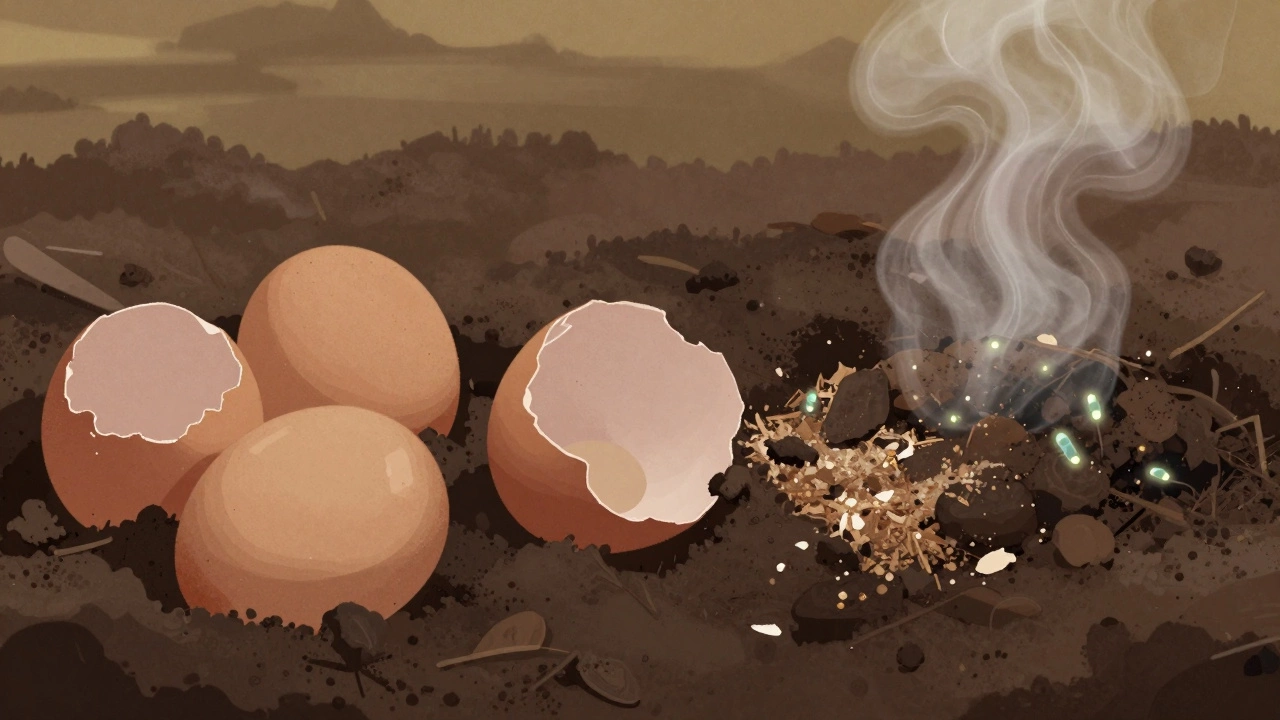
If you grind eggshells into a fine powder and add them to a compost pile that’s actively heating up (130-160°F), they break down faster. The microbes and heat work together to mineralize the calcium. After 6-8 months, your compost will have usable calcium - and it’ll be evenly distributed.
Another option? Brew an eggshell tea. Boil 10-15 cleaned shells in a gallon of water for 15 minutes. Let it cool, strain, and use it as a liquid drench. It won’t fix a calcium deficiency overnight, but it gives your plants a gentle boost. One gardener in Brighton reported fewer blossom end rot issues on her tomatoes after using this method for two seasons.
What You Should Do Instead
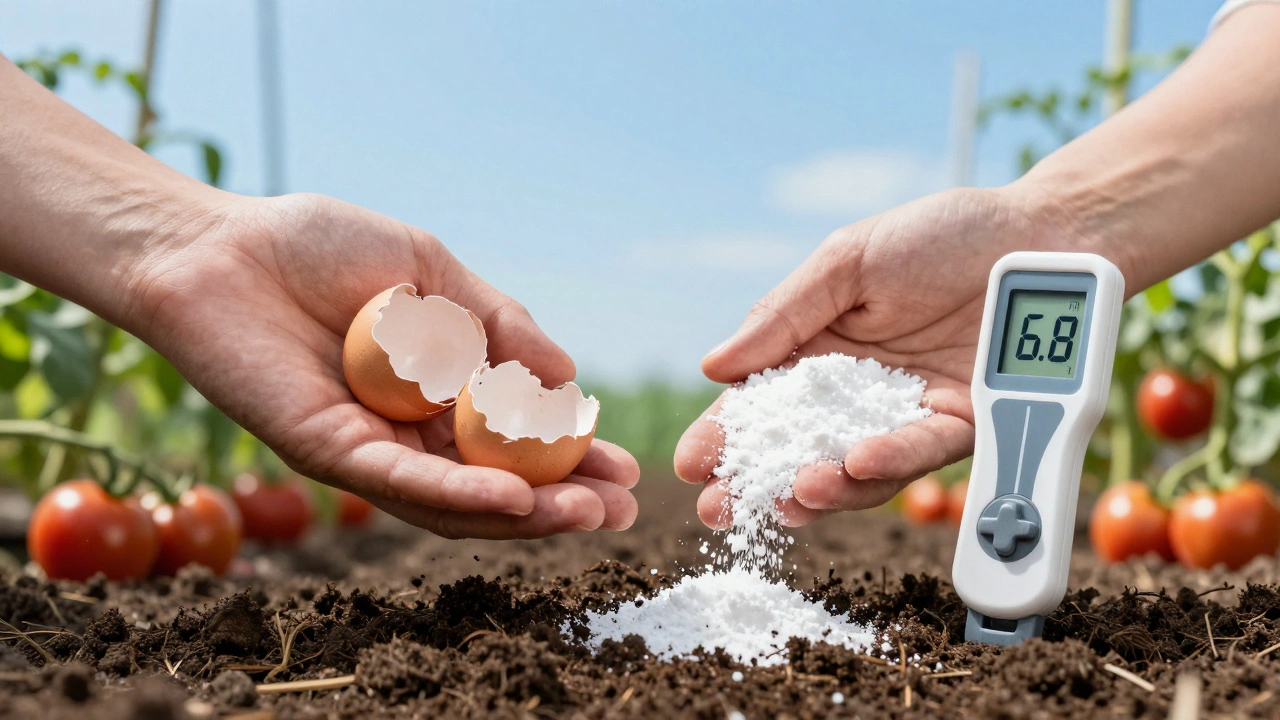
If your soil lacks calcium, test it. A simple home test kit costs less than £10 and tells you exactly what’s missing. Most garden soils in the UK are already rich in calcium. What’s often lacking is accessibility.
Here’s what actually works:
- Use agricultural lime if your soil is too acidic (below pH 6.0)
- Add gypsum (calcium sulfate) if you need calcium without changing pH
- Apply compost rich in well-decomposed organic matter
- Use a balanced organic fertilizer with calcium (like fish emulsion or seaweed extract)
These options deliver calcium in forms your plants can absorb within days - not years.
Is It Harmful to Use Eggshells?
No - but it’s pointless. If you’re crushing eggshells and sprinkling them on your soil, you’re not hurting anything. You’re just wasting time. You could be doing something that actually moves the needle.
One exception: if you’re growing plants that hate calcium (like blueberries or rhododendrons), don’t add eggshells. They raise soil pH, and those plants need acidic conditions. A pH shift of even 0.5 units can wreck their growth.
Bottom Line: Skip the Shells, Focus on Solutions
Crushed eggshells aren’t evil. They’re just ineffective. Don’t waste your energy on a myth. Use your time to test your soil, amend it properly, and feed your plants with what actually works.
Want to improve your garden soil? Start with compost. Add mulch. Test your pH. Use targeted amendments. That’s how real gardeners get results - not by tossing shells on the ground and hoping.
Can crushed eggshells prevent blossom end rot in tomatoes?
Not directly. Blossom end rot is caused by inconsistent watering, not a lack of calcium in the soil. Even if your soil has plenty of calcium, if the plant can’t absorb it due to dry roots or waterlogged soil, the rot still happens. Crushed eggshells won’t fix this. Water deeply and evenly, and use mulch to keep soil moisture stable - that’s what stops blossom end rot.
How long do eggshells take to break down in soil?
In typical garden soil, whole or coarsely crushed eggshells can take 2 to 5 years to decompose. Fine powder might break down in 6-12 months, but only if the soil is warm, moist, and rich in microbes. In colder climates like the UK, decomposition slows even more. For practical gardening, that’s too slow to be useful.
Should I wash eggshells before using them?
Yes - always. Raw eggshells can carry salmonella or other bacteria, especially if they’ve been in contact with raw egg. Rinse them under running water, then bake them at 200°F for 10 minutes to sterilize. This kills pathogens and makes them safe to handle. It also makes them brittle, so they crush easier.
Can I use eggshells in potted plants?
Technically, yes - but it’s still ineffective. Potting mix is sterile and low in microbes, so decomposition is even slower than in garden soil. If you’re using a high-quality potting mix, it already contains balanced nutrients. Adding eggshells won’t help, and may even block drainage if you use large pieces. Stick to liquid fertilizers or slow-release granules for container plants.
Are eggshells better than commercial calcium supplements?
No. Commercial calcium supplements like calcium nitrate or gypsum release nutrients in days, not years. They’re formulated for plant uptake. Eggshells are a natural product, but nature works slowly. If your plants need calcium now, you need a fast-acting solution. Eggshells are a long-term project - not a fix.
If you’re serious about soil health, skip the eggshells. Test your soil. Use compost. Apply the right amendments. That’s how you grow better plants - not by following trends.