Monsoon Planting Calculator
Find Your Ideal Monsoon Flowers
Select your region to see which flowers thrive during India's rainy season (June-July)
Recommended Flowers
Key Planting Tips
If you’re planning a flower garden in India, timing is everything. The difference between a burst of color and a patch of soggy, rotting bulbs comes down to just two months-June and July. These aren’t just the wettest months of the year; they’re the heartbeat of India’s flowering season. When the monsoon hits hard, it doesn’t just cool the air-it wakes up the soil, triggers root growth, and turns dry patches into wildflower meadows. But if you plant too early or too late, you risk losing your blooms to drought or drowning them in floodwater.
Why June and July Are the Rainiest Months
India’s monsoon isn’t a single storm-it’s a slow-moving weather system that rolls in from the southwest. By early June, the Arabian Sea and Bay of Bengal have warmed enough to push massive clouds inland. These clouds dump over 70% of India’s annual rainfall in just four months, with June and July carrying the heaviest load. In places like Mumbai, Kerala, and Assam, you can get 300 to 500 mm of rain in a single month. Even in Delhi or Bangalore, where rainfall is lighter, June and July still bring 150-250 mm each.
This isn’t just weather data-it’s a signal for gardeners. The soil becomes soft, moist, and rich with microbial activity. Nutrients from decomposing leaves and organic matter are flushed into the root zone. That’s the sweet spot for planting tuberous flowers like gladiolus, lilies, and dahlias. Annuals like marigolds and zinnias also thrive when sown right after the first heavy rains.
How Rainfall Patterns Affect Flower Choices
Not all flowers love heavy rain. Some, like roses and chrysanthemums, prefer well-drained soil and can rot if left in standing water. Others, like sunflowers and cosmos, thrive in the downpour. Knowing your region’s rainfall helps you pick the right blooms.
In coastal areas like Goa or Tamil Nadu, where June and July bring near-daily storms, go for flood-tolerant species:
- Bougainvillea-blooms wildly after rain, needs no extra watering
- Hibiscus-loves humidity and thrives in wet soil
- Cananga odorata (Ylang-Ylang)-flowers only in monsoon humidity
In drier inland zones like Rajasthan or Madhya Pradesh, where rain is intense but short-lived, plant fast-growing annuals that bloom before the soil dries out:
- Marigolds-germinate in 5 days after rain, bloom in 45 days
- Zinnias-colorful, drought-tolerant once established
- Cosmos-self-seeds easily, attracts butterflies
Even in the Himalayan foothills, where June and July are the only months with reliable rain, native wildflowers like the Himalayan blue poppy and orchids rely on this window to flower and set seed.
What Happens If You Plant Outside These Months?
Planting in May? You’re racing against dry soil and scorching heat. Seeds may not germinate, or seedlings will wilt before roots reach moisture. Planting in August? You’re late. The rains are tapering off, and the soil is starting to harden. Your flowers won’t have enough time to establish before the dry season hits.
One gardener in Pune tried planting lilies in August 2024. The bulbs rotted within three weeks. He later learned that lilies need the cool, saturated soil of June to trigger root development. By August, the soil temperature had already dropped below the ideal range of 18-22°C for root growth.
On the flip side, planting in October or November-after the monsoon ends-means you’re relying on irrigation. That’s fine if you have a drip system, but most home gardeners in India don’t. Rain-fed gardens depend on nature’s schedule.
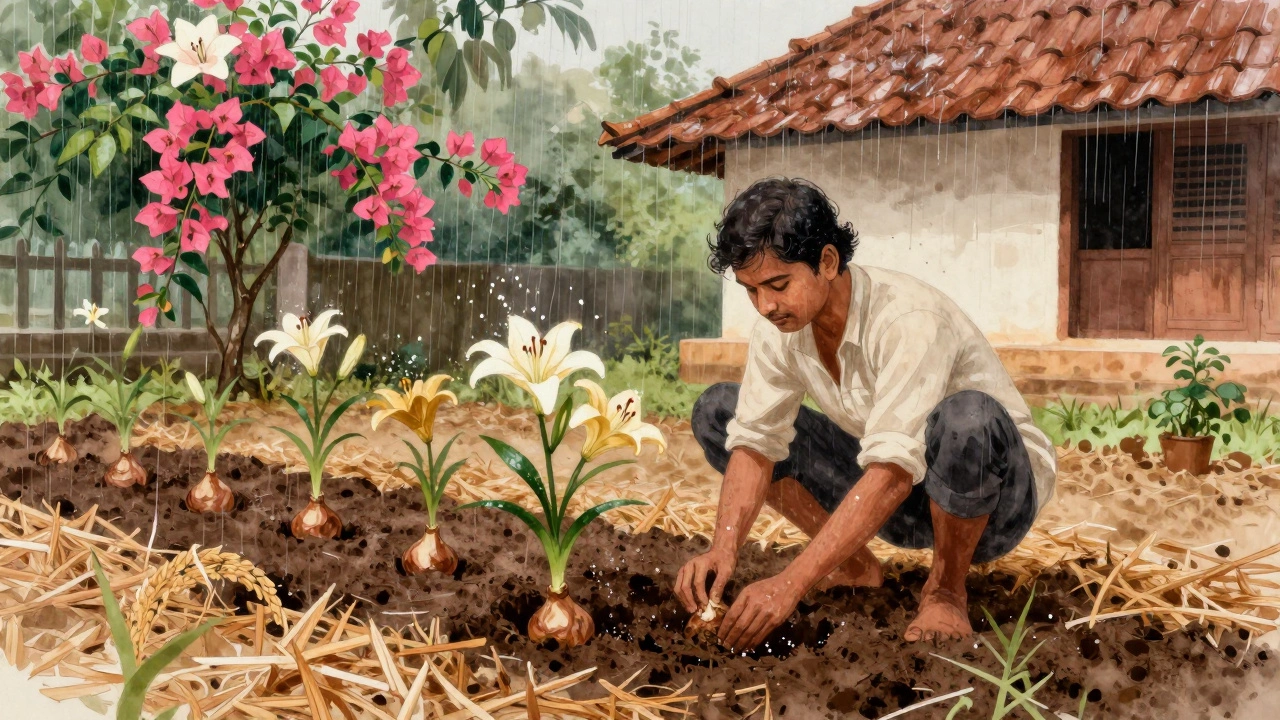
How to Prepare Your Garden for June and July
You don’t just wait for rain-you get ready for it.
- Clear debris-Remove dead leaves and weeds before June. They trap water and invite fungal diseases.
- Improve drainage-Raise flower beds by 10-15 cm. Use gravel or broken pottery at the bottom to prevent waterlogging.
- Amend soil-Mix in compost or coco peat. Monsoon rain washes nutrients away; enriched soil holds on longer.
- Choose mulch wisely-Use rice husk or dry grass, not plastic. Mulch keeps soil cool and slows evaporation after the rain stops.
- Plant in clusters-Group flowers with similar water needs. Don’t mix drought-tolerant succulents with moisture-loving impatiens.
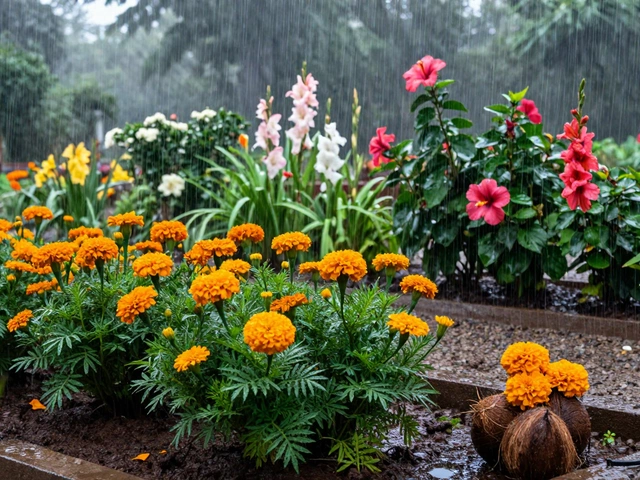
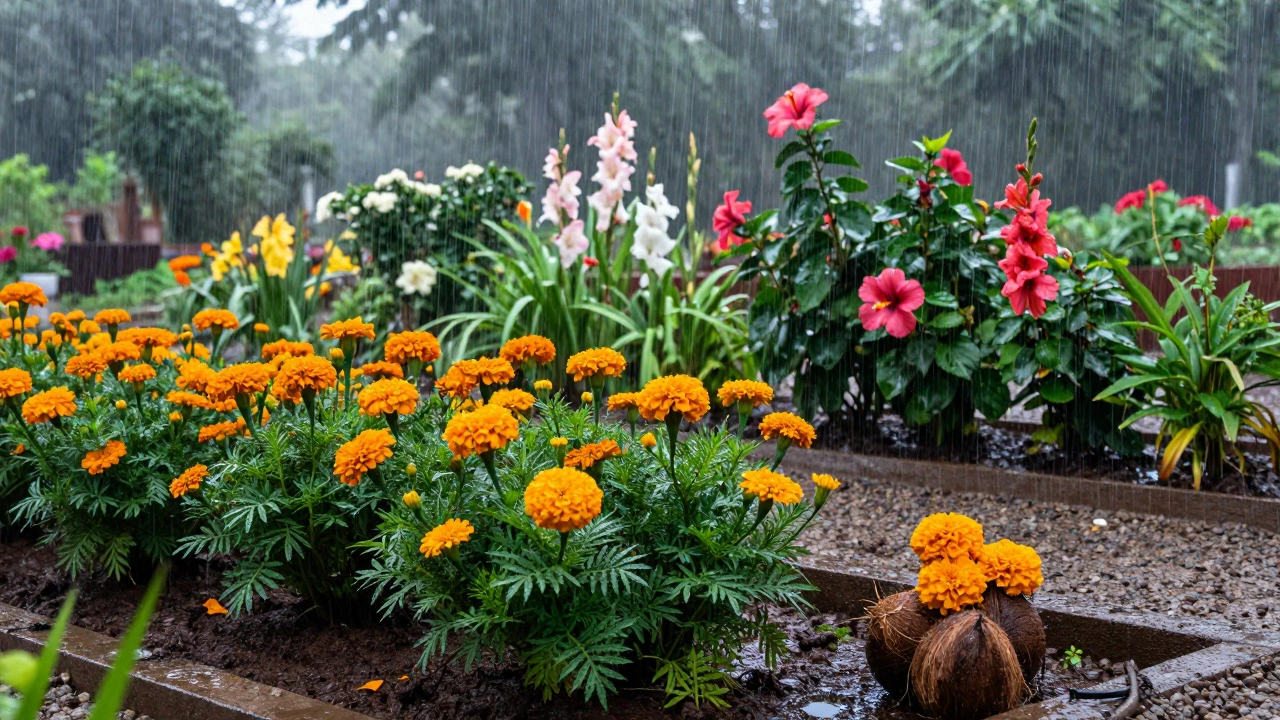
One trick used by gardeners in Kerala: plant marigolds and chrysanthemums in old coconut shells. The shells drain perfectly and hold just enough moisture for the roots without drowning them.
Flowers That Bloom Best in June and July
Here are the top 5 flowers that explode into color during India’s rainiest months:
- Gladiolus-Tall spikes in red, pink, and white. Plant bulbs in late May for blooms by mid-June.
- Lilies-Fragrant and elegant. Need cool, moist soil. Best planted in early June.
- Marigolds-India’s most popular monsoon flower. Blooms in 4-6 weeks. Easy to grow from seed.
- Hibiscus-Blooms nonstop in humidity. Cut back after rains to encourage new growth.
- Cosmos-Delicate, airy blooms that attract bees and butterflies. Self-seeds for next year.
These flowers aren’t just pretty-they’re resilient. Studies from the Indian Council of Agricultural Research show that marigolds planted in June have 40% higher survival rates than those planted in April or August.
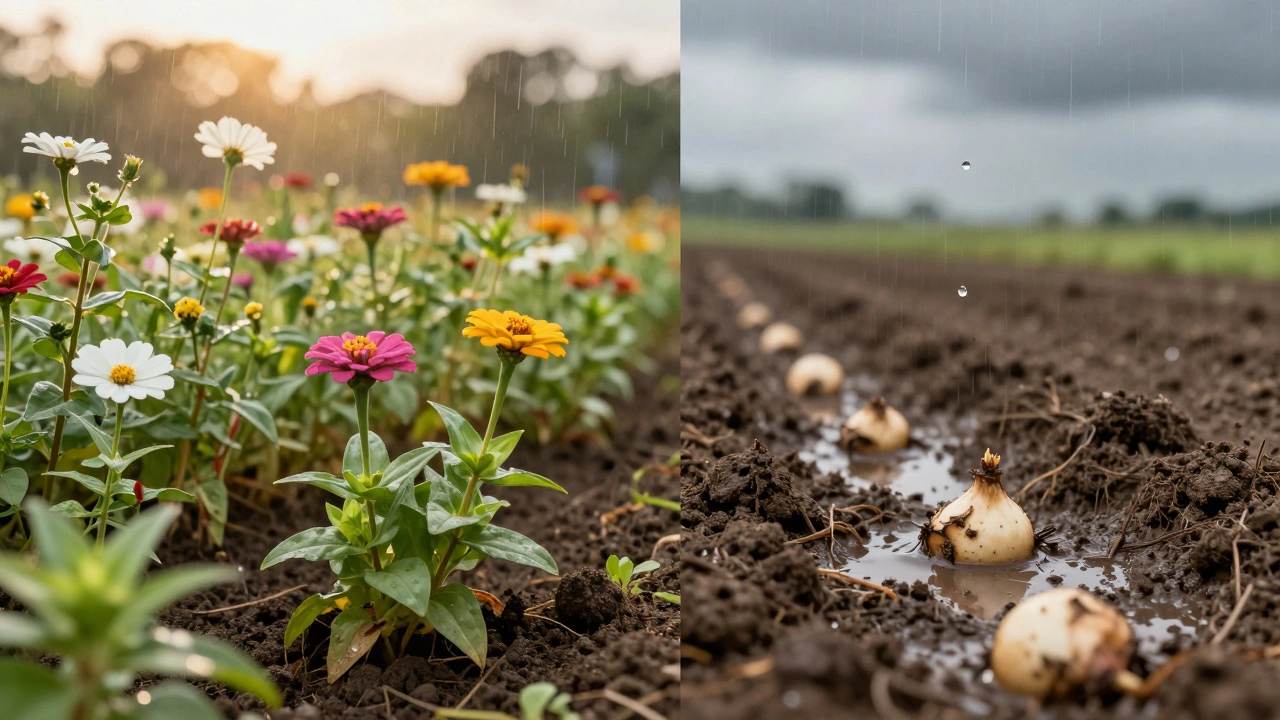
Common Mistakes to Avoid
Even experienced gardeners mess up during monsoon season.
- Overwatering-If it rained yesterday, don’t water today. Monsoon soil stays wet for days.
- Using heavy clay soil-It turns to cement when wet. Mix in sand or compost to lighten it.
- Planting in low spots-Water pools there. Your flowers will drown. Always plant on slight slopes.
- Ignoring pests-Snails, slugs, and fungal mildew thrive in dampness. Sprinkle neem cake around plants.
- Waiting for perfect weather-There’s no such thing. The moment the first heavy shower hits, get your plants in the ground.
One gardener in Bengaluru waited until July 15 to plant her dahlias. By then, the rains had weakened. Only 3 out of 12 bulbs survived. She learned: plant when the first thunderclap rolls in, not when the forecast says ‘heavy rain’.
What to Do After the Rain Stops
August and September still have rain, but it’s spotty. By October, the monsoon is done. That’s when you shift from planting to maintenance.
- Deadhead spent blooms to encourage new flowers.
- Prune leggy stems to keep plants compact.
- Apply a light layer of compost to replenish nutrients washed away.
- Save seeds from cosmos and marigolds for next year’s planting.
Don’t be tempted to fertilize heavily after the rains. Too much nitrogen now will make leaves grow instead of flowers. Stick to organic options like cow dung tea or compost extract.
Are June and July the only good months to plant flowers in India?
For most of India, yes-especially if you’re relying on rain. But in southern states like Tamil Nadu and Kerala, the northeast monsoon in October and November brings a second rainy season. That’s when you can plant winter-blooming flowers like chrysanthemums and poinsettias. In higher altitudes like Himachal or Uttarakhand, you can plant in May as the snow melts.
Can I plant roses during the monsoon?
Yes, but with care. Roses hate wet feet. Plant them in raised beds with good drainage. Use a mix of garden soil, sand, and compost. Avoid watering for 3-4 days after planting. Mulch with dry leaves to prevent fungal spots.
Why do my flowers rot after heavy rain?
It’s usually because the soil doesn’t drain well. Clay-heavy soil traps water around roots. To fix it, add sand, perlite, or coco peat. Raised beds help too. Also, avoid planting too deep-keep the crown of the plant above soil level.
Do I need to water flowers after June and July?
Not if you planted correctly. By August, most monsoon flowers have deep roots and can survive on dew and occasional showers. Only water if the top 5 cm of soil is dry and the weather is unusually hot. Overwatering kills more flowers than under-watering.
What’s the best time of day to plant during monsoon?
Early morning, right after the rain stops. The soil is moist, the temperature is cool, and the sun won’t stress the new plants. Avoid planting during midday heat or right before a storm-you risk washing away seeds or damaging tender roots.
Next Steps for Your Flower Garden
By next June, you’ll know exactly what works in your yard. Keep notes: which flowers bloomed longest, which pests showed up, which spots stayed soggy. Next year, adjust your planting list. Maybe swap out one variety for another. Maybe add more native wildflowers-they need less care and support local bees.
Flower gardening in India isn’t about control. It’s about timing. You can’t make it rain, but you can plant when it does. And when you do, your garden won’t just survive-it’ll shine.