Soil Breaker Tool Selector
Answer these questions to find the most effective tool for your specific soil situation.
Question 1 of 4
What is the approximate size of the area you need to work on?
Recommended Tool
You know that feeling. You drive a spade into your garden bed, and it stops dead. It’s not just dirt; it’s concrete disguised as earth. This is soil compaction, the silent killer of plant roots and water drainage. Whether you’re dealing with clay-heavy ground in Brighton or sandy loam that has been trampled by foot traffic, breaking up hard soil is one of the most frustrating tasks in gardening. But here’s the thing: brute force isn’t always the answer. Using the wrong tool can wreck your back without actually fixing the problem.
The "best" tool depends entirely on what kind of hard soil you have and how much space you’re working with. Are you trying to loosen deep subsoil? Or just aerate the top few inches? Let’s figure out which tool matches your specific situation so you stop fighting the ground and start working with it.
Why Your Soil Has Turned Into Rock
Before we pick up a shovel, let’s understand the enemy. Soil becomes hard primarily due to three factors: compaction from weight, lack of organic matter, and incorrect timing. When heavy rain falls on bare soil, or when you walk across wet beds repeatedly, the air pockets collapse. The particles pack together tightly. Without those air pockets, water can’t drain, and roots can’t breathe.
Clay soils are particularly prone to this because their plate-like particles stick together when wet and shrink into dense blocks when dry. Sandy soils compact differently; they lose structure but don’t form the same sticky clumps. Knowing your soil type helps you choose the right intervention. If you dig clay when it’s too wet, you create brick-like structures that will last for years. Timing is everything.
The Broadfork: The MVP for Deep Compaction
If you ask any serious market gardener or permaculture enthusiast what their favorite tool is, many will say the broadfork is a manual soil loosening tool with two handles and long tines used to break up compacted subsoil without turning it over. It looks like a giant pitchfork, but it works differently than a standard digging fork.
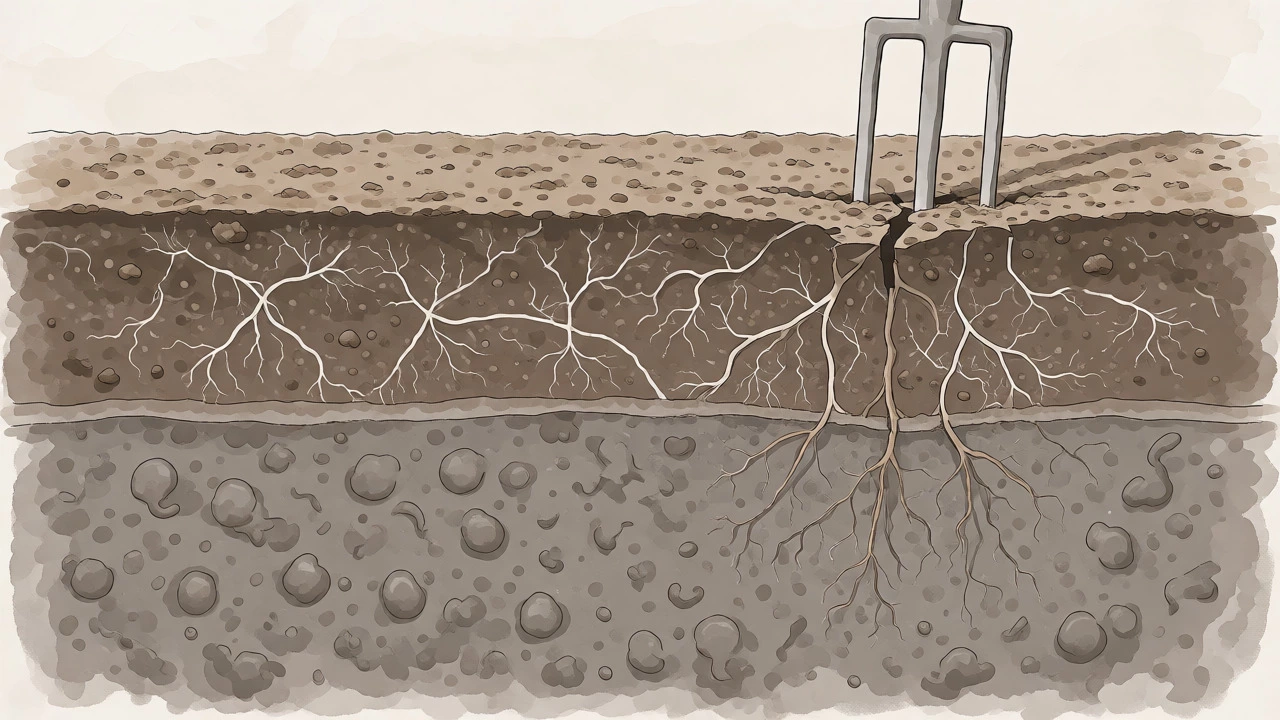
Here’s why it wins for hard soil: you push it straight down into the ground using your body weight, then pull back on the handles. This action lifts and cracks the soil horizontally. Crucially, it does not invert the soil layers. This preserves the delicate fungal networks (mycorrhizae) and keeps weed seeds buried where they belong. For established beds or large areas, this is far more efficient than double-digging.
- Best for: Established garden beds, lawns needing renovation, and deep compaction.
- Ergonomics: Uses leg strength rather than back strength.
- Depth: Can reach 10-12 inches easily.
In my own plots in Sussex, I use a broadfork once a year in autumn. It breaks up the pan formed by winter rains without destroying the soil structure built up by summer cover crops. It’s messy work, but it leaves the ground fluffy and ready for planting come spring.
The Digging Fork: Precision for Small Spaces
Not everyone has space for a broadfork. If you’re working in tight flower borders or raised beds, a digging fork is a handheld tool with flat tines designed to lift and turn soil is your go-to. Unlike a spade, which cuts vertically, a fork pierces the soil and levers it upward. This creates channels for air and water.
However, there’s a trap here. Many people use forks to turn the soil over completely. While this mixes in compost, it also brings dormant weed seeds to the surface, where they germinate instantly. For breaking up hard soil specifically, try a technique called "forking." Insert the fork deeply, rock it back and forth to crack the soil, but leave the block in place. Do this every six inches across the bed. It’s less disruptive than full turnover and improves drainage significantly.
| Tool | Primary Use | Soil Disruption | Physical Effort |
|---|---|---|---|
| Broadfork | Deep aeration without inversion | Low (preserves layers) | Moderate (leg-driven) |
| Digging Fork | Lifting and cracking small areas | Medium (can be low if careful) | High (back/arms) |
| Spade/Shovel | Cutting and moving soil | High (inverts layers) | Very High |
| Garden Claw | Breaking surface crusts | Low (surface only) | Low |
The Garden Claw: For Surface Crusting Only
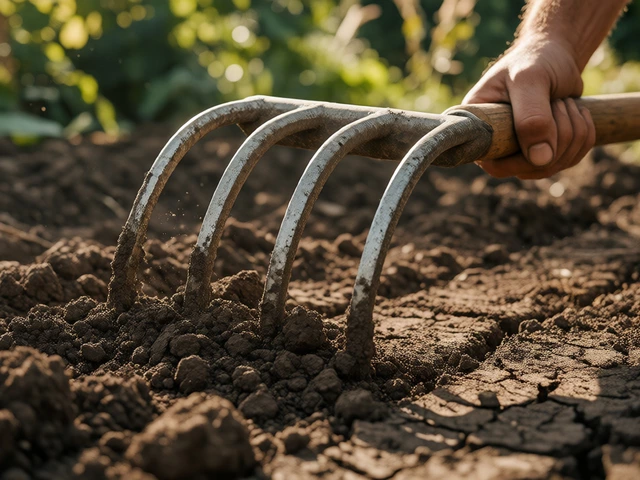
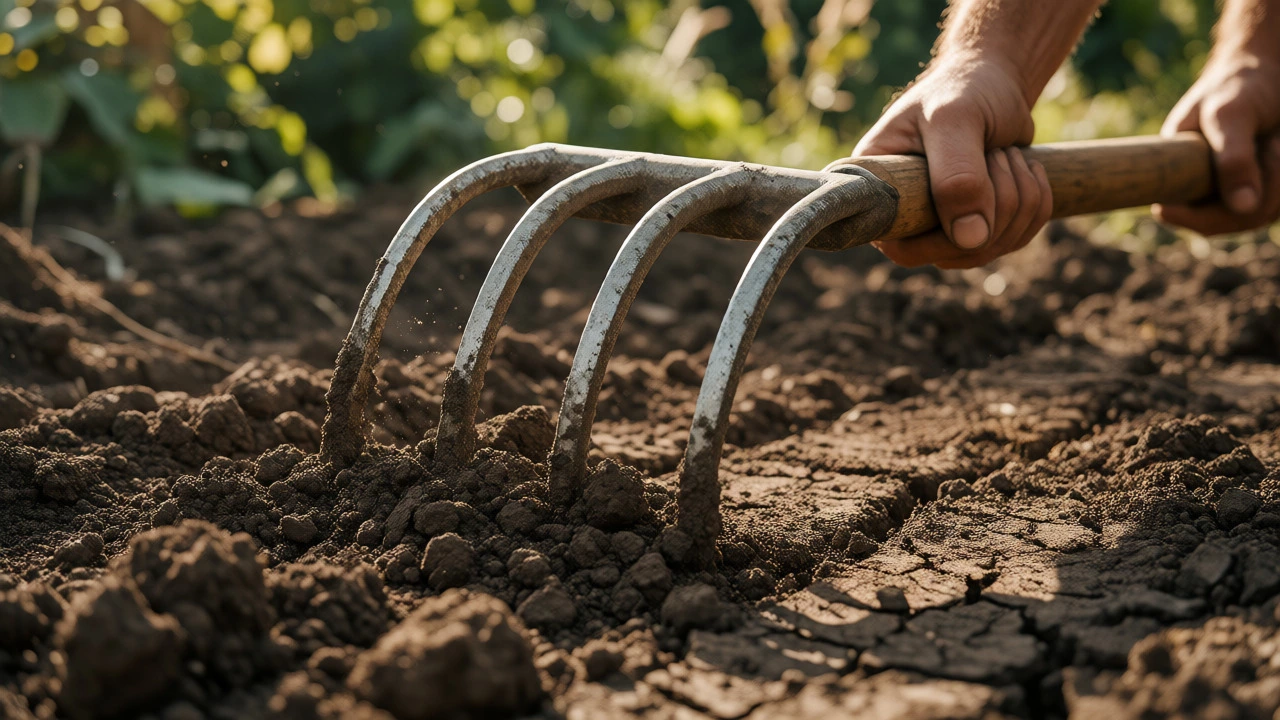
Sometimes, the hardness isn’t deep down-it’s right at the top. After a heavy rain followed by sun, a crust forms on the surface. This seals off moisture evaporation and prevents seedlings from emerging. A garden claw is a hand-held cultivator with multiple curved tines used for breaking up surface soil is perfect for this.
Don’t confuse this with a rake. A rake drags debris; a claw digs in. Drag it through the top inch of soil to break the seal. This allows water to penetrate during the next shower. It’s quick, easy, and saves you from having to re-water heavily. Just remember: claws don’t fix deep compaction. If your roots hit a wall at four inches, a claw won’t help you.
When Machines Make Sense
For larger plots, say over 50 square meters, manual tools become exhausting. This is where mechanical options enter the chat. Two main contenders exist: rototillers and power harrows.
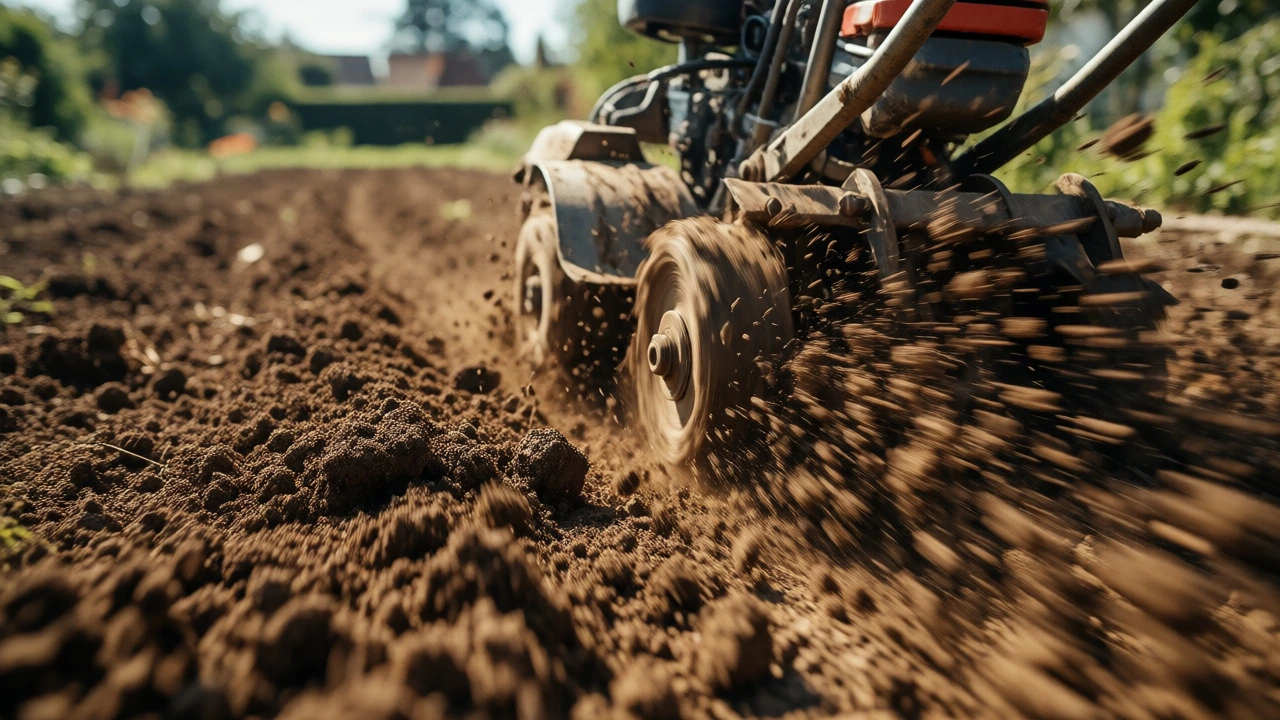
A rototiller is a motorized machine with rotating blades that churn and mix the soil chops the soil thoroughly. It’s great for starting new gardens or mixing in massive amounts of compost. However, rototilling can destroy soil structure if used excessively. It pulverizes aggregates and can lead to even harder compaction below the tiller depth (the "tillage pan").
Power harrows, often attached to small tractors, are gentler. They level the seedbed and break clods without churning the soil as violently. In the UK, hiring a mini-tractor with a harrow attachment for a day is often cheaper than buying a rototiller you’ll use twice a year. Check local hire shops in Brighton; many offer half-day rates.
How to Choose the Right Tool for Your Situation
Still unsure? Run through this quick decision tree:
- Is the area small (under 10 sqm)? Yes → Use a digging fork or garden claw. No → Go to step 2.
- Is the soil severely compacted deep down? Yes → Use a broadfork. No → Go to step 3.
- Are you establishing a new bed? Yes → Consider a rototiller for initial breakdown. No → Use a broadfork or digging fork.
- Do you have physical limitations? Yes → Opt for a broadfork (uses legs) or hire machinery. No → Digging fork offers more control.
Remember, the goal isn’t just to make the soil soft; it’s to make it porous. Soft but dense soil still drowns roots. Porous soil breathes.
Pro Tips for Easier Breaking
Even the best tool struggles against stubborn conditions. Here are three tricks to make the job easier:
Wait for the right moisture. Never dig wet clay. It sticks to the tool and turns into sludge. Wait until the soil is moist but crumbly. If you squeeze a handful, it should hold shape but crumble when poked.
Add organic matter first. Before breaking up hard soil, spread a layer of well-rotted manure or compost on top. As you work the tool in, you’re incorporating this material. Organic matter acts as a buffer, preventing re-compaction later.
Work in strips. Don’t try to do the whole bed at once. Work in parallel strips. This gives you leverage and keeps you organized. It also lets you assess progress as you go.
Can I break up hard soil without digging?
Yes, largely. Planting deep-rooted cover crops like daikon radish or comfrey can naturally break up compaction. Their taproots drill into the soil, creating channels for air and water. Once the plants die back, these channels remain, improving structure without manual labor.
Is a spade better than a fork for hard soil?
Generally, no. A spade cuts and slices, which can shear roots and compact the bottom of the hole. A fork lifts and cracks, which opens up the soil structure. For breaking up compaction, a fork or broadfork is superior because it aerates rather than just displaces.
How often should I break up my garden soil?
Once a year is usually sufficient for established beds, ideally in autumn after harvest. Over-working the soil destroys its natural aggregate structure. If you have heavy clay, you might need to intervene twice a year, but always monitor for signs of compaction before acting.
What is the cheapest way to fix compacted lawn?
Manual aeration with a garden fork is the cheapest method. Push the fork into the ground, wiggle it to create holes, and remove. Follow up by brushing sand or topsoil into the holes. This costs almost nothing compared to hiring a core aerator.
Does adding gypsum help break up clay soil?
Gypsum (calcium sulfate) can help displace sodium ions in sodic clay soils, improving structure. However, for typical garden clay caused by compaction, organic matter and proper aeration are far more effective and cost-efficient. Gypsum is a specific fix for specific chemical issues, not a universal cure-all.