Bonsai Deep Soak Planner & Guide
When Should I Soak?
Select your tree type and current season to get personalized advice.
The Deep Soak Method
Follow these steps to ensure even hydration and root health.
There is a dangerous myth floating around the bonsai community: that you should water your tree on a strict schedule. "Every Tuesday at 9 AM," someone might tell you. If you follow that advice, your tree will die. Plants do not live by clocks; they live by biology. The question isn't really about time-it's about moisture levels in the soil and the specific needs of the species you are holding.
The short answer to how often should I soak my bonsai tree is: whenever the top layer of soil feels dry to the touch, or just before it becomes completely parched. For most indoor bonsai during winter, this might be once a week. For an outdoor pine in the height of July, it could be twice a day. The "deep soak" method is the gold standard for ensuring roots get oxygen and water evenly, but timing it wrong can rot your tree faster than neglect.
Why the "Deep Soak" Method Matters
Most beginners make the mistake of "cupping" their bonsai. This means sprinkling a little water on top until it stops absorbing, then walking away. The problem? The surface gets wet, but the bottom half of the pot stays bone dry. Roots eventually migrate upward to chase that easy moisture. When they hit the surface, they burn in the sun or dry out instantly. A shallow root system cannot support the canopy above, leading to stunted growth and eventual collapse.
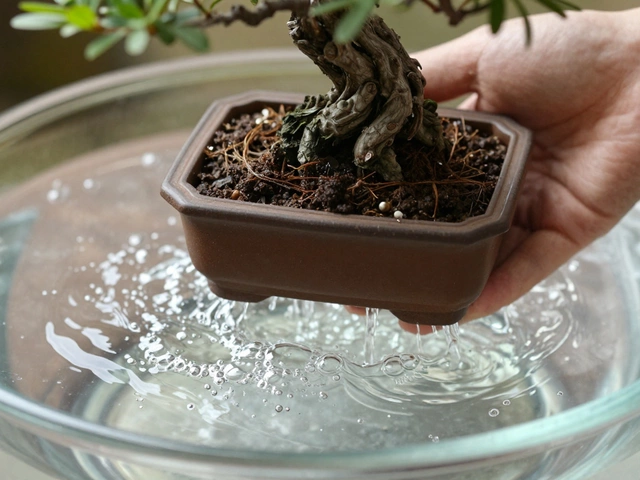
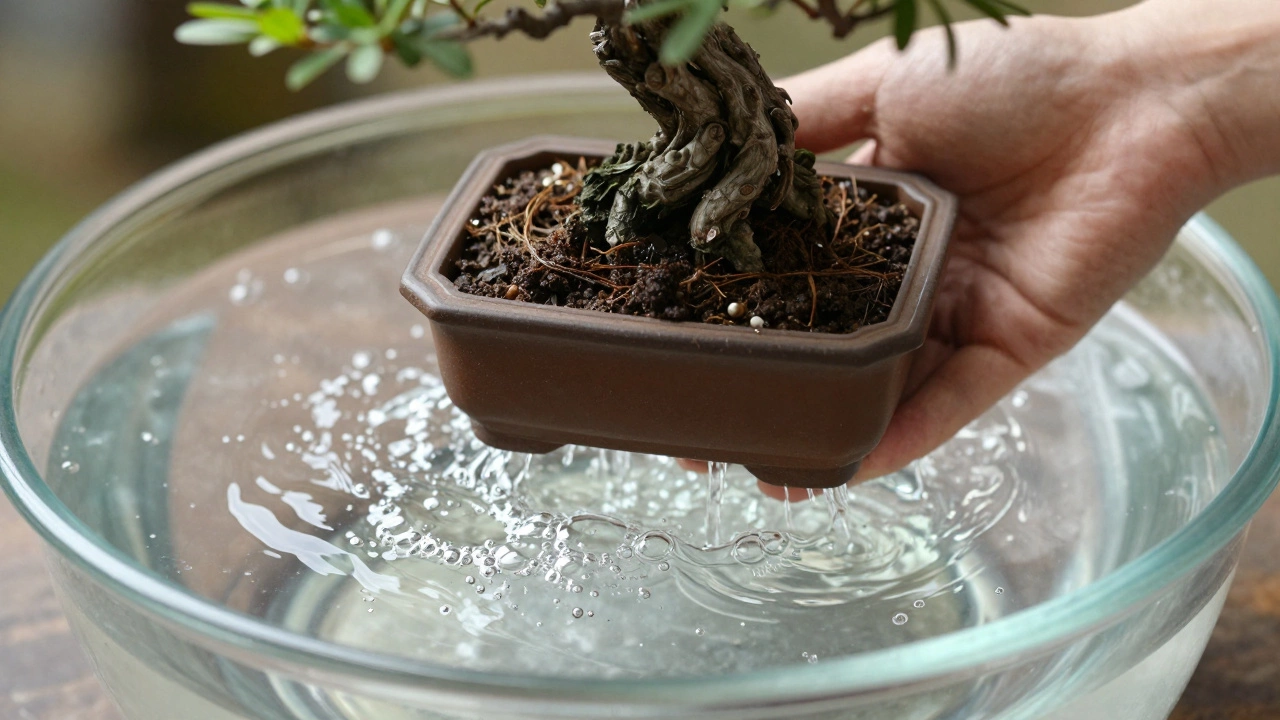
The deep soak method fixes this. By submerging the entire pot (up to the rim) in a basin of water, you use capillary action to pull moisture up through the soil from the bottom. This ensures every inch of the root ball gets hydrated. It also flushes out excess salts from fertilizers that build up over time, which can burn delicate root tips.
Here is how to do it right:
- Fill a sink, bucket, or large tray with room-temperature water.
- Gently place the bonsai pot into the water. Do not splash water onto the trunk or foliage if the species dislikes wet bark (like some pines).
- Watch for bubbles. As air escapes the soil, bubbles will rise. Wait until the bubbling slows down significantly-usually 15 to 30 minutes.
- Lift the pot and let it drain thoroughly on a saucer or rack for at least 10 minutes. Never leave a bonsai sitting in standing water overnight.
Decoding the Signals: When Is "Now"?
Since there is no calendar date for watering, you need to learn to read your tree. The most reliable tool is your finger. Insert your index finger into the soil up to the second knuckle. If it comes out clean and dry, it is time to soak. If it feels damp or cool, wait another day. Checking daily builds a rhythm between you and the plant.
You can also lift the pot. A dry bonsai feels surprisingly light, almost hollow. A properly watered one has heft. This takes practice, but after a month of checking weight daily, you will know exactly when the tank is empty without touching the soil.
Visual cues are secondary but helpful. Leaves that look slightly dull or droop marginally are thirsty. However, if leaves are yellowing or dropping rapidly, the issue might be overwatering or root rot, not thirst. Always check the soil first before assuming dehydration.
Species-Specific Watering Needs
Not all bonsai are created equal. A tropical Ficus has different thirst patterns than a temperate Japanese Maple. Understanding the origin of your tree is crucial for setting expectations.
| Species Group | Examples | Drought Tolerance | Soil Preference | Typical Soak Frequency (Summer) |
|---|---|---|---|---|
| Temperate Deciduous | Japanese Maple, Elm, Hornbeam | Low | Moist but well-draining | Every 1-2 days |
| Conifers | Juniper, Pine, Cypress | Moderate | Well-draining, gritty | Every 2-4 days |
| Tropical/Subtropical | Ficus, Jade, Serissa | Low to Moderate | Consistently moist | Every 2-3 days |
| Succulents/Cacti | Jade, Agave | High | Very fast-draining | Once every 7-14 days |
For instance, a Juniper procumbens can handle a few days of drought better than a Acer palmatum (Japanese Maple). Maples have broad leaves that transpire (lose water) quickly. If you let a Maple sit dry for three days in summer, it will shed its leaves as a survival mechanism. Junipers, with their needle-like foliage, conserve water more effectively. Knowing these biological differences prevents panic when one tree looks fine while another wilts next to it.
Seasonal Shifts: Adjusting Your Routine
Nature operates on seasons, and your watering schedule must pivot accordingly. In spring and summer, trees are in active growth mode. They are photosynthesizing heavily, pushing out new buds, and expanding their canopy. This metabolic activity requires significant water transport. During these months, expect to soak your bonsai more frequently. Heat accelerates evaporation, so a tree that needed water every three days in April might need it every day in August.
Autumn brings a slowdown. As temperatures drop, growth halts. The tree prepares for dormancy. You can gradually reduce the frequency of deep soaks. Check the soil less obsessively; allow it to dry out slightly more between sessions. This mimics the natural drying trends of autumn weather.
Winter is the trickiest season, especially for indoor enthusiasts. Temperate trees outdoors may be dormant and frozen, requiring very little water (just enough to keep roots from desiccating in wind). However, tropical trees kept indoors face a harsh reality: central heating. Radiators and forced-air systems strip humidity from the air, causing soil to evaporate faster than you’d expect for "winter." A Ficus in a heated living room might still need weekly soaks, even though it’s December. Always check the soil; don’t assume cold weather equals dry soil.
Common Pitfalls and How to Avoid Them
Overwatering is the number one killer of bonsai. It is easier to revive a dried-out tree than a rotted one. When soil stays soggy, air pockets fill with water. Roots need oxygen to breathe. Without it, they suffocate and decay. Bacteria and fungi thrive in this anaerobic environment, spreading rot up the trunk. Signs include blackened roots, mushy soil, and sudden leaf drop despite wet soil.
To prevent this, ensure your pot has adequate drainage holes. Never block them with saucers during the soaking process. After lifting the pot from the basin, let it drip freely. If you notice water pooling in the saucer hours later, your soil mix might be too dense. Consider repotting with a grittier substrate containing akadama, pumice, or lava rock.
Another mistake is using cold tap water directly in winter. Shocking warm roots with icy water can stunt growth. Let tap water sit for a few hours to reach room temperature before soaking. Also, avoid chlorinated water if possible, as chlorine can harm beneficial soil microbes over time. Rainwater or filtered water is ideal for sensitive species like Azaleas.
Tools That Make Soaking Easier
You don’t need expensive gear, but a few simple tools streamline the process. A dedicated bonsai watering can with a fine rose head is great for top-up watering between soaks. For the deep soak itself, a plastic tub or a specialized bonsai soaking tray works best. Look for trays with raised feet to allow airflow underneath the pot after draining.
A soil moisture meter can be a backup for beginners who struggle with the finger test. Insert the probe deep into the root zone. If the reading indicates "dry," proceed with the soak. However, meters can give false readings if placed near large rocks or roots, so use them as a guide, not a gospel.
FAQ
Can I soak my bonsai tree every day?
Generally, no. Daily deep soaking usually leads to root rot because the soil never gets a chance to aerate. Only soak deeply when the topsoil is dry. Between soaks, you can mist the foliage or lightly sprinkle water on top to maintain humidity, but the full immersion should be reserved for when the root ball actually needs hydration.
How long should I leave my bonsai in the water?
Leave it submerged until air bubbles stop rising from the soil, typically 15 to 30 minutes. Once the bubbling slows, the soil is saturated. Leaving it longer than an hour offers no benefit and increases the risk of waterlogging the finer particles in the mix.
What if my bonsai leaves are drooping but the soil is wet?
This is a critical sign of root rot or transplant shock. If the soil is wet and leaves are drooping, stop watering immediately. Check the roots for black, mushy areas. You may need to remove the tree from the pot, trim dead roots, and repot in fresh, well-draining soil. Drooping with wet soil is rarely due to lack of water.
Is rainwater better than tap water for bonsai?
Yes, rainwater is softer and lacks chlorine and fluoride, which can accumulate in soil and harm sensitive species like Azaleas and Maples. Tap water is generally fine for hardy trees like Junipers or Pines, but letting it sit for 24 hours to off-gas chlorine is a good practice if you don't have access to rainwater.
Do I need to soak my bonsai in winter?
Yes, but less frequently. Dormant trees still need water to prevent root desiccation, especially if they are exposed to wind or indoor heating. Check the soil regularly. If it is dry, give it a thorough soak. Just ensure the water is not freezing cold, as thermal shock can damage roots.