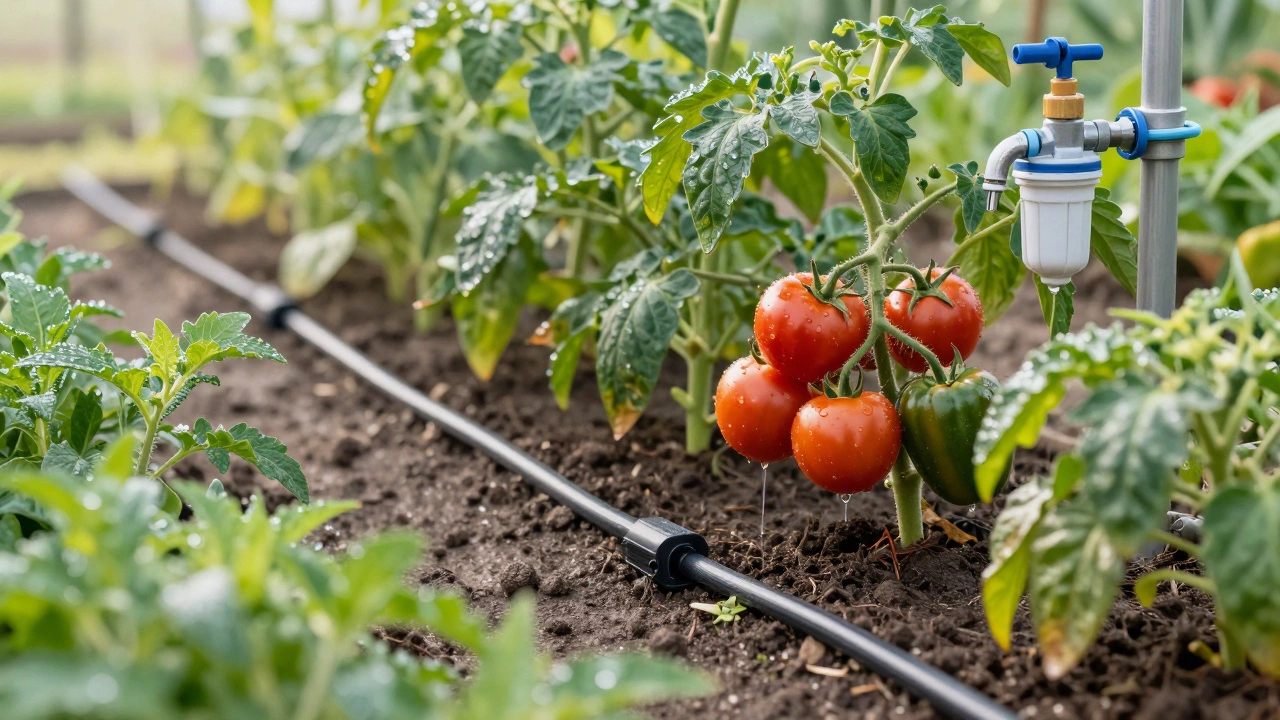
Drip irrigation kits save water, time, and boost garden yields. Learn if they're worth the cost for UK gardens, what to buy, how to install, and how to maintain them for long-term success.
Automatic Irrigation: Smart Watering Solutions for Indian Gardens and Farms
When you set up an automatic irrigation, a system that delivers water to plants without manual effort. Also known as smart watering, it’s not just a luxury—it’s becoming essential for farmers and home gardeners in India facing erratic rains, rising temperatures, and shrinking water supplies. Whether you’re growing tomatoes on a balcony or rice in a field, wasting water by hand-watering every day is no longer practical. Automatic irrigation makes sure your plants get the right amount of water, at the right time, without you lifting a finger.
This system isn’t one-size-fits-all. It includes drip irrigation, a method that slowly releases water directly to plant roots through tubes and emitters, which is perfect for small gardens and terrace farms. It also covers sprinklers, subsurface lines, and timer-based systems that sync with weather data. But here’s the catch: most people buy these systems and then give up because they clog, leak, or waste water instead of saving it. That’s why understanding how drip emitters, the small nozzles that control water flow in drip systems work—and how to maintain them—is just as important as installing the system. A clogged emitter can ruin a whole row of plants, and uneven flow means some plants drown while others dry out.
Automatic irrigation isn’t just about hardware. It’s about matching the system to your soil, climate, and crop. In Haryana, where vegetable farms rely on precision watering, farmers use timers and moisture sensors to cut water use by 40%. On balconies in Mumbai, gardeners use gravity-fed drip lines because electricity is unreliable. You don’t need fancy tech to start—just a basic timer, some tubing, and a little observation. The goal isn’t to automate everything, but to reduce the daily grind of watering while keeping your plants healthy.
What you’ll find in these posts are real solutions from Indian gardeners who’ve been there. From fixing leaky terrace systems to choosing the right plants for low-maintenance watering, these guides cut through the noise. You’ll learn why rice farmers can’t rely on sprinklers, how to stop your balcony from leaking because of overwatering, and which plants survive with minimal irrigation. No fluff. No theory. Just what works on the ground in India’s heat, monsoons, and concrete jungles.