Drip Irrigation Savings Calculator
Calculate Your Savings
See how much water, time, and money you can save with drip irrigation
Your Savings
Results
Enter your details to see your savings.
Let’s be honest-most of us buy drip irrigation kits hoping they’ll solve our watering problems. We’re tired of dragging hoses, forgetting to water, or watching our plants wilt in the heat. But then we see the price tag. Is it really worth it? Or are we just throwing money at a fancy hose with tiny holes?
The short answer: yes, if you’re growing vegetables, herbs, or potted plants and you’re serious about saving water and time. But not all kits are created equal. And if you’re just trying to water a few pots on a balcony, you might be better off with a simple soaker hose.
How drip irrigation actually works
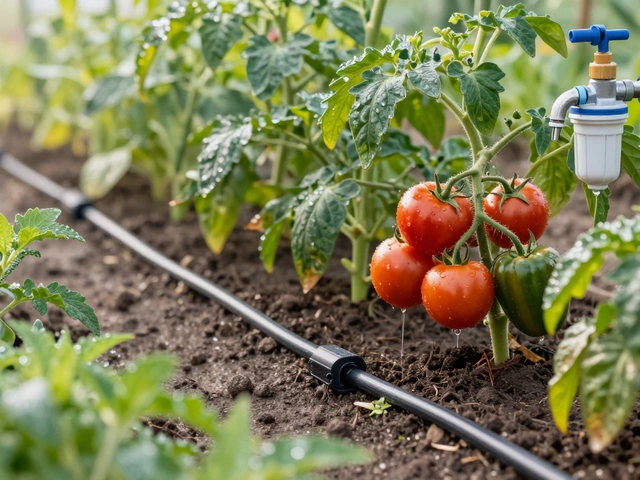
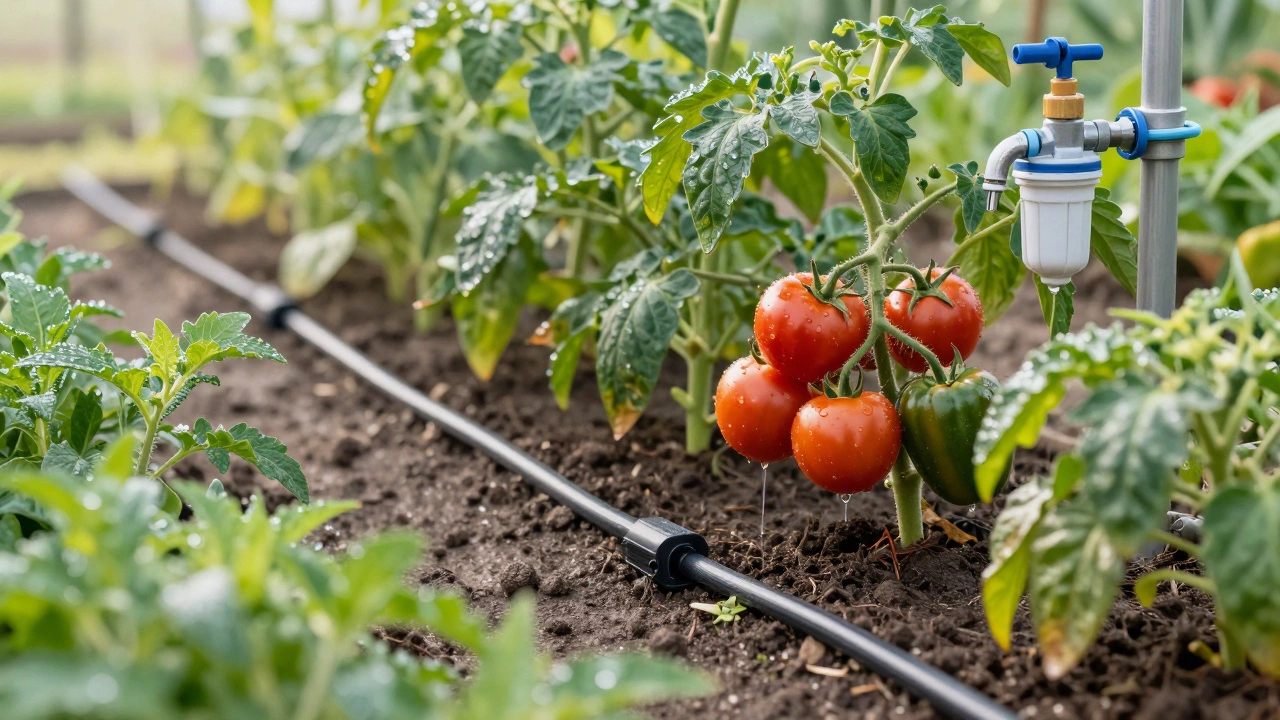
Drip irrigation isn’t magic. It’s simple physics. Instead of spraying water into the air like a sprinkler, drip systems deliver water slowly, drop by drop, right to the base of each plant. That means less evaporation, less runoff, and no wasted water on weeds or paths.
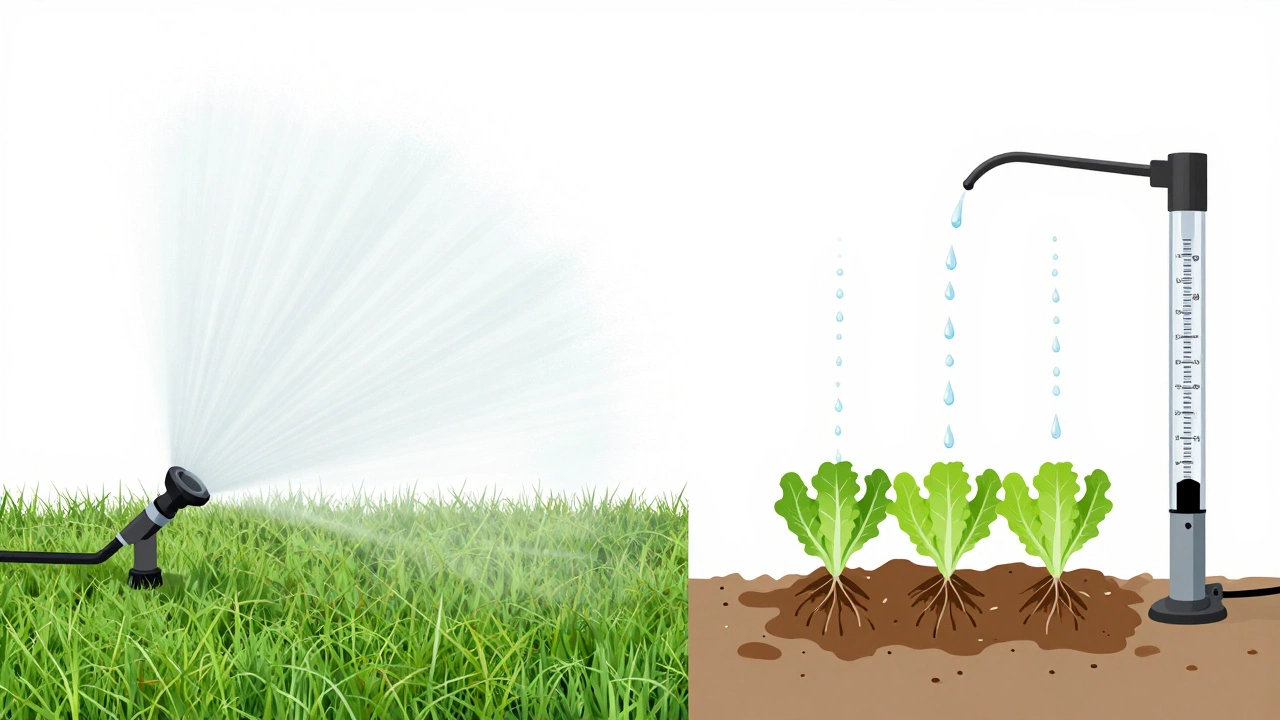
In a typical garden, sprinklers lose up to 50% of water to wind and evaporation. Drip systems? They’re 90-95% efficient. That’s not a guess-it’s from the University of California Agriculture and Natural Resources studies. In Brighton’s damp but unpredictable springs, that efficiency matters. You’re not just saving water; you’re saving money on your bill and time on your schedule.
What you get in a typical drip irrigation kit
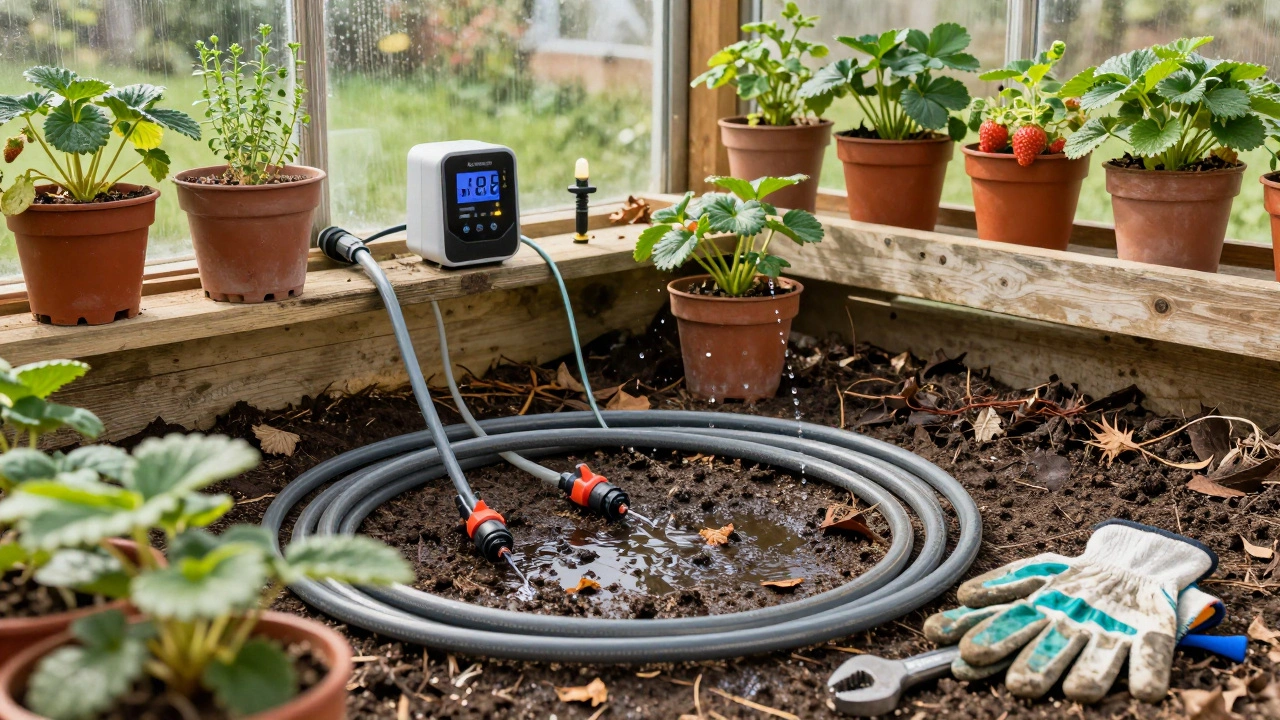
Most starter kits include: tubing, emitters (the little drippers), connectors, a pressure regulator, and a filter. Some come with a timer. The good ones have pressure-compensating emitters-these keep water flowing evenly even if your garden slopes or the tubing runs long.
Here’s what you’re really paying for:
- Emitters: These are the stars. Standard ones cost 10-20p each. Pressure-compensating ones? 30-50p. Worth it if you’ve got uneven ground.
- Tubing: 16mm black polyethylene tubing lasts 5-7 years outdoors. Cheaper kits use thinner material that cracks in winter.
- Filter: Non-negotiable. Tap water in the UK has sediment. Without a filter, your emitters clog in weeks.
- Timer: Not essential, but if you travel or work long hours, it’s a game-changer. Battery-powered ones last 1-2 seasons.
Basic kits start around £30 for a 10m setup. Mid-range with timer and pressure regulators? £60-£80. High-end with smart controls? £150+. You don’t need the fancy ones to start.
Real savings: water, time, and plants
Let’s say you water your vegetable patch three times a week with a hose. That’s 20 minutes each time. That’s 10 hours a month. Now imagine setting your drip system for 45 minutes once every three days. You’re cutting watering time by 80%. No more forgetting. No more rushed watering before work.
Water savings? A typical sprinkler uses 1,000 litres per hour. A drip system uses 10-20 litres per hour for the same area. For a 20m² vegetable garden, that’s roughly 1,500 litres saved every month. In a year? That’s over 18,000 litres. In Brighton, where water restrictions are becoming more common, that’s not just green-it’s smart.
And your plants? They thrive. Drip irrigation keeps leaves dry, which cuts down on fungal diseases like mildew and blight. Tomatoes, peppers, and cucumbers grow bigger. Herbs stay fragrant. Strawberries don’t rot on the soil. I’ve seen it in my own raised beds-plants that used to struggle now produce twice as much.
When drip kits don’t make sense
Not every garden needs this. If you have a small lawn or a few potted plants, a drip system is overkill. You’re better off with a watering can or a simple soaker hose. Drip systems work best for:
- Vegetable gardens (rows or raised beds)
- Herb gardens (especially in containers)
- Flower beds with spaced-out plants
- Greenhouse growing
- Areas with slopes or uneven ground
They’re not ideal for dense groundcovers like ivy or lawns. You’d need hundreds of emitters, and the cost adds up fast.
Also, if you’re not willing to maintain it? Don’t bother. Drip systems need checking every few weeks. Emitters clog. Tubing gets chewed by slugs or rodents. Filters need cleaning. It’s low effort, but not zero effort.
What to look for in a kit
Here’s what actually works, based on real use in UK gardens:
- Pressure-compensating emitters: These are the upgrade you don’t skip. They ensure even watering even on a slope.
- 16mm mainline tubing: Avoid 12mm-it’s flimsy and cracks in frost.
- 50-micron filter: Cheap filters are 100-micron. They clog. Don’t risk it.
- Barbed fittings: These hold tubing tightly. No leaks.
- Timer with manual override: You’ll want to adjust it when it rains.
Brands like Rain Bird, Gardena, and Hozelock have reliable kits. But you don’t need the name. Look for kits that list these specs. Many budget brands on Amazon copy the same parts-just without the brand markup.
Installation: less scary than it looks
You don’t need tools or plumbing skills. Here’s how to do it in an afternoon:
- Map out where your plants are. Sketch a rough layout.
- Run the main tubing along the edge of your bed or around pots.
- Use a punch tool (comes with most kits) to poke holes where each plant is.
- Insert emitters. Push them in until they click.
- Connect the filter and pressure regulator to your tap.
- Turn on the water. Check for leaks. Adjust emitters if water pools or runs too fast.
It takes about 2-3 hours for a 10m² bed. First time? Add an extra hour. You’ll get faster.
Cost vs. benefit: the math
Let’s break it down:
- Kit cost: £60 for a decent 20m² setup
- Water saved: ~18,000 litres/year
- Water bill savings: UK average is £1.50 per cubic metre. That’s £27 saved per year.
- Time saved: 10 hours/month = 120 hours/year. That’s 3 full workdays.
- Yield increase: 20-50% more vegetables in many cases. That’s £100+ in produce value if you grow tomatoes, beans, or salad greens.
So, you’re paying £60 upfront. You break even in about 2 years. After that? Pure savings. And your garden looks better.
Common mistakes and how to avoid them
I’ve seen too many people buy a kit, install it, and then give up because it didn’t work. Here’s why:
- No filter: Clogged emitters within weeks. Always use one.
- Wrong emitter spacing: Too far apart? Plants dry out. Too close? Waste water. 30cm for herbs, 45cm for tomatoes.
- Leaving it on too long: Drip doesn’t mean soak. 30-60 minutes every 2-3 days is enough in summer.
- Not winterizing: Drain the system before frost. Water in tubing freezes and bursts pipes.
- Ignoring maintenance: Check emitters monthly. Clean the filter every 4-6 weeks.
Simple habits make all the difference.
Final verdict: yes, if you do it right
Drip irrigation kits are worth it if you grow food, care about water use, and want to spend less time watering. They’re not a luxury. They’re a practical upgrade for anyone serious about their garden.
Don’t buy the most expensive kit. Don’t buy the cheapest one either. Find the middle ground-something with pressure-compensating emitters, a filter, and 16mm tubing. Install it yourself. Maintain it. And watch your garden thrive while you sit back with a cup of tea.
It’s not about spending more. It’s about working smarter.
Do drip irrigation kits work in the UK climate?
Yes, they work very well. The UK’s wet winters and variable springs actually make drip systems more valuable. They deliver water precisely when it’s needed, reducing waste during rainy spells and keeping plants hydrated during dry spells. Unlike sprinklers, they don’t wet the foliage, which helps prevent fungal diseases common in damp climates.
Can I use a drip kit for potted plants?
Absolutely. Many kits include special adapters for containers. Use one emitter per pot, and set it to run for 15-30 minutes every 2-3 days. This is far more reliable than daily watering, especially if you’re away often. For balcony gardens, it’s one of the best upgrades you can make.
How long do drip irrigation kits last?
The tubing and fittings last 5-7 years with basic care. Emitters can clog or wear out sooner-usually after 2-3 years. Filters need replacing every 1-2 years. A well-maintained system can last a decade. Replace parts as needed; you don’t have to buy a whole new kit.
Will drip irrigation attract pests?
Not directly. But if water pools around the base of plants due to clogged emitters or poor setup, it can create damp spots that attract slugs or fungus gnats. The solution? Keep emitters clean, avoid overwatering, and make sure water soaks into the soil-not sits on top.
Can I connect a drip system to a rain barrel?
Yes, but you’ll need a pump. Rain barrels don’t produce enough pressure for drip systems to work properly. A small 12V pump (around £40) can boost pressure from 0.5 bar to 1.5 bar-enough for most kits. This makes your system truly sustainable.
Is it worth getting a smart timer?
Only if you travel often or hate manual adjustments. Smart timers can link to weather apps and skip watering when rain is forecast. But a basic mechanical timer (under £20) works fine for most home gardens. You can adjust it manually when needed.
Do I need to winterize my drip system?
Yes. Water left in tubing freezes and expands, cracking pipes and fittings. Drain the system before the first frost. Remove the timer and store it indoors. Leave emitters in place-they’re easy to reconnect in spring.