Low Maintenance Plant Selector
Choose Your Garden Conditions
Recommended Plants
Your garden conditions match these low maintenance plants.
Want a garden that looks great without demanding your time every weekend? You’re not alone. Most people who start gardening quickly realize they don’t have the hours to water, prune, weed, and fuss over plants daily. The good news? A beautiful, thriving garden doesn’t need constant attention. The best low maintenance garden uses the right plants, smart design, and natural systems to cut work while keeping color, texture, and life in your yard.
Forget Perfect Lawns - Think Ground Covers and Stone
The biggest time-suck in traditional gardens? Grass. Mowing weekly, edging borders, fertilizing, and fighting weeds in turf is exhausting. Replace it. In a low maintenance garden, grass is optional. Instead, use ground covers like creeping thyme, sedum, or clover. These spread slowly, choke out weeds, need no mowing, and survive dry spells. Clover even fixes nitrogen in the soil, so you don’t need fertilizer.
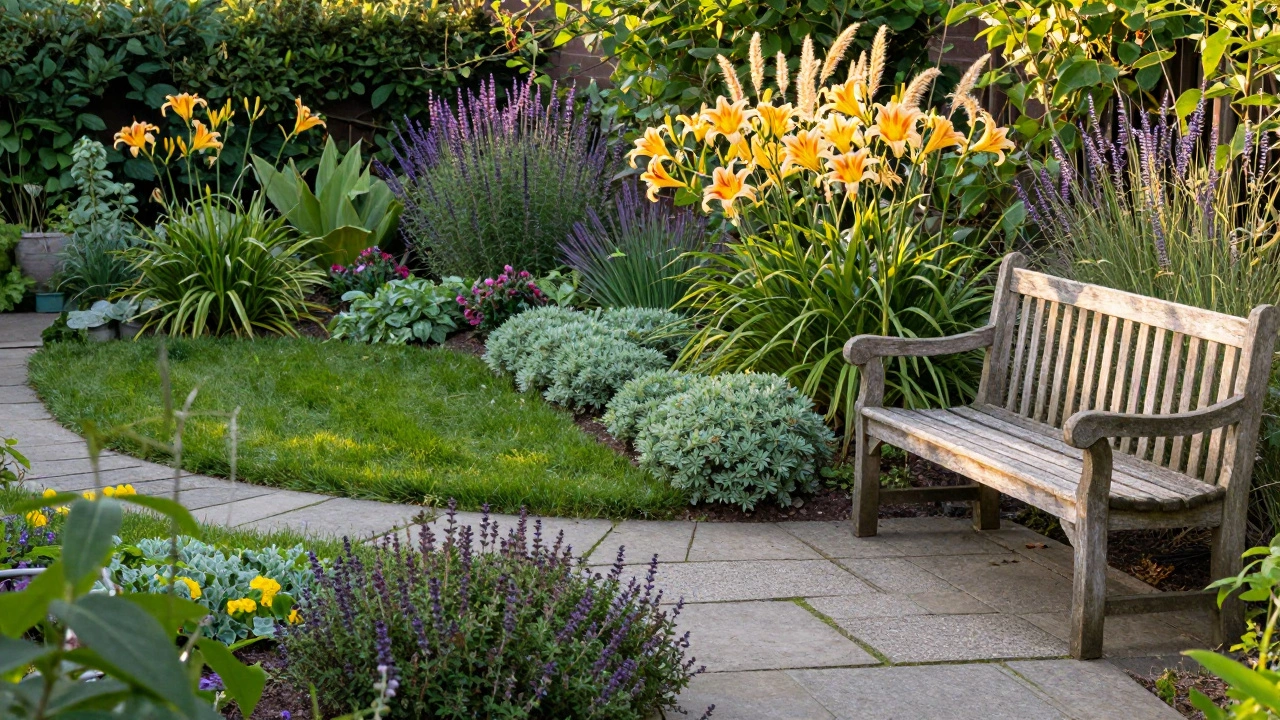
Where plants won’t grow - under trees, on slopes, or in shady corners - use gravel, crushed stone, or decomposed granite. These materials drain well, suppress weeds, and look clean. Add a few boulders or a simple wooden bench, and you’ve got a space that feels intentional, not neglected.
Choose Plants That Don’t Ask for Much
The secret to low maintenance? Pick plants that naturally thrive in your climate without extra help. Avoid tropicals, high-water annuals, or finicky hybrids. Stick to natives and drought-tolerant perennials. Here’s what works:
- Daylilies - bloom all summer, survive heat and poor soil, no deadheading needed.
- Russian sage - silvery foliage, purple spikes, thrives in full sun with almost no water after year one.
- Black-eyed Susan - bright yellow flowers, attracts pollinators, self-seeds so you get more each year.
- Ornamental grasses - like Miscanthus or Calamagrostis - sway in the wind, turn golden in fall, and need cutting back just once a year in early spring.
- Lavender - fragrant, long-blooming, repels deer and rabbits, loves rocky soil.
These plants don’t need staking, constant watering, or pruning. Once established, they rely on rain. In fact, overwatering them can kill them. Let them adapt.
Design for Less Work, Not More Beauty
Many people think low maintenance means boring. It doesn’t. It means designing smart. Group plants by water needs. Put thirsty plants near your hose or downspout. Put drought-tolerant ones where water naturally drains away. This cuts irrigation needs by 60% or more.
Use mulch - not the dyed kind, but wood chips or shredded bark. A 3-inch layer blocks weeds, keeps roots cool, and slowly feeds the soil. Reapply every two years. No need to replace it annually.
Limit paths and borders. Too many edges mean more weeding and trimming. Let plants spill over gently into gravel or stone. That’s not messy - it’s natural. Think woodland edge, not showroom display.

Install a Smart Irrigation System (But Only If You Need It)
You don’t need sprinklers everywhere. In fact, most low maintenance gardens need little to no irrigation after the first year. But if you live in a dry region or have a few thirsty plants, install a drip system. Drip lines deliver water directly to roots, lose almost nothing to evaporation, and can be timed with a simple timer.
Look for systems with moisture sensors. They only turn on when the soil is dry. No more guessing. No more wasting water. Brands like Rain Bird and Netafim make reliable, easy-to-install kits for homeowners. You can set it up in a weekend.
Let Nature Do the Work
One of the biggest mistakes? Trying to control everything. In a low maintenance garden, you’re the curator, not the boss. Leave some seed heads on plants through winter. Birds eat them. Leave fallen leaves in flower beds. They break down into compost. Don’t remove every weed - only the aggressive ones. Many “weeds” like dandelions and clover actually support bees and improve soil.
Plant pollinator-friendly species like milkweed, echinacea, and borage. They attract beneficial insects that eat pests. That means fewer chemicals, less spraying, and less work. A garden that works with nature doesn’t need constant fixing.
What to Avoid
Some plants promise low care but deliver high drama. Skip these:
- Hydrangeas - need consistent moisture, specific soil pH, and frequent pruning.
- Roses - prone to mildew, aphids, and require regular feeding and deadheading.
- Annual flowers like petunias or marigolds - need replanting every spring and lots of water.
- Topiaries and formal hedges - require weekly trimming to look neat.
These aren’t bad plants. But they’re not low maintenance. Save them for pots you can move and manage seasonally, not for your main garden.
Real Results: A 5-Year Comparison
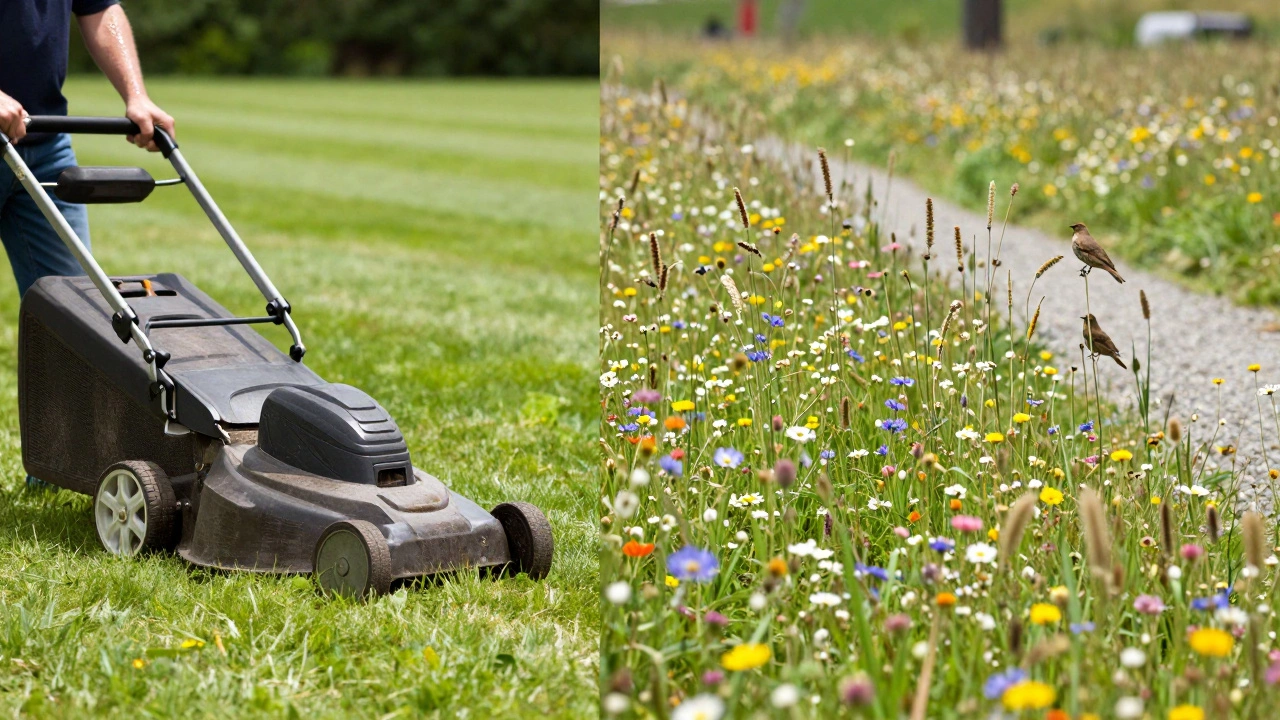
A study by the University of California Agriculture and Natural Resources tracked two similar 100-square-foot gardens over five years. One used traditional annuals and turf. The other used native perennials, mulch, and gravel. The traditional garden required 120 hours of labor per year: mowing, weeding, watering, replanting. The low maintenance garden? Just 18 hours - mostly pruning in spring and adding mulch every other year. The second garden also used 75% less water and supported 3x more pollinators.
You don’t need a huge yard to see this difference. Even a 20-square-foot corner can become a quiet, thriving refuge with the right choices.
Start Small, Think Long-Term
You don’t have to redo your whole yard tomorrow. Pick one bed. Replace one patch of grass. Swap one high-maintenance shrub for a native perennial. Watch how it grows. Notice how little you have to do. Then repeat.
A low maintenance garden isn’t about giving up beauty. It’s about choosing plants and patterns that last. It’s about letting go of perfection and embracing resilience. The goal isn’t a magazine cover. It’s a space that breathes with you - not against you.
Can a low maintenance garden still look colorful?
Yes. Many drought-tolerant perennials bloom for months. Daylilies, Russian sage, black-eyed Susans, and lavender offer vibrant colors from spring through fall. Ornamental grasses add movement and golden tones in winter. Combine them in clusters for visual impact without extra work.
Do I need to fertilize a low maintenance garden?
Usually not. Native and drought-tolerant plants thrive in poor soil. Mulch breaks down slowly and feeds the soil naturally. Over-fertilizing can actually harm these plants and encourage weak growth that attracts pests. Only add compost if your soil is extremely compacted or sandy.
How often should I water a low maintenance garden?
During the first year, water deeply once a week to help roots establish. After that, most plants survive on rain alone. In extreme drought, water once every two weeks. Always check soil moisture by sticking your finger in - if it’s damp 2 inches down, skip watering.
Are low maintenance gardens good for wildlife?
Yes. Native plants support local pollinators, birds, and beneficial insects. Leaving seed heads and leaf litter provides food and shelter. Avoid pesticides. A low maintenance garden becomes a mini-ecosystem, not just a yard.
What’s the cheapest way to start a low maintenance garden?
Start with cuttings or divisions from friends’ gardens. Many perennials like daylilies and sedum spread easily. Buy seeds instead of mature plants. Use free mulch from tree services. Replace grass with gravel or crushed stone - it’s cheaper than sod and lasts decades.
Next Steps: Your 30-Day Plan
- Week 1: Walk your yard. Mark areas that need work - patchy grass, weedy beds, dry spots.
- Week 2: Research native plants for your zone. Use your local extension office’s website or a native plant database.
- Week 3: Remove one small area of turf or weeds. Lay down cardboard, cover with 3 inches of wood chips.
- Week 4: Plant one drought-tolerant perennial. Water it weekly for the next month. Then, walk away.
That’s it. You’ve started a garden that will grow quieter, stronger, and more beautiful - without you lifting a finger every weekend.