
Vegetable Profitability Estimator
Select your crop and enter your farm details to estimate potential returns. Note: Estimates are based on average Indian agricultural data from 2026 guides.
You’ve got a plot of land, maybe some terrace space, or perhaps you’re just tired of buying overpriced tomatoes at the local market. The question on your mind is simple: what should I grow that actually pays off? In India, where climate varies from the humid coasts to the arid plains, picking the right crop can mean the difference between breaking even and making serious money. It’s not just about what grows easily; it’s about market demand, shelf life, and input costs.
Let’s cut through the noise. There is no single "magic" vegetable that works for every farmer in every season. However, certain crops consistently offer higher returns per square foot due to their rapid growth cycles, high market prices, or low maintenance needs. We’ll look at the heavy hitters like chillies and okra, but also the underdogs that are quietly making farmers rich in specific regions. By the end of this guide, you’ll know exactly which vegetable fits your soil, your budget, and your market access.
The Economics of Growing Vegetables in India
Before we name the winners, you need to understand how profit is calculated in Indian agriculture. It’s rarely just about yield per acre. High yield means nothing if the market price crashes because everyone else harvested at the same time. Profitability depends on three main factors: cost of inputs (seeds, fertilizer, labor), market price volatility, and post-harvest losses.
For small-scale growers, especially those with less than one acre, the strategy shifts. You can’t compete with large farms on bulk commodities like potatoes or onions unless you have storage facilities. Instead, you win by growing high-value, perishable items that require quick turnover. Think about crops that mature in 45-60 days. Fast cycles mean you can harvest multiple times a year, compounding your earnings. This is why leafy greens and short-duration legumes often outperform long-season crops in terms of annualized return on investment.
Chilli: The Red Gold of Indian Agriculture
If there is one vegetable that dominates the profitability conversation in India, it’s Chilli (Capsicum annuum). Known locally as Mirchi, it is a staple in every Indian kitchen, driving consistent demand year-round. But here’s the catch: fresh green chillies fetch lower prices compared to dried red chillies, which command premium rates in export markets and industrial processing.
Growing chillies requires careful water management. They thrive in well-drained loamy soils with a pH between 6.0 and 7.0. If you live in Andhra Pradesh, Telangana, or Karnataka, you’re in prime chilli territory. The Guntur district alone accounts for a massive chunk of global chilli trade. For a small farmer, intercropping chillies with turmeric or maize can maximize land use. While the initial setup for drip irrigation might seem steep, the reduction in water usage and weed control costs pays back within two seasons.
| Vegetable | Duration (Days) | Avg. Yield (Quintals) | Market Price Range (₹/kg) | Net Profit Potential |
|---|---|---|---|---|
| Green Chilli | 90-120 | 80-100 | 30 - 80 | High |
| Okra (Bhindi) | 45-60 | 40-60 | 20 - 60 | Medium-High |
| Cucumber | 40-50 | 150-200 | 15 - 40 | Medium |
| Tomato | 60-80 | 200-300 | 10 - 40 | Volatile |
| Mushroom | 20-30 | N/A (per sq ft) | 150 - 300 | Very High |
Okra (Bhindi): The Low-Risk Cash Crop
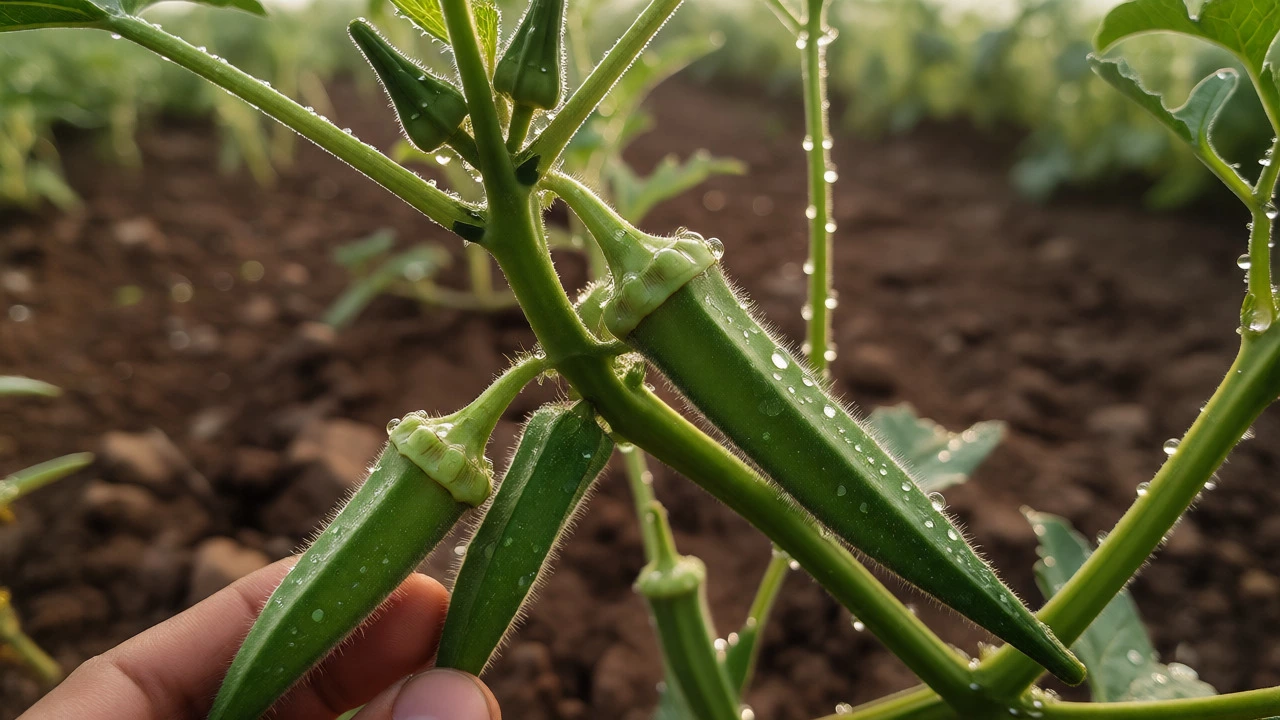
Okra is arguably the most beginner-friendly profitable crop in India. Why? Because it’s tough. It tolerates heat better than most veggies and doesn’t demand perfect soil conditions. In states like Bihar, Uttar Pradesh, and West Bengal, okra is grown almost everywhere. The key to making money with okra is timing. Harvesting early in the morning ensures freshness, which commands a 10-15% price premium at local mandis.
One common mistake is planting too densely. Okra plants need airflow to prevent fungal diseases like yellow vein mosaic virus. Using hybrid seeds rather than saved seeds can boost yields by up to 30%. Since okra has a short gestation period, you can fit two to three crops into a single year if you manage irrigation correctly. This rapid turnover makes it an excellent choice for cash flow, especially when combined with longer-duration crops like brinjal.
Cucurbits: Cucumber and Bitter Gourd
Don’t underestimate the power of cucurbits. Cucumber is a water-intensive crop, yes, but its yield per square foot is exceptional. With proper trellising, you can double your production area vertically. This is ideal for terrace gardeners or those with limited horizontal space. The market for fresh cucumbers is steady, driven by salad consumption and juice bars in urban centers.
Bitter gourd (Karela) is another winner, particularly in South India. It’s considered a health food, which allows farmers to charge a premium. Unlike sweet fruits, bitter gourd doesn’t face the same level of competition from imports. Pests like fruit flies are the main headache, but using pheromone traps instead of heavy pesticides keeps costs down and quality up. Organic bitter gourds sell for nearly twice the price of conventional ones in metro cities like Mumbai and Bangalore.
Leafy Greens: Spinach and Amaranth
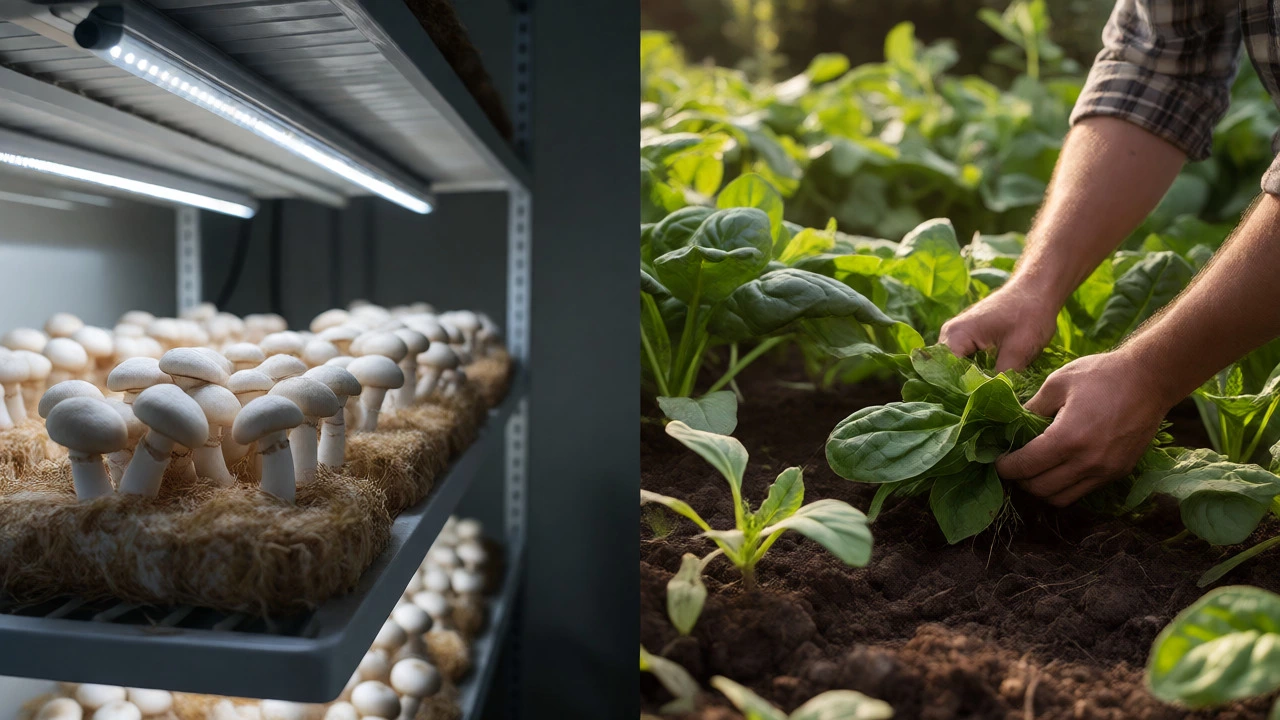
If you want quick cash, go green. Leafy vegetables like spinach (Palak) and amaranth (Chaulai) have incredibly short life cycles-sometimes ready to harvest in just 25 to 30 days. This speed allows for multiple cropping cycles annually. In peri-urban areas near big cities, these crops are gold mines because they spoil quickly, giving local farmers an advantage over distant suppliers.
The challenge with leafy greens is labor. Harvesting them is tedious. However, if you have family help or cheap local labor, the margins are fantastic. Fertilizer requirements are moderate, mostly nitrogen-heavy, which is relatively inexpensive. Selling directly to restaurants or via subscription boxes bypasses the middlemen who usually eat up 40% of the profit margin.
Mushrooms: The Indoor Powerhouse
While technically fungi, mushrooms are treated as vegetables in culinary terms and are increasingly popular in Indian diets. Button mushrooms and Oyster mushrooms are the top choices for profitability. Why? Because they don’t need sunlight or large plots of land. You can grow them in a spare room, a garage, or a dedicated shed.
Oyster mushrooms are easier to start with. They grow on agricultural waste like straw and sawdust, which are cheap or free. The substrate-to-yield ratio is impressive, often reaching 1 kg of mushrooms from 10 kg of wet substrate. Prices remain high because supply hasn’t caught up with the rising demand for vegan and healthy eating trends. Plus, since they’re harvested year-round, you have a steady income stream regardless of seasonal weather fluctuations.
How to Choose What to Grow
Selecting the right vegetable isn’t just about what’s trending. You need to match the crop to your specific situation. Here’s a quick decision framework:
- Check Your Climate: Chillies hate frost; lettuce hates heat. Look at your local temperature averages. If you’re in North India, winter brings opportunities for peas and carrots. In the South, summer crops like cowpea do well.
- Assess Water Availability: Do you have reliable groundwater? If not, avoid water-guzzlers like sugarcane or rice-like vegetables. Opt for drought-tolerant options like okra or brinjal.
- Know Your Market: Who will buy your produce? Are you selling to a wholesale mandi, a local kirana store, or a direct-to-consumer app? Apps prefer standardized, high-quality packaging, while mandis care about volume and price.
- Evaluate Labor Costs: Can you handle the harvesting yourself? If not, choose crops that can be harvested mechanically or require less frequent picking, like pumpkins, rather than daily-picked beans.
Common Pitfalls That Kill Profits
Even with the right crop, you can lose money if you make basic errors. The biggest killer is poor pest management. Waiting until you see damage before spraying pesticides is too late. Integrated Pest Management (IPM) uses biological controls and monitoring to keep pests below economic injury levels. This saves money on chemicals and prevents residue buildup, which can lead to rejection by buyers.
Another trap is ignoring soil health. Continuously planting the same crop depletes specific nutrients. Rotate your crops. Follow a heavy feeder like tomato with a light feeder like onion or a nitrogen fixer like beans. This natural balance reduces fertilizer bills significantly. Also, don’t neglect post-harvest handling. Rough handling bruises tomatoes and chills chillies, leading to immediate price drops. Simple steps like using clean crates and avoiding midday sun during transport can save 10-15% of your revenue.
Next Steps for Your Farm
Ready to plant? Start small. Test one profitable crop on a quarter-acre patch. Track every rupee spent and earned. Note the exact dates of sowing, flowering, and harvesting. Compare your results with local market prices. Once you crack the code on one crop, expand. Remember, consistency beats luck. A modest profit made reliably every month is better than a windfall that comes once a year.
Which vegetable has the highest profit margin in India?
Generally, spices and medicinal plants like saffron or ashwagandha have high margins, but among common vegetables, chillies and mushrooms often provide the best return on investment due to high demand and value addition potential.
Is tomato farming still profitable in 2026?
Tomato farming is highly volatile. While yields are high, price crashes are common due to oversupply. It is profitable only if you have access to cold storage or contract farming agreements that guarantee a minimum price.
What is the easiest profitable vegetable for beginners?
Okra (Bhindi) and Radish are considered the easiest. They have short growth cycles, tolerate various soil types, and require minimal technical expertise to achieve decent yields.
Can I grow profitable vegetables on a terrace?
Yes. Leafy greens, cherry tomatoes, peppers, and herbs like basil and mint work well on terraces. Vertical gardening techniques can maximize space and increase yield per square foot.
How does organic farming affect vegetable profitability?
Organic farming lowers input costs by eliminating synthetic fertilizers and pesticides. While yields may drop slightly, the premium price fetched by certified organic produce often results in higher net profits, especially in urban markets.