
High-Value Crop Profitability Estimator
Select a crop type to estimate potential gross revenue. Adjust inputs based on your specific soil health, water availability, and local market rates.
Estimated Annual Gross Revenue
Total Projected Income: ₹0
You have a plot of land, some savings, and a burning question: what should I grow to actually make money? In India, the answer isn't just about picking the crop with the highest market price. It's about matching soil health, water availability, and local demand with your management skills. Traditional staples like wheat and rice offer stability but rarely generate significant wealth on small holdings. If you want real profit margins, you need to look beyond the commodity markets.
Most successful Indian farmers today are shifting toward high-value commercial crops. These include niche fruits, medicinal herbs, exotic flowers, and off-season vegetables. The difference between breaking even and making a six-figure annual income often lies in choosing the right crop for your specific micro-climate and timing the harvest when supply is low. Let’s break down which farming methods are currently delivering the best returns across different regions of India.
Flower Farming: The Hidden Goldmine
If you enjoy gardening or have an eye for aesthetics, flower farming is arguably one of the most lucrative options in peri-urban areas. Unlike food crops, flowers don’t spoil as quickly if handled correctly, and the demand from weddings, festivals, and religious ceremonies never dips. Flower farming involves cultivating ornamental plants primarily for their aesthetic value rather than consumption.
Gujarat, Maharashtra, and Karnataka lead this sector. Marigolds are the undisputed kings here. They require minimal care, grow fast (90-120 days), and fetch premium prices during festival seasons like Diwali and Dussehra. But don't stop at marigolds. Gerberas, roses, and tuberoses command higher prices per stem. A single acre of well-managed gerbera farm can yield more revenue than ten acres of cotton.
- Marigold: Low risk, high volume. Best for beginners with access to local mandis.
- Gerbera: Requires polyhouse infrastructure but offers year-round income.
- Tuberose: High demand for garlands; excellent shelf life if harvested early morning.
- Roses: Cut flower varieties fetch premium rates in metro cities.
The catch? Logistics. Flowers wilt. You need cold storage or quick transport to urban centers. If you live within 50 km of a major city like Mumbai, Delhi, or Bangalore, flower farming is a no-brainer.
Organic Vegetable Farming: Premium Prices, Loyal Customers
Conventional vegetable farming is a race to the bottom on price. Organic farming flips the script. Urban consumers are increasingly willing to pay 30-50% more for vegetables grown without synthetic pesticides. This isn't just a trend; it's a shift in consumer behavior driven by health awareness.
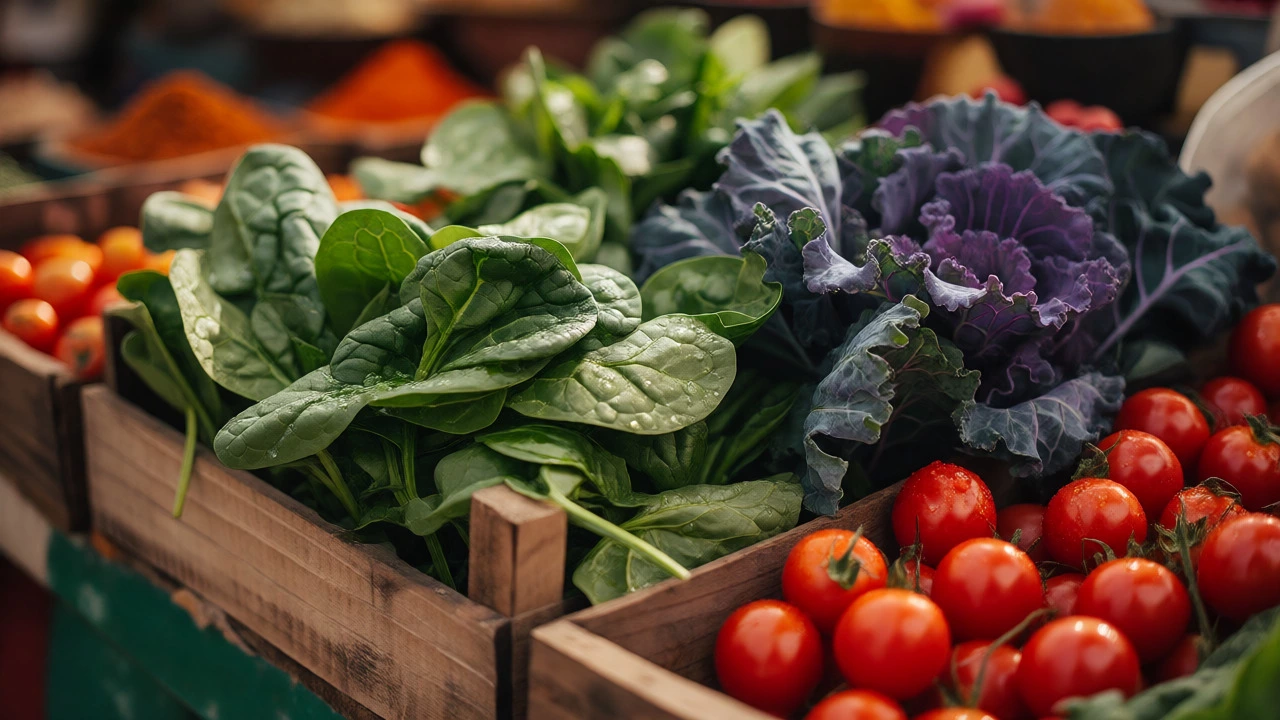
Crops like spinach, kale, broccoli, and cherry tomatoes perform exceptionally well in organic setups. Spinach, for instance, grows rapidly in cool weather and can be harvested multiple times from a single sowing. Broccoli has seen a surge in demand among fitness-conscious millennials in cities like Pune and Hyderabad. The key here is direct-to-consumer sales. Selling through farmer producer organizations (FPOs) or online platforms cuts out middlemen who usually take a massive cut.
| Crop | Avg Yield (per acre) | Market Price Range (₹/kg) | Growth Cycle |
|---|---|---|---|
| Spinach | 8-10 tons | 40-80 (Organic) | 30-45 days |
| Broccoli | 6-8 tons | 60-120 | 60-75 days |
| Cherry Tomato | 10-12 tons | 80-150 | 90-120 days |
| Potato | 15-20 tons | 15-25 | 90-100 days |
Notice the price disparity. While potatoes yield more weight, the revenue per kilogram is significantly lower. Organic leafy greens turn over capital faster because they mature quickly and sell at premium rates.
Mushroom Farming: Small Space, Big Returns
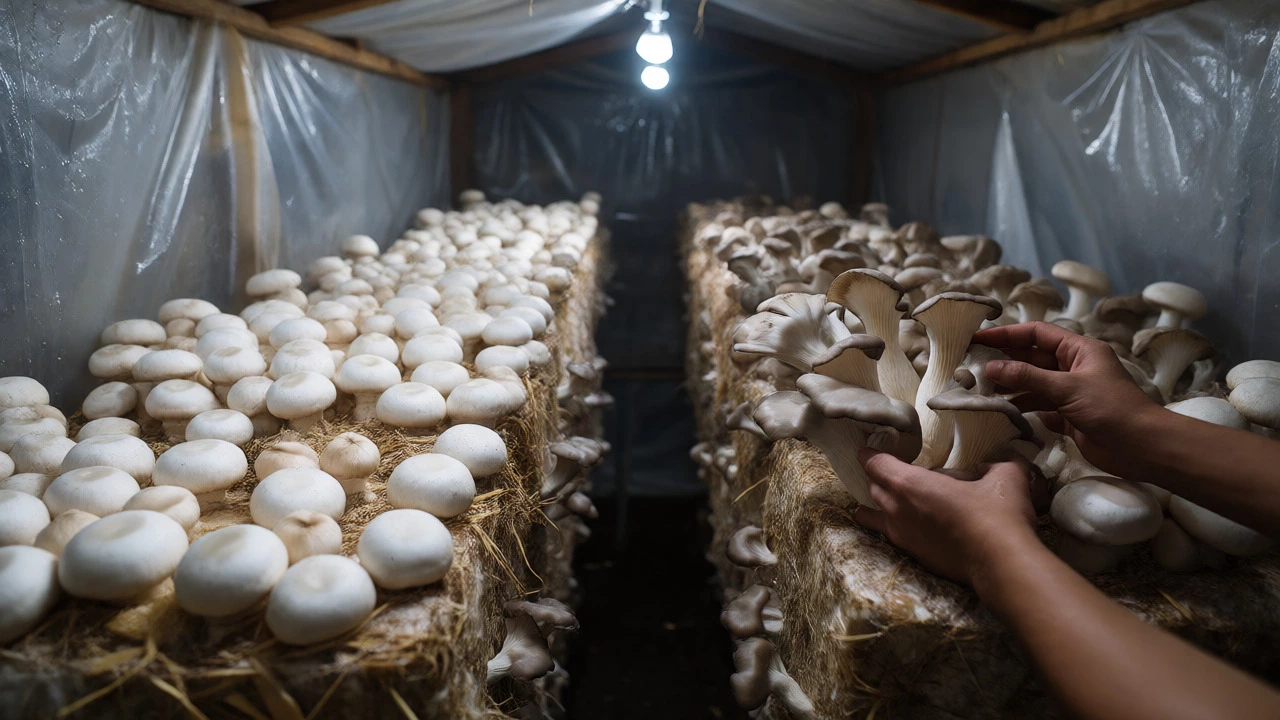
You don't need acres of fertile land to start mushroom farming. You need a dark room, humidity control, and substrate. This makes it perfect for backyard entrepreneurs or those with limited land. Button mushrooms and oyster mushrooms are the easiest to cultivate.
Oyster mushrooms are particularly forgiving. They grow on straw, sawdust, or agricultural waste. A small shed of 100 square feet can produce 200-300 kg of mushrooms per cycle. With three to four cycles a year, that’s nearly a ton of produce. Since mushrooms are perishable, selling locally to hotels, restaurants, and supermarkets ensures freshness and better margins. The initial investment is low, often under ₹50,000 for a starter kit, and you can break even within six months.
Fruit Plantation: Long-Term Wealth Building
If you have patience, fruit trees are a solid long-term investment. Unlike annual crops, trees like mango, guava, and pomegranate provide yields for decades. However, modern agriculture favors high-density planting (HDP) techniques to maximize early returns.
Pomegranate farming has boomed in Andhra Pradesh, Maharashtra, and Rajasthan. Varieties like Bhagwa and Ganesh command export-quality prices. Similarly, dragon fruit is gaining traction due to its low water requirement and high market appeal. It starts bearing fruit within 12-18 months, much faster than traditional orchards. Avocado is another emerging star, especially in hill stations like Ooty and Kodaikanal, where climate conditions mimic its native habitat.
- Pomegranate: High export potential, drought-tolerant.
- Dragon Fruit: Fast maturing, low maintenance, high antioxidant content.
- Avocado: Niche market, premium pricing, suitable for hilly regions.
- Banana: Consistent demand, but requires heavy irrigation and pest management.
The downside is the gestation period. You might wait two to three years for significant income. Intercropping with short-duration crops like papaya or banana can help cover expenses during the waiting phase.
Medicinal and Herbal Farming: The Wellness Boom
The global wellness industry is exploding, and India is a hub for Ayurveda. Crops like ashwagandha, turmeric, and lemongrass are seeing unprecedented demand. Turmeric, specifically the Lakadong variety from Meghalaya, sells for triple the price of regular turmeric due to its high curcumin content.
Ashwagandha is hardy and thrives in semi-arid regions. It requires little water and has a growing season of about five months. Farmers in Madhya Pradesh and Rajasthan are switching to this crop because pharmaceutical companies buy directly from them at fixed rates. Lemongrass oil extraction adds another layer of profitability. Even the residue after distillation can be used as animal feed or compost.
This sector requires knowledge of processing. Selling raw roots earns less than selling dried powder or extracted oil. Investing in basic drying facilities can double your margins.
Factors That Determine Your Profit
Choosing the crop is only half the battle. The other half is execution. Here’s what actually moves the needle on your bottom line:
- Water Management: Drip irrigation reduces water usage by 40% and increases yield quality. For high-value crops like flowers and fruits, this is non-negotiable.
- Soil Health: Regular testing and organic amendments prevent nutrient depletion. Healthy soil resists pests naturally, reducing pesticide costs.
- Market Linkage: Growing the best crop means nothing if you can’t sell it. Contract farming with exporters or tie-ups with retail chains guarantee buyers before you sow.
- Labor Costs: High-value crops are labor-intensive. Mechanization or efficient family labor planning is crucial to keep costs down.
Don't ignore government subsidies. Schemes like PM-KISAN, horticulture missions, and state-specific drip irrigation subsidies can offset up to 50% of your setup costs. Check with your local Krishi Vigyan Kendra (KVK) for current benefits.
Common Pitfalls to Avoid
New farmers often fail not because of bad crops, but because of poor planning. Here are the most common mistakes:
- Following the Crowd: If everyone plants onions, the price crashes the next season. Diversify or time your entry carefully.
- Ignoring Post-Harvest Losses: Up to 30% of perishable goods rot before reaching the market. Invest in crates, shade nets, and quick transport.
- Underestimating Labor: Hand-picking strawberries or pruning grapevines takes time. Calculate labor hours realistically.
- Lack of Technical Knowledge: Don't guess. Attend workshops on integrated pest management (IPM) and soil testing.
Profitability isn't static. It changes with seasons, policies, and global trends. Stay flexible. Keep records of every rupee spent and earned. Over time, your data will tell you exactly which combination of crops works best for your land.
Is flower farming profitable for small farmers?
Yes, flower farming is highly profitable for small farmers, especially those near urban centers. Crops like marigold, tuberose, and gerbera have high demand and short growth cycles. With proper post-harvest handling and direct sales to florists or temples, small plots can generate substantial income compared to traditional grains.
Which crop gives the highest return per acre in India?
High-value horticultural crops generally offer the highest returns per acre. Dragon fruit, saffron (in Kashmir), vanilla, and certain exotic flowers like orchids can yield exceptional profits. However, these require specific climatic conditions and technical expertise. For broader applicability, organic vegetables and pomegranates are consistently high-performing options.
How does climate change affect farming profitability in India?
Climate change increases risks through erratic rainfall and extreme temperatures. It affects profitability by increasing input costs (irrigation, pest control) and causing yield fluctuations. Farmers adopting climate-resilient practices like mulching, drip irrigation, and drought-resistant crop varieties tend to maintain better profit margins despite weather uncertainties.
Do I need a large landholding to start profitable farming?
No, many profitable ventures thrive on small landholdings. Mushroom farming, greenhouse flower cultivation, and hydroponic vegetable systems work well on fractions of an acre. The key is intensive cultivation and high-value outputs rather than extensive land use.
What is contract farming and how does it help profitability?
Contract farming is an agreement between farmers and buyers (often companies) to produce crops under predetermined terms. It helps profitability by guaranteeing a buyer and often a minimum price, reducing market risk. Companies may also provide seeds, technology, and credit, lowering the farmer's upfront investment burden.