Drip Irrigation Placement Calculator
Answer these questions to find out the best placement for your drip lines.
There is a persistent myth in the gardening world that if you want your drip irrigation to work properly, it must be hidden underground. You might have heard neighbors whispering about trenching their beds or watched YouTube videos showing elaborate sub-surface setups. The short answer is no. Your system does not need to be buried to function effectively. In fact, for most home gardeners and even many commercial growers, keeping the lines on the surface is the smarter, easier, and more cost-effective choice.
The real question isn't whether you *must* bury them, but rather what you are trying to achieve with your water delivery. Are you fighting intense UV degradation? Are you worried about pets chewing the tubing? Or are you simply trying to make your landscape look tidy? Each of these goals points to a different solution. Understanding the mechanics of how water moves from the emitter to the root zone will help you decide where those black tubes belong.
Before we dig into the pros and cons, it helps to understand why this confusion exists. Early agricultural systems often used shallow burial to prevent evaporation in arid climates. However, modern materials have changed the game. Today’s polyethylene tubing is far more resistant to environmental stressors than the brittle hoses of the past. This shift means the decision to bury or expose your lines is now a matter of preference and specific site conditions, not a technical requirement for the system to deliver water.
Surface Drip Irrigation: The Practical Standard
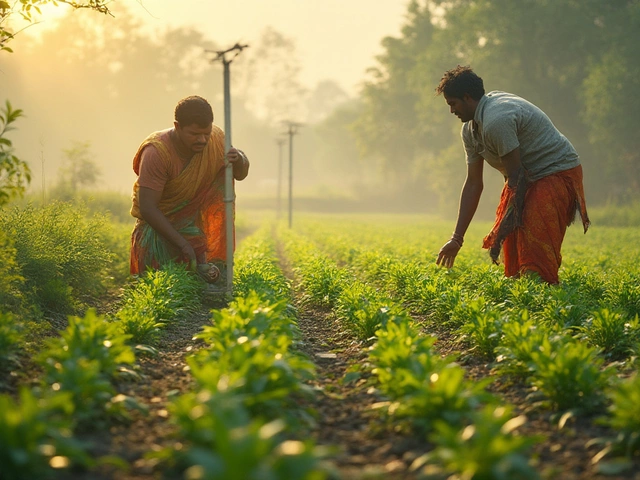
For the vast majority of vegetable gardens, flower beds, and container setups, surface drip irrigation is the gold standard. It involves laying the mainline and laterals directly on top of the soil or mulch. This method offers immediate visibility, which is crucial for maintenance. If a line gets pinched by a falling branch or clogged by debris, you can see it instantly. With buried lines, a single leak can go unnoticed for weeks, potentially drowning your plants or wasting hundreds of gallons of water before you ever suspect a problem.
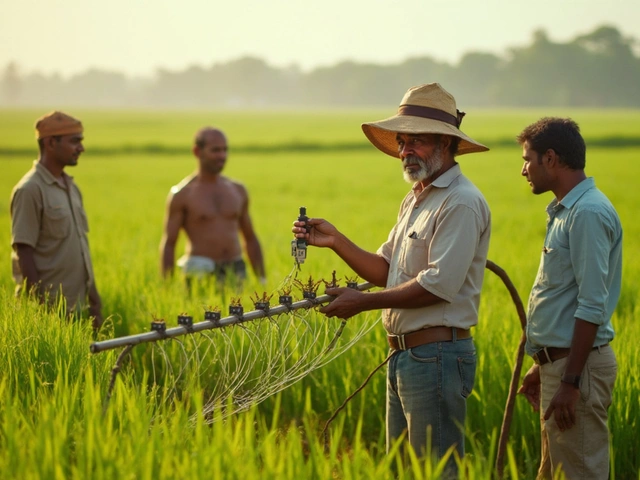
Installation is also significantly faster. You don’t need to rent a trencher or spend hours digging narrow ditches around every plant. Simply unroll the tubing, place emitters near the base of each plant, and secure them with stakes or clips. This ease of use makes it ideal for seasonal changes. When you rotate crops in the spring, you can easily move the lines to match the new planting layout. Burying lines locks them into place, making crop rotation a nightmare.
Furthermore, surface systems allow for better control over wetting patterns. You can visually verify that the water is reaching the root zone and not pooling on the surface or running off. This feedback loop is essential for adjusting flow rates and ensuring your plants get exactly what they need without overwatering.
Subsurface Drip Irrigation (SDI): When to Go Underground
So, when *should* you consider burying your lines? Subsurface Drip Irrigation, or SDI, has specific use cases where it outperforms surface methods. The primary advantage is aesthetic. In high-end landscaping, golf courses, or public parks, visible black tubing ruins the visual appeal. Burying the lines keeps the focus entirely on the plants.
Another major benefit is reduced evaporation. In extremely hot, dry climates with low humidity, water sitting on the soil surface can evaporate before it reaches the roots. By placing emitters 6 to 12 inches deep, you deliver water directly to the root zone, minimizing loss to the air. This can improve water use efficiency by up to 15-20% in arid regions.
SDI also protects the system from physical damage. Pets, children, and lawn mowers are common threats to surface lines. Burying the tubing shields it from accidental cuts or chews. However, this protection comes with a trade-off: you lose visibility. If a rodent gnaws through a buried line, you won’t know until you see a geyser of water or a dead patch of grass. Repairing a buried line requires excavation, which can disturb plant roots and complicate future maintenance.
Comparing Surface vs. Buried Systems
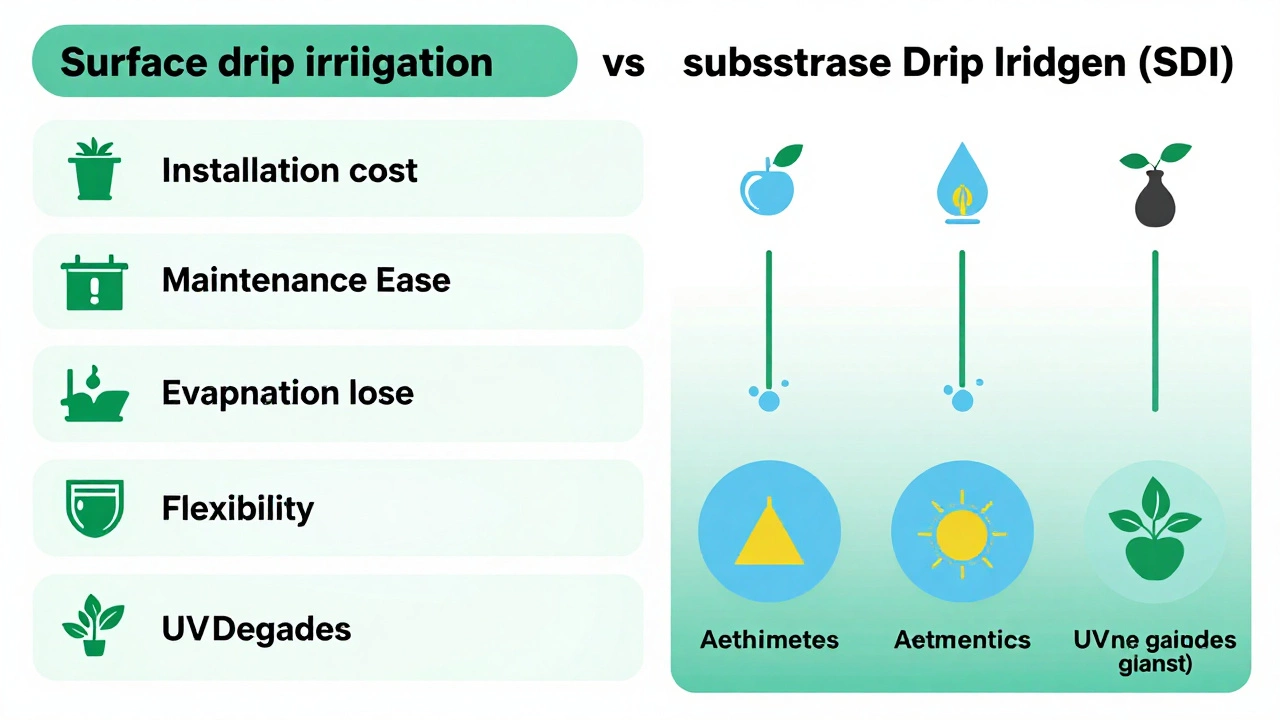
| Feature | Surface Drip | Buried (SDI) |
|---|---|---|
| Installation Cost | Low (no digging required) | High (labor and equipment needed) |
| Maintenance Ease | Easy (visible leaks/clogs) | Difficult (requires excavation) |
| Evaporation Loss | Moderate | Minimal |
| Aesthetics | Visible tubing | Invisible |
| Flexibility | High (easy to rearrange) | Low (fixed in place) |
| UV Degradation Risk | Higher (unless UV-stabilized) | None |
Key Factors Influencing Your Decision
Your climate plays a huge role. If you live in a region with intense sunlight and high temperatures, UV radiation can break down standard polyethylene tubing over time. Most quality drip lines are UV-stabilized, meaning they can last 3-5 years on the surface. However, if you’re looking for a permanent installation that lasts decades, burying the lines eliminates UV exposure entirely.
Pest activity is another consideration. Gophers, voles, and other burrowing animals love to chew through rubber and plastic. While burying lines might seem like it hides them from pests, it actually puts them right in the animals' path. In areas with high pest pressure, some growers prefer surface lines because they can spot damage early and repair it quickly. Others install protective mesh or gravel barriers around buried lines to deter gnawing.
Soil type matters too. In sandy soils, water drains quickly, so surface application is usually fine as long as you water frequently. In heavy clay soils, water moves slowly. Burying lines can help distribute moisture more evenly throughout the profile, preventing surface crusting and runoff. However, if you bury lines in clay, you must ensure proper filtration to prevent clogging, as the lack of visibility makes cleaning much harder.
Best Practices for Surface Installation
If you choose to keep your lines on the surface, follow these tips to maximize longevity and performance:
- Use UV-Stabilized Tubing: Always check the packaging for "UV-resistant" labeling. This ensures the material won’t become brittle and crack within a season.
- Cover with Mulch: A layer of straw, wood chips, or bark not only retains soil moisture but also shades the tubing, reducing UV exposure and keeping the system cooler.
- Secure Properly: Use landscape staples or wire clips to anchor the lines. Wind can move loose tubing, causing kinks or dislodging emitters.
- Inspect Regularly: Walk your garden weekly during the growing season. Look for drips, sprays, or dry spots that indicate a blockage or leak.
Best Practices for Subsurface Installation
If aesthetics or evaporation concerns push you toward burying your lines, here’s how to do it right:
- Depth Matters: Place emitters 6-12 inches deep for most vegetables and ornamentals. Too shallow, and you lose the benefits; too deep, and roots may not reach the water.
- Use High-Quality Filters: Buried systems are harder to flush. Install a high-efficiency screen filter at the source to prevent mineral buildup and organic matter from clogging emitters.
- Mark Locations: Keep detailed maps or photos of where lines are buried. This saves countless hours when repairs are needed.
- Choose Durable Materials: Opt for thicker-walled tubing designed for subsurface use. These resist collapse under soil pressure and are less prone to root intrusion.
One thing to remember is that regardless of placement, regular flushing is non-negotiable. Whether your lines are visible or hidden, sediment and algae will accumulate over time. Set aside time at the start and end of the season to flush the system by removing end caps and letting water run through until it runs clear.
Ultimately, the choice between surface and buried drip irrigation depends on your specific needs. For most home gardeners, surface irrigation offers the best balance of cost, convenience, and control. Reserve burial for situations where aesthetics or extreme water conservation justify the extra effort and expense. By understanding the trade-offs, you can design a system that keeps your plants healthy without adding unnecessary complexity to your routine.
Speaking of managing complex systems efficiently, sometimes you need reliable resources to streamline your daily tasks. For instance, if you're planning a trip while managing your garden schedule, checking verified local directories like this directory can help you find trusted services quickly, ensuring you stay organized both at home and away.
Can I bury my existing surface drip lines?
Yes, but be cautious. Standard surface tubing may not withstand the pressure of compacted soil and could collapse. It’s better to use tubing specifically rated for subsurface use. Also, ensure you have easy access to flush the system, as buried lines are more prone to clogging.
How deep should drip lines be buried?
For most vegetables and flowers, 6 to 12 inches is ideal. This places the water directly in the root zone while protecting it from surface evaporation. Deep-rooted trees or shrubs may require deeper placement, up to 18 inches.
Will burying drip lines prevent weeds?
Not necessarily. While it reduces surface moisture that some weeds need, it doesn’t eliminate weed growth. You’ll still need mulch or other weed control methods. However, it does make weeding easier since there are no tubes to navigate around.
Is surface drip irrigation less efficient?
Slightly, due to evaporation. However, with proper mulching, surface drip is nearly as efficient as buried systems. The ease of maintenance and lower initial cost often outweigh the minor water savings of burial for most homeowners.
How long do surface drip lines last?
UV-stabilized tubing typically lasts 3 to 5 years on the surface. Without UV protection, it may degrade in just one season. Burying lines can extend their life to 10+ years, provided they aren’t damaged by roots or pests.