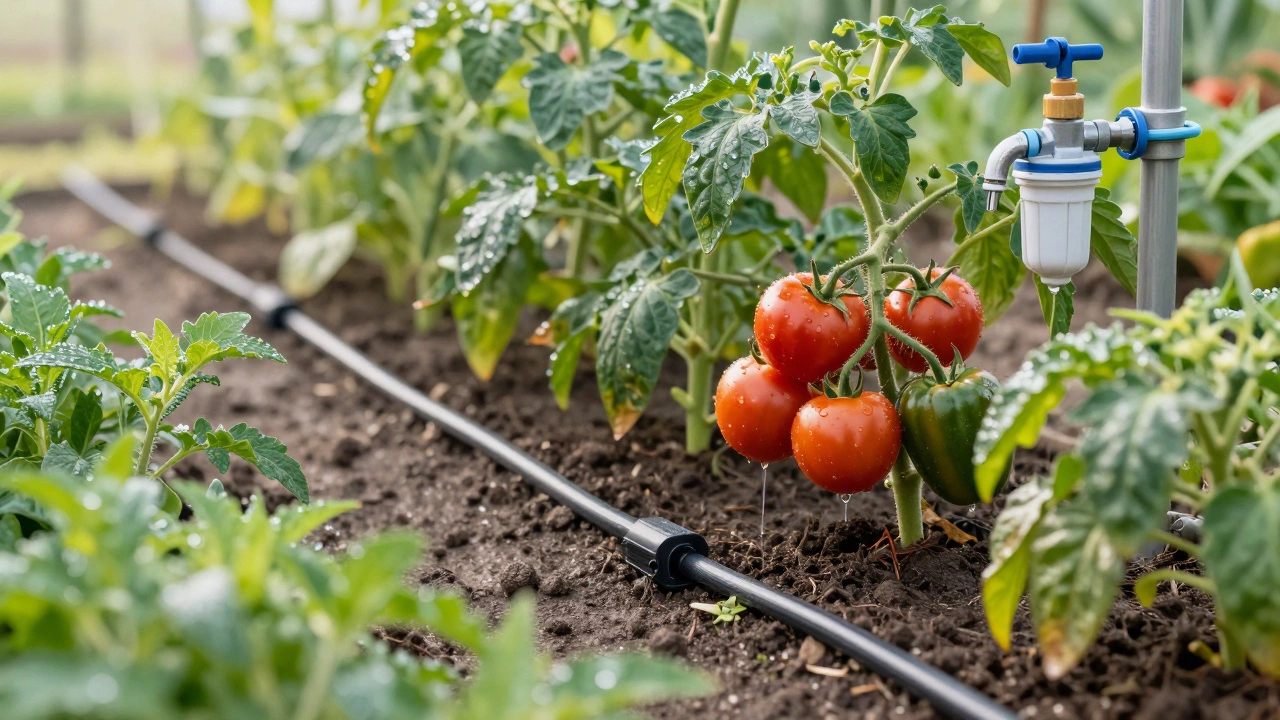
Drip irrigation kits save water, time, and boost garden yields. Learn if they're worth the cost for UK gardens, what to buy, how to install, and how to maintain them for long-term success.
Drip System for Vegetables: Efficient Watering Made Simple
When you’re growing vegetables in India’s heat, every drop of water counts. A drip system for vegetables, a targeted irrigation method that delivers water slowly and directly to plant roots. Also known as drip irrigation, it’s not just for big farms—home gardeners in Delhi, Bangalore, or Pune use it to grow tomatoes, chillies, and spinach with half the water and twice the results. This isn’t magic. It’s physics: water goes where plants need it, not where it evaporates or runs off.
But a drip system isn’t just about the tubes. It’s about the drip emitters, small devices that control water flow at each plant. These are the heart of the system. They clog. They leak. They get crushed by pots or eaten by ants. And if you don’t check them monthly, your entire crop pays the price. That’s why posts like What Is the Problem with Drip Emitters? exist—to show you how to spot trouble before your lettuce turns brown. Then there’s the vegetable gardening, the practice of growing edible plants in home plots, balconies, or small fields. It’s where the drip system shines. Whether you’re growing spinach on a terrace in Mumbai or carrots in a raised bed in Haryana, drip irrigation cuts down on weeds, keeps leaves dry (so fungi don’t take hold), and lets you water even when you’re away. You don’t need fancy gear. A 500-rupee kit from a local hardware store, some tubing, and 10 minutes a week to check for clogs can turn your garden into a high-yield zone.
People think drip systems are only for big farms because they’ve seen those long plastic lines in wheat fields. But the same tech works on your balcony with 12 pots of tomatoes. The key is matching the flow rate to your plants. Tomatoes? Two liters per hour. Chillies? One liter. Herbs? Half a liter. Get that wrong, and you’re either drowning roots or starving them. And don’t forget the filter. Indian tap water? It’s full of sand, rust, and minerals. Skip the filter, and your emitters will seal shut in weeks.
What you’ll find in the posts below isn’t theory. It’s what works. From fixing a clogged emitter in a rainy season to choosing the right tubing for clay soil, these guides come from gardeners who’ve been there. You’ll learn how to build a system that lasts, how to spot the quiet signs of failure, and how to make your drip setup work even when the power’s out or the water pressure’s low. No fluff. No jargon. Just clear, practical steps you can follow tomorrow morning.