Beginner Garden Size Estimator
Start small to succeed. This tool helps you find the "No-Regret Zone" by matching your goals with realistic maintenance hours.
Your Goals
Recommended Setup
4x4 ft
What to Grow:
Visualizing your plot...
You just bought your first packet of tomato seeds. You have visions of endless salads and jars of homemade sauce. Then you look at your yard or balcony and panic sets in. How big does this actually need to be? Do you need an acre? A quarter-acre? Or can you get away with a few pots by the back door?
Here is the truth that most gardening books gloss over: size doesn't equal success. In fact, starting too big is the number one reason beginners quit. They get overwhelmed by weeds, watering schedules, and the sheer volume of soil to manage. The sweet spot for a beginner isn't about maximizing yield; it's about maximizing learning without burnout.
The "No-Regret" Zone: Why Smaller is Better
Think of your first garden like learning to cook. Would you start by preparing a Thanksgiving dinner for twenty people? Probably not. You'd start with pasta or stir-fry. Your garden is the same. You are learning soil biology, plant spacing, and pest management simultaneously. If the surface area is too large, these variables become impossible to control.
A common mistake is digging up a 10x10 foot plot (100 square feet) right out of the gate. That sounds modest, but once you account for pathways, borders, and failed crops, it becomes a full-time job. For a true beginner, the ideal footprint is between 4x4 feet (approximately 16 square feet) and 8x8 feet (64 square feet). This range allows you to grow enough food to taste the difference, but keeps maintenance under two hours per week.
Calculating Your Space Based on Goals
Your available space should dictate your ambition, not the other way around. Let’s break down what different sizes actually deliver in terms of harvest and effort. This isn't theoretical; this is based on typical yields for high-value crops like tomatoes, peppers, and leafy greens in temperate climates like the UK.
| Garden Size | Best For | Weekly Maintenance | Realistic Harvest |
|---|---|---|---|
| 2x4 ft (Container/Patio) | Herbs, salad leaves, dwarf tomatoes | 15-30 mins | Enough for garnishes and side salads |
| 4x4 ft (Raised Bed) | Intensive veg, herbs, compact peppers | 45-60 mins | Weeks of fresh meals for 1-2 people |
| 6x6 ft (Small Plot) | Mixed veg, some root crops | 90-120 mins | Supplemental groceries for a family |
| 8x8 ft+ (Standard) | Full crop rotation, preservation | 3+ hours | Significant reduction in grocery bills |
The Power of the 4x4 Raised Bed
If you have access to ground space, a 4x4 foot raised bed is arguably the single best tool for a novice gardener. It solves three major problems at once: drainage, weed control, and soil quality.
In traditional row gardening, you walk between rows, which compacts the soil. Compacted soil means roots struggle to breathe and water pools on the surface. In a 4x4 bed, you never step inside the growing area. You reach from all four sides. This keeps the soil structure loose and airy, which directly translates to healthier plants.
Moreover, filling a 4x4 bed with high-quality compost and topsoil mix is affordable. Filling a 20x20 plot with premium soil costs hundreds of pounds. With a small bed, you can afford the "good stuff"-like peat-free multi-purpose compost mixed with well-rotted manure-which gives your plants a massive head start. When your soil is excellent, even a beginner can grow exceptional tomatoes.
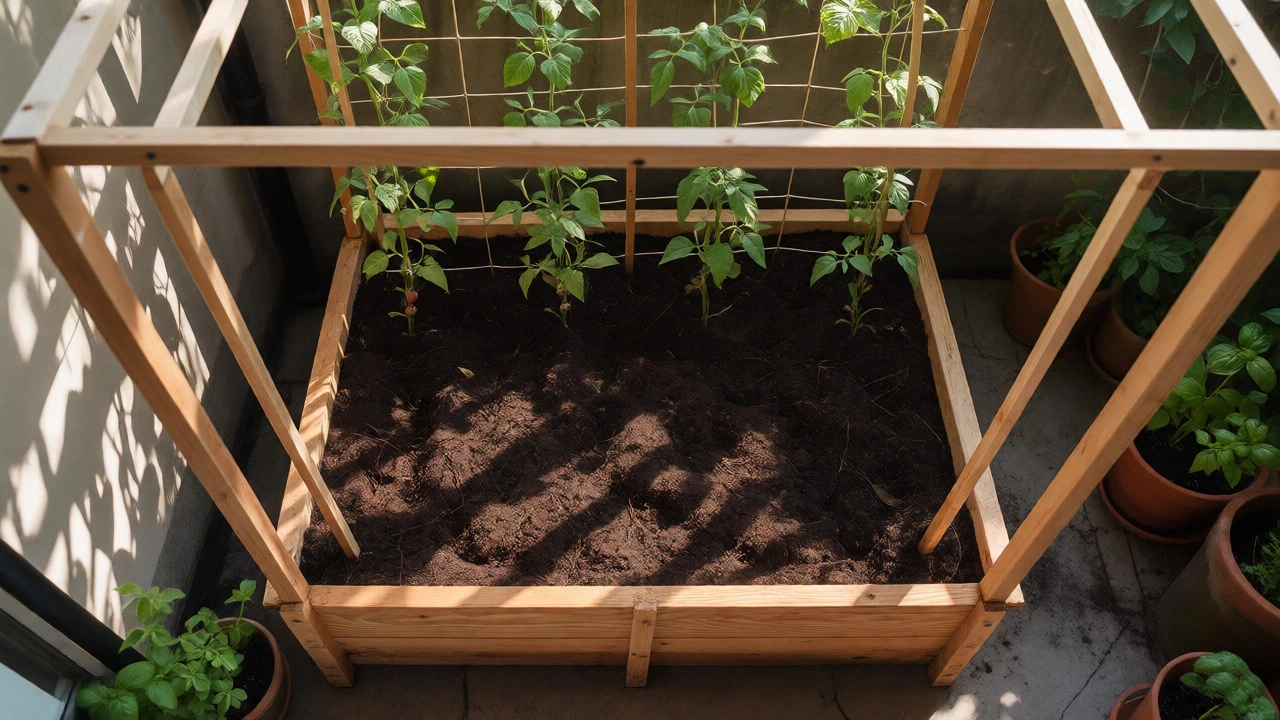
Vertical Gardening: Getting More from Less
Just because your footprint is small doesn't mean your harvest has to be. You can double your effective growing area by thinking vertically. This is especially crucial if you are working with balconies or narrow patios.
Consider growing climbing varieties. Instead of bush beans that spread wide, plant pole beans on a simple trellis. Instead of sprawling cucumbers, train them up a string or netting. Tomatoes can be caged or staked to grow straight up. By using vertical space, a 4x4 area can effectively produce as much as a 10x10 flat plot.
However, there is a catch. Vertical plants need more consistent water and nutrients because they have less soil volume per plant. If you go vertical, you must be diligent about checking moisture levels daily during hot spells. It is a trade-off: higher yield for higher attention.
What Can You Actually Grow in a Small Space?
Not all vegetables are created equal when space is tight. Some crops take up huge amounts of room for minimal return. Others are dense producers. Here is how to prioritize your planting list for a beginner-sized garden.
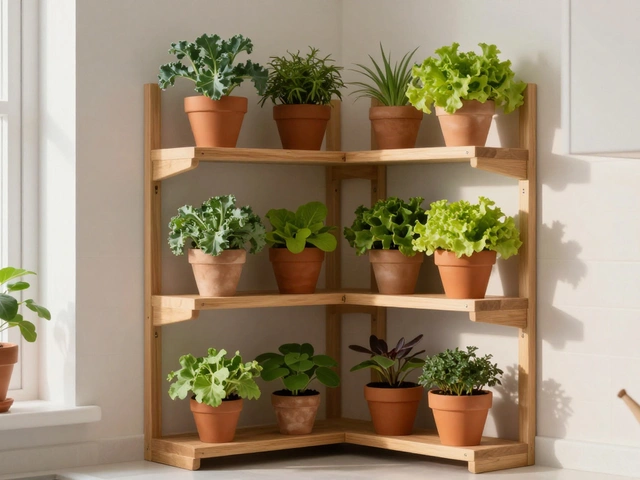
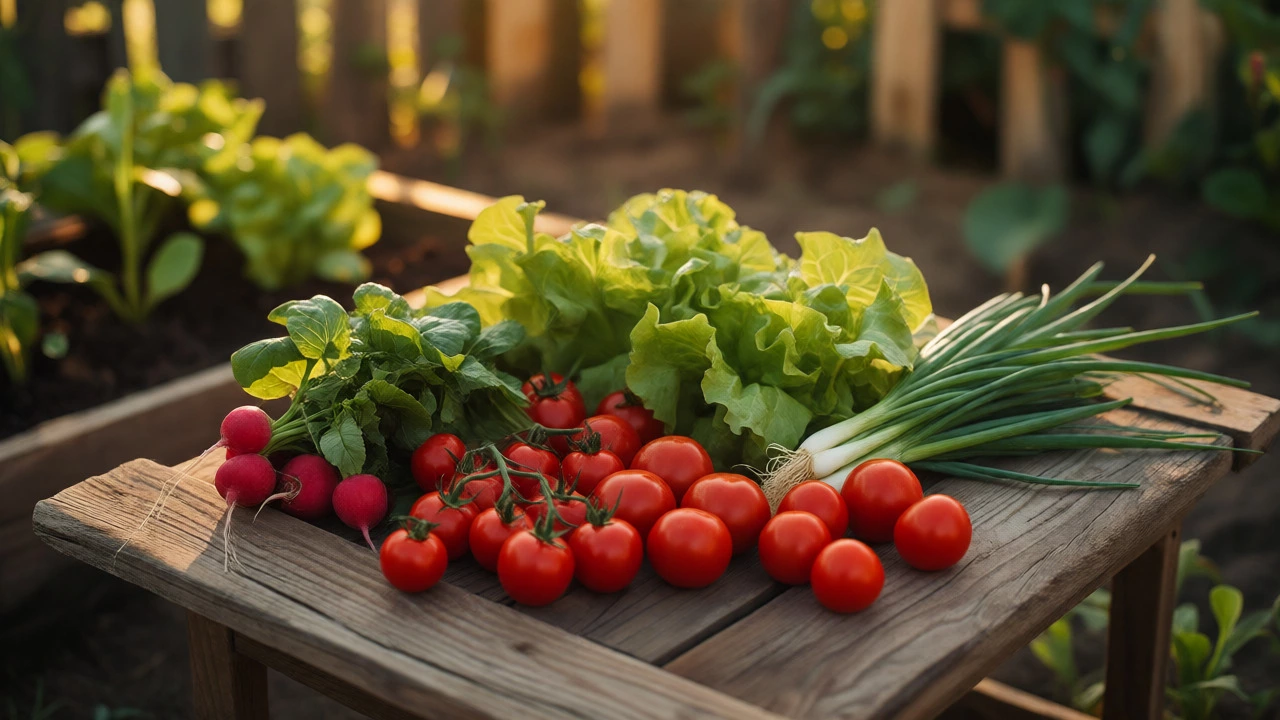
- High Value, Low Space: Salad leaves (lettuce, rocket, spinach), herbs (basil, parsley, coriander), radishes, and spring onions. These mature quickly and can be harvested continuously.
- Medium Value, Medium Space: Tomatoes, peppers, courgettes (zucchini), and dwarf runner beans. These require support structures but offer high yields per square foot.
- Low Value for Beginners: Potatoes, sweetcorn, pumpkins, and cabbage. Potatoes need deep soil and lots of space; you can buy them cheaply. Pumpkins sprawl across yards. Save these for when you have expanded to a larger plot.
A smart strategy is succession planting. Don't plant all your lettuce at once. Sow a few seeds every two weeks. This ensures you have a steady supply rather than a glut followed by nothing. In a 4x4 bed, this timing is easier to manage because you aren't trying to coordinate dozens of rows.
Common Pitfalls to Avoid
Even with the perfect size, beginners often stumble into predictable traps. The biggest one is overcrowding. You buy six tomato seedlings because they looked nice at the nursery. You squeeze them into a 4x4 bed. By August, they are fighting for light, air circulation is poor, and blight sets in.
Stick to recommended spacing. Most tomato plants need 18-24 inches (45-60 cm) of space each. In a 4x4 bed, that means you can comfortably fit only 4-6 tomato plants. It feels wasteful to leave empty space initially, but those gaps will fill in as the plants grow. Crowded plants are stressed plants, and stressed plants attract pests.
Another pitfall is ignoring sunlight. No amount of clever sizing helps if your spot gets only two hours of sun. Vegetables generally need 6-8 hours of direct sunlight. Before you build anything, spend a day observing your space. Mark where shadows fall at noon. If your best spot is tiny, accept it. A tiny sunny garden beats a large shady one every time.
Expanding Gradually
Once you have successfully managed your first season, you will likely feel confident enough to expand. But do it incrementally. Add another 4x4 bed next year. Or try container gardening on your patio to complement your main bed. This approach lets you refine your skills before taking on more responsibility.
Remember, gardening is a marathon, not a sprint. The goal of your first year is not to feed your entire neighborhood. It is to learn how to keep a living thing alive and thriving. Start small, master the basics, and let your confidence-and your garden-grow naturally.
Is a 4x4 garden really enough for a family?
For a beginner, yes, it is enough to provide significant supplements to your diet, such as fresh salads, herbs, and a few tomatoes. However, it won't replace all grocery shopping. A 4x4 bed is designed for learning and enjoying the process, not for total self-sufficiency. If you want to feed a family of four fully, you would eventually need closer to 100-200 square feet, but start with the 4x4 to learn the ropes first.
Can I start gardening on a balcony?
Absolutely. Balcony gardening is a great entry point. Use large containers (at least 10-15 gallons or 40-60 liters) for fruiting crops like tomatoes and peppers, and smaller pots for herbs and salad leaves. Ensure your balcony gets at least 6 hours of sun. Remember that containers dry out faster than ground soil, so you may need to water daily in summer.
How much does it cost to set up a 4x4 raised bed?
Costs vary by region, but in the UK, a basic DIY wooden 4x4 raised bed kit might cost £50-£100. High-quality soil and compost to fill it will add another £40-£80 depending on depth and supplier. Seeds are inexpensive (£2-£5 for a variety pack). Compared to hiring a landscaper or building a large deck, it is a low-risk financial investment.
Do I need to rotate crops in a small garden?
Crop rotation is harder in a very small space because you don't have separate sections to move plants between. In a single 4x4 bed, focus on soil health instead. Add plenty of organic matter (compost/manure) each year. If possible, divide the bed into four quadrants and rotate families (e.g., brassicas, solanaceae, legumes, roots) through the quadrants annually to prevent disease buildup.
What if my soil is bad clay or rocky?
This is exactly why raised beds are recommended for beginners. You don't need to fix the native soil underneath. Build the bed frame on top of the existing ground (or lay cardboard to suppress weeds) and fill it with imported good soil. This bypasses years of struggling with heavy clay or rocky terrain and gives you immediate control over the growing medium.