Onion Variety & Tear Potential Checker
Select Your Onion Profile
Analysis Result
Ready to Calculate
Select options and click the button above.
It’s a kitchen ritual that happens every day, yet it still feels like a personal betrayal. You grab a sharp knife, reach for that humble bulb sitting on the counter, and within seconds, your eyes are stinging. Water is streaming down your face. You’re blinking furiously, trying to keep your vision clear so you don’t accidentally chop off a fingertip. It’s frustrating, messy, and honestly, a bit ridiculous for such a small ingredient.
If you’ve ever wondered which vegetable brings tears to your eyes, the answer is almost certainly the onion. But here is the twist: onions aren’t just a culinary annoyance; they are a powerhouse crop in Indian vegetable gardening. They thrive in the heat, store well through the dry months, and are essential to almost every dish in an Indian pantry. The real question isn’t just why they make you cry, but how you can grow them successfully in your garden while minimizing the eye-watering effects when it’s time to harvest and cook.
The Science Behind the Stinging
Before we talk about planting seeds or managing soil, let’s get one thing straight: onions are not trying to hurt you. They are defending themselves. When you slice into an Onion (Allium cepa), you break its cells. This releases enzymes called alliinases. These enzymes mix with amino acid sulfoxides stored in the onion layers. The result is a volatile gas known as syn-propanethial-S-oxide.
This gas travels up from the cutting board and reacts with the water in your eyes. It forms a mild sulfuric acid. Your brain detects this irritation and signals your lacrimal glands to produce tears to wash the acid away. It’s a chemical defense mechanism evolved over thousands of years to keep pests and predators away from the bulb.
Understanding this chemistry helps you realize that not all onions are created equal. Some varieties release more of this gas than others. In the context of Indian Vegetable Gardening, this matters because local varieties often have different potency levels compared to imported hybrids. Knowing which variety you are growing can help you manage expectations when harvest time comes.
Top Tear-Inducing Varieties in Indian Gardens
Not every onion will make you sob uncontrollably. The intensity of the sting depends largely on the sulfur content and the specific cultivar. In India, where the climate ranges from tropical to subtropical, certain varieties dominate home gardens and commercial farms alike. Here are the most common ones you’ll encounter:
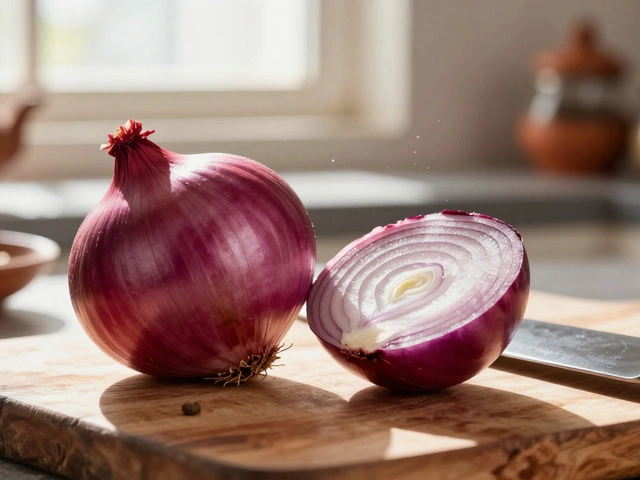
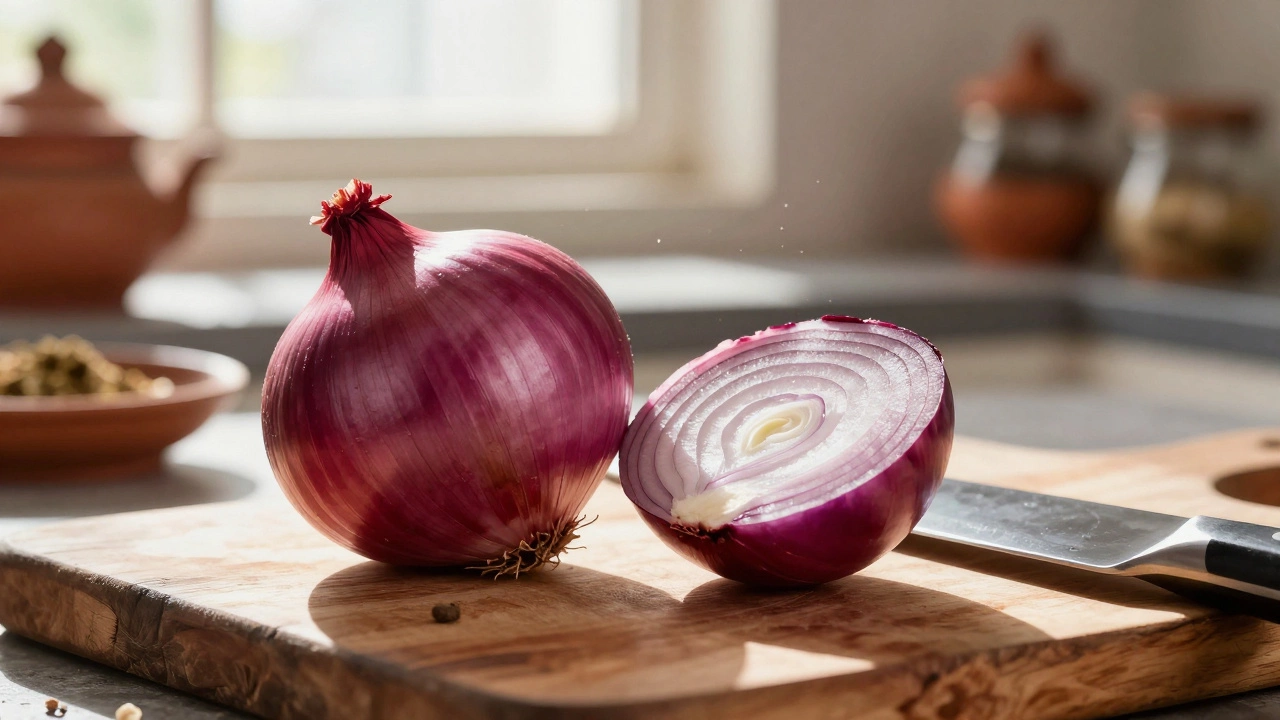
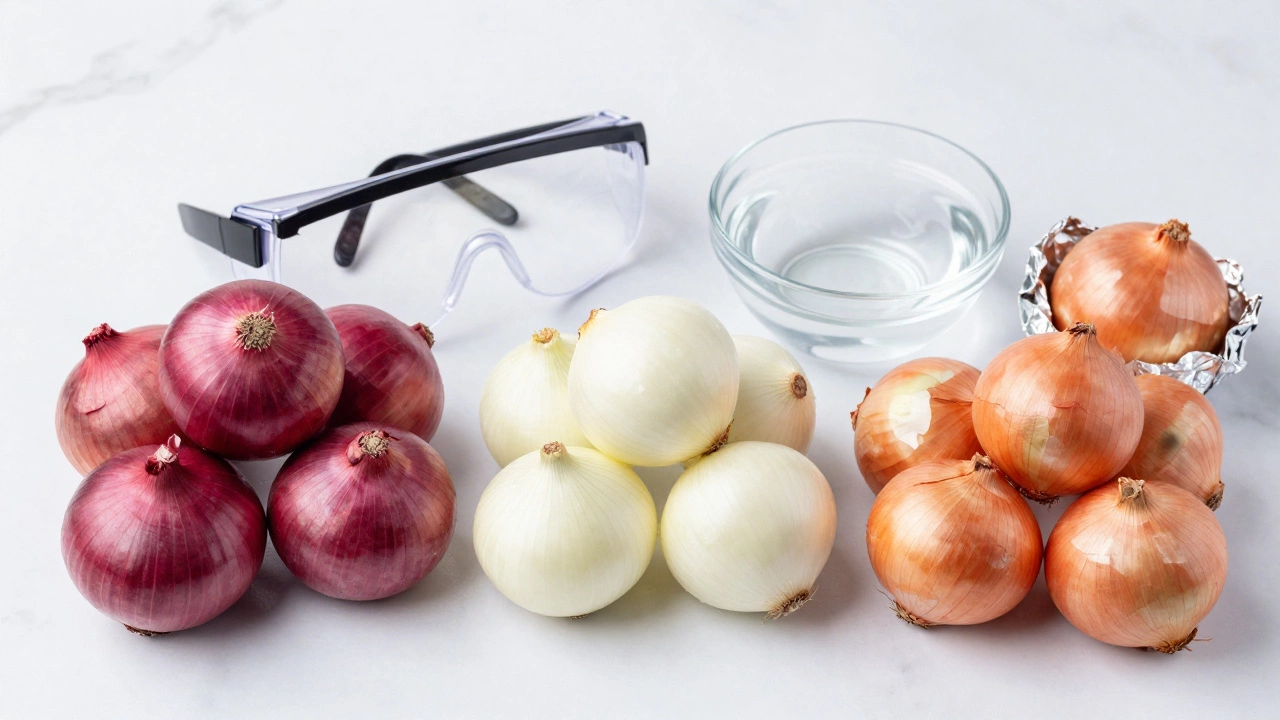
- Red Onions (Desi Lal Pyaz): These are widely grown in states like Maharashtra and Gujarat. They tend to be milder when raw but can still pack a punch when cut. Their thick skins protect the inner layers, sometimes trapping more sulfur compounds until the moment of slicing.
- White Onions: Often used in South Indian cooking, these have a sharper, more pungent flavor. They contain higher levels of the enzymes responsible for tear production. If you are sensitive to eye irritation, white onions are usually the worst offenders.
- Yellow/Brown Onions: These are the standard all-rounders. They offer a balance between sweetness and pungency. While they still produce the lachrymatory factor, they are generally less aggressive than white varieties.
For gardeners looking to minimize tears during preparation, choosing a red or yellow variety over a white one might make a noticeable difference. Additionally, younger onions harvested early in the season often have lower sulfur concentrations than mature bulbs left in the ground too long.
| Variety | Pungency Level | Tear Potential | Best Use Case |
|---|---|---|---|
| Red Onion | Mild to Medium | Low to Moderate | Salads, Chutneys, Curries |
| White Onion | High | High | Sambar, Rice Dishes, Pickles |
| Yellow Onion | Medium | Moderate | General Cooking, Sautéing |
Growing Onions Without the Heartache
So, you want to grow these tear-jerkers yourself? Good luck. Onions are incredibly rewarding crops if you get the timing right. In India, the best time to plant onions depends heavily on your region. For most of North and Central India, the ideal window is between August and October, allowing the plants to establish before the winter chill. In Southern India, where temperatures remain warmer year-round, you can plant from September to February.
The key to a successful harvest lies in the soil. Onions love well-drained, sandy loam soil with a pH between 6.0 and 7.0. Heavy clay soils will suffocate the roots and lead to rot, especially during the monsoon season. If you are gardening on a terrace or balcony, use raised beds filled with a mix of garden soil, compost, and river sand to ensure proper drainage.
Watering is another critical factor. Onions need consistent moisture during their early growth stages to develop strong roots. However, as the bulbs begin to form, you should reduce watering. Excess water at this stage causes the bulbs to split or rot. A good rule of thumb is to stop watering completely two weeks before harvesting. This allows the outer skins to cure and toughen, which actually helps seal in the flavors-and yes, the tear-inducing chemicals-keeping the bulb fresh for longer storage.
Smart Harvesting Techniques to Save Your Eyes
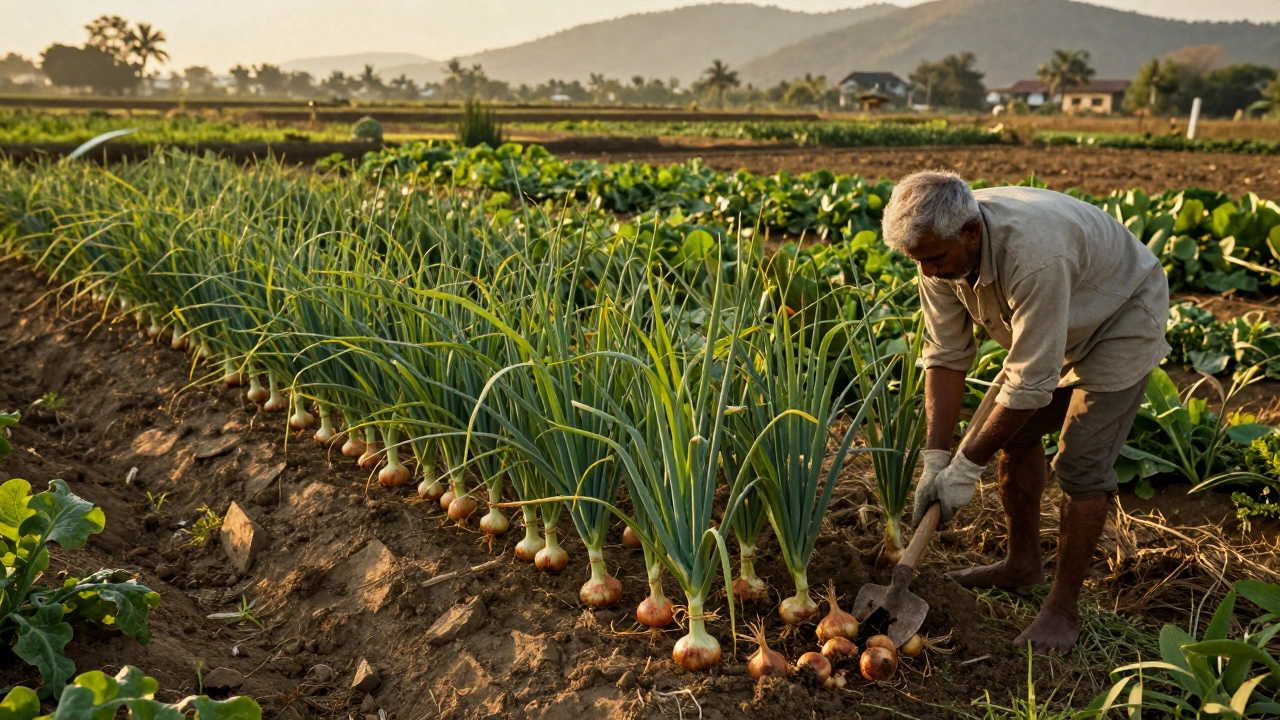
Harvesting onions is different from picking leafy greens. You don’t just pluck them off the vine. You wait until the tops turn yellow and fall over naturally. This signals that the plant has stopped growing and is storing energy in the bulb. Once the tops have fallen, gently lift the bulbs from the soil using a garden fork. Avoid pulling by the stem, as this can damage the root system and cause the bulb to split.
Here is where many gardeners make a mistake: they rush to clean and store the onions immediately. Don’t do that. Instead, spread the harvested onions out in a single layer in a shaded, well-ventilated area. Let them cure for 10 to 14 days. During this curing process, the necks dry out, creating a natural barrier against decay. Properly cured onions can last for several months without refrigeration, making them perfect for long-term storage in Indian households.
To minimize exposure to the tear-inducing gas during post-harvest handling, wear lightweight gloves. While they won’t stop the gas entirely, they prevent the oils from transferring to your skin, which can cause lingering irritation if you rub your eyes later. Also, try to handle the bulbs during times of day when ventilation is best, such as early morning or late evening, rather than in the humid midday heat.
Kitchen Hacks to Stop the Tears
Even with careful harvesting, you’ll eventually need to chop those onions. There are several tried-and-tested methods to reduce the sting, ranging from simple tricks to scientific approaches. None of them eliminate the gas entirely, but they significantly reduce its impact.
First, chill your onions. Place them in the refrigerator for 30 minutes before cutting. The cold temperature slows down the enzymatic reaction that produces the tear-inducing gas. Second, use a very sharp knife. A dull blade crushes the cells rather than slicing them cleanly, releasing more of the volatile compounds. Third, cut near a fan or open window. Airflow disperses the gas before it reaches your eyes.
Another popular method involves soaking the onion in water for 10 minutes before chopping. This dissolves some of the enzymes on the surface, reducing the amount released during cutting. Finally, consider wearing protective goggles. Yes, it looks silly in the kitchen, but swim goggles designed for clarity work surprisingly well. They create a physical barrier that prevents the gas from contacting your eyes directly.
Why Grow Onions Despite the Hassle?
You might be asking yourself why bother growing something that makes you cry. The answer is simple: cost, quality, and control. Store-bought onions often lose their flavor due to prolonged storage and transportation. Home-grown onions, harvested at peak maturity, offer superior taste and texture. Plus, knowing exactly what goes into your soil means you avoid pesticides and synthetic fertilizers.
In the context of sustainable gardening in India, onions are also low-maintenance once established. They require minimal pest control compared to other vegetables like tomatoes or beans. Aphids and thrips can be an issue, but companion planting with carrots, leeks, or marigolds can help repel these pests naturally. By integrating onions into your broader garden plan, you create a resilient ecosystem that supports biodiversity while providing you with a steady supply of this essential ingredient.
Common Mistakes to Avoid
New gardeners often fall into a few traps when cultivating onions. One major error is overcrowding. Planting sets or seeds too close together leads to competition for nutrients and sunlight, resulting in small, underdeveloped bulbs. Space your plants at least 4 to 6 inches apart to give each bulb room to expand.
Another mistake is ignoring bolting. Bolting occurs when the onion plant sends up a flower stalk instead of focusing energy on the bulb. This usually happens due to stress from extreme temperatures or inconsistent watering. Bolted onions have a tougher, woody texture and a stronger, more bitter flavor. To prevent bolting, choose day-length appropriate varieties for your region and maintain consistent moisture levels throughout the growing season.
Lastly, don’t neglect weed control. Weeds compete aggressively with young onion seedlings for resources. Hand-weeding is safest to avoid damaging the shallow root systems of the onions. Mulching with straw or dried grass helps suppress weeds while retaining soil moisture, giving your onions a head start in the race to maturity.
Does freezing an onion stop the tears?
Yes, freezing an onion for about 30 minutes before chopping can significantly reduce tear production. The cold temperature slows down the enzymatic reactions that release the lachrymatory factor. However, frozen onions become softer and may not hold their shape well when cooked, so this method is best for recipes where texture isn't critical, like soups or sauces.
Can I grow onions from grocery store scraps?
You can grow green onion tops from the root ends of scallions or spring onions placed in water or soil. However, traditional bulbing onions (the large round ones) rarely form full-sized bulbs from grocery store scraps. They may sprout leaves, but they usually lack the genetic vigor and size potential of purchased sets or seeds intended for bulb production.
What is the best month to plant onions in India?
The best planting time varies by region. In Northern India, plant between August and October for a winter harvest. In Central India, September to November is ideal. In Southern India, where winters are milder, you can plant from September to February. Always aim to plant cool-season varieties when daytime temperatures are below 30°C (86°F) to ensure proper bulb formation.
Why do some people not cry when cutting onions?
Some individuals have a genetic variation that makes them less sensitive to the sulfur compounds found in onions. Others may have developed a tolerance over time due to frequent exposure. Additionally, factors like humidity, airflow, and the sharpness of the knife play significant roles in how much gas is released and whether it reaches the eyes.
How do I store harvested onions for long periods?
Store cured onions in a cool, dark, and well-ventilated place. Ideal conditions include temperatures between 0°C and 10°C (32°F to 50°F) with low humidity. Mesh bags, braided strings, or wooden crates allow air circulation, preventing mold and rot. Avoid storing onions near potatoes, as potatoes release moisture and gases that can cause onions to spoil faster.