Bedroom Plant Safety & Sleep Quality Checker
Select the plants currently in your bedroom. Click to toggle selection.
Ready to Analyze
Select plants and conditions above to see how they affect your sleep environment.
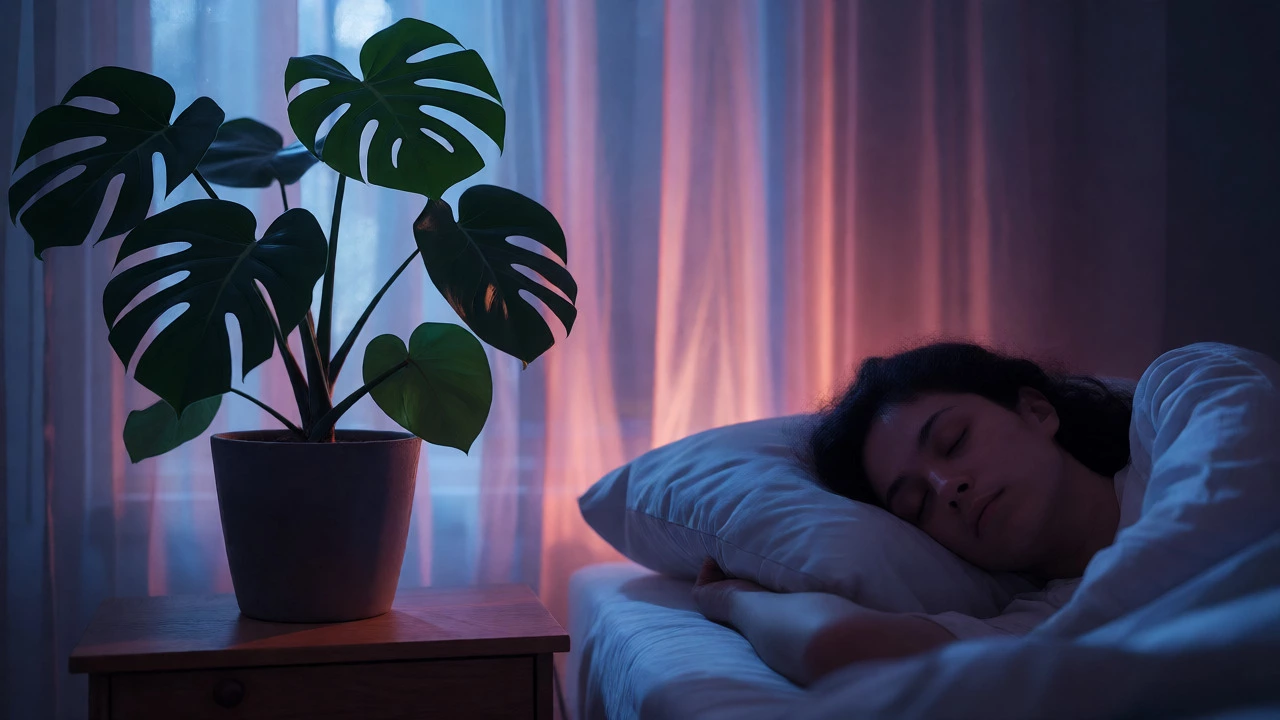
You’ve probably heard the old wives’ tale that sleeping with plants in your room is dangerous. Maybe a grandparent warned you that they “steal your oxygen” while you sleep. Or perhaps you’ve read conflicting advice online, where some say plants are great for air purification and others claim they make your bedroom air toxic by morning. So, what’s the truth? Is it actually bad to keep potted plants in the house at night?
The short answer is: it depends on how many you have and which ones you choose. But before you toss your favorite Monstera out the window, let’s break down the science of plant respiration versus photosynthesis, why context matters more than fear, and which plants might actually help you sleep better.
The Science Behind the Myth: Photosynthesis vs. Respiration
To understand the issue, you need to know how plants breathe. During the day, plants perform photosynthesis. They take in carbon dioxide (CO₂) from the air, use sunlight to convert it into energy, and release oxygen (O₂) as a byproduct. This is why we love them-they’re natural air filters during daylight hours.
But at night, when there’s no sunlight, photosynthesis stops. Instead, plants switch to cellular respiration, just like humans do. In this process, they consume oxygen and release carbon dioxide. This is the source of the “danger.” The fear is that if you have too many plants in a small, closed room, they’ll compete with you for oxygen and fill the room with CO₂, potentially lowering air quality.
Here’s the reality check: the amount of CO₂ produced by a typical houseplant is tiny. A human exhales about 900 grams of CO₂ per night. A large potted plant might produce less than 50 grams. You’d need hundreds of plants in a sealed closet to notice any meaningful drop in oxygen levels. So, for most people, the “oxygen theft” myth is largely exaggerated.
When It Actually Becomes a Problem
While the oxygen argument is mostly overblown, there are legitimate reasons why keeping certain potted plants in the bedroom at night isn’t ideal. These issues aren’t about suffocation; they’re about allergies, mold, and toxicity.
Mold and Humidity Risks
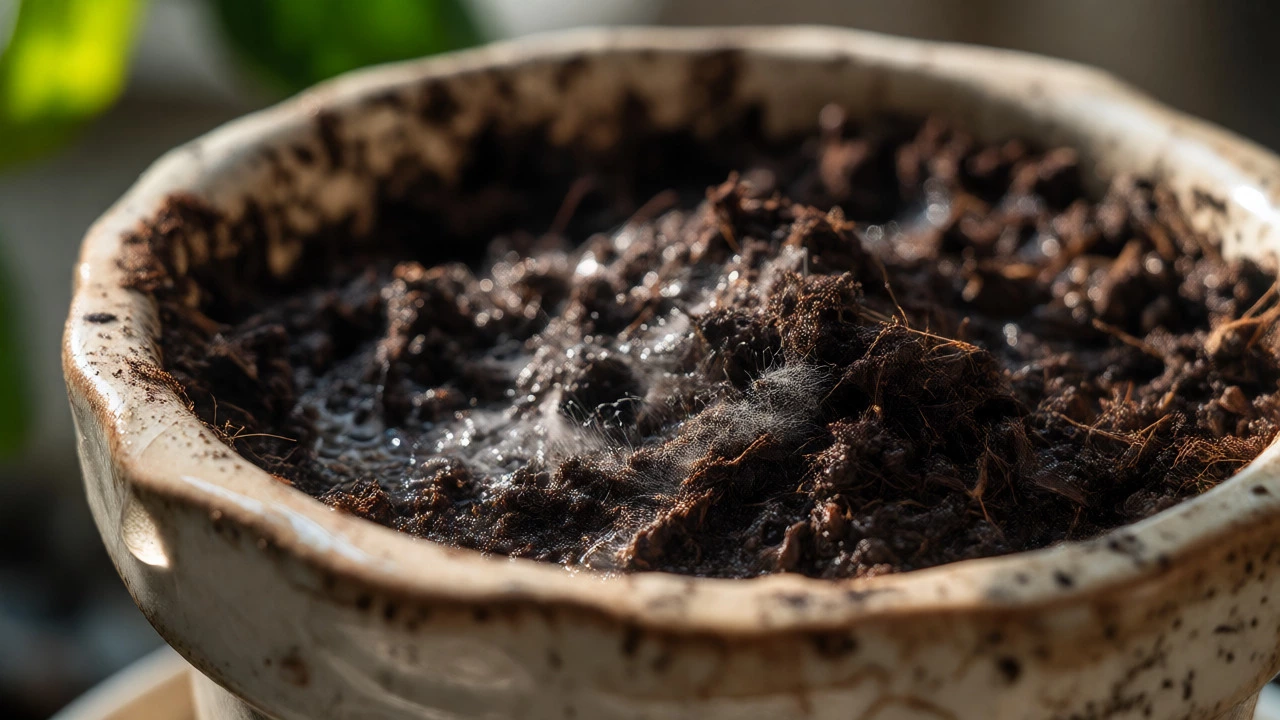
Potted plants require water, and wet soil is a breeding ground for fungi. If you overwater your plants or don’t ensure proper drainage, mold spores can grow in the top layer of soil. At night, when windows are often closed and ventilation is low, these spores can become airborne. For someone with asthma or seasonal allergies, breathing in mold spores all night can lead to congestion, coughing, or poor sleep quality.
This is especially true for tropical plants that thrive in high humidity. If your bedroom is already damp, adding a thirsty fern or peace lily can push moisture levels higher, encouraging dust mites and mold growth.
Toxicity Concerns for Pets and Kids
If you have cats, dogs, or curious toddlers, nighttime visibility is poor. A pet might chew on a leaf while exploring the dark, or a child might pull a pot off a nightstand. Many common houseplants contain calcium oxalate crystals or other compounds that cause irritation if ingested. While this doesn’t affect your sleep directly, it adds a layer of risk that makes some plants unsuitable for bedrooms.
Scent Overload
Some flowering plants, like Lilies or Hyacinths, release strong fragrances at night. For sensitive individuals, heavy scents can trigger headaches, nausea, or disrupt sleep cycles. Unlike fresh flowers in a vase, potted flowering plants continuously emit volatile organic compounds (VOCs), which can accumulate in a small room.
Which Plants Are Safe (and Beneficial) for Bedrooms?
Not all plants behave the same way. Some have evolved to absorb CO₂ even at night through a process called Crassulacean Acid Metabolism (CAM). These plants open their stomata (pores) at night to collect CO₂, store it, and then close them during the day to prevent water loss. This means they actually increase oxygen levels in your room while you sleep.
| Plant Name | Nighttime Behavior | Best For | Care Level |
|---|---|---|---|
| Snake Plant | Releases Oxygen (CAM) | Air Quality & Low Light | Very Easy |
| Aloe Vera | Releases Oxygen (CAM) | Healing & Air Purification | Easy |
| Spider Plant | Minimal CO₂ Release | Allergy Sufferers | Easy |
| Peace Lily | Consumes O₂ / Releases CO₂ | Humidity Control | Moderate |
| Fiddle Leaf Fig | Consumes O₂ / Releases CO₂ | Aesthetics | Hard |
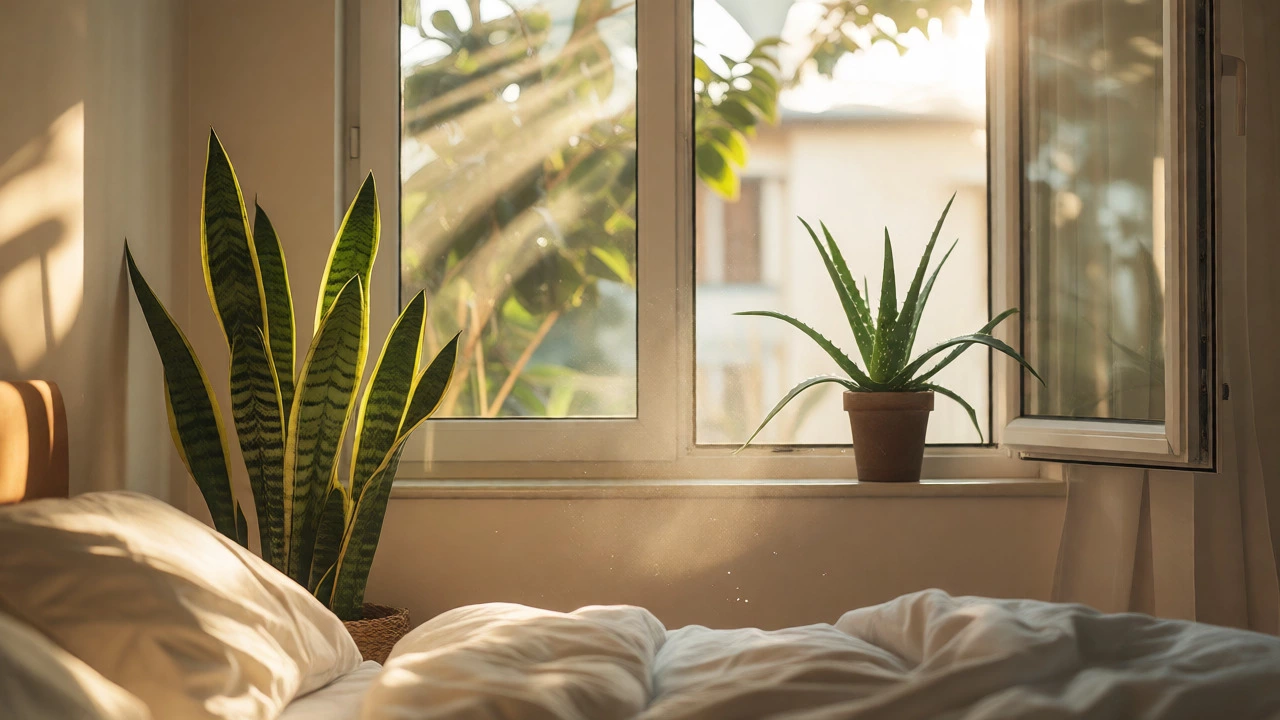
The Snake Plant (Sansevieria trifasciata) is arguably the best choice for bedrooms. It’s hardy, tolerates neglect, and actively improves air quality at night. NASA’s Clean Air Study highlighted its ability to filter toxins like formaldehyde and benzene, making it a dual-purpose helper for both health and sleep.
Aloe Vera is another CAM plant that releases oxygen at night. Plus, if you burn yourself cooking, you can snip a leaf for immediate relief. It needs bright light, so place it near a window that gets daytime sun.
Plants to Avoid in the Bedroom at Night
While most non-flowering greenery is fine, there are specific types you should keep out of the sleeping area:
- English Ivy: Known for releasing allergens and irritants, it can worsen asthma symptoms if kept close to the bed.
- Taro (Elephant Ear): Contains calcium oxalate, which is toxic if ingested. Not a problem unless you have pets or kids who might nibble.
- Flowering Hydrangeas: Can cause skin irritation and contain mild toxins. Their large blooms also require frequent watering, increasing mold risk.
- Bonsai Trees: Often kept indoors, but they can harbor pests like spider mites and require precise humidity control, which can be tricky in a dry bedroom.
How to Safely Keep Plants in Your Bedroom
You don’t have to banish all greenery from your sanctuary. With a few adjustments, you can enjoy the benefits without the downsides.
1. Monitor Soil Moisture
Overwatering is the number one cause of mold in indoor plants. Stick your finger an inch into the soil. If it’s dry, water it. If it’s damp, wait. Use pots with drainage holes to prevent stagnant water at the bottom.
2. Increase Ventilation
Even if you keep windows closed, try to crack a door or use a fan on low setting to circulate air. This prevents CO₂ buildup (from both you and the plants) and reduces humidity around the soil.
3. Choose the Right Number
One or two small plants are harmless. Ten large trees in a 10x10 room might create a microclimate that feels stuffy. Start small and see how you feel. If you wake up groggy or congested, remove a plant and reassess.
4. Clean Leaves Regularly
Dust accumulates on leaves, blocking pores and reducing efficiency. Wipe leaves with a damp cloth weekly. This also helps you spot pests early before they spread to other rooms.
Common Myths Debunked
“All plants release CO₂ at night.” Not exactly. As mentioned, CAM plants like Snake Plants and Aloe Vera absorb CO₂ at night. Even non-CAM plants produce negligible amounts compared to human exhalation.
“Plants cause allergies.” Most indoor allergies come from pollen, which is rare in houseplants since they don’t bloom aggressively indoors. Mold and dust are the real culprits, not the plant itself.
“You need a lot of plants to purify air.” Studies show you’d need 10-100 plants per square meter to match the air exchange rate of opening a window. Don’t rely solely on plants for ventilation; use them as a supplement, not a replacement for fresh air.
Do potted plants really steal oxygen at night?
Technically, yes, they consume oxygen during respiration. However, the amount is minuscule-far less than what a human or pet exhales. You would need dozens of large plants in a sealed room to notice any impact on your oxygen levels.
Which plants are safe to keep in the bedroom at night?
Snake Plants, Aloe Vera, Spider Plants, and Golden Pothos are excellent choices. Snake Plants and Aloe Vera are particularly good because they release oxygen at night via CAM metabolism.
Can mold from plant soil affect my sleep?
Yes. Wet soil can promote mold growth, releasing spores that may trigger allergies or respiratory issues. Ensure proper drainage, avoid overwatering, and consider using top-dressing like gravel to reduce surface mold.
Are flowering plants bad for the bedroom?
Strongly scented flowers like Lilies or Hyacinths can cause headaches or disrupt sleep for sensitive people. They also attract insects if windows are open. Opt for foliage plants instead.
Do plants improve indoor air quality significantly?
They help, but modestly. NASA studies showed they remove VOCs, but later research indicates ventilation is far more effective. Think of plants as a mood booster and minor air refresher, not an industrial air purifier.