Find Your Perfect Year-Round Bloomer
Select your region and preferences to find the ideal plant for continuous blooming.
Recommended for You:
Most people think gardening in India is a seasonal game. You plant marigolds for Diwali, buy roses for Valentine’s Day, and then watch your garden go dormant during the scorching summer or the heavy monsoon rains. But what if you could have color all year round? It turns out, nature has already provided the answer. There isn't just one magic plant that gives 12 months flowers, but there are several hardy champions that do exactly that across different parts of the country.
If you live in Bangalore, Chennai, or even parts of Delhi, you can create a garden that never sleeps. The secret lies in choosing species that thrive in tropical and subtropical climates, which cover most of India. These plants don’t just survive; they bloom continuously because they are adapted to heat and humidity. Let’s look at the specific plants that deliver on this promise, how to care for them, and why some regions might need a slightly different approach than others.
The Undisputed King: Bougainvillea
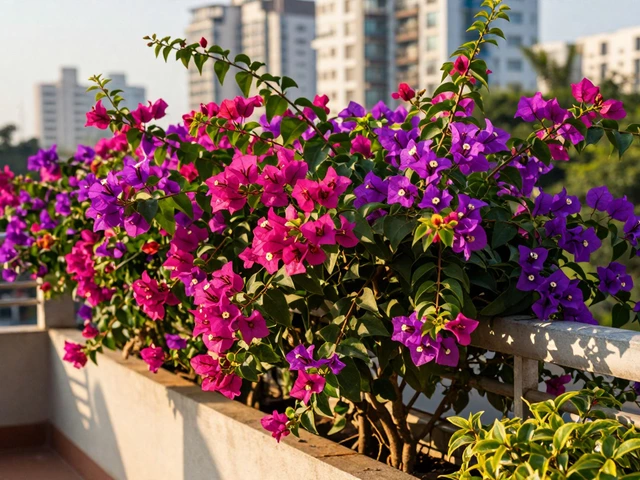
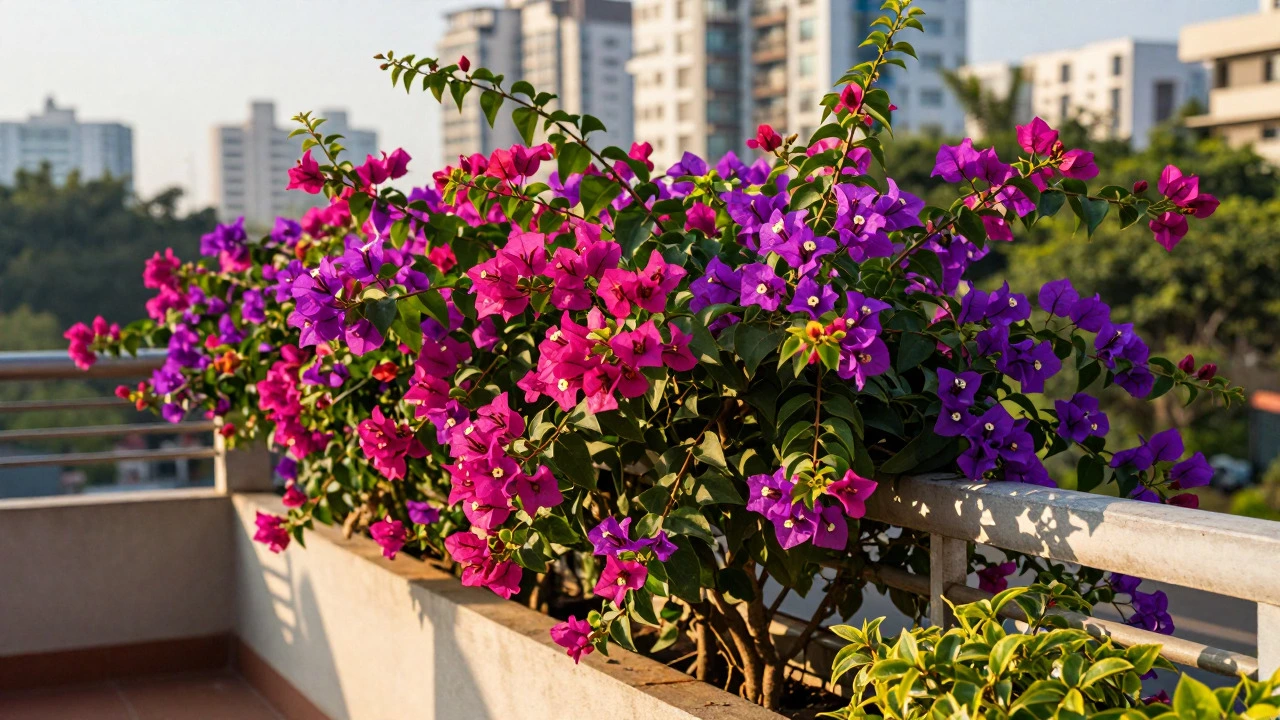
When we talk about year-round color in India, Bougainvillea is a thorny vine known for its vibrant papery bracts that bloom almost continuously in warm climates. Also known as Paper Flower, it is arguably the most reliable plant for non-stop flowering. You see it everywhere-from roadside dividers in Mumbai to terrace gardens in Hyderabad.
Why does it work so well? Bougainvillea loves heat. In fact, it needs direct sunlight-about six to eight hours a day-to produce those bright pink, purple, orange, or white blooms. If you shade it too much, it grows leaves instead of flowers. The trick to keeping it blooming all 12 months is actually holding back on water slightly. This technique, called "water stress," tricks the plant into thinking it needs to reproduce quickly, triggering flower production. Just ensure it gets enough sun and prune it regularly after each flush of blooms to keep the shape tidy.
- Best For: Terraces, balconies, and boundary walls.
- Light Requirement: Full sun (6-8 hours).
- Maintenance: Low. Prune after flowering bursts.
- Colors Available: Magenta, Purple, Orange, White, Yellow.
The Fragrant Powerhouse: Jasmine (Mogra)
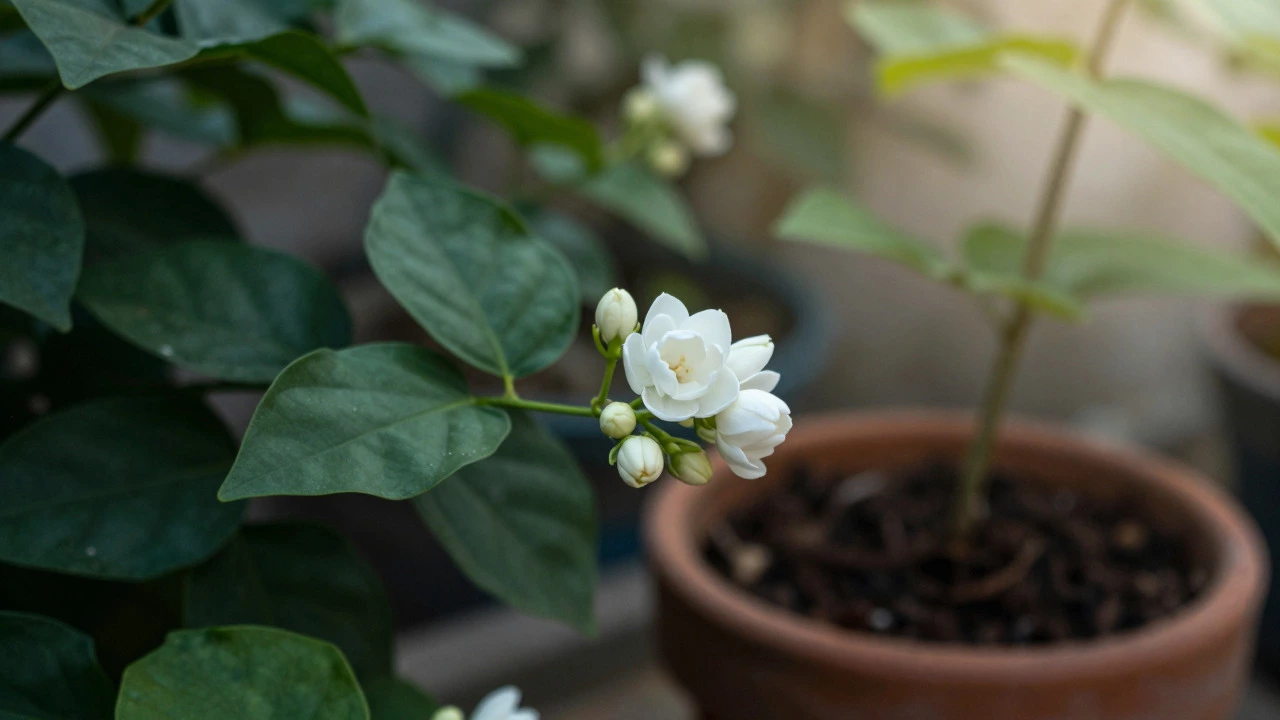
No Indian garden is complete without the scent of Jasmine is an aromatic climbing shrub with small white flowers that open at night. While many varieties are seasonal, the Jasminum sambac (commonly known as Mogra) and Jasminum grandiflorum can provide near-year-round blooms if given the right conditions. Specifically, the 'Maid of Orleans' variety is famous for its continuous flowering capability in warmer zones like Kerala and Karnataka.
Jasmine prefers morning sun and afternoon shade. If you leave it in the harsh midday sun of Rajasthan or Tamil Nadu, the buds may drop before opening. To get 12-month fragrance, you need to feed it with organic compost every two months. Nitrogen-heavy fertilizers will give you lush green leaves but fewer flowers, so stick to balanced NPK fertilizers or bone meal, which promotes blooming. Trim the vines lightly every few weeks to encourage new growth, where the flowers form.
The Resilient Beauty: Hibiscus
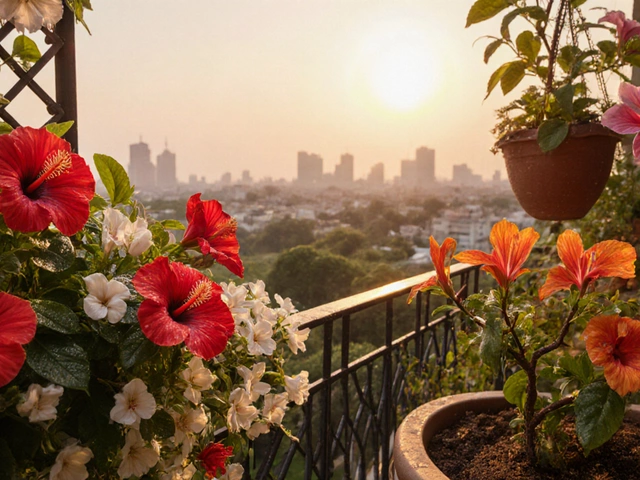
Hibiscus rosa-sinensis is a tropical shrub producing large, showy flowers in various colors. This is the plant that defines the tropical aesthetic. Unlike many other flowers that take a break during the monsoon, Hibiscus often blooms more vigorously during the rainy season. In cities like Pune and Bangalore, where the temperature rarely drops below 15°C, Hibiscus can flower all year long.
The key to year-round Hibiscus is soil drainage. It hates sitting in waterlogged soil, which leads to root rot. Use a mix of garden soil, cocopeat, and sand. Keep the soil moist but not soggy. If your Hibiscus stops flowering, check for pests like aphids or spider mites, which love these soft leaves. A simple neem oil spray every month keeps them away. Also, deadhead (remove spent flowers) regularly. This tells the plant to put energy into making new buds rather than seeds.
The Colorful Climber: Mandevilla
If you want something exotic that looks expensive, try Mandevilla is a vigorous climbing vine with large, trumpet-shaped flowers in shades of pink and red. Often confused with Dipladenia, Mandevilla is tougher and blooms more prolifically. It is perfect for trellises, pergolas, or hanging baskets on balconies. In coastal areas like Goa and Mumbai, Mandevilla thrives due to the high humidity.
Mandevilla needs support to climb. Without it, the stems become leggy and weak. Provide a sturdy structure early on. It requires regular feeding with a high-phosphorus fertilizer to maintain its constant bloom cycle. One thing to note: Mandevilla is sensitive to cold. If you live in North India (Delhi, Punjab), it will likely stop flowering when temperatures drop below 10°C in winter. For true 12-month performance, stick to South and Central India.
The Ground Cover Champion: Lantana
You’ve probably seen Lantana camara is a hardy shrub with clusters of small flowers that change color from yellow/orange to red/purple. It is so tough it’s considered invasive in some countries, but for the home gardener, it’s a blessing. Lantana blooms continuously from spring through winter, and in tropical belts, it never really stops. It handles drought, poor soil, and intense heat better than almost any other ornamental plant.
Lantana is ideal for filling gaps between larger plants. It spreads quickly, so give it space or contain it in pots. Be aware that the berries are toxic to pets and children, so place it where they won’t reach. Despite its wild reputation, newer cultivars like 'Lantana montevidensis' offer smaller, more manageable forms with beautiful purple flowers, perfect for edging pathways.
| Plant Name | Bloom Duration | Sunlight Need | Water Requirement | Best Region |
|---|---|---|---|---|
| Bougainvillea | All Year (with pruning) | Full Sun (6-8 hrs) | Low (drought tolerant) | Pan-India (except extreme cold) |
| Jasmine (Mogra) | Near Year-Round | Morning Sun, Afternoon Shade | Moderate | South & Central India |
| Hibiscus | All Year | Partial to Full Sun | High (keep moist) | Tropical & Subtropical Zones |
| Mandevilla | All Year (Warm Climates) | Full Sun to Partial Shade | Moderate | Coastal & Southern India |
| Lantana | All Year | Full Sun | Low to Moderate | Pan-India |
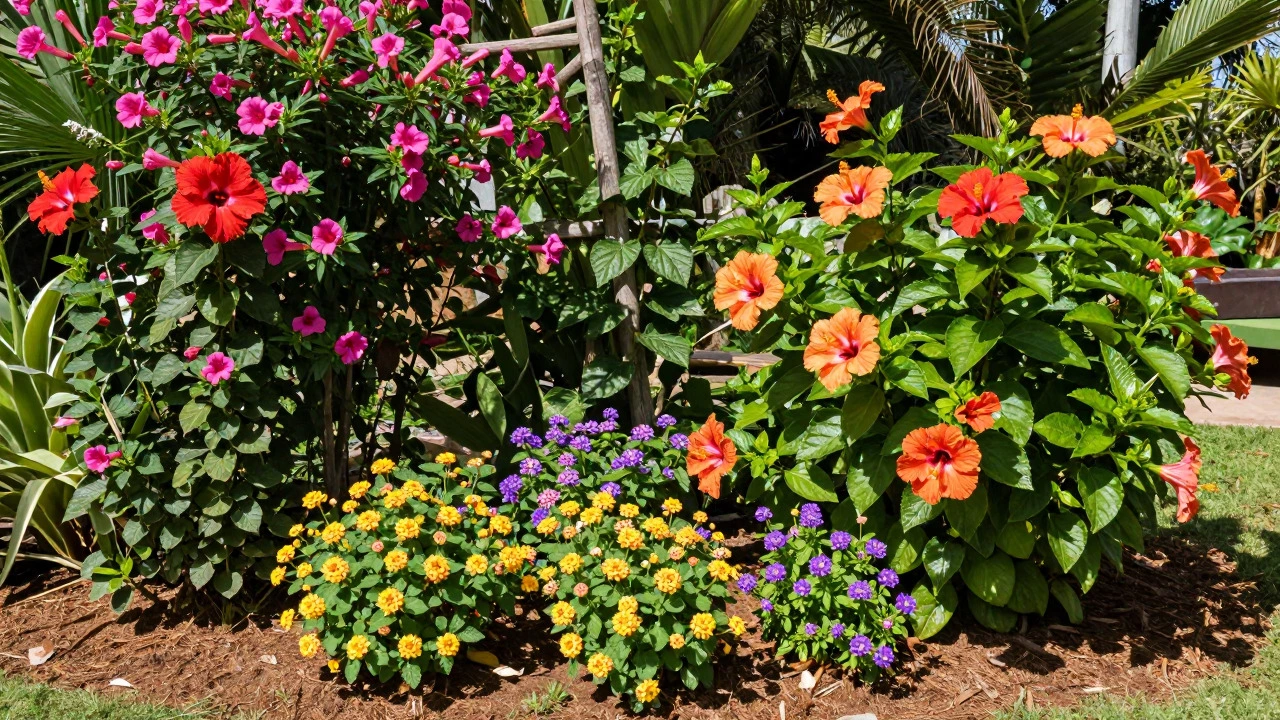
Regional Considerations: Does Location Matter?
Absolutely. India’s climate diversity means a plant that blooms in December in Kochi might be shivering in Kolkata. Here is how to adjust your strategy based on where you live:
- North India (Delhi, Punjab, Haryana): Winters here can drop below 5°C. Most tropical bloomers will pause. Focus on Bougainvillea and Hibiscus, but bring potted plants indoors during peak winter nights. Jasmine will struggle unless kept in a sheltered spot.
- West India (Maharashtra, Gujarat): Coastal areas like Mumbai are perfect for Mandevilla and Jasmine. Inland areas like Pune handle Hibiscus and Bougainvillea beautifully year-round.
- South India (Kerala, Tamil Nadu, Karnataka): This is the goldmine for 12-month flowers. The consistent warmth allows all five plants listed above to perform at their best. You can even add Frangipani (Plumeria) to the list, though it has brief pauses.
- East India (Bengal, Odisha): High humidity helps Hibiscus and Jasmine. Ensure good air circulation to prevent fungal diseases during the monsoon.
Essential Care Tips for Continuous Blooming
Even the best plants won’t bloom if neglected. To achieve that dream of a garden that never stops flowering, follow these three rules:
- Deadheading is Non-Negotiable: Remove faded flowers immediately. If you leave them, the plant wastes energy making seeds. Cutting them off signals the plant to make more flowers.
- Fertilize Regularly: Blooming takes energy. Use a liquid fertilizer rich in Phosphorus (the middle number in N-P-K) every 4-6 weeks. Organic options like bone meal or rock phosphate work wonders.
- Prune Wisely: Don’t over-prune. Light trimming encourages bushiness and more flower sites. Heavy pruning should only happen once or twice a year, preferably after the main blooming cycle slows down slightly.
Common Mistakes That Stop Blooms
Have you ever bought a beautiful flowering plant, brought it home, and it stopped blooming within weeks? You’re not alone. Here’s why it happens:
Too Much Nitrogen: Gardeners love green leaves. So, they dump nitrogen-rich urea on their plants. Result? A jungle of leaves with zero flowers. Switch to a balanced or phosphorus-heavy feed.
Inconsistent Watering: Letting the soil dry out completely stresses the plant, causing bud drop. Conversely, waterlogging kills roots. Find the sweet spot: moist, not muddy.
Wrong Soil pH: Most flowering plants prefer slightly acidic to neutral soil (pH 6.0-7.0). If your soil is too alkaline (common in North India), nutrients become locked up. Add compost or sulfur to lower pH gradually.
Is there a single plant that guarantees 12 months of flowers in all of India?
No single plant works perfectly everywhere due to India's diverse climate. However, Bougainvillea comes closest, blooming year-round in most regions except those with severe winters below 5°C. For North India, it may pause during peak winter.
Which flower is best for beginners who want year-round blooms?
Lantana is the easiest choice. It is extremely hardy, requires minimal watering, tolerates poor soil, and blooms continuously with almost no care. It is perfect for first-time gardeners.
Can I grow year-round flowering plants in pots on my balcony?
Yes, absolutely. Bougainvillea, Hibiscus, and Mandevilla thrive in containers. Ensure the pots have drainage holes and use a high-quality potting mix. Balcony plants may need more frequent watering than ground-planted ones.
Why did my jasmine stop blooming?
Jasmine usually stops blooming due to lack of sunlight, over-fertilization with nitrogen, or insufficient pruning. It needs morning sun and regular light trimming to stimulate new flower buds.
How often should I fertilize plants for continuous blooming?
Apply a balanced or phosphorus-rich fertilizer every 4 to 6 weeks during the growing season. Reduce frequency in winter for plants in colder regions. Organic compost can be added monthly for sustained health.