High-Value Crop Profit Estimator
Select a crop type and enter your estimated land area to calculate potential gross revenue and net profit estimates.
Saffron Profit Estimate
Imagine earning more from a single square foot of soil than you could from a month’s salary. It sounds like a dream, but in Indian agriculture, it’s a reality for farmers who know exactly which is the richest plant in India. When we talk about "richness," we aren’t just looking at the price tag on a bundle of vegetables. We are talking about yield per acre, market stability, and the sheer profit margin that can turn a small plot into a goldmine.
Most people guess rice or wheat. But let’s be honest: staple crops feed the nation, yet they rarely make the farmer rich after accounting for labor and water costs. The real money lies in niche, high-value crops that require specific care but offer massive returns. Whether you have a terrace garden in Mumbai or two acres in Punjab, understanding these high-value plants changes how you view your land.
Defining "Rich" in Agriculture
Before we name the winners, we need to define what makes a plant "rich." It isn’t just about selling one item for ₹5,000. If that item takes six months to grow and needs expensive climate control, your profit might be lower than a fast-growing herb. True agricultural wealth comes from three factors:
- Price Per Unit: How much does the market pay per kilogram?
- Yield Density: How many kilograms can you harvest per acre?
- Input Costs: How much do seeds, water, fertilizer, and labor cost?
A crop with a moderate price but low input costs and high demand often beats a luxury crop with risky weather dependencies. However, when we look at the top tier, a few names consistently rise to the top due to their global demand and premium pricing.
Saffron: The Red Gold of Kashmir
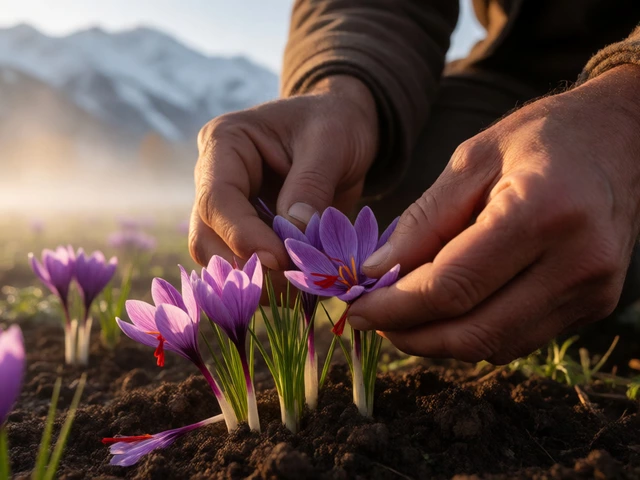
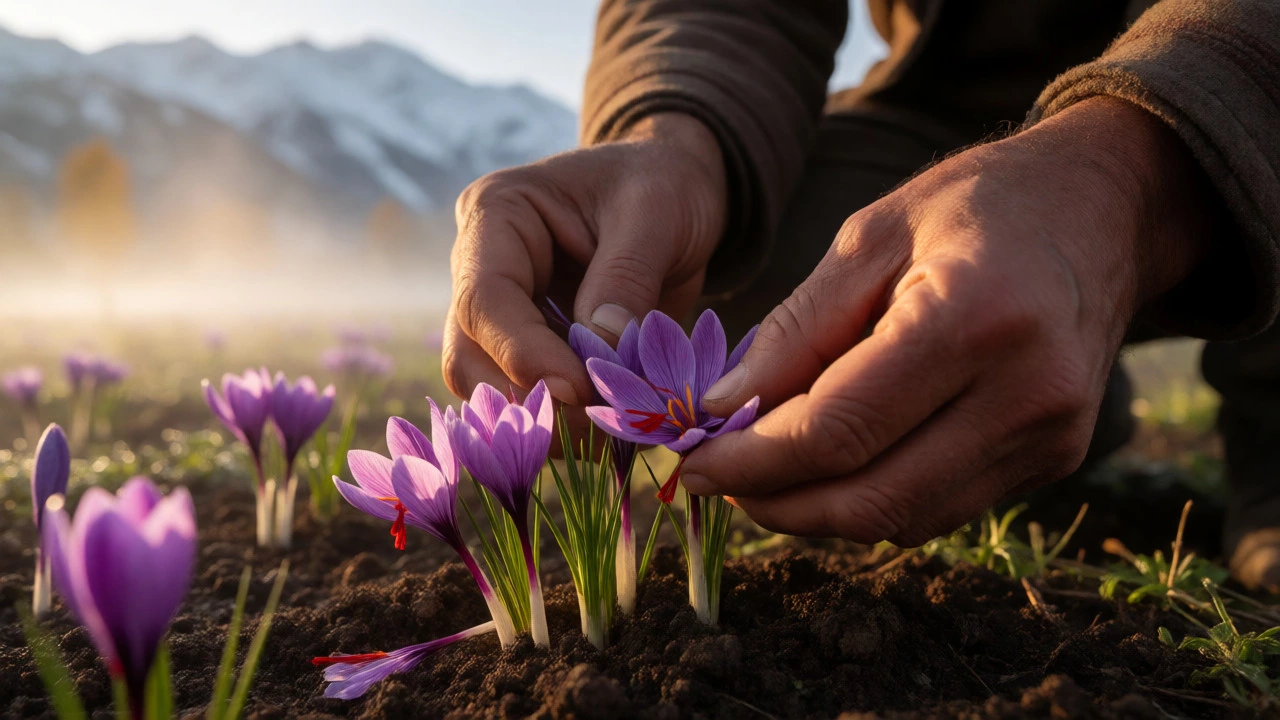
If there is one undisputed king of value, it is Saffron (Crocus sativus). Known globally as "red gold," this spice commands prices between ₹200,000 and ₹300,000 per kilogram in local markets. Why so high? Because each flower produces only three tiny stigmas, which must be hand-picked during a short window in autumn.
In India, saffron cultivation is concentrated in Pampore and other parts of Kashmir. While the entry barrier is high-requiring specific cold climates and intensive labor-the return on investment is staggering. A single acre can yield enough dried saffron to generate lakhs in revenue. For a farmer with access to suitable land, saffron isn’t just a crop; it’s an asset class.
| Crop Name | Approx. Price per Kg (₹) | Growth Cycle | Primary Region |
|---|---|---|---|
| Saffron | 200,000 - 300,000 | Annual (Autumn Harvest) | Kashmir |
| Vanilla | 4,000 - 6,000 | 3-4 Years to first yield | Kerala, Karnataka, Tamil Nadu |
| Mushrooms (Exotic) | 150 - 400 | Short (Weeks) | All India (Controlled env.) |
| Aloe Vera | 20 - 50 (Gel/Juice) | Perennial | Rajasthan, Gujarat, Andhra Pradesh |
| Dragon Fruit | 80 - 150 | Perennial (Year-round) | Gujarat, Maharashtra, Karnataka |
Vanilla: The Orchid That Pays
You might think vanilla is purely imported, but India has become a significant player in Vanilla production. This climbing orchid is the second most expensive spice in the world after saffron. In states like Kerala and Karnataka, farmers are shifting from traditional spices to vanilla because the global demand for natural vanilla extract is outstripping supply.
The catch? Patience. Vanilla vines take three to four years to mature before they produce flowers. Furthermore, the pollination is manual-a tedious process where each flower opens for only a day. But once established, a well-maintained vanilla plantation can provide steady income for over a decade. With pod prices hovering around ₹4,000 to ₹6,000 per kg, the long-term payoff for early adopters has been exceptional.

Mushrooms: Fast Cash for Urban Farmers
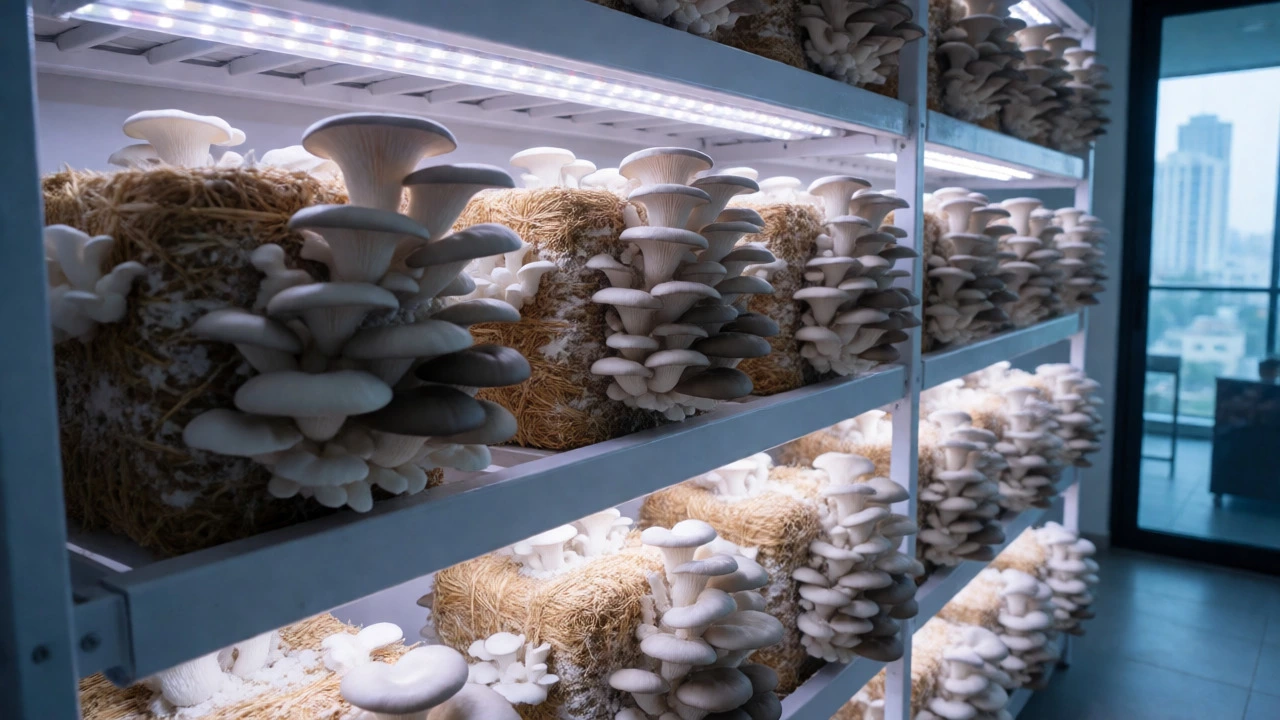
Not everyone has acres of land. If you are working with limited space, mushrooms are arguably the richest plant-equivalent crop you can grow. Specifically, exotic varieties like Oyster Mushrooms and Button Mushrooms thrive in controlled indoor environments.
Why are they so profitable? Speed. You can go from spawning to harvest in under a month. They don’t need sunlight, soil, or heavy irrigation. They grow on agricultural waste like straw or sawdust. For urban entrepreneurs or those with basement spaces, mushrooms offer a rapid turnover rate. While the price per kg is lower than saffron (₹150-₹400), the volume and frequency of harvests create a consistent cash flow that staples cannot match.
Aloe Vera: The Green Gold Rush
A few years ago, Aloe Vera was hyped as the next big thing. Some farmers went broke trying to sell raw leaves to unprepared buyers. Today, the market has stabilized, and those who entered processing or contract farming are seeing solid returns. Aloe Vera is a hardy succulent that requires minimal water and thrives in hot, arid regions like Rajasthan and Gujarat.
The richness here comes from by-products. Selling fresh gel, juice, or processed pulp adds value compared to selling raw leaves. Contract farming with pharmaceutical and cosmetic companies ensures a buyer before you even plant. With yields reaching up to 40 tons per acre annually, the sheer volume compensates for the lower unit price, making it a viable option for large-scale dryland farming.
Dragon Fruit: The Trendsetter
Once a novelty, Dragon Fruit (Kamalam) is now a mainstream high-value crop. Its bright pink skin and sweet flesh appeal to health-conscious consumers in metros. Farmers in Gujarat and Maharashtra have reported excellent profits because the plant fruits year-round after its initial establishment phase.
Demand often exceeds supply during off-seasons, driving prices up. Since it is a cactus family member, it withstands drought better than many fruit trees. For farmers willing to invest in drip irrigation and trellis systems, dragon fruit offers a recurring annual income stream that surpasses traditional fruits like banana or papaya in terms of net profit per acre.
How to Choose Your Rich Plant
So, which one should you pick? It depends entirely on your context. Here is a quick decision framework:
- Have cold winters and labor availability? Go for Saffron. It’s the highest value but highest risk.
- Have humid tropics and patience? Choose Vanilla. Long wait, but lucrative long-term.
- Have limited space and want quick returns? Start with Mushrooms. Low capex, fast cycles.
- Have dry land and bulk capacity? Aloe Vera is your best bet.
- Want steady yearly income? Dragon Fruit balances effort and reward well.
Remember, no plant is rich if you can’t sell it. Before planting a single seed, secure your market. Talk to exporters, check local wholesale rates, and consider adding value through packaging or processing. The richest plant is ultimately the one that meets a specific market need efficiently.
Frequently Asked Questions
Is saffron really grown in India?
Yes, primarily in the Union Territory of Jammu & Kashmir, specifically in areas like Pampore. It accounts for a significant portion of the world's saffron production, though Iran remains the largest global producer.
Which crop gives the fastest profit in India?
Leafy greens like spinach and coriander give the fastest turnover (30-45 days), but in terms of high-margin profit speed, exotic mushrooms like Oyster or Shiitake are superior due to their short growth cycle and premium pricing.
Can I grow vanilla in North India?
It is difficult. Vanilla requires high humidity and warm temperatures without extreme heat. It thrives in Southern India (Kerala, Karnataka). Growing it in North India would require expensive greenhouse climate control, which may eat into profits.
Is Aloe Vera still profitable?
Yes, but not as a standalone raw leaf seller. Profitability comes from contract farming with processors or creating value-added products like gels and juices. Oversupply in recent years crashed raw leaf prices, so market linkage is crucial.
What is the most expensive vegetable in India?
While technically a fungus, Truffles are extremely expensive but rare in India. Among common cultivated vegetables, exotic varieties like Broccoli or certain types of Asparagus fetch higher prices than staples, but none rival the per-kilo value of spices like Saffron or Vanilla.